Florence does not try to impress you. It does not need to. You step off the train at Santa Maria Novella, walk ten minutes through streets that look like a Renaissance painting because they are, and arrive at the Piazza del Duomo, where Brunelleschi’s dome sits above the rooftops with the casual confidence of something that has been the finest piece of engineering in the world for six centuries and knows it.
Florence is the city where the Renaissance happened, where the Medici built the most significant artistic patronage network in Western history, and where the accumulated result of all of it sits within a 30-minute walking radius of wherever you are standing.
The capital of Tuscany sits on the Arno River in central Italy, a compact city that contains the Uffizi Gallery (the finest collection of Italian Renaissance painting in existence), Michelangelo’s David, Brunelleschi’s dome, the Ponte Vecchio, the Pitti Palace, the Boboli Gardens, and enough churches, palazzos, and piazzas of the first rank to sustain several days of serious looking.
It also has some of the best food in Italy, which is not a modest claim. Give it three full days minimum. The city reveals itself slowly and rewards the visitor who gets past the queues and into the neighbourhood rhythm of the back streets.
Florence City Essentials
Entry Requirements for Florence
- EU and Schengen Area citizens can travel to Italy without any visa requirements.
- Citizens of the US, UK, Canada, Australia, and most Western countries can visit without a visa for up to 90 days in any 180-day Schengen period.
- Indian nationals require a Schengen visa from the Italian Embassy before departure.
- The EU’s ETIAS pre-travel authorization for visa-exempt non-EU nationals is being progressively rolled out. Check out travel.ec.europa.eu before booking.
Getting There and Getting Around
Florence Amerigo Vespucci Airport (FLR) is about 4 km from the city centre, connected by tram (Tramvia Line T2, about 20 minutes to Santa Maria Novella station) or taxi (about 15 minutes).
Pisa International Airport (PSA), used by many budget carriers, is about 80 km west and connected by the Pisa Mover shuttle to Pisa Centrale station, then a direct train to Florence Santa Maria Novella (total about 70 to 80 minutes).
By train: Florence Santa Maria Novella station is a major hub. High-speed Frecciarossa and Italo trains connect to Rome (about 1.5 hours), Milan (about 1.75 hours), Bologna (35 minutes), and Venice (about 2 hours). For visitors arriving by car, the city centre is a ZTL (Zona a Traffico Limitato) restricted zone. Driving into it results in automatic fines. Park outside and use the tram or a taxi.
Getting around Florence is primarily a matter of walking. The historic centre is compact enough that most of the major sights are within a 30-minute walk of each other.
- Walking: This is the most important and most rewarding way to experience Florence. The distance from the Duomo to the Uffizi is about 10 minutes on foot. From the Uffizi to the Ponte Vecchio is 5 minutes and from the Ponte Vecchio to the Pitti Palace is 10 minutes across the bridge. The entire historic centre can be covered on foot in a well-paced day.
- Autolinee Toscane bus and tram: Florence’s public bus and tram network (operated by Autolinee Toscane since 2021, though locals still commonly refer to it as ATAF) covers the city and surrounding areas. Tram Line T2 is the most useful for airport connections. Tickets are available via the Autolinee Toscane app, contactless payment on board, or at tabacchi (tobacconists).
- Taxi: They are available throughout the city but can be difficult to hail on the street. It is best to call one via the 4390 taxi number, use the appTaxi app, or ask your accommodation to arrange. Uber operates a limited service in Florence using only licensed black-car drivers, which makes it significantly more expensive than in most other cities.
- ZTL restrictions apply to motor vehicles, not bicycles. Cars and motorbikes without resident permits are banned from the restricted zone covering most of the historic centre. Bicycles and e-bikes are permitted inside the ZTL.


The Duomo and the Historic Centre
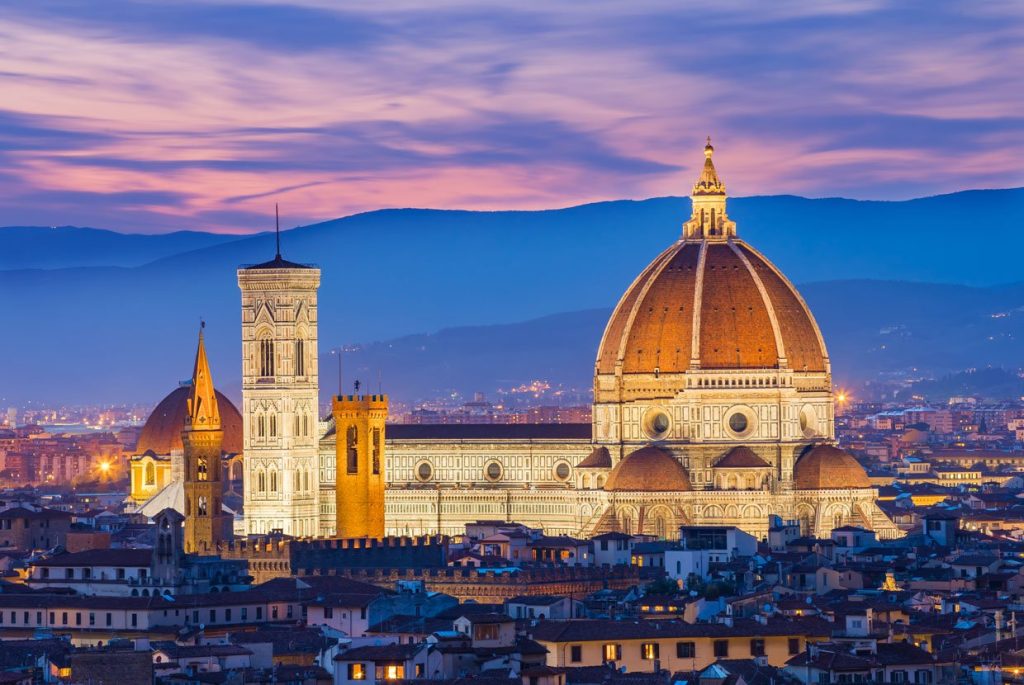
Everything in Florence begins with the Duomo, and the approach through the narrow streets that surround it, where the full scale of the building is hidden until the last moment and then suddenly revealed, is one of the great urban experiences in Italy.
The Cathedral of Santa Maria del Fiore (the Duomo) was begun in 1296 and substantially completed in the 14th century, but the dome, the structural problem that defined the building for decades, was not solved until Filippo Brunelleschi proposed his revolutionary double-shell construction method in 1420.
The dome, completed in 1436, spans 44.9 metres and rises 114.5 metres above the ground. It was the largest dome in the world at the time of its construction and remained the largest for over a century. The 463-step climb to the top through the space between the inner and outer shells, past Giorgio Vasari’s frescoes of the Last Judgment on the interior, gives views over Florence and the surrounding Tuscan hills that justify every step.
The Duomo complex covers five components: the Cathedral itself, Brunelleschi’s Dome, Giotto’s Bell Tower (Campanile), the Baptistery of San Giovanni, and the Opera del Duomo Museum.
The Brunelleschi Pass (a 3-day pass available from the Opera del Duomo website) covers access to all five components, including a reserved dome climb slot. Book this months in advance. The dome slots sell out far ahead during peak season.
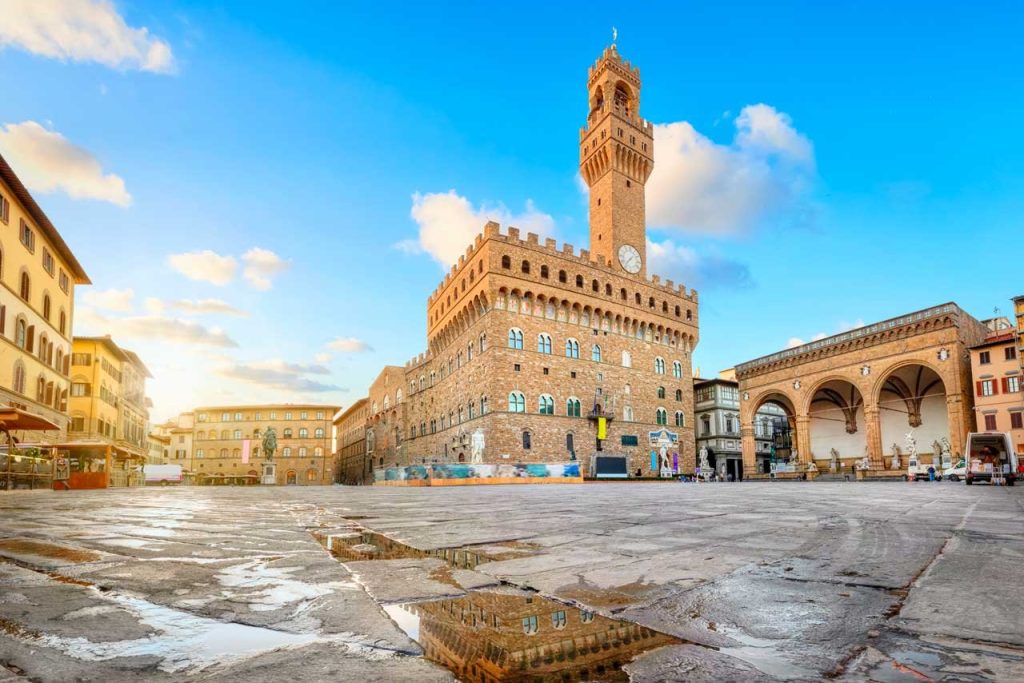
From the Duomo, the Piazza della Signoria is a 10-minute walk south and serves as the political and historical heart of Florence. The L-shaped piazza is dominated by the Palazzo Vecchio (Florence’s town hall since the 13th century), the open-air Loggia dei Lanzi (a covered sculpture gallery with works by Giambologna and Cellini), and a copy of Michelangelo’s David on the exact spot where the original stood from 1504 to 1873. The Uffizi Gallery opens directly onto the piazza from the east.
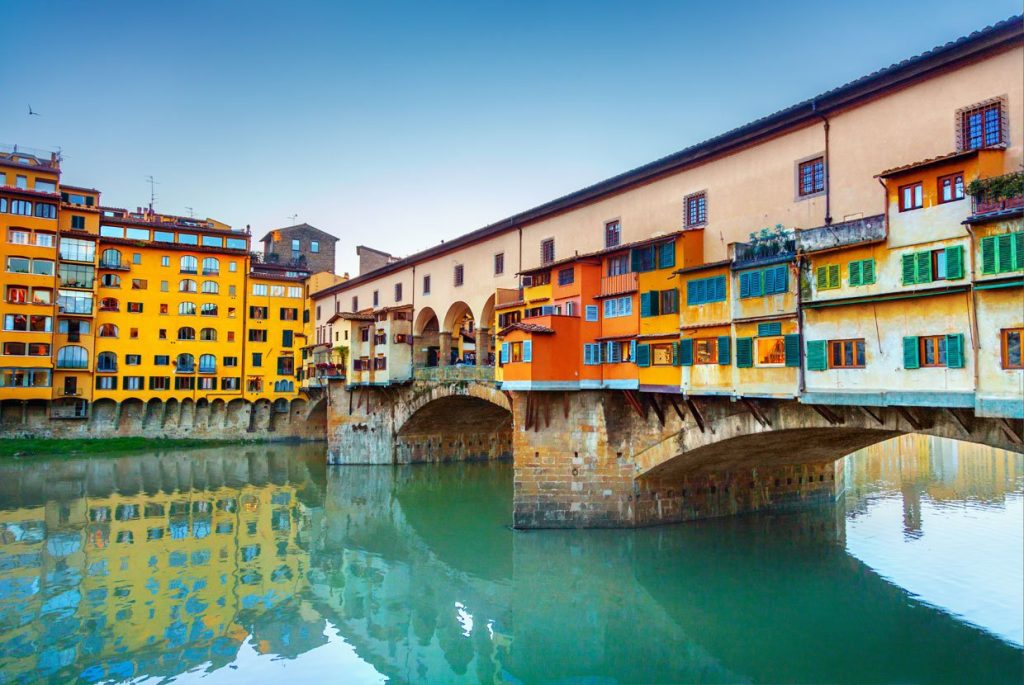
The Ponte Vecchio across the Arno, completed in 1345, is the oldest bridge in Florence and the only bridge in the city not destroyed by the Germans in World War II. The goldsmiths’ shops that line its sides were established by Medici order in the 16th century (replacing the butchers who had previously occupied the bridge, whose waste fell into the Arno below).
The Vasari Corridor runs above the shops, connecting the Uffizi to the Pitti Palace across the bridge.

The Uffizi Gallery
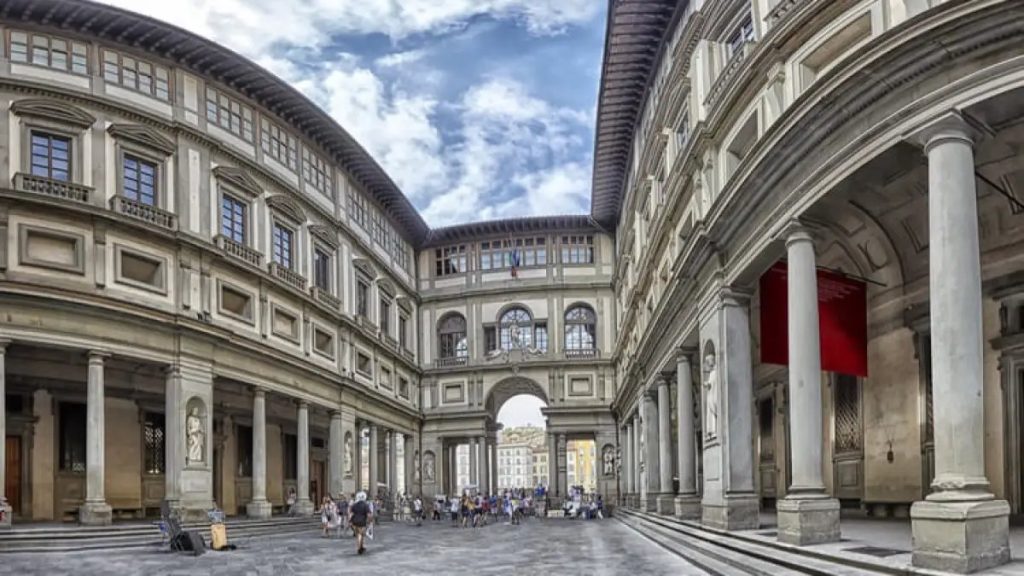
From the Piazza della Signoria, the Uffizi is the single most important cultural institution in Florence and one of the most significant art galleries in the world.
Built originally as the offices (uffizi) of the Medici government in 1560, it was converted into a public gallery in 1769 and now houses the most comprehensive collection of Italian Renaissance painting in existence.
The collection is arranged chronologically across 45 rooms, tracing the development of painting from Cimabue and Giotto in the 13th century through Botticelli, Leonardo, Michelangelo, Raphael, Titian, and Caravaggio to the 17th-century Dutch and Flemish masters.
The most celebrated works include Botticelli’s Birth of Venus and Primavera, both in Rooms 10 to 14, which should be the first destination on any visit.
Leonardo’s Annunciation and the Adoration of the Magi, Michelangelo’s Doni Tondo, Raphael’s Madonna of the Goldfinch, Titian’s Venus of Urbino, and Caravaggio’s Bacchus and Medusa are among the other essential works.
The Uffizi is extremely popular and sells out its timed entry slots in advance. A pre-booked priority entrance ticket eliminates the risk of walking up and finding no available slots. Allow a minimum of two hours, but three is more appropriate for a thorough visit.
Uffizi Gallery Priority Entrance Ticket available through Thrillark provides timed entry with priority access, bypassing the walk-up queue. It is the most important museum booking in Florence.

Michelangelo’s David and the Accademia
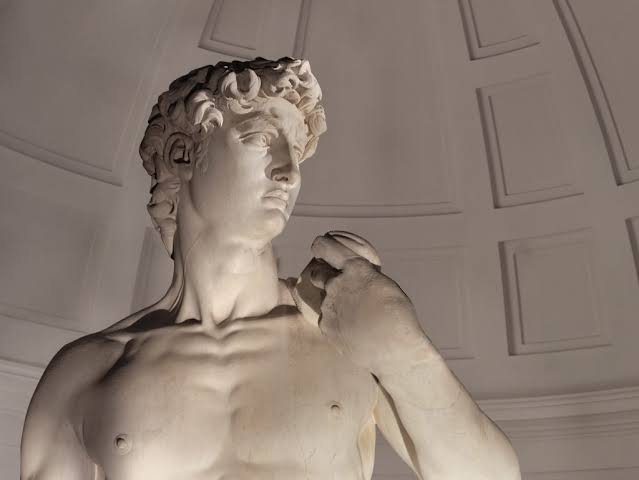
From the Uffizi, a 15-minute walk north through the university district brings you to the single most visited sculpture in the world. The Galleria dell’Accademia on Via Ricasoli houses Michelangelo’s David, carved between 1501 and 1504 from a single block of Carrara marble 5.17 metres tall, and placed in the Piazza della Signoria as a symbol of Florentine republican freedom.
It was moved to the Accademia in 1873 to protect it from weather damage. The original is here, and the copy in the Piazza is a later replacement.
The David is in the Tribune, a purpose-built hall at the end of the main gallery, and the approach through the room of Michelangelo’s unfinished Prisoners (four rough-hewn figures emerging from the marble that Michelangelo left incomplete, now read as the most powerful sculptures in the room despite their incompletion) is itself an extraordinary experience. Allow 45 minutes to 1 hour.
Accademia Gallery Priority Entrance Ticket provides priority access and timed entry, bypassing the significant queues that form at this extremely popular attraction.

The Pitti Palace and Boboli Gardens
From the Accademia, crossing back through the historic centre and over the Ponte Vecchio brings you to Oltrarno, the neighbourhood on the south bank of the Arno that is the most interesting and most local part of Florence.
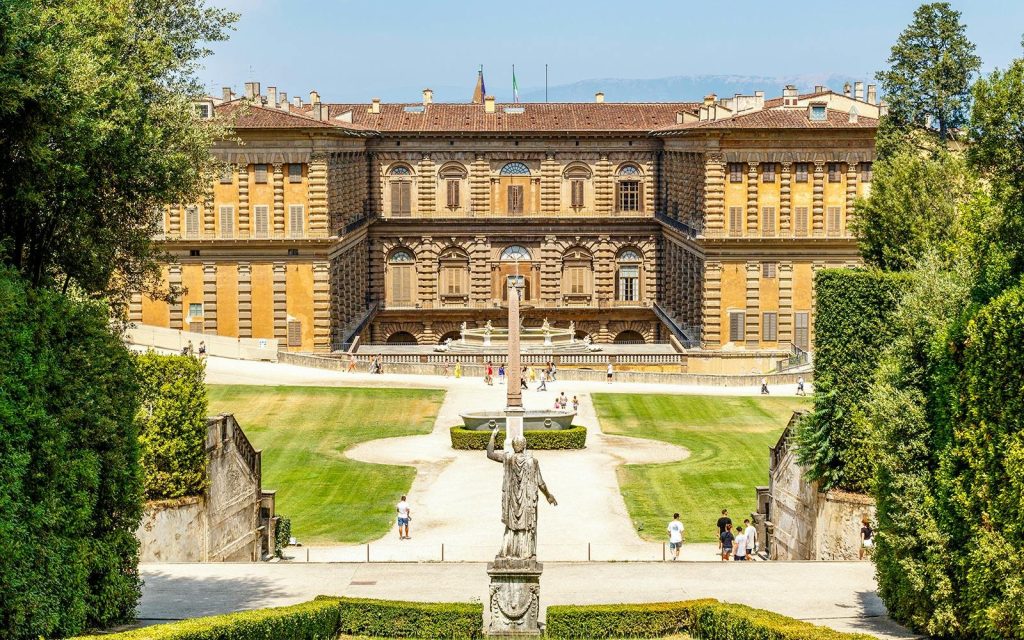
The Pitti Palace in Oltrarno was the residence of the Medici Grand Dukes and later of Napoleon and the Savoy royal family. The complex houses several museums, including the Palatine Gallery (the most significant, with Raphael, Titian, Rubens, and Caravaggio in the original palace rooms), the Royal Apartments, the Museum of Costume and Fashion, and a Gallery of Modern Art covering 18th- to 20th-century Italian painting.
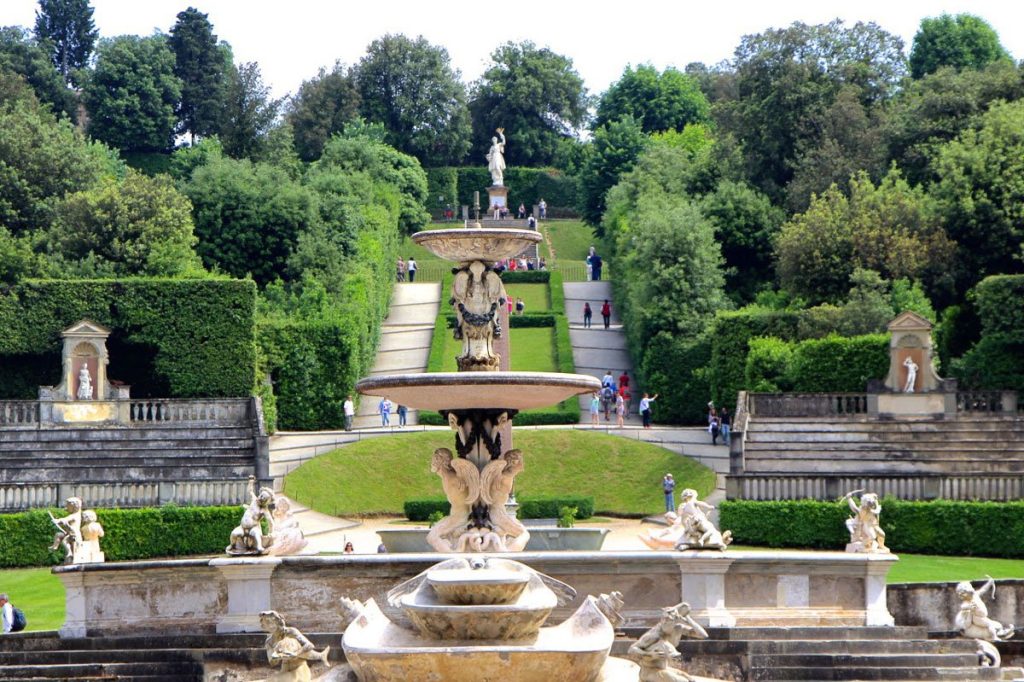
Directly behind the palace, the Boboli Gardens cover 11 hectares of hillside in formal Italian garden style, with fountains, grottos, statuary, and an amphitheatre, ascending to a belvedere at the summit with views over the olive groves and cypresses of the surrounding Florentine hills.
The Bardini Gardens, a short walk from the Boboli entrance, extend the garden experience with additional hillside terracing and views over the Arno.
The Boboli Gardens Skip-the-Line Ticket offers priority entry to one of the most beautiful Renaissance gardens in Italy, combined with access to the Bardini Gardens. It is best visited in the morning when the light comes over the hills from the east.


The Neighbourhood: Oltrarno
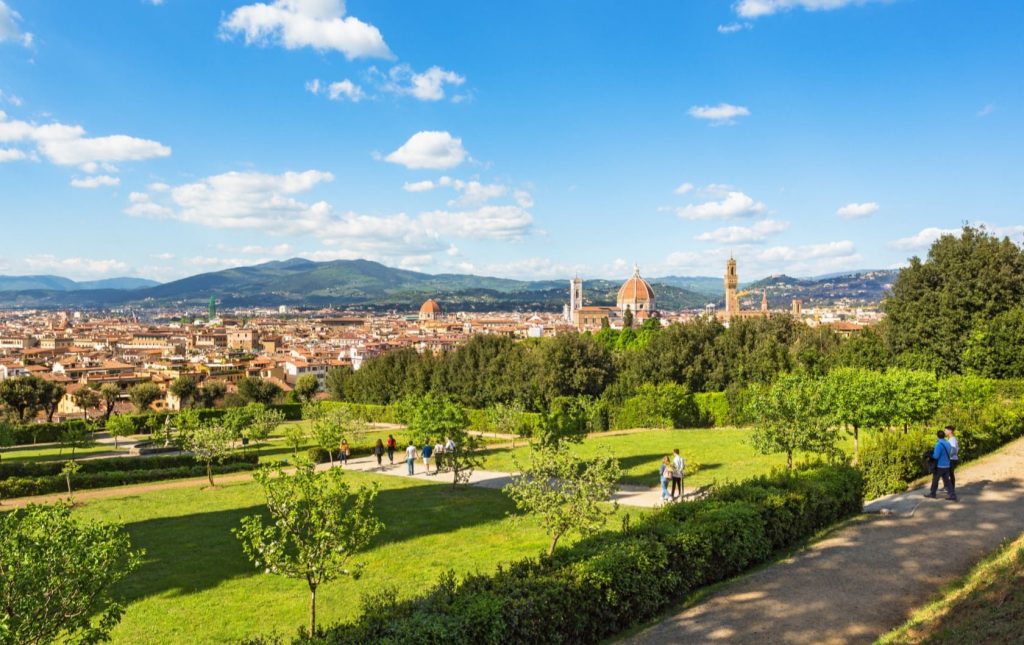
The Boboli visit is an ideal introduction to the Oltrarno neighbourhood, which deserves its own afternoon of slow exploration. Oltrarno is where the artisan workshops, the vintage boutiques, the best local restaurants, and the wine bars that Florentines actually use are concentrated, in streets that have the quiet of a residential neighbourhood but the density of content of a much more visited area.
The Basilica di Santo Spirito on the piazza of the same name is Brunelleschi’s most elegant interior. It is a 15th-century church of extraordinary proportional harmony, housing a wooden crucifix by the young Michelangelo in the sacristy and regularly attended by the neighbourhood’s residents in a way that keeps it feeling like a church rather than a museum.
The craft and artisan culture of Oltrarno extends through workshops for leather, bookbinding, furniture restoration, jewellery making, and fabric dyeing, many of which have been in the same family for multiple generations. The lanes between Via Maggio and the Arno are the most rewarding for this kind of exploration.
The Duomo Neighbourhood Museums
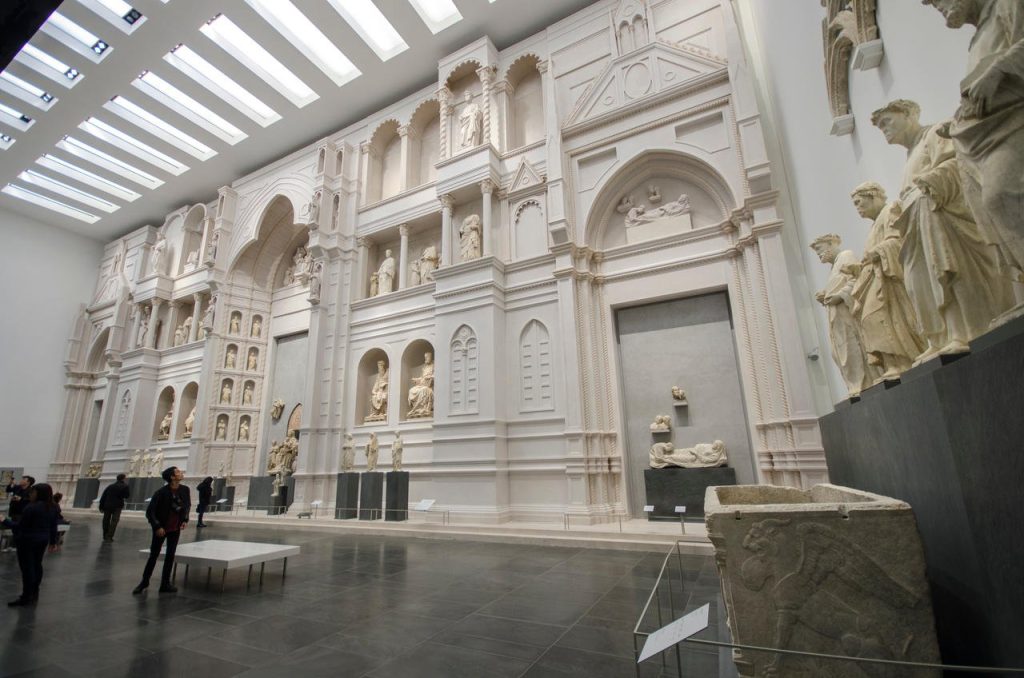
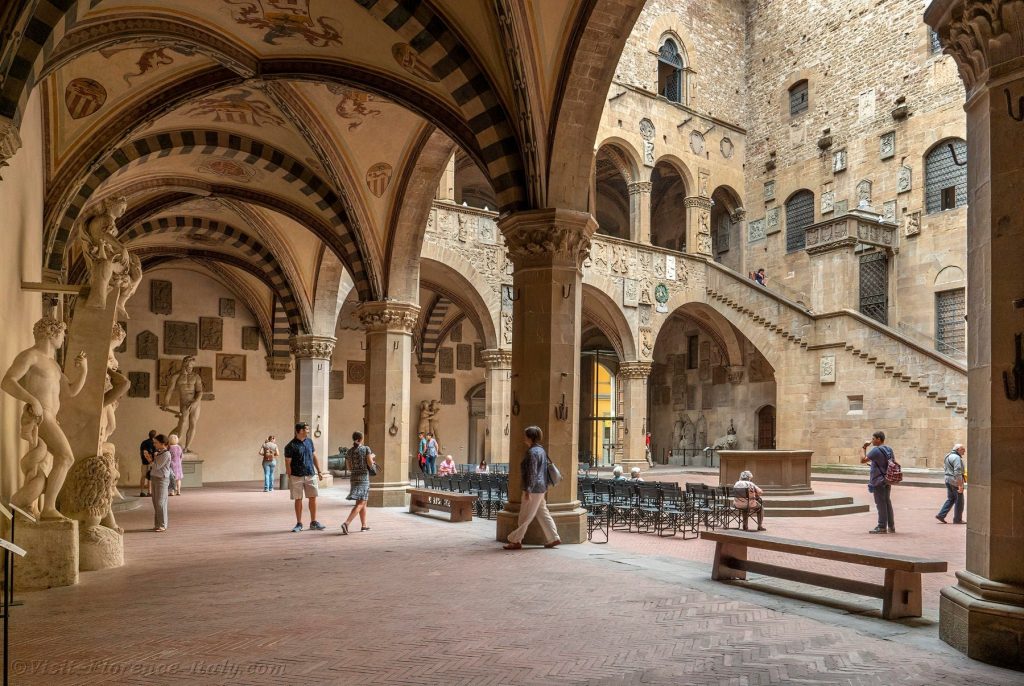
Florence’s museum density extends well beyond the Uffizi and the Accademia. Several important institutions in the historic centre are significantly less crowded and reward the visitor who has time beyond the headline attractions.
The Opera del Duomo Museum (Museo dell’Opera del Duomo) on the Piazza del Duomo houses the original baptistery doors by Lorenzo Ghiberti (the Gates of Paradise, considered by Michelangelo to be worthy of serving as the gates of heaven), Donatello’s cantoria and his wooden carving of Mary Magdalene, and the original sculptural programme from the Duomo’s exterior. It is the most undervisited major museum in Florence.
The Bargello (Museo Nazionale del Bargello) on Via del Proconsolo is housed in Florence’s oldest public building (1255), which served as the city prison before becoming a museum. The collection covers Renaissance sculpture at its most concentrated, with two Donatello Davids (the marble and the bronze), Michelangelo’s early Bacchus and Brutus, Giambologna’s Mercury, and Cellini’s Perseus model alongside the original plaquettes and bronzes that shaped the development of Italian sculpture.
Piazzale Michelangelo and the Views
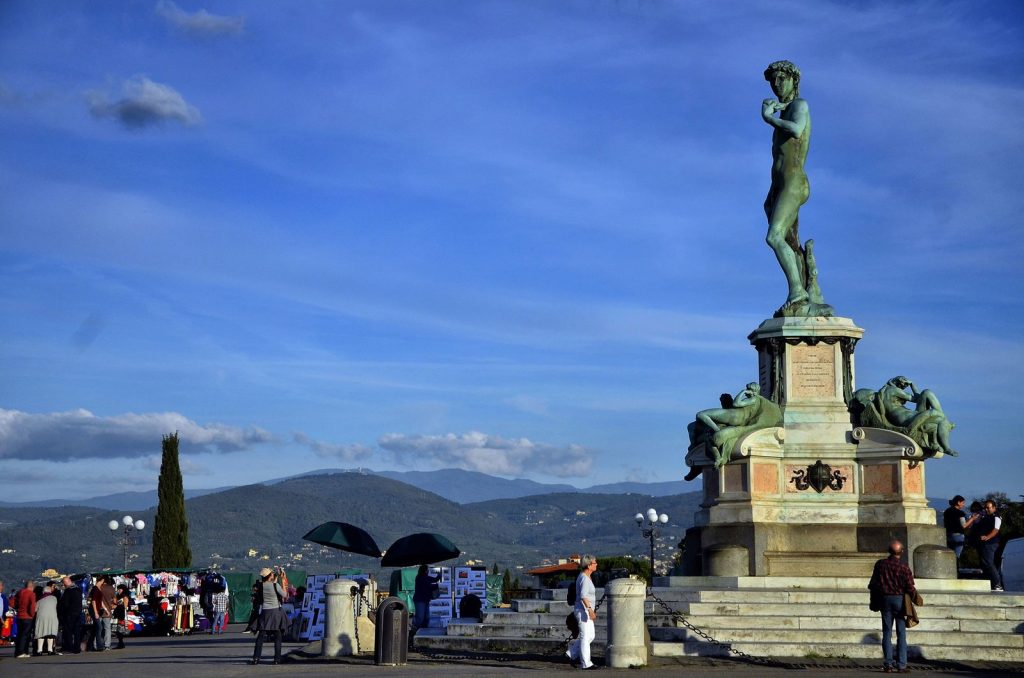
From Oltrarno, the road climbs south up the hill to Piazzale Michelangelo, the most famous viewpoint in Florence, a wide terrace above the city giving a panoramic view over the entire historic centre with the Duomo dome as the centerpiece.
The walk up from the Ponte Vecchio takes about 30 minutes through the Boboli Gardens or via the road past the Bardini Gardens. The sunset from the piazzale, when the golden light falls across the terracotta rooftops, and the dome turns amber, is one of the finest in Italy.
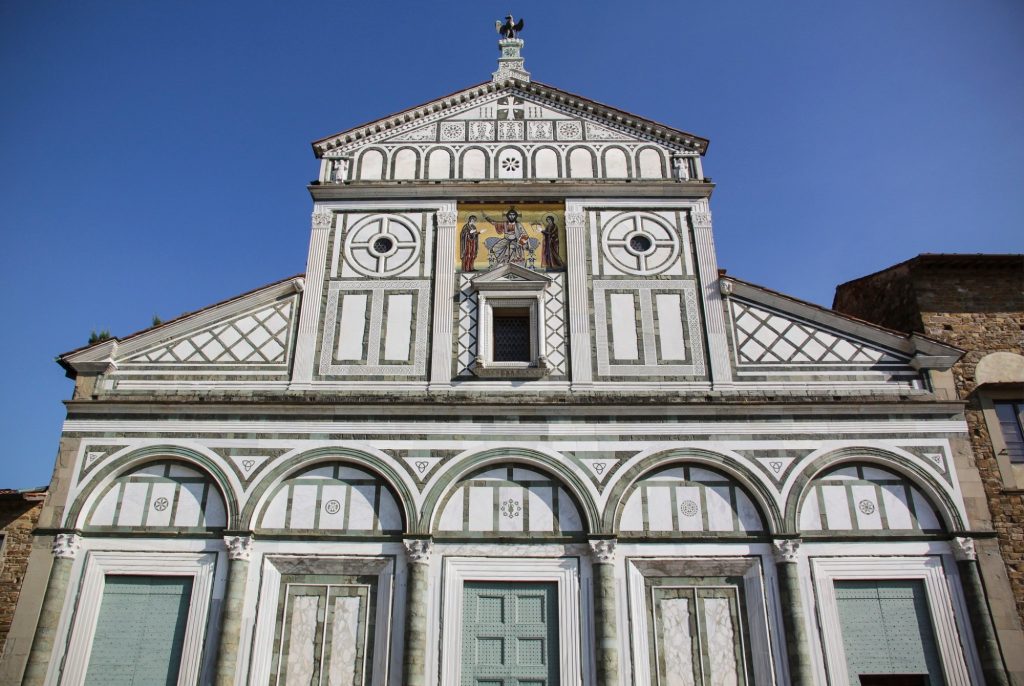
Further up the same hill, the Basilica di San Miniato al Monte, a Romanesque church begun in 1018, has a remarkable striped green-and-white marble facade and one of the most beautiful interiors in Tuscany. It is free to enter and far less visited than any attraction in the city below.
Day Trips from Florence
Florence’s position in the heart of Tuscany makes it one of the finest bases for day trips in Italy.
- Siena (about 1.5 hours by bus or on a guided tour) is the most complete medieval city in Tuscany, with the extraordinary Piazza del Campo (the shell-shaped main square and home of the annual Palio horse race), the striped Gothic Duomo, and a hill town atmosphere that feels entirely different from Florence despite its proximity.
- San Gimignano (about 1.5 to 2 hours by bus with a change or on a tour) is the medieval town of 14 surviving towers visible from miles across the Tuscan landscape, with excellent white wine (Vernaccia di San Gimignano) and a UNESCO-listed historic centre.
- Pisa (about 1 hour by direct train from Santa Maria Novella) has the Piazza dei Miracoli with the Leaning Tower, the Cathedral, and the Baptistery in one of the most unexpectedly beautiful monumental ensembles in Italy, despite the crowds.
- Chianti wine country between Florence and Siena is accessible by car or on a guided tour, with vineyard estates producing some of the finest Sangiovese-based wines in the world. The drive south on the Via Chiantigiana (SS222) through cypress-lined roads, olive groves, and hilltop villages is one of the most beautiful road journeys in Italy.
- Cinque Terre (about 2.5 to 3 hours by train from Santa Maria Novella to La Spezia, then the Cinque Terre regional train) is a full day from Florence but one of the most spectacular coastal landscapes in the Mediterranean.
Food in Florence
Florence’s food identity is Tuscan to its core and unapologetic about it. The cuisine is built on simple, exceptional ingredients like Chianina beef, Tuscany olive oil, wild boar, pecorino, bread without salt (a deliberately unsalted Tuscan tradition that surprises first-time visitors), and the Sangiovese grapes of Chianti.
Bistecca alla Fiorentina is the defining Florentine dish. It is a thick-cut bone-in T-bone or porterhouse from Chianina cattle, grilled over charcoal at very high heat, served rare (al sangue) and never anything else, with no sauce and no garnish. It is sold by weight and shared between two to four people. The version at the best Florentine restaurants is one of the finest beef experiences available anywhere.
Lampredotto is the street food that most visitors overlook, and many locals consider essential. It uses the fourth stomach of the cow, slow-boiled in vegetable broth, sliced, and served in a crusty roll with salsa verde and a hot chilli sauce at the market stands and trippaio carts around the city. The Nerbone stand inside the Mercato Centrale has been serving it since 1872.
Ribollita is the quintessential Florentine peasant soup made with a twice-cooked bread and vegetable soup with Tuscan black kale (cavolo nero), cannellini beans, and stale bread, ladled into bowls and finished with a pour of olive oil. It is one of the most fortifying and economical dishes in Italy, available at any serious trattoria.
Schiacciata is the Florentine flatbread, olive oil-rich and dimpled, available plain or topped at bakeries throughout the city from early morning. The seasonal version with grapes (schiacciata con l’uva) appears in autumn when the wine harvest brings the new-season grapes in.
Chianti Classico is the wine, and it is excellent. The Sangiovese grape grown in the hills between Florence and Siena produces a wine of tannin, cherry fruit, and the particular earthy quality of the Tuscan hills that pairs with everything on the Florentine menu. Order the house red in any neighbourhood trattoria, and it will almost certainly be a Chianti.
When to Visit Florence
Spring (March to May) is the best time. You’ll get temperatures from 12 to 22°C, the wisteria on the Oltrarno walls, the azaleas in the garden of the Villa della Petraia, and the full cultural programme running without the peak summer crowds. March is good for fewer visitors, while April and May are the finest weather months. Avoid Easter week itself, when visitor numbers spike significantly.
Autumn (September to November) is the second-best window. The summer crowds thin from mid-September, temperatures drop to a comfortable 15 to 22°C, the Chianti harvest fills the countryside south of the city with the smell of fermenting must, and October light on the terracotta rooftops is extraordinary. The food season is at its richest, with truffle season beginning in October.
Summer (June to August) is very hot (32 to 38°C), extremely crowded at the major attractions, and the most expensive accommodation period. The Uffizi and the Accademia are at their busiest. Early morning visits to major sites before 9 am are the most effective strategy if visiting in summer.
Winter (December to February) is the quietest and coldest season, with temperatures from 2 to 10°C. The Christmas decorations around the city and the winter food menu (ribollita, bistecca, white truffle dishes) make December particularly atmospheric. January and February have the shortest queues at every major attraction and the lowest hotel rates of the year.
Practical Tips Before You Go
- Book the Uffizi, the Accademia, and the Duomo dome climb well in advance. The Uffizi and Accademia pre-booked tickets through Thrillark ensure priority entry without the risk of sold-out slots. The Brunelleschi dome climb sells out months ahead during peak season.
- The historic centre is a ZTL restricted traffic zone. Do not drive into it under any circumstances. The automatic cameras issue fines by post that arrive months later. Park outside the ZTL or use the train and public transport.
- Dress for churches. Shoulders and knees must be covered in all churches and religious sites. The Duomo has strict enforcement and will refuse entry to visitors who do not comply.
- Eat away from the main tourist streets. The streets immediately around the Duomo and Piazza della Signoria have tourist-facing restaurants that charge significantly more for food that is significantly less good. Walk 5 to 10 minutes in any direction to find neighbourhood trattorias with better food and honest prices.
- The Oltrarno is where the locals are. Cross the Ponte Vecchio and walk into Oltrarno for the best cafes, the most characterful bars, the market stalls, and the restaurants that Florentines actually choose.
- Book popular restaurants as far in advance as possible. The most celebrated trattorias (Il Latini, Vini e Vecchi Sapori, Trattoria Sostanza) require reservations made weeks or months ahead. The restaurant culture in Florence rewards planning.
- The Piazzale Michelangelo at sunrise is completely empty and extraordinary. At sunset it is packed. Both are worth doing. The sunrise visit requires nothing but an early alarm.
Florence is the city that proves beauty can be a civic project. What the Medici and the merchant families and the guilds and the artists and the architects of the 14th to 16th centuries built here was not accidental. It was the most concentrated, most intentional act of cultural production in Western history, and the result is a city where turning a corner still produces wonder after 700 years of visitors having turned the same corner. It deserves your patience, your comfortable shoes, and your full three days.
Head to Thrillark to book your Uffizi Gallery tickets, Accademia priority entrance, Boboli Gardens access, and your Tuscany and Cinque Terre day tours, and give the Cradle of the Renaissance the visit it has earned.
Frequently Asked Questions About Florence
Do you need a visa to visit Florence?
EU and Schengen citizens need no visa. Citizens of the US, UK, Canada, Australia, and most Western countries can visit without a visa for up to 90 days in any 180-day Schengen period. Indian nationals require a Schengen visa from the Italian Embassy. ETIAS, the EU’s pre-travel authorization for visa-exempt non-EU nationals, is being progressively rolled out. Make sure to check travel.ec.europa.eu before booking.
What is the most important thing to book in advance in Florence?
The Uffizi Gallery and the Accademia Gallery (for Michelangelo’s David) both require advance booking during peak season; same-day tickets are unreliable. The Brunelleschi dome climb requires a reserved time slot that sells out months ahead from April to October. The Thrillark priority entrance tickets for both the Uffizi and the Accademia are the most practical advance booking solution.
What is Brunelleschi’s Dome, and how do you visit it?
Filippo Brunelleschi’s dome on the Cathedral of Santa Maria del Fiore is the defining achievement of Renaissance architecture: a double-shell dome spanning 44.9 metres, built between 1420 and 1436 without the use of centering (the wooden framework that traditionally supported a dome under construction). The 463-step climb to the lantern at the top passes through the space between the two shells, past Vasari’s Last Judgment frescoes, and gives panoramic views over Florence and Tuscany. A reserved time slot through the Brunelleschi Pass (available from the Opera del Duomo website) is required; book months in advance for peak dates.
What is the difference between the Uffizi and the Accademia?
The Uffizi Gallery is the primary art museum of Florence, housing the most important collection of Italian Renaissance painting in the world: Botticelli, Leonardo, Michelangelo, Raphael, Titian, and Caravaggio across 45 rooms. The Galleria dell’Accademia is primarily visited for Michelangelo’s David and the Prisoners series; it also has a collection of Florentine Renaissance painting but is smaller in scope. Both require advance booking; both have Thrillark priority entrance tickets available.
What is the Tuscany Tour from Florence, and what does it cover?
The Tuscany Tour from Florence covers four of the most significant Tuscan destinations in a single guided day: the Leaning Tower of Pisa on the Piazza dei Miracoli, the wine country of the Chianti region, the UNESCO-listed medieval tower town of San Gimignano, and the extraordinary Piazza del Campo and Cathedral of Siena. The tour handles all transport and provides expert commentary on each location. It is the most efficient way to experience the breadth of Tuscany from a Florence base in a single day.
What is Cinque Terre, and how far is it from Florence?
The Cinque Terre is a UNESCO World Heritage Site of five coloured fishing villages (Monterosso, Vernazza, Corniglia, Manarola, and Riomaggiore) on the Ligurian coast, connected by hiking trails and a coastal rail line. From Florence by train, the journey takes about 2.5 to 3 hours via La Spezia. The Thrillark guided day tour from Florence covers four of the five villages (Manarola, Riomaggiore, Vernazza, and Monterosso) and handles all transport and logistics for a full day on the coast.
What should you eat in Florence?
The essential dishes are Bistecca alla Fiorentina (the thick-cut Chianina T-bone grilled rare, sold by weight, shared between people), lampredotto (the Florentine street food of slow-boiled cow stomach in a crusty roll, best at the Nerbone stand in the Mercato Centrale), ribollita (twice-cooked bread and vegetable soup with cavolo nero), and schiacciata (the Florentine olive oil flatbread from any bakery). Drink Chianti Classico with everything. Do not eat within sight of the Duomo.
Browse by themes
Top Things to Do in Italy