Milan does not waste your time. It is the most efficient city in Italy, the most international, and the most forward-looking, and it has built this reputation while also containing Leonardo da Vinci’s Last Supper, Italy’s greatest Gothic cathedral, the world’s most famous opera house, and one of Europe’s finest art collections. It manages the contradiction of being both ruthlessly modern and historically extraordinary without appearing to find either particularly difficult.
Italy’s second-largest city is the capital of Lombardy and the engine of the Italian economy. You’ll see the financial centre, the fashion capital, and the design capital simultaneously, which gives it an energy that distinguishes it from every other city in the country.
Rome has the ancient glory. Florence has the Renaissance. Venice has the canals. Milan has the Duomo, the Galleria, La Scala, the Navigli, two of Italy’s most successful football clubs, and the Alps visible on the horizon on a clear day.
Give it three days. Two for the city and one for a lake. You will definitely want to come back.
Milan City Essentials
Entry Requirements for Milan
- EU and Schengen Area citizens can travel to Italy without any visa requirements.
- Citizens of the US, UK, Canada, Australia, and most Western countries can visit without a visa for up to 90 days in any 180-day Schengen period.
- Indian nationals require a Schengen visa from the Italian Embassy before departure.
- The EU’s ETIAS pre-travel authorization for visa-exempt non-EU nationals is being progressively rolled out. Make sure to check travel.ec.europa.eu before booking.
Getting There and Getting Around
Milan Malpensa Airport (MXP) is the main international gateway, 49 km northwest of the city. The Malpensa Express train connects the airport to Milano Centrale station in approximately 52 minutes, running every 30 minutes. Linate Airport (LIN) is the closest at 7 km east, connected by Metro Line 4 to central Milan in about 30 minutes. Bergamo Orio al Serio (BGY), used by many budget carriers, is connected to central Milan by bus shuttle in about 60 minutes.
Getting around the city:
Milan has one of the better urban transport networks in Italy, with four Metro lines, an extensive tram network (some of the original orange trams still run), and a bus system covering the outer areas.
- Metro: Five lines cover the city (M1 red, M2 green, M3 yellow, M4 blue, M5 purple/Lilla). The M5 purple line runs from Bignami in the north directly to San Siro Stadio, making it the most useful line for stadium visitors. Single tickets cover 90 minutes of travel. Day and multi-day passes are available.
- Tram: Milan’s historic trams are both practical and enjoyable, covering routes the Metro does not reach and giving ground-level views of the city’s architecture.
- Milan Pass: The city pass covering unlimited use of all ATM public transport (Metro, tram, bus) for 24, 48, or 72 hours alongside skip-the-line access or discounts at the Duomo, Sforza Castle, Pinacoteca di Brera, and other major attractions. It is available through Thrillark and worth buying for any visitor covering multiple paid attractions across several days.
- Walking: The historic centre between the Duomo, the Galleria, La Scala, and the Brera neighbourhood is compact and best explored on foot.

The Duomo and Piazza del Duomo
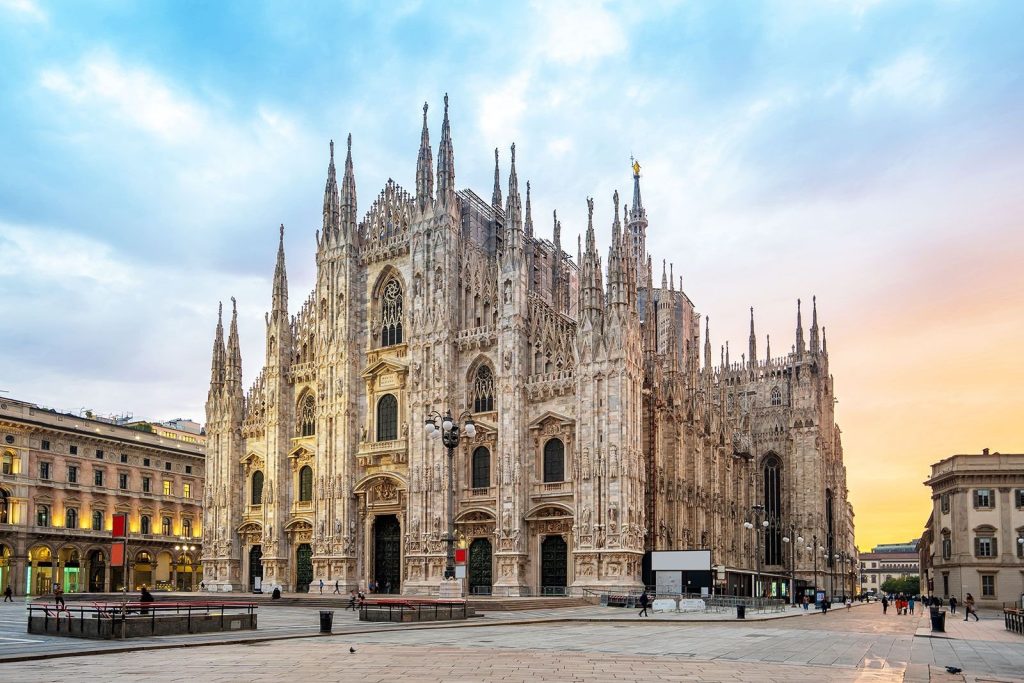
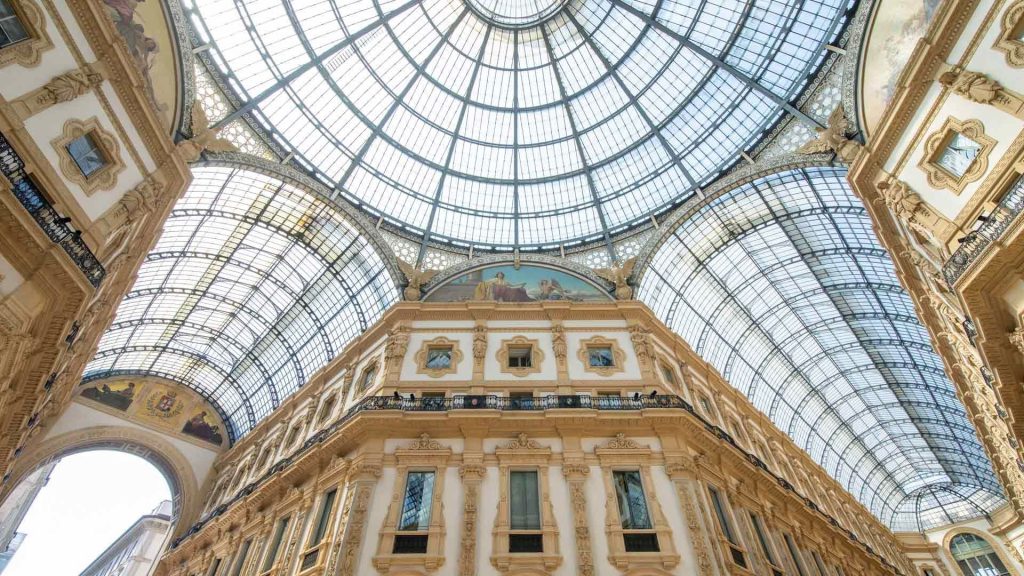
Every journey through Milan begins at the Duomo, and it earns the central position it holds in the city’s identity.
The Milan Cathedral (Duomo di Milano) is the largest Gothic cathedral in Italy and the third-largest church in the world by interior volume, begun in 1386 under Gian Galeazzo Visconti and not formally completed until 1965, a construction project spanning nearly six centuries.
The facade is clad in white Candoglia marble and bristles with 3,400 statues, 135 gargoyles, and 700 figures across its exterior surfaces. The gilded statue of the Madonnina on the highest spire at 108 metres has been the symbol of the city since 1774.
Inside, the cathedral covers 11,700 square metres of floor space, supported by 52 columns, each 24 metres tall, that line the nave in a procession of extraordinary scale. The 16th-century stained glass windows are the oldest and largest in the world by some measures.
The rooftop terraces are the finest viewpoint in Milan, with a forest of Gothic spires with the Alps visible on the horizon on clear days and the city spreading below in every direction. Accessible by stairs or lift, the terraces are the most memorable single experience the Duomo offers and are not to be skipped.
The Milan Cathedral and Museum ticket covers entry to the cathedral, the museum, the archaeological area (the remains of the Battistero di San Giovanni alle Fonti beneath the piazza), and the rooftop terraces in a single combined booking. Make sure to book in advance to avoid queuing at the ticket counter.
Stepping back from the cathedral, the Galleria Vittorio Emanuele II fills the north side of the piazza. It is a 19th-century iron-and-glass shopping arcade with a 47-metre central dome, four floors of boutiques including Prada and Louis Vuitton, and the famous bull mosaic in the central octagon on which Milanese tradition dictates you spin on your heel for luck. The Galleria connects the Duomo to La Scala and is one of the most beautiful covered commercial spaces in the world.

La Scala and the Opera
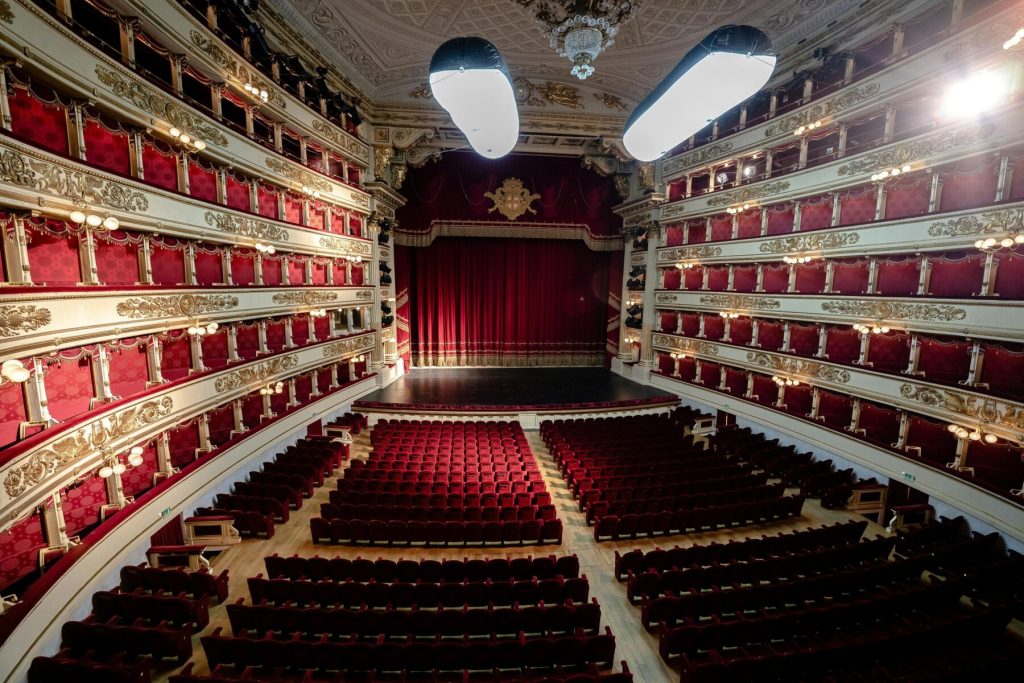
From the Galleria, the passage north opens directly onto Piazza della Scala and the neoclassical facade of the most famous opera house in the world.
Teatro alla Scala was built in 1776 to 1778 on the site of the demolished church of Santa Maria alla Scala, opened on 3 August 1778 with Antonio Salieri’s Europa riconosciuta, and has been the stage for premieres by Verdi, Puccini, Rossini, and Bellini that defined Italian opera in its golden age.
Verdi’s Otello and Falstaff had their world premieres here. The theatre was rebuilt after Allied bombing in 1943 and reopened in 1946 with a concert conducted by Arturo Toscanini.
The La Scala Theatre Ticket gives you access to the theatre’s museum, which traces the history of opera and La Scala through instruments, costumes, portraits, and memorabilia, and gives views into the auditorium itself (subject to rehearsal schedules). Attending a performance is the ultimate experience.
The museum visit is the next best thing for visitors whose dates do not align with the program.

The Last Supper
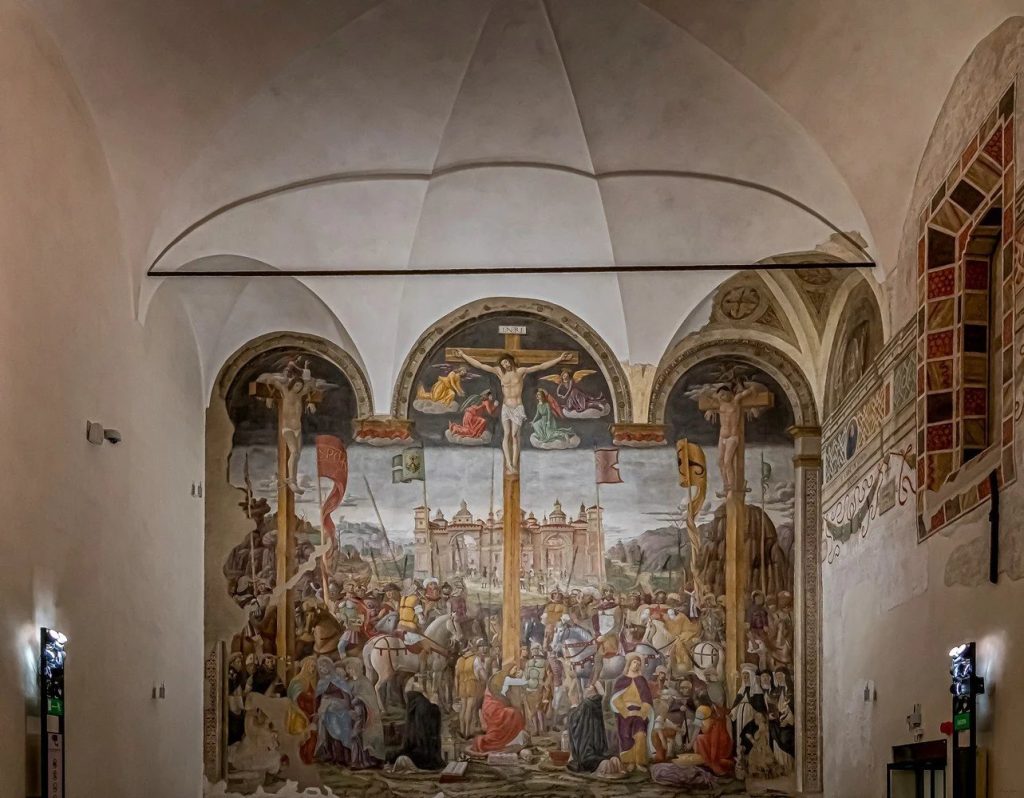
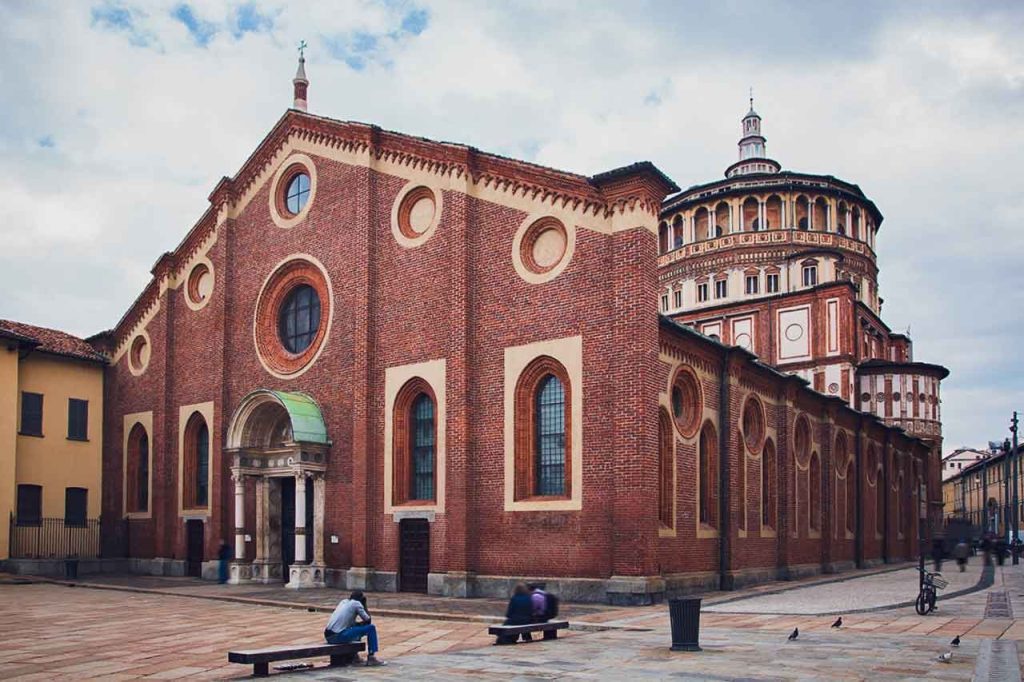
From La Scala, a short Metro ride or 20-minute walk west brings you to the most important painting in Milan and one of the most significant works of art in human history.
Leonardo da Vinci’s Last Supper (Il Cenacolo Vinciano) is painted on the wall of the refectory of the Convent of Santa Maria delle Grazie in the Magenta neighbourhood. Leonardo worked on it between 1495 and 1498 using an experimental tempera and oil technique on dry plaster rather than the traditional fresco method, a decision that caused the painting to begin deteriorating almost immediately and has required continuous conservation ever since.
The painting depicts the moment of Christ’s announcement that one of the twelve apostles will betray him, capturing each figure’s individual reaction in a composition of extraordinary psychological complexity. The figures are life-size, and the room’s perspective lines converge at Christ’s right temple, drawing the eye toward the central figure regardless of where in the refectory you stand.
The experience is 15 minutes in a group of 30, in a climate-controlled room, in complete silence, and it is intense in a way that smaller reproductions do not prepare you for.
Book at least two to three months in advance. Entry is strictly timed at 15 minutes per group and sells out weeks or months ahead during peak season. There are no walk-up tickets.
The Convent of Santa Maria delle Grazie is also worth noting as a UNESCO World Heritage Site in its own right.
Sforza Castle and Brera
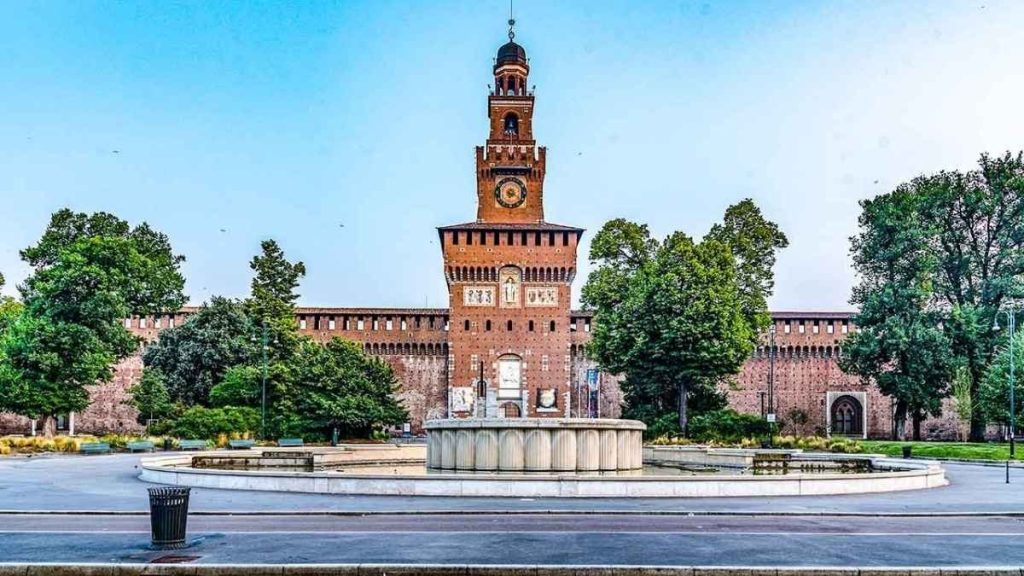
From the Last Supper, heading north brings you to the other great complex of medieval Milan. The Sforza Castle (Castello Sforzesco) was built in the 14th century by the Visconti dynasty as a fortress and expanded by Francesco Sforza into a palace of extraordinary scale in the 15th century.
Leonardo da Vinci worked here as a court engineer and artist for Ludovico Sforza. The castle was used as a military barracks and partially demolished after the French invasion of 1499, and much of what stands today is a 19th-century restoration by Luca Beltrami.
The castle’s museums house Michelangelo’s Pietà Rondanini, his final work left unfinished at his death in 1564, alongside collections of furniture, armour, Egyptian antiquities, and prehistoric art.
The Sforza Castle Ticket with Audio Guide provides access to all the castle museums alongside an audio guide that contextualizes the centuries of history layered into the complex.
Behind the castle, the Parco Sempione is Milan’s central park . You’ll see 47 hectares of English-style gardens that function as the city’s primary outdoor social space. The Arco della Pace at the western edge and the Torre Branca observation tower (available for separate visits) add architectural interest to the park.
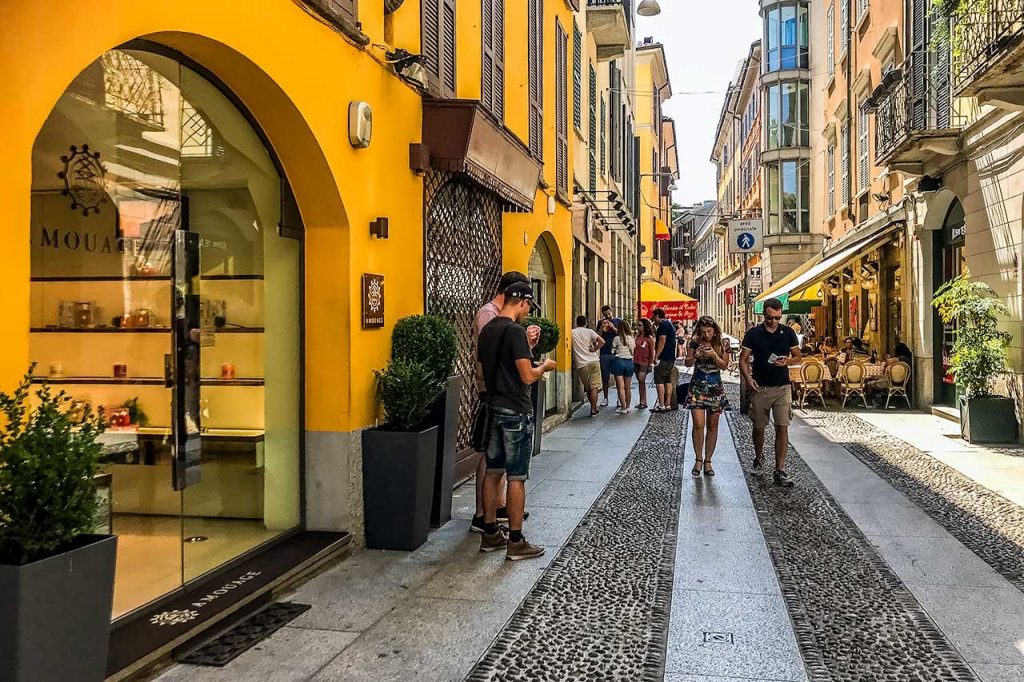
From the castle, walking east brings you into Brera, the most characterful neighbourhood in central Milan with cobbled streets, independent art galleries, antique shops, and the aperitivo culture that makes a Milanese early evening one of the finest social rituals in Italy.
The Pinacoteca di Brera on Via Brera is one of the greatest art galleries in Italy, housing Raphael’s Marriage of the Virgin, Mantegna’s Dead Christ, Caravaggio, Bellini, and Tintoretto in a collection that justifies the neighbourhood’s art reputation.

The Pinacoteca Ambrosiana
From Brera, returning toward the Duomo brings you to the other great art institution of central Milan.
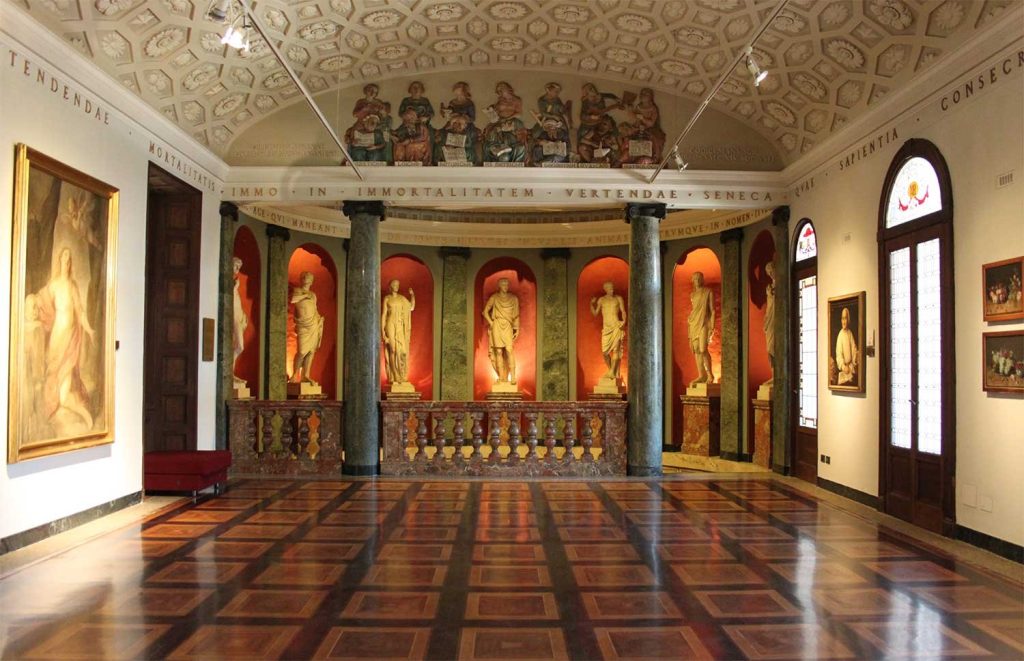
The Pinacoteca Ambrosiana on Piazza Pio XI, founded by Cardinal Federico Borromeo in 1618, is one of the oldest public art galleries in Europe and one of the most undervisited significant collections in Italy.
The holdings include Leonardo da Vinci’s Portrait of a Musician, Raphael’s cartoon for the School of Athens (the full-size preparatory drawing for the Vatican fresco), Caravaggio’s Basket of Fruit (one of the earliest pure still-life paintings in Western art history), and a significant collection of Flemish and Italian works from the 15th to 18th centuries.
The adjacent Biblioteca Ambrosiana holds the largest collection of Leonardo’s drawings and notes in the world, inlcuding the Codex Atlanticus, comprising 1,119 pages of his scientific and artistic manuscripts.

Leonardo3 Museum
Given how deeply Leonardo da Vinci’s presence runs through Milan, from the Last Supper in the Magenta refectory to the drawings in the Ambrosiana to his years at the Sforza court, it makes sense that the city also has a museum dedicated entirely to his inventions.
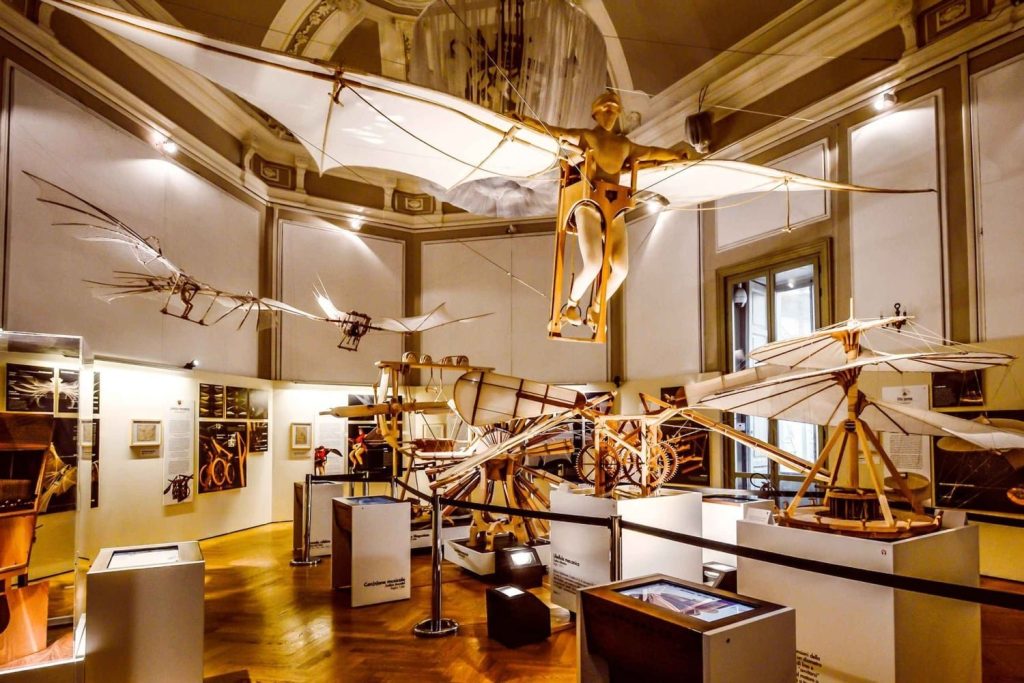
The Leonardo3 Museum in the Galleria Vittorio Emanuele II, directly beneath the iconic glass dome at the heart of the city, covers Leonardo’s scientific and engineering work through more than 200 reconstructed models built from his original sketches.
This includes flying machines, military vehicles, hydraulic systems, musical instruments, and architectural concepts, alongside interactive digital reconstructions of his paintings that reveal the underdrawings and compositional decisions invisible to the naked eye.
Positioned in the Galleria, it is one of the most conveniently located museums in Milan and works well combined with a Duomo visit on the same morning.

The Navigli
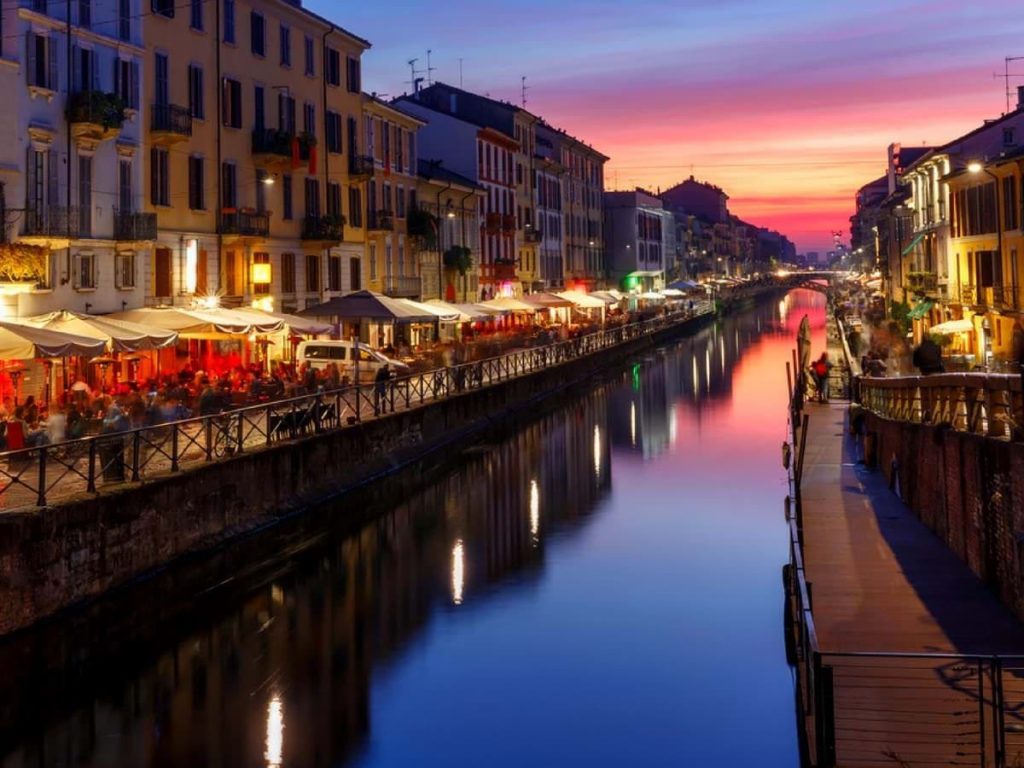
By early evening, the city pulls you south toward the Navigli, and this is the correct direction to go. The Navigli district in the southern part of the city centre is built along the surviving stretches of Milan’s historic canal network: the Naviglio Grande (connecting Milan to the Ticino River and historically the artery along which Candoglia marble was transported to build the Duomo) and the Naviglio Pavese.
The canal banks are lined with restaurants, wine bars, vintage shops, and aperitivo establishments that fill every evening from around 6 pm with locals and visitors in a social scene that is the most authentically Milanese evening activity available.
The aperitivo hour is the ritual that defines Milanese evening culture. During this time you get to enjoy a Campari Spritz or Negroni with a spread of small food (olives, bruschetta, mini sandwiches, risotto bites) that comes with the drink at no extra charge in many traditional bars. It is the most cost-effective and most enjoyable early evening in any Italian city.
San Siro Stadium
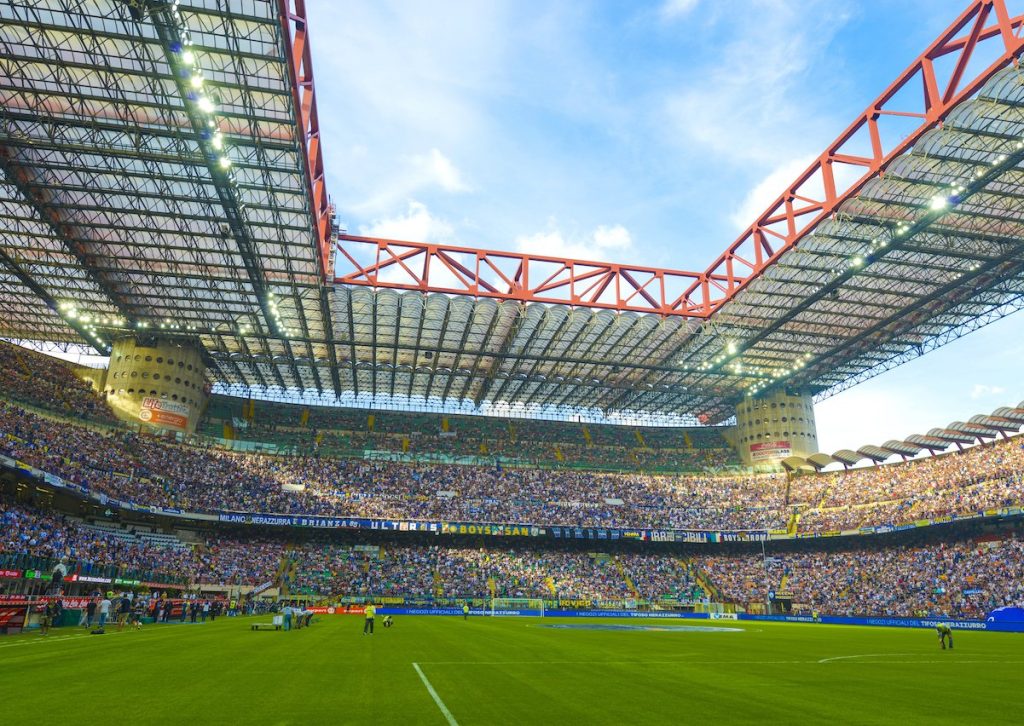
For visitors with any interest in football, one of the great pilgrimages available in Milan is to San Siro (Stadio Giuseppe Meazza). It is the home ground shared by AC Milan and Inter Milan, two of the most successful clubs in European football history.
The stadium holds 75,923 spectators. It was built in 1926 originally for AC Milan. Later, Inter Milan began sharing it as a home ground in 1947.
The San Siro Stadium ticket covers access to the stadium’s museum (covering both clubs’ histories across shared trophies, match memorabilia, kits, and footage), a self-guided tour of the changing rooms, the pitch-side tunnel, and the directors’ box.
On match days, the atmosphere outside the stadium on the tram line from the centre is one of the most vivid experiences available in the city.

Casa Milan Museum
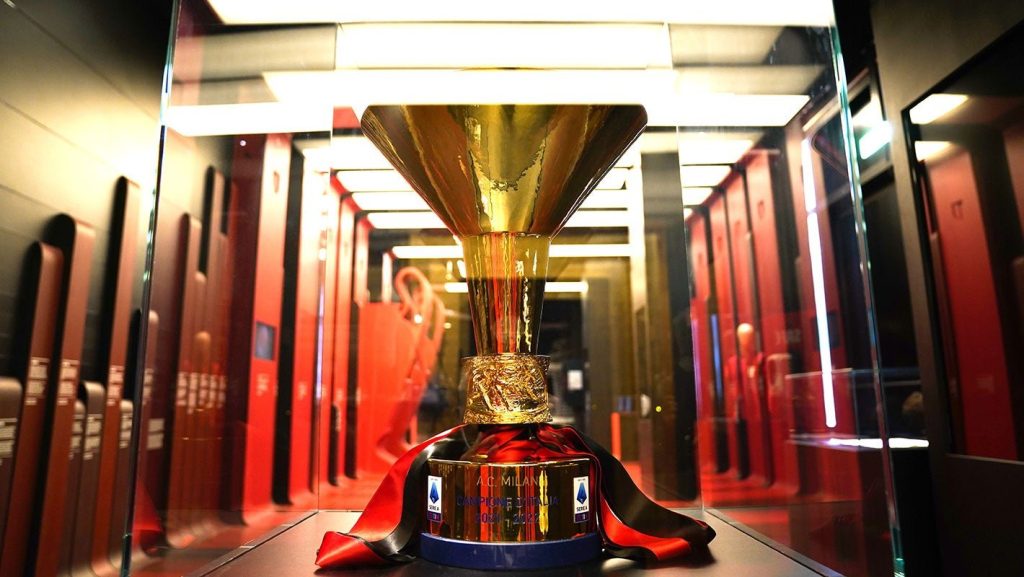
Adjacent to San Siro, the Casa Milan Museum is AC Milan’s dedicated club museum, a four-floor interactive experience covering the club’s 125-year history through trophies, photographs, video presentations, and memorabilia from the players and seasons that made AC Milan one of the most decorated clubs in world football.
Seven European Cup/Champions League titles, nineteen Serie A titles, and the stories of players including Maldini, Van Basten, Gullit, Baresi, Shevchenko, and Kaka are documented in a facility that is both a serious sporting archive and an enjoyable experience for supporters and casual visitors alike.

Other Popular Attractions in Milan
- Villa Panza Collection at Villa Menafoglio Litta Panza in Varese, about 50 km northwest of Milan, is one of the finest collections of American post-war and contemporary art in Europe, housed in an 18th-century villa surrounded by a park. The collection covers Dan Flavin’s fluorescent light installations in purpose-built rooms, alongside works by James Turrell, Robert Irwin, and other significant post-war figures, in a setting of extraordinary contrast between the formal villa architecture and the minimalist art within. It is accessible by train from Milano Porta Garibaldi to Varese, then local transport.
- Leolandia Ticket covers the most family-oriented theme park in the Milan region, located in Capriate San Gervasio, about 30 km northeast of the city (approximately 40 minutes by car). Designed specifically for children aged 2 to 12, Leolandia combines gentle rides, children’s show characters, a water park area in summer, and seasonal events in a well-organized setting. It is a full family day out from Milan without the travel time of the larger parks further afield.
- Acquatica Park Ticket covers the largest water park in Milan, located in the western city in the San Siro area, with wave pools, water slides, a lazy river, and a dedicated children’s splash zone. Open from late May through September, it is the most accessible water park in central Milan and requires no lengthy transfer from the city centre.


Food in Milan
Milan is more food-serious than its reputation as a fashion city sometimes suggests, and the culinary identity here is distinctly northern Italian, built on butter rather than olive oil, risotto rather than pasta, and a tradition of slow-cooked meats that reflects both the region’s agriculture and its climate.
Risotto alla Milanese is the city’s signature dish, a saffron-infused risotto of extraordinary golden colour cooked slowly with beef stock and finished with Parmesan and butter in a technique that requires continuous attention for 18 to 20 minutes. It is traditionally served alongside Osso Buco alla Milanese, the braised veal shank with gremolata, and together they represent the most Milanese meal available in the city.
Cotoletta alla Milanese is the Milanese breaded veal cutlet, bone-in, thin, fried in butter, and served without sauce or garnish in a format that predates the Wiener Schnitzel and remains a point of civic pride. The debate about which restaurant serves the definitive version is a perennial Milan conversation.
Panettone is the other Milanese contribution to global food culture, the tall, domed, sweet bread enriched with eggs, butter, dried fruit, and orange peel that is the traditional Christmas bread of Lombardy and now eaten globally. The original is made by specific Milan bakeries using a natural yeast starter cultivated across generations.
Aperitivo culture is the evening ritual that defines Milanese social life, a drink paired with a spread of small food including olives, bruschetta, mini sandwiches, and risotto bites that comes at no extra charge in many traditional bars. It is the most cost-effective and most enjoyable early evening in any Italian city and the only way to eat between 6 pm and 8 pm in Milan without feeling like you are doing something wrong.
Breakfast in Milan means a cornetto and a caffè standing at the bar of a neighbourhood café, typically near the office rather than near the tourist sites, at a price that makes the equivalent transaction in any tourist-facing establishment feel slightly insulting.
Day Trips from Milan
Milan’s position in the Po Valley with the Alps to the north and the Apennines to the south makes it one of the best bases for day trips in Italy.
- Lake Como (approximately 1 hour by train from Milano Centrale to Varenna or Como) is the most spectacular of the northern lakes. It is a Y-shaped alpine lake surrounded by mountains, with the villages of Varenna, Bellagio, Menaggio, and Tremezzo accessible by ferry across the water. The Villa del Balbianello near Lenno is the most beautiful lakeshore villa in Italy and appeared in Casino Royale and Star Wars: Attack of the Clones.
- Lake Maggiore (about 1 hour by train from Milano Centrale to Stresa) has the Borromean Islands in the middle of the lake. There are three private islands owned by the Borromeo family since the 12th century, of which Isola Bella (with its 17th-century baroque palace and terraced gardens) and Isola dei Pescatori (an active fishing village) are the most visited.
- Lake Garda (approximately 1.5 hours by train and bus to Desenzano or Sirmione) is the largest lake in Italy, with the medieval castle of Sirmione on its southern shore and Gardaland theme park accessible from the eastern shore.
- Bergamo (40 minutes by train or 1 hour by bus from Orio al Serio Airport) is the most underrated city near Milan. It is a lower modern town and an upper medieval city (Città Alta) enclosed within Venetian walls, with a Romanesque baptistery, the Carrara Academy art gallery, and views over the Po Valley that most Milan visitors completely miss.
When to Visit Milan
Milan rewards visitors differently depending on the season, and the timing matters more here than in most Italian cities because the cultural and fashion calendar shapes the city’s energy so directly.
Spring (April to June) is the best window, with mild temperatures from 15 to 24°C, the city in full cultural season, and the fashion and design calendar at its most active. April and May are excellent months individually.
The Salone del Mobile (Milan Furniture Fair), held annually in April, the world’s largest design fair, and transforms the city for an entire week. Book your accommodation months ahead if your visit overlaps with it.
Autumn (September to November) is the second-best window. The summer heat dissipates, the cultural season resumes after August, and September Fashion Week and the reopening of the La Scala season frame the months that follow.
October in particular has the best combination of comfortable weather, thin crowds, and a city fully engaged with its own life again.
Summer (June to August) is hot, reaching 28 to 34°C, and partially deserted by Milanese residents who leave for the lakes and the coast in August. Many local restaurants and shops close for two to four weeks during this period. The heat and the quieter city make it less rewarding than spring or autumn, though hotel prices drop and the major attractions are fully operational.
Winter (December to February) is cold (2 to 8°C) and can be foggy, but December has a particular atmosphere that makes it worth considering. The Christmas decorations along Corso Vittorio Emanuele II, the fashion window displays in the Quadrilatero della Moda, and the La Scala season opening on 7 December, the feast of Sant’Ambrogio and the most significant date in the Milanese calendar, combine into something that feels genuinely local rather than tourist-facing.
Practical Tips Before You Go
- Book the Last Supper as far in advance as possible. Two to three months ahead is the standard recommendation during peak season. It sells out completely, and walk-up tickets do not exist under any circumstances.
- Download the ATM Milan app before arriving. It covers real-time route planning across all five Metro lines, trams, and buses, and the M5 purple line connects directly to San Siro from the city centre.
- Dress for churches. Shoulders and knees must be covered to enter the Duomo and any other church in Milan. A light scarf or shirt carried in your bag handles every situation without needing to buy one at the entrance.
- The Quadrilatero della Moda is worth an afternoon even if you have no intention of buying anything. The fashion district bounded by Via Montenapoleone, Via della Spiga, Via Manzoni, and Corso Venezia has window displays that are genuinely extraordinary.
- Aperitivo hour runs from around 6pm to 8pm. Milanese bars serve drinks with a spread of small food included in the price, making it the cheapest and most enjoyable way to eat in the early evening and the most local thing you can do in the city.
- Sunday morning is the best time to walk the Duomo piazza and the Galleria without crowds. By 11 am both are significantly busier.
- Card payment is widely accepted throughout the city, but having EUR 30 to 50 in small bills covers neighbourhood cafes, market stalls, and smaller local restaurants that prefer cash.
- The Salone del Mobile in April doubles hotel prices across the entire city. If design is not the reason you are visiting, avoid this week. If it is, book accommodation at least six months ahead.
Milan is the city that proves Italy can contain multitudes: the most forward-looking metropolis in the country and the keeper of some of its oldest and most significant art.
The Last Supper is here. So is the Duomo. So is La Scala. So are two of the most successful football clubs in the world and a canal district that fills with people every evening in the kind of spontaneous, generous social ritual that makes you understand why people fall in love with Italian cities.
Head to Thrillark to book your Milan Cathedral tickets, Sforza Castle, La Scala Theatre visit, Pinacoteca Ambrosiana, San Siro Stadium tour, and the Milan Pass that covers everything in between.
Frequently Asked Questions About Milan
Do you need a visa to visit Milan?
EU and Schengen citizens need no visa. Citizens of the US, UK, Canada, Australia, and most Western countries can visit without a visa for up to 90 days in any 180-day Schengen period. Indian nationals require a Schengen visa from the Italian Embassy. ETIAS, the EU’s pre-travel authorization for visa-exempt non-EU nationals, is being rolled out. Check travel.ec.europa.eu before booking.
How do you get from Malpensa Airport to central Milan?
The Malpensa Express train is the fastest and most comfortable option, reaching Milano Centrale in approximately 52 minutes with trains running every 30 minutes. Taxis from Malpensa to the city centre take 45 to 75 minutes depending on traffic. The bus is a cheaper alternative but significantly slower. From Linate (LIN), Metro Line 4 connects directly to central Milan in about 30 minutes.
How far in advance do you need to book the Last Supper?
Two to three months is the standard recommendation during peak season (April to October); during popular periods it can sell out even further ahead. The booking system opens 90 days in advance. There are no walk-up tickets under any circumstances. If you cannot get a booking through official channels, tour operators sometimes hold slots that are otherwise sold out.
What is the Milan Pass, and is it worth buying?
The Milan Pass covers unlimited ATM public transport (Metro, tram, bus) for 24, 48, or 72 hours and provides access to or discounts at major attractions, including the Duomo, Sforza Castle, and Pinacoteca di Brera. For visitors making multiple journeys per day and visiting two or more paid attractions, the pass consistently saves money compared to individual ticket purchases. Available through Thrillark.
What is Leolandia, and how far is it from Milan?
Leolandia is a family-oriented theme park designed for children aged 2 to 12, located in Capriate San Gervasio, approximately 30 km northeast of Milan (about 40 minutes by car). It combines gentle rides, children’s character shows, a summer water park area, and seasonal events. It is the most accessible family theme park from Milan for a day trip without a lengthy transfer.
What are the best day trips from Milan?
Lake Como (1 hour by train) is the most spectacular, with its alpine setting and ferry-connected villages. Lake Maggiore (1 hour, to Stresa) has the Borromean Islands and the baroque palace of Isola Bella. Bergamo (40 minutes by train) is the most underrated nearby city, with a medieval upper town enclosed within Venetian walls. Lake Garda (1.5 hours) is the largest of the lakes and most accessible for families visiting Gardaland.
What is the Salone del Mobile, and should you plan your visit around it?
The Salone del Mobile is the world’s largest furniture and design fair, held annually in April at the Fiera Milano exhibition centre. During Salone week the entire city participates in the Fuorisalone (unofficial design events throughout the city’s neighbourhoods), hotel prices double or triple, and the city has an extraordinary creative energy that is unlike any other week of the year. Worth visiting if design is your primary interest; worth avoiding if crowds and prices concern you more.
Browse by themes
Top Things to Do in Italy