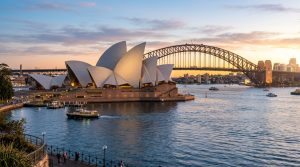
Sydney’s most iconic building isn’t just a pretty postcard; it’s a living, breathing world of art, drama, history, and harbour views that will genuinely blow your mind. Whether you’re a first-timer wide-eyed at the sails or a return visitor finally booking that backstage tour, this guide has everything you need to experience the Sydney Opera House like a pro. We’re talking history, architecture, performances, practical tips, tickets, and all the insider stuff nobody else tells you. So buckle up. Why the Sydney Opera House Should Be at the Top of Your List Let’s get one thing straight: the Sydney Opera House is not just a building you photograph from a ferry and tick off your list. It’s a UNESCO World Heritage Site, one of the busiest performing arts centres on the planet, and the architectural equivalent of a mic drop. Sitting on Bennelong Point on the edge of Sydney Harbour in New South Wales, it draws over 10 million visitors a year, and every single one of them has a moment where they stop, look up, and think, “Okay, wow!” The Opera House is situated on land that the Gadigal people of the Eora Nation have known as Tubowgule for thousands of years. That deep cultural significance doesn’t disappear behind the tourist brochures. It’s woven into the very identity of the place, including the nightly First Nations light projection on the sails called Badu Gili. This isn’t just a venue; it’s a meeting point of ancient stories and cutting-edge art. With over 2,000 performances staged every year, from world-class opera and ballet to comedy, film, talks, and experimental theatre, the Opera House never really sleeps. It hosts resident companies including Opera Australia, the Sydney Symphony Orchestra, the Australian Ballet, and the Sydney Theatre Company. You could visit ten times and have an entirely different experience each time. Which, honestly, is a very good excuse. Don’t come here just to stand outside and Instagram the tiles. Come in to hear the stories, feel the scale of the Concert Hall, and understand why this building changed architecture forever. The rest of this guide will show you exactly how to do that. The History of the Sydney Opera House: Controversy, Drama, and a Danish Architect Before those famous sails rose above the harbour, Bennelong Point was home to Fort Macquarie, a colonial-era fortification built between 1817 and 1821, later demolished in 1901. In its place came a rather unglamorous tram depot, which operated from 1902 until 1958, when someone had the vision to ask, “What if we built something extraordinary here instead?” That someone was NSW Premier Joseph Cahill, who pushed for an international design competition in 1956. Two hundred and thirty-three entries arrived from 32 countries. The winning design? A radical, almost unbuildable concept by a relatively unknown Danish architect named Jørn Utzon. Here’s where it gets spicy. Utzon’s sketches were reportedly pulled from the rejected pile by legendary architect Eero Saarinen, who saw something nobody else did in those sweeping shell forms. The project began in 1959, but construction was nothing short of a saga. The costs ballooned from an estimated AU$7 million to a final AU$102 million, and the engineering challenges were so complex that new mathematical methods had to be invented just to make the roof work. The solution? Each shell is actually a segment of the same sphere. It is a geometric trick that allowed the pre-cast concrete sections to be mass-produced. Then came the political drama. A new Liberal government in 1965 transferred project control away from Utzon, effectively stripping him of authority over payments and decisions. By 1966, he resigned and left Australia, never to return and never to see his completed masterpiece in person. The interior was finished by architect Peter Hall, a point of ongoing debate among purists who argue the acoustic compromises made during this phase are still felt in the concert hall today. On 20 October 1973, Queen Elizabeth II officially opened the Sydney Opera House to a fireworks-lit harbour and a world that had been watching for 14 years. In 2004, a small act of reconciliation happened: the Utzon Room, the only interior space Jørn Utzon personally designed, was completed following a renewed collaboration with the architect before his death in 2008. In 2007, the building received UNESCO World Heritage status, one of the very few structures ever inscribed within living memory. The NSW State Archives hold the original competition drawings, construction records, and even the minutes from the Opera House Committee. If you’re a history nerd, it’s all there. The Architecture and Tours of the Sydney Opera House: What’s Inside and How to See It Most buildings make sense the moment you look at them. The Sydney Opera House does the opposite. The more you learn about how it was built, the more impossible it seems. Those iconic roof shells are covered with 1,056,000 self-cleaning ceramic chevron tiles manufactured in Sweden, creating that distinctive shimmer that shifts with the Sydney light all day long. The podium base is clad in pink granite from Tarana, New South Wales, and every curved shell segment was derived from the same sphere using a pioneering “pinwheel” geometry system, allowing 2,194 pre-cast concrete sections to be assembled on-site like a giant jigsaw puzzle. No building before it had ever been constructed this way, and the engineering is every bit as jaw-dropping as the view from the harbour. Inside, the Opera House holds six major performance venues. The Concert Hall seats 2,679 people and houses the world’s largest mechanical tracker-action organ with 10,244 pipes. The Joan Sutherland Theatre is where Opera Australia and The Australian Ballet perform, while the Drama Theatre, Playhouse, Studio, and the small but stunning Utzon Room complete the lineup. Every angle of this building reveals something new, which was entirely intentional. The best way to experience all of this is on a tour. The Official 1-Hour Guided Walking Tour runs daily in English, French, German, Spanish, Japanese, Korean, and Mandarin. It