
Australian National Maritime Museum: Complete Visitor Guide (2026)
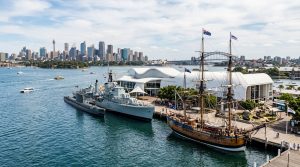
Sydney has a way of anchoring its best experiences to the water, and nowhere is that more true than at the Australian National Maritime Museum. Sitting right on the edge of Darling Harbour, this is one of those rare attractions that rewards you differently depending on whether you’re eight years old or eighty, and one that most visitors, even longtime Sydney locals, admit they’ve been underestimating. It’s often overlooked, but it absolutely shouldn’t be. Rain or shine, it’s well worth your time. This guide covers everything you need before you visit – what’s inside, how to book, where to find it, and how to make the most of a full day on the waterfront. What Is the Australian National Maritime Museum? The Australian National Maritime Museum is a federally operated maritime institution in Darling Harbour, Sydney. It opened in 1991 and has grown into one of the most distinctive cultural attractions in the country – not because of what’s on its walls, but because of what’s moored at its docks. The museum’s collection spans 160,000 items, from an impressive fleet of historic vessels to galleries filled with fascinating artifacts, exhibitions, and interactive displays that bring to life stories of exploration, immigration, naval service, and Indigenous maritime culture. What genuinely sets it apart from every other museum in Sydney is the outdoor fleet. The museum has one of the largest and most diverse in-water fleets in the world, including the Cold War submarine HMAS Onslow, naval destroyer HMAS Vampire, and a stunning replica of Captain Cook’s tall ship HMB Endeavour. These aren’t display pieces behind glass. They’re vessels you can board, explore, and descend into, guided by volunteers whose knowledge of maritime history is matched only by their enthusiasm for sharing it. Set along the waterfront at 2 Murray Street, the museum combines indoor galleries with a fleet of historic ships and a submarine that visitors can board, covering exploration, trade, migration, defense, and leisure, offering a comprehensive look at how the ocean has shaped Australia’s past and present. What’s Inside: Galleries, Vessels & Exhibitions The Australian National Maritime Museum operates across two distinct experiences: the permanent indoor galleries, which are free to enter, and the outdoor fleet and special exhibitions, which require a paid ticket. The permanent galleries cover the full breadth of Australia’s relationship with the sea. They explore maritime deep-time history and the connections between Indigenous Australians and the sea, maritime defense history, immigration by sea, and ocean science, with interactive displays and multimedia installations throughout. At the center of the Indigenous maritime gallery is a video art installation by the Mulka Project that anchors the exhibition’s themes with genuine cultural weight. The Navy Gallery is one of the most significant spaces in the building. In 2026, the Royal Australian Navy marks its 125th anniversary, and the museum has installed a major new commemorative exhibition, the Navy 125 Exhibition, which opened on 28 February 2026 as the most advanced and comprehensive naval display in the museum’s history. Action Stations is an immersive cinematic experience that shows the inner workings of the Royal Australian Navy like never before, exploring the danger and drama of military life at sea. Visiting this pavilion before heading out to the docks is the single best thing you can do to contextualise the vessels. The stories it tells make stepping aboard HMAS Vampire or descending into HMAS Onslow significantly more meaningful. The outdoor fleet is where the museum earns its reputation. Depending on the day of your visit, you may find one or more ships available to tour: the HMAS Onslow submarine, the HMAS Vampire, the last remaining big gun ship in the nation, and the tall ship James Craig, which took 30 years to restore and is one of the world’s few remaining 19th-century barques that are still seaworthy. The HMB Endeavour, a full-size replica of Captain Cook’s ship, is also accessible via a gangway from HMAS Vampire’s deck and gives visitors a hands-on experience of 18th-century seafaring that no landlocked exhibit could replicate. Notable exhibits inside the main building include a working triple-expansion marine steam engine, the figurehead from Victorian colonial naval vessel HMVS Nelson, and a Fleet Air Arm Sikorsky S-70B-2 Seahawk helicopter suspended from the ceiling. The museum also runs a consistently strong program of temporary exhibitions. 2026 highlights include the Ocean Photographer of the Year exhibition and Ur Wayii (Incoming Tide), a major First Nations maritime exhibition. These rotating shows are worth checking ahead of your visit, as they frequently become the most talked-about element of the day. Practical Tips for Visiting the Australian National Maritime Museum A few things that will make a meaningful difference to your experience before you arrive. Opening Hours & Location The Australian National Maritime Museum is open daily from 10 am to 4 pm during regular hours, with last vessel boarding at 3:10 pm. During school holidays, hours extend to 9:30 am to 5 pm, with the last vessel boarding at 4:10 pm. Entry to the permanent galleries is free. The museum is located at 2 Murray Street, Darling Harbour, Sydney NSW 2000. It is right on the waterfront next to Pyrmont Bridge, in the heart of the Darling Harbour precinct. Getting there is straightforward from anywhere in central Sydney. The No. 389 bus stops directly outside. Light rail and train services run to nearby stations, with a short walk to the waterfront. A ferry stop at Darling Harbour provides one of the more scenic approaches to the museum. For those driving, a parking complex sits nearby, though public transport is the more practical option for most visitors given the central location. Best Time to Visit & Nearby Attractions Weekday mornings outside NSW school holiday periods are the best conditions for a visit to the Australian National Maritime Museum. Crowd levels on weekday mornings are noticeably lower, queue times at the submarine and popular vessels are shorter, and the volunteers have more time to engage with individual visitors when the gallery isn’t