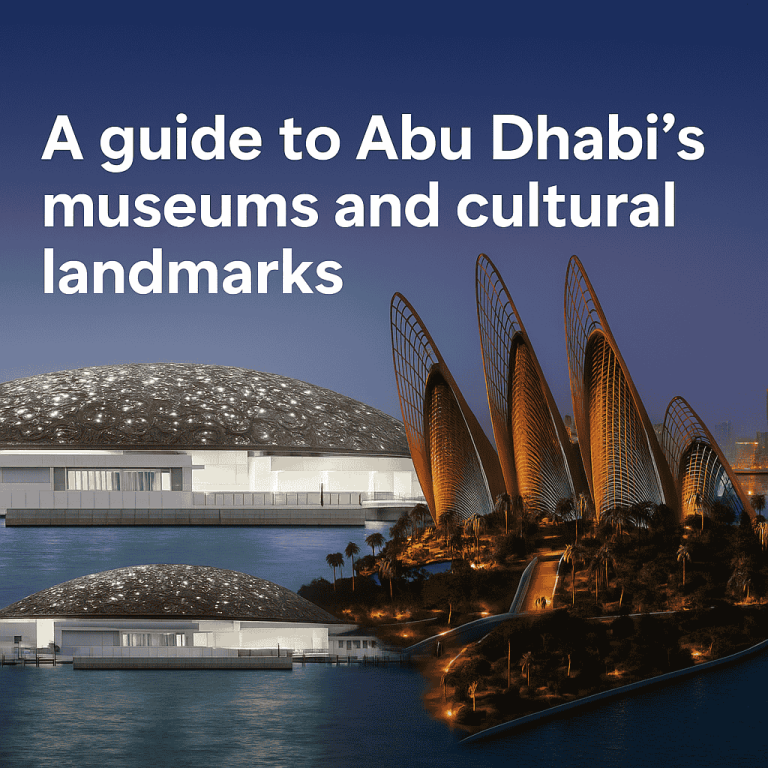
Abu Dhabi is not the city you think it is. Most people arrive expecting a smaller, quieter version of Dubai and leave surprised by something altogether different: a capital that takes culture as seriously as it takes ambition, where you can stand inside one of the most spectacular mosques in the world in the morning, scream through a record-breaking rollercoaster in the afternoon, and eat a slow dinner in a heritage souq at night.
It is laid-back in a way its neighbours are not. It feels lived-in. And it has a warmth to it that visitors consistently underestimate until they’re actually there.
Abu Dhabi is the largest of the seven Emirates, spanning 200 islands with a 700-kilometre coastline and stretching all the way to the edge of Rub Al Khali, the world’s largest continuous sand desert.
The city on Abu Dhabi Island is the modern, glossy showcase, but the emirate around it includes Al Ain’s ancient oases and forts, the vast dunes of the Liwa region, and a coastline that takes days to explore properly. Make sure you plan enough days to explore the city without missing out on anything.
Abu Dhabi City essentials
Why Abu Dhabi Is Worth the Trip

Abu Dhabi has been doing its best impression of a well-kept secret for years. Dubai got the global headlines, the nightclub openings, and the reputation. Abu Dhabi got the Louvre. It got the Sheikh Zayed Grand Mosque, which belongs in the same conversation as the most beautiful buildings on Earth. It got the Formula 1 Abu Dhabi Grand Prix, which closes out the season every year in one of the most dramatic sporting settings you will ever sit inside. And it got Yas Island, which houses four world-class theme parks in a single destination, making it the closest thing the Middle East has to Orlando.
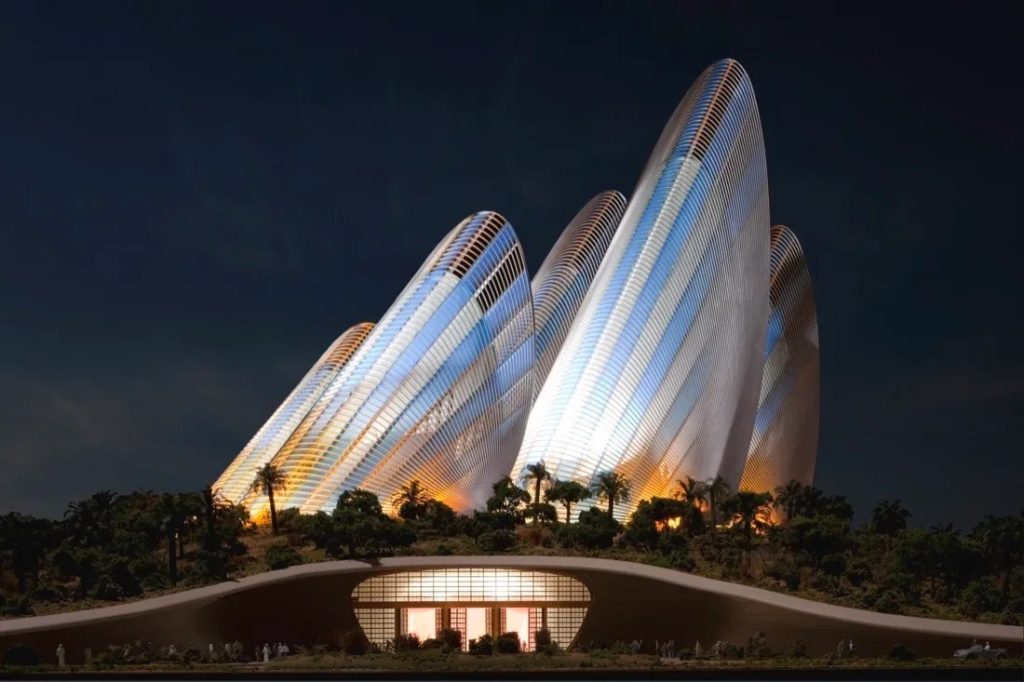
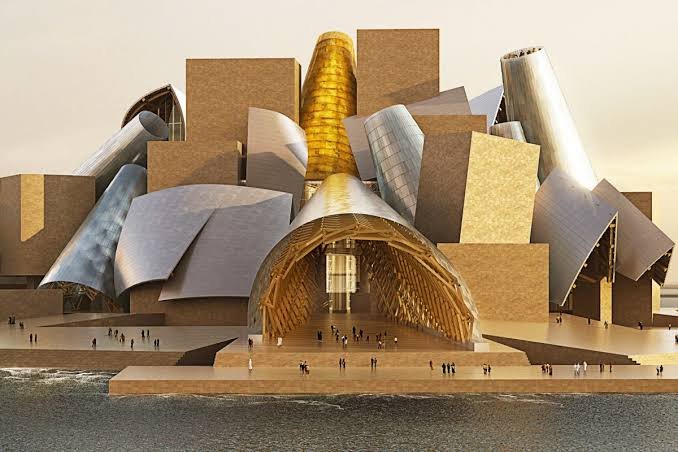
What the city also has is a cultural depth that surprises people. The Saadiyat Cultural District is one of the most ambitious museum precincts being developed anywhere in the world right now, with the Louvre Abu Dhabi already open, the Zayed National Museum and a Guggenheim branch in development.
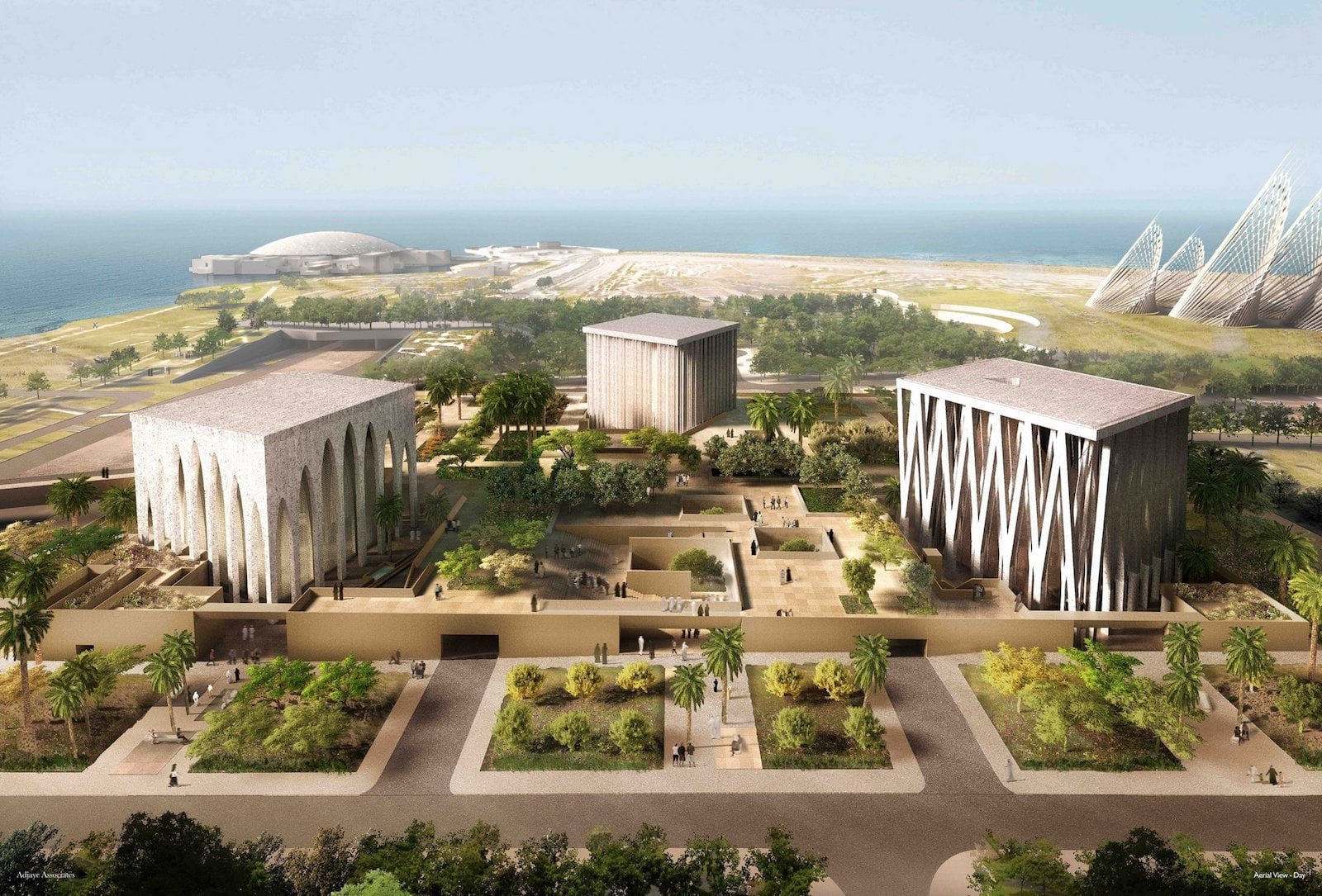
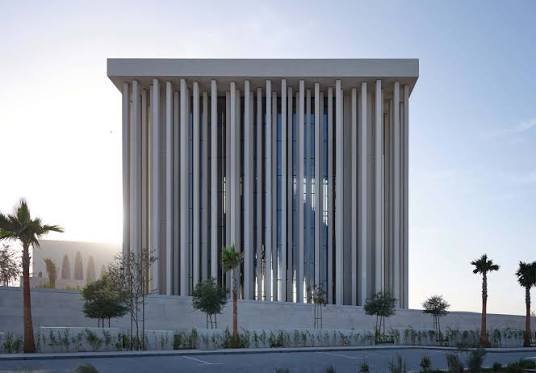
The Abrahamic Family House, opened in 2023 on Saadiyat Island, is a mosque, a church, and a synagogue standing side by side, designed as a symbol of peaceful coexistence. These are not tourist checkboxes. They are genuinely significant places.
Abu Dhabi Essentials: Entry and Visas
Most visitors, including those from the US, UK, EU, Australia, India, and a large number of other countries, receive a visa on arrival at Zayed International Airport, typically valid for 30 to 90 days, depending on nationality.
Always check your specific country's requirements before flying, as these change and vary by passport. The official resource for visa information is visitabudhabi.ae.
If you are visiting from a country that requires a pre-arranged visa, apply through the UAE's official channels well in advance. Processing is generally straightforward, but last-minute applications add unnecessary stress.
Where to Stay in Abu Dhabi
Abu Dhabi's accommodation is spread across several distinct areas, and choosing the right one makes a real difference.
Abu Dhabi Island and the Corniche are the heart of the city, with the main waterfront boulevard, the main museums and government buildings, and the best concentration of hotels at all price points. The Corniche itself is a beautifully maintained 8-kilometre beachfront promenade with cycling paths, parks, and open-sea swimming in designated areas. Staying near here puts you close to the Sheikh Zayed Grand Mosque (a short drive away), Qasr Al Hosn, and the downtown restaurant and bar scene.
Saadiyat Island is the cultural and luxury end of the spectrum, a short drive from the city centre with the Louvre Abu Dhabi, white-sand public beaches, and some of the finest resort hotels in the country. The Park Hyatt Abu Dhabi and the Jumeirah at Saadiyat Island Resort are both genuinely excellent. If you are here for art, culture, and the beach, Saadiyat is the right base.
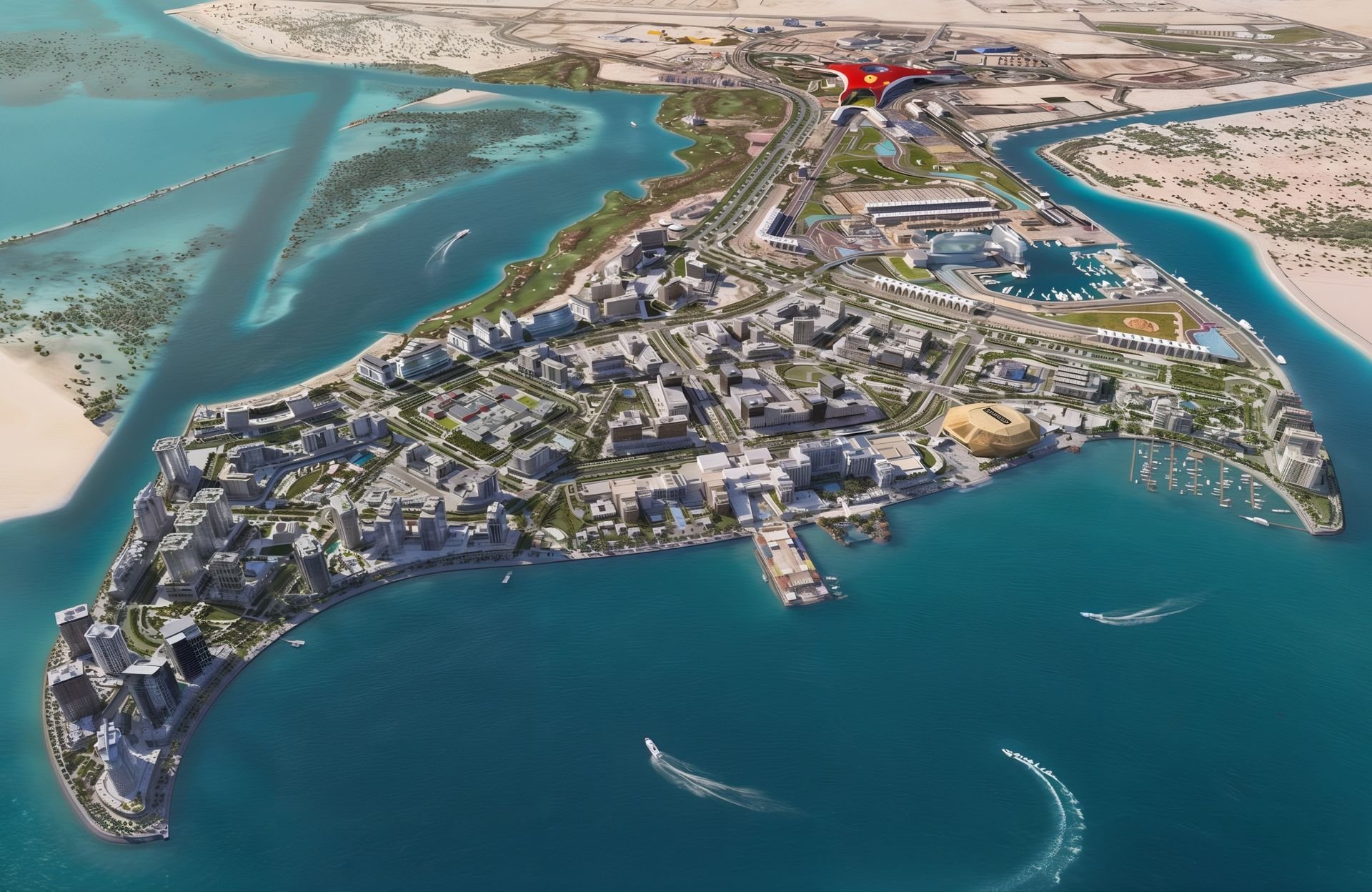
Yas Island is the entertainment precinct, 30 minutes from the city centre, home to Ferrari World, Warner Bros. World, Yas Waterworld, SeaWorld, the Yas Marina Circuit, Yas Mall, and a marina.
If you are travelling with children or if theme parks are the main event, staying on Yas Island is the obvious choice. Multiple hotels at various price points sit within walking distance of the parks, including the excellent WB Abu Dhabi (decorated entirely around Warner Bros. characters and stories), the W Abu Dhabi, and the Hilton Abu Dhabi Yas Island.
Getting There and Getting Around
Flying in: Zayed International Airport serves Abu Dhabi and handles direct flights from most major international hubs. It has earned multiple Best Airport in the Middle East titles at the World Airport Awards. After landing, follow the signs through immigration and customs to arrivals. Many nationalities receive visas on arrival. The airport is approximately 30 minutes from central Abu Dhabi and around 30 to 40 minutes from Yas Island.
Getting around once you're there:
- Abu Dhabi Taxi app: Download this before you arrive. It is the official app of the Integrated Transport Centre, which connects you to the nearest available metered taxi and usually delivers in under 10 minutes. Attempting to hail taxis in 40-degree heat without it is an experience you can avoid.
- Careem: The go-to app for ride-hailing in Abu Dhabi. It connects you to both private cars and official Abu Dhabi taxis through one platform. Download it before you arrive. Uber does operate in Abu Dhabi, but only through licensed limousine companies, which makes it noticeably more expensive than standard taxis. Careem is the better everyday option.
- Free Experience Abu Dhabi Shuttle Bus: A complimentary shuttle service runs eight routes connecting key tourist areas and attractions, including the Louvre Abu Dhabi, Qasr Al Watan, Qasr Al Hosn, and the Sheikh Zayed Grand Mosque. It is air-conditioned, wheelchair-accessible, and completely free. Use it.
- Public buses: It is operated using the Hafilat Smart Card and are available at the Abu Dhabi Central Bus Station and Lulu Hypermarket branches. They are cheaper than taxis but slower and less convenient for most tourist routes.
- Rental car: Worth considering if you plan to explore beyond the city, including Al Ain, Liwa Oasis, or the northern coast. Driving is on the right-hand side. Speed cameras are everywhere, enforcement is strict, and drink-driving carries a zero-tolerance policy (0.0% BAC) with severe penalties.
The Sheikh Zayed Grand Mosque
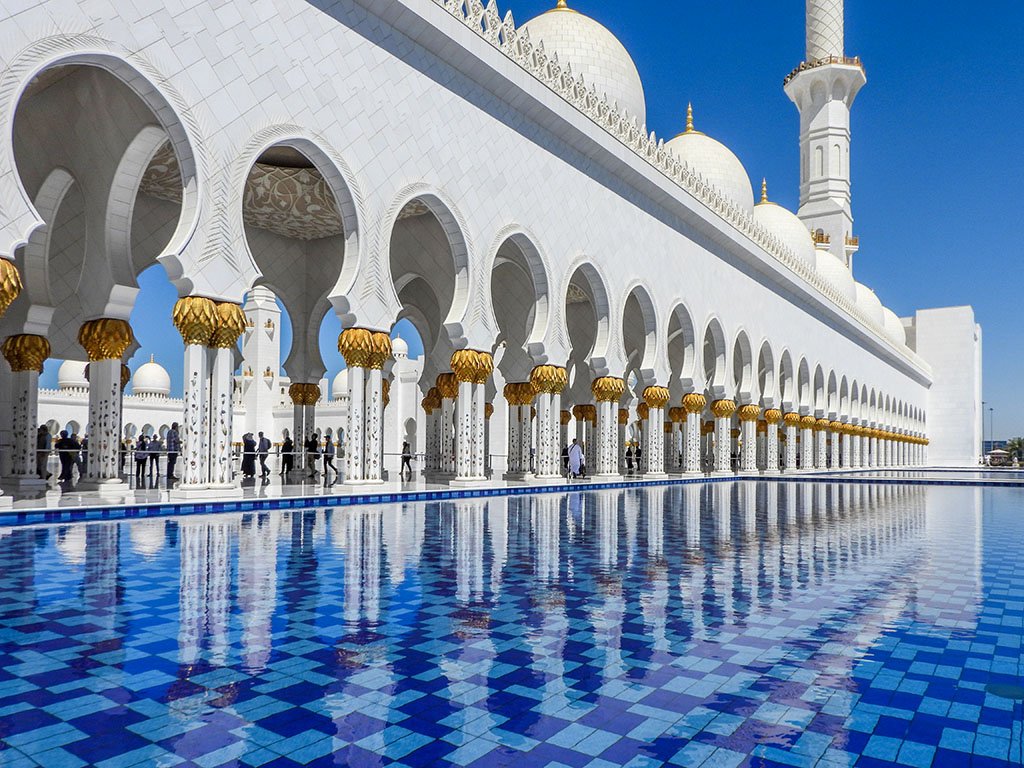
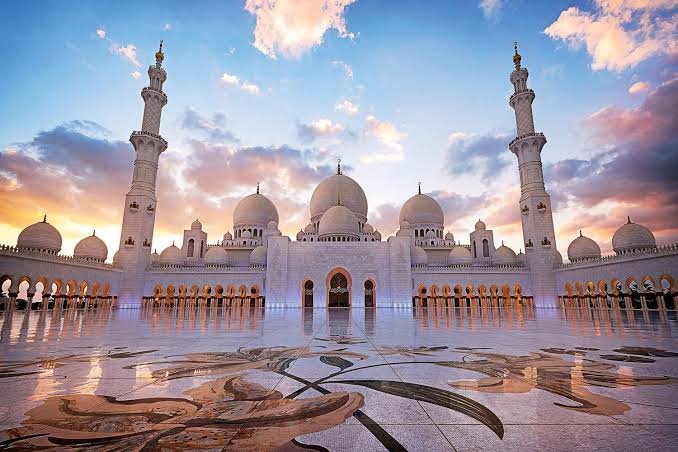
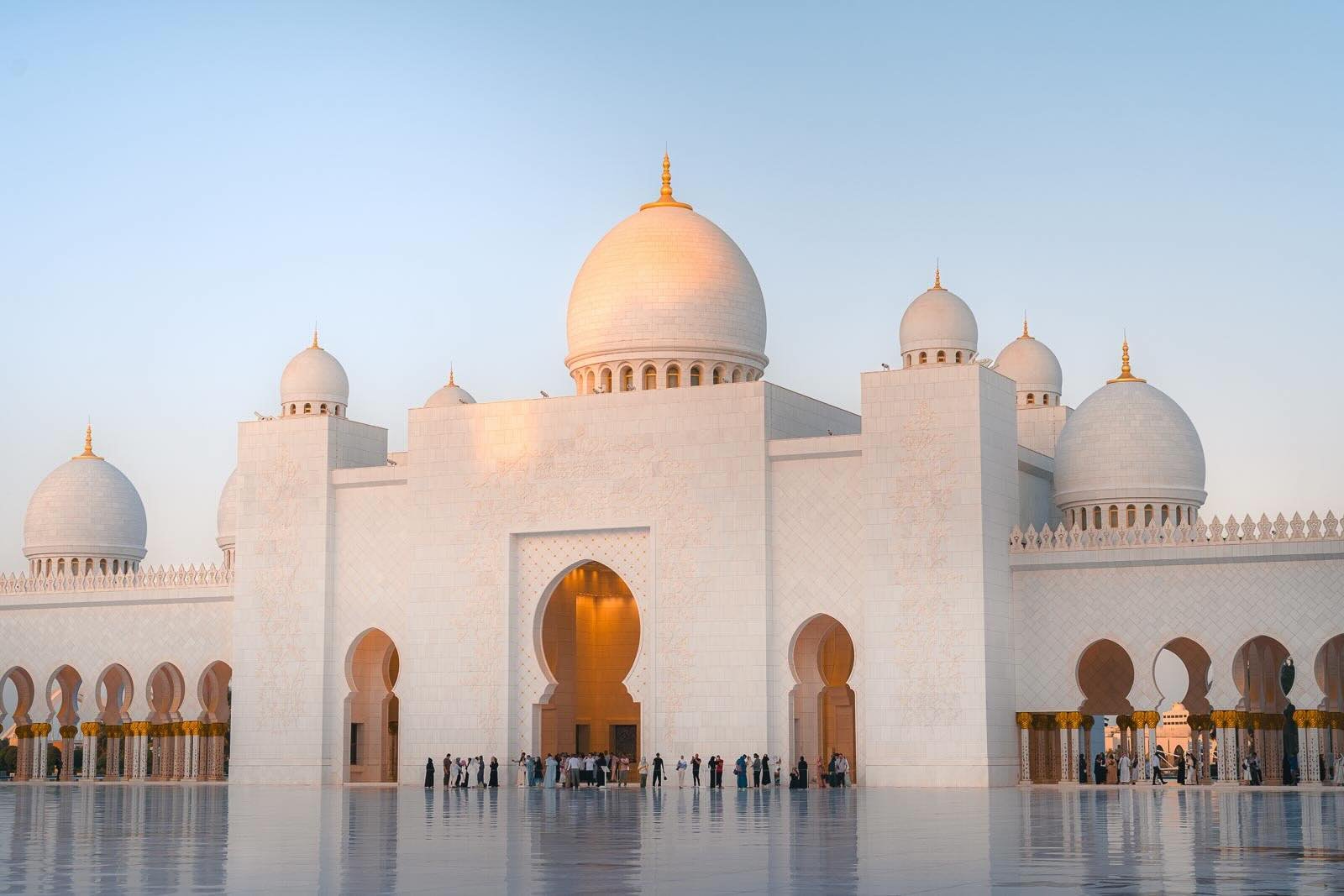
If you see nothing else in Abu Dhabi, see this. The Sheikh Zayed Grand Mosque is one of the largest mosques in the world, with a capacity for over 40,000 worshippers, and one of the most architecturally extraordinary buildings you are likely to encounter anywhere on Earth.
The 82 domes, 1,096 columns, 24-carat gold-plated chandeliers, and the world's largest hand-knotted carpet (which covers the main prayer hall and was made by more than 1,200 Iranian artisans) combine into a space that makes even the most jaded traveller stop and go quiet.
- Entry is free and open to non-Muslims outside of prayer times.
- Modest dress is required: both men and women must wear loose clothing covering shoulders and legs, and women must cover their heads.
- Abayas and scarves are available to borrow or buy at the entrance.
- Photography is welcome in the outdoor areas, but physical contact between visitors, making gestures, and lying on the carpet for photos are all prohibited.
- Visit at sunrise if you can manage it, when the mosque is quiet, and the light makes the white marble look like it is glowing from within.

Yas Island: The Theme Park Capital of the Middle East
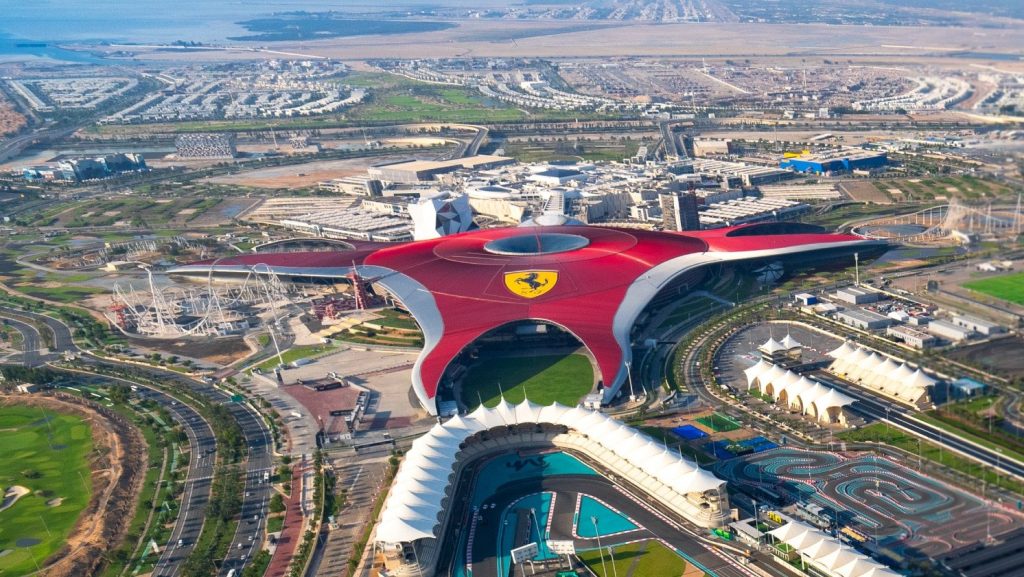

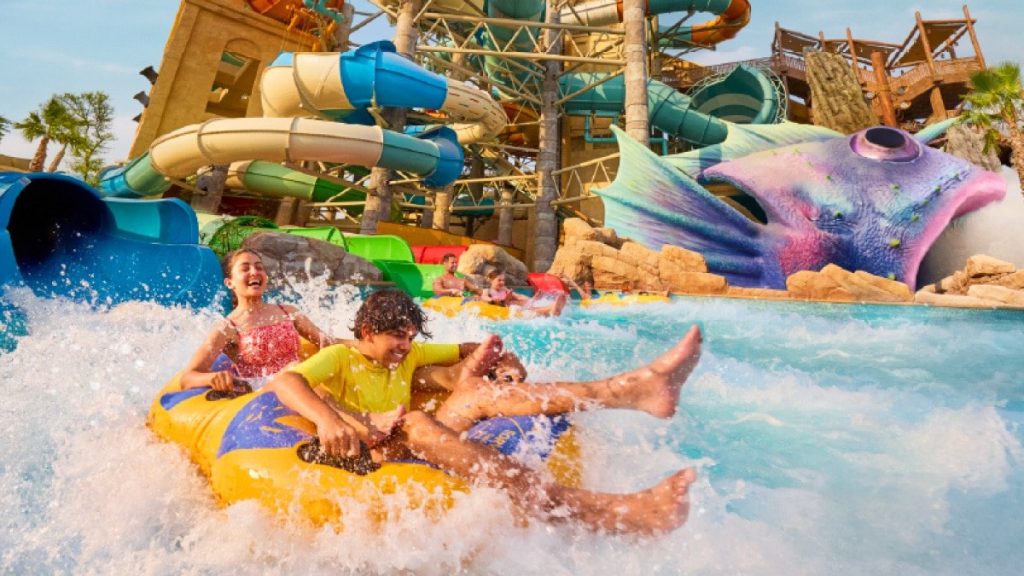
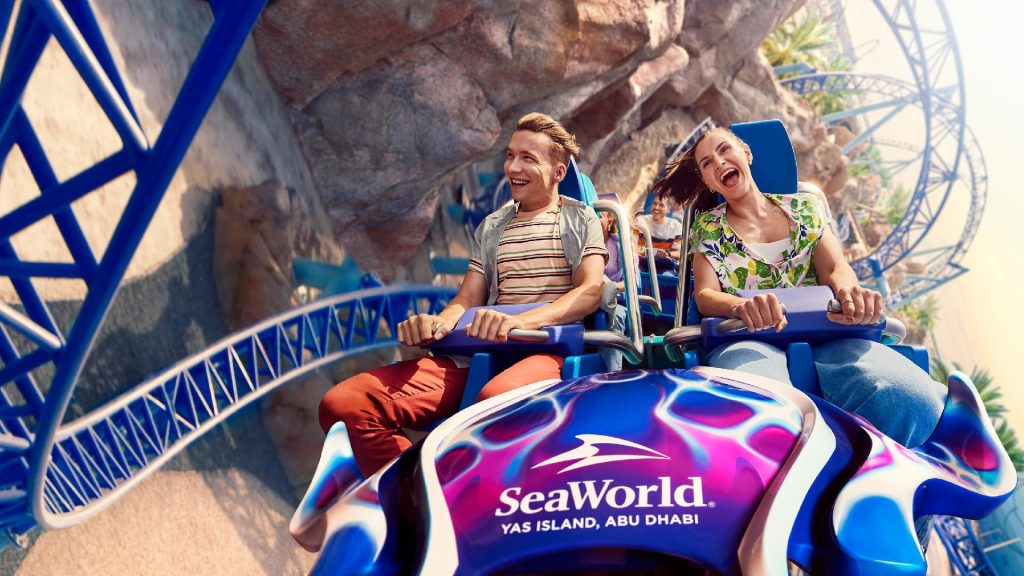
Yas Island is Abu Dhabi's most concentrated entertainment destination, built around a Formula 1 circuit and now home to four major theme parks, a waterfront marina, multiple beaches, and enough hotels to stay for a week without leaving the island.
- Ferrari World Yas Island is the one built around speed. The Formula Rossa rollercoaster reaches 240 km/h, making it one of the fastest rollercoasters in the world and the long-standing record holder before being surpassed by Falcon's Flight at Six Flags Qiddiya in Saudi Arabia. The park is entirely Ferrari-branded, with driving simulators, pit-stop experiences, and an immersive celebration of everything the brand represents. The building itself, with its distinctive red sweeping roof modelled on the Ferrari GT's body, is a landmark visible from across the island.
- Warner Bros. World Yas Island is the indoor, fully air-conditioned park built around DC superheroes, Looney Tunes, and Hanna-Barbera characters. Batman, Superman, Wonder Woman, Bugs Bunny, Scooby-Doo, and The Flintstones all have dedicated zones. It is excellent for families and younger children in particular, though the adult rides deliver genuine thrills.
- Yas Waterworld is a water park with slides, a wave pool, a lazy river, and more than 40 rides, slides, and attractions across a park themed around Emirati pearl diving heritage. The Dawwama, a six-person tornado waterslide, is the largest of its kind in the world.
- SeaWorld Yas Island opened in 2023 as the first SeaWorld outside North America. It combines marine life displays, animal encounters, and rides across six themed lands. The killer whale-free approach (no orca shows) reflects a shift in SeaWorld's conservation philosophy that began several years earlier.
Multi-park passes that cover all four parks are also available and represent significantly better value than buying individual tickets.


The Saadiyat Cultural District
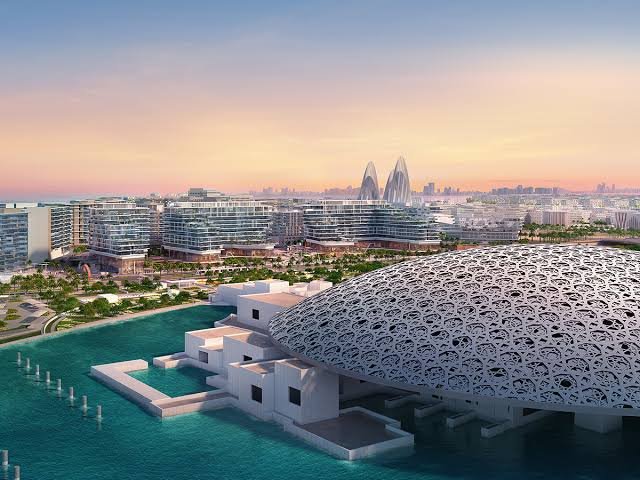
Saadiyat Island is where Abu Dhabi has placed its most ambitious cultural bet, and the results so far are extraordinary.
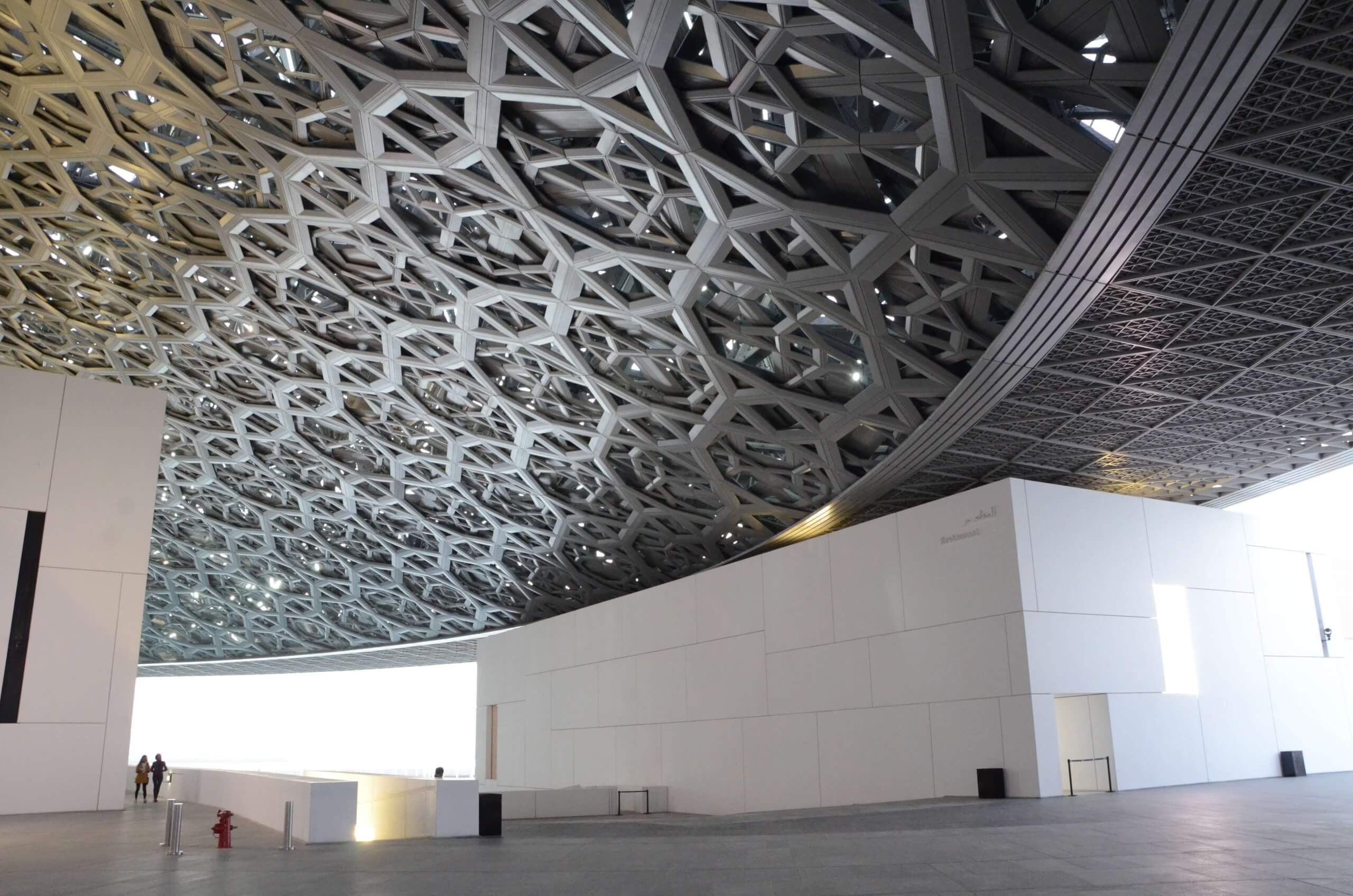
- The Louvre Abu Dhabi opened in 2017 as the first universal museum in the Arab world, built under a partnership with the Louvre Paris. The permanent collection moves chronologically through human history across twelve galleries, tracing the connections between civilizations rather than presenting them as separate chapters. The building, designed by Jean Nouvel, is as much of a reason to visit as the collection: a vast dome of overlapping geometric panels that creates a rain of light across the water below. Do not rush it.
- The Abrahamic Family House, opened in 2023, stands as one of the most significant architectural and cultural statements anywhere in the world. You get to see a mosque, a church, and a synagogue designed by Sir David Adjaye, each sitting on equal ground, each built to the same proportions, and each welcoming visitors of all faiths. It is quiet, thoughtful, and genuinely moving.
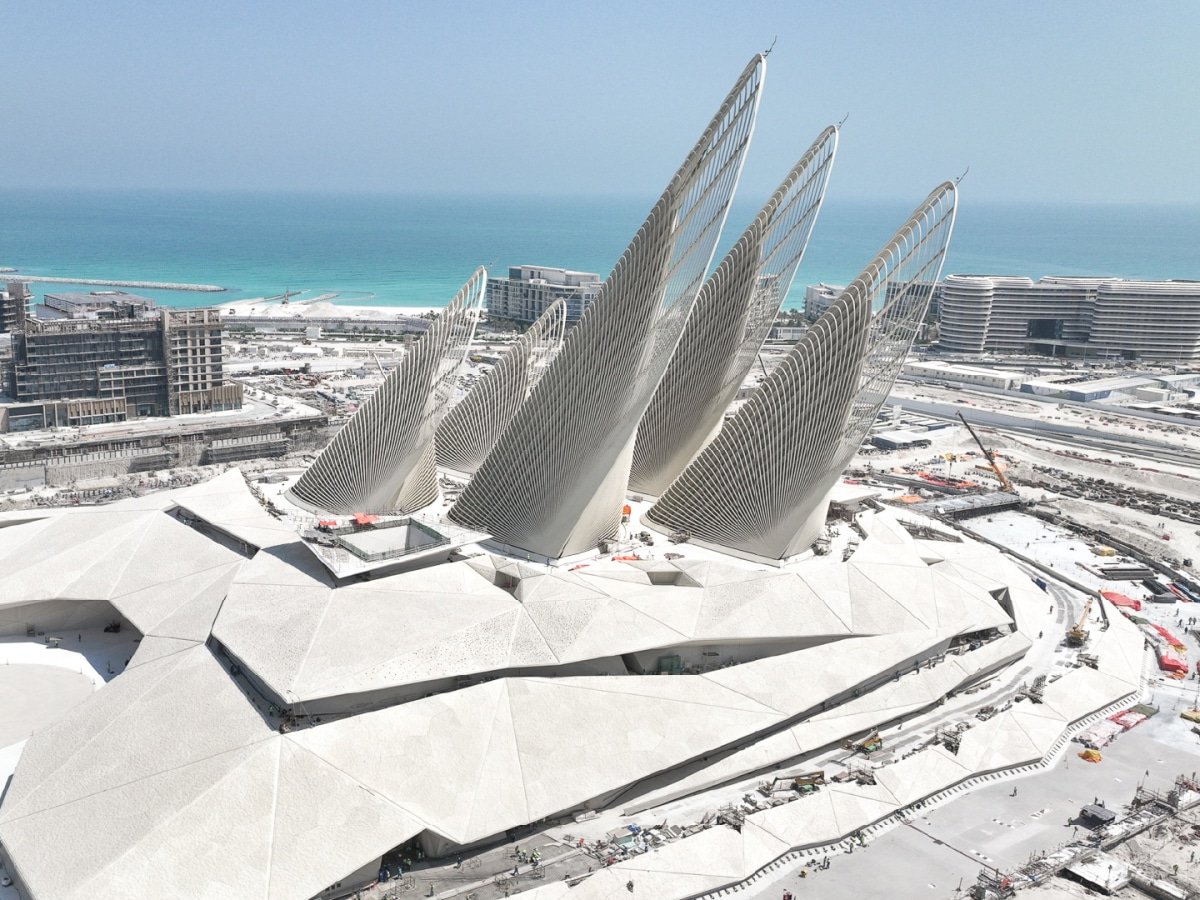
- The Zayed National Museum on Saadiyat Island is the UAE's national museum, dedicated to the life and legacy of the founding father, Sheikh Zayed bin Sultan Al Nahyan, and the broader history and culture of the Emirates. Designed by Foster + Partners, the building features five towers inspired by the wings of a falcon, with galleries covering Emirati heritage, the natural environment, and the nation's development from a pearl-diving economy to a modern state.
- The Guggenheim Abu Dhabi on Saadiyat Island is a major contemporary and modern art museum designed by Frank Gehry, whose distinctive deconstructivist architecture has already defined buildings like the Guggenheim Bilbao. The collection focuses on art from the 1960s to the present day with a particular emphasis on work from the Middle East, North Africa, and South and Southeast Asia, regions that have historically been underrepresented in major international museum collections.


Popular Things to Do in Abu Dhabi
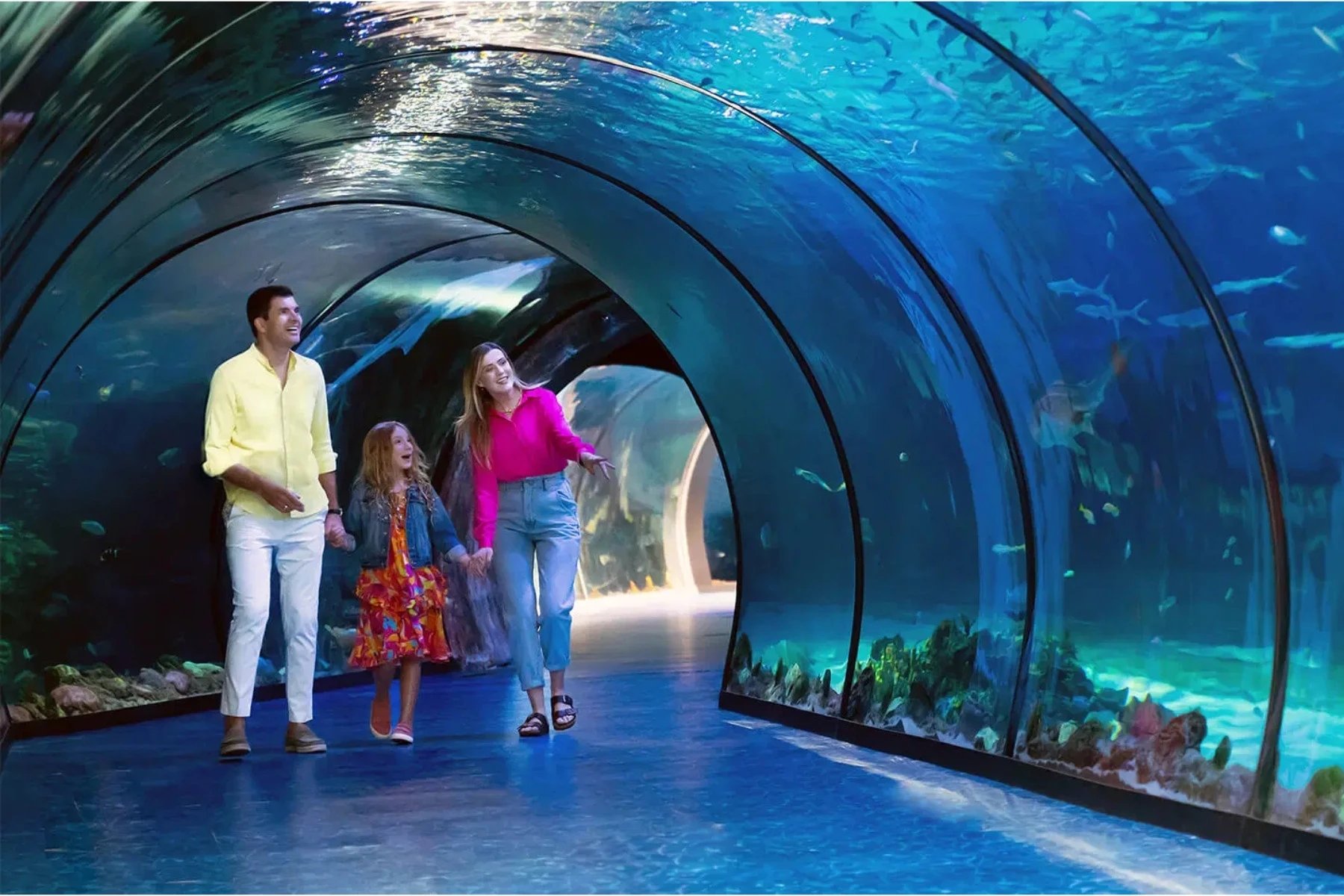
- The National Aquarium Abu Dhabi at Al Qana is one of the largest aquariums in the Middle East, with over 46,000 animals across more than 300 species arranged across ten themed zones inspired by Abu Dhabi's diverse natural environments. It also offers scuba diving experiences for both certified and non-certified divers, letting visitors get into the water alongside the marine life.
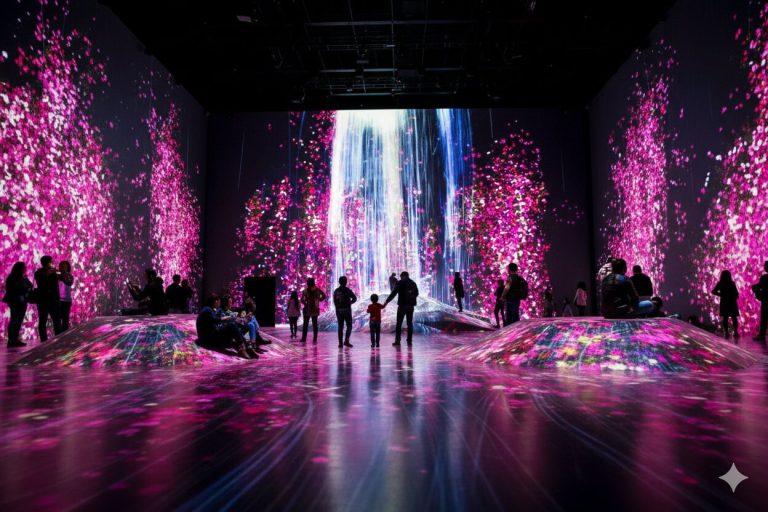
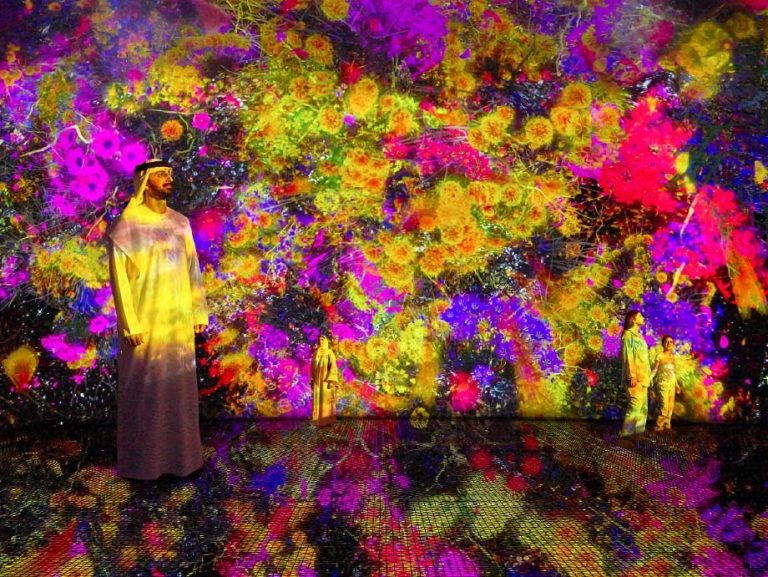
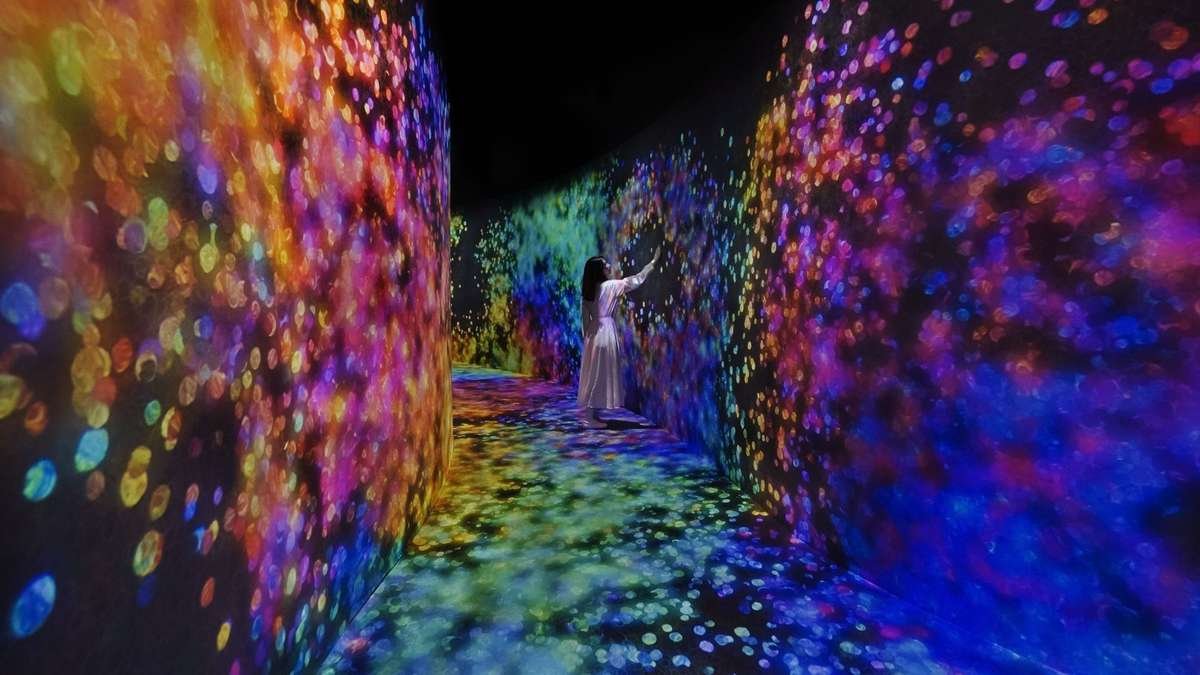
- teamLab Phenomena Abu Dhabi is one of the most talked-about openings in the city, an immersive digital art experience by the celebrated Japanese collective teamLab. The installation responds to the presence and movement of visitors in real time, turning each visit into a unique, unrepeatable experience.
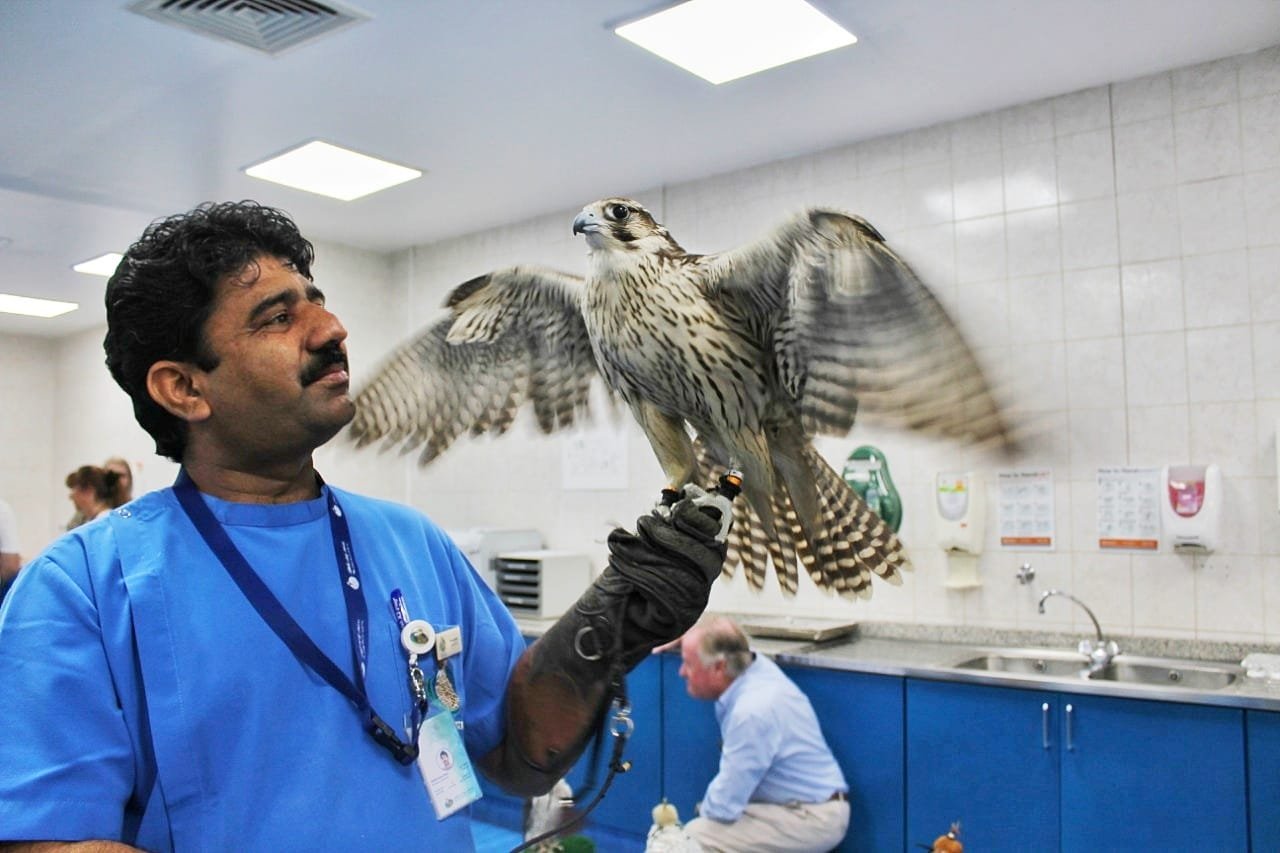
- The Falcon Hospital Tour is one of Abu Dhabi's most genuinely distinctive experiences. The UAE Falcon Hospital is the world's first and largest facility dedicated to falcons, a bird that holds deep cultural significance in Emirati society. The tour takes visitors through the hospital, explains the history and art of falconry, and includes the chance to handle and photograph these remarkable birds.
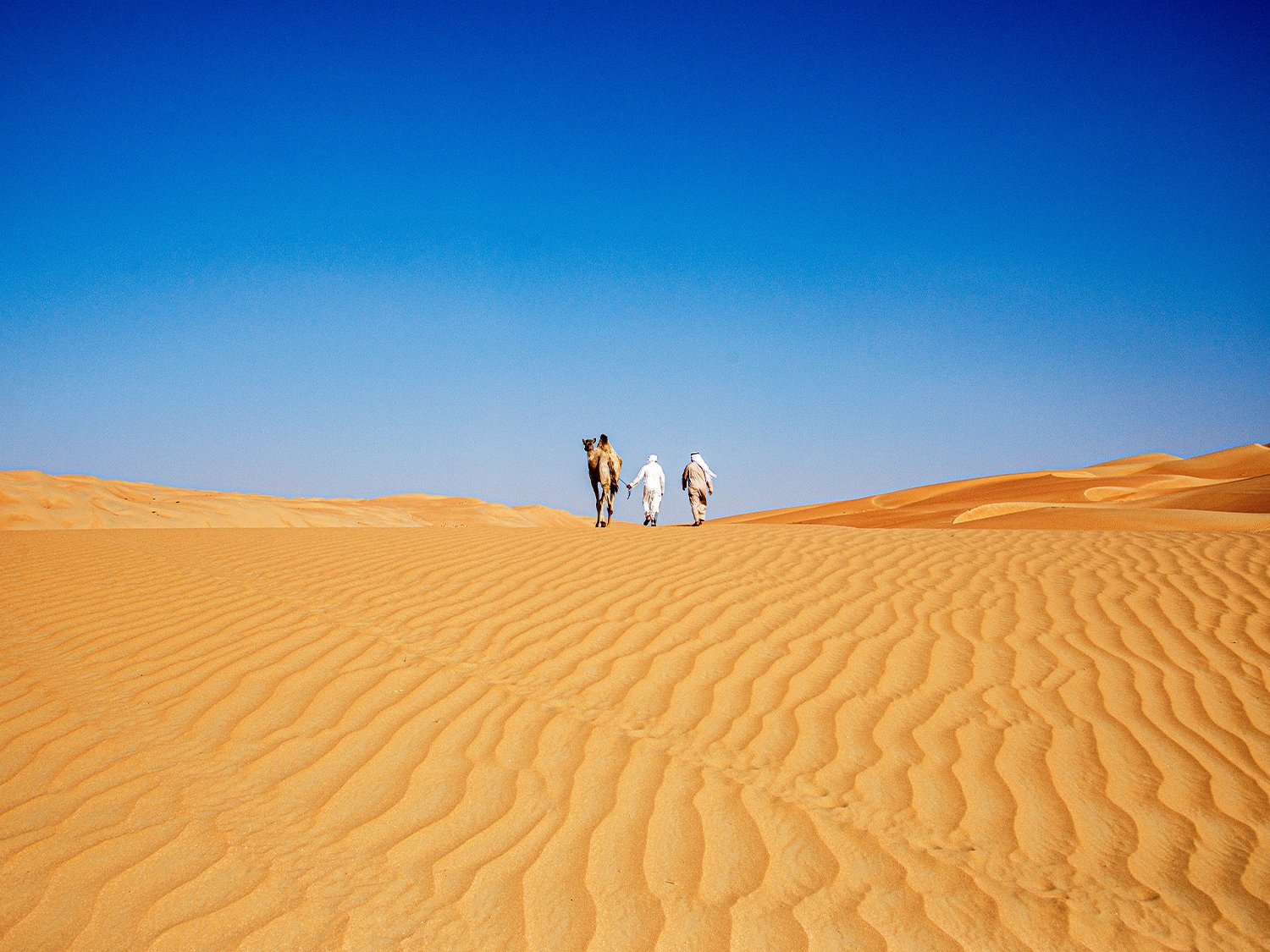
- Abu Dhabi Desert Safari in any of its forms (standard evening, sunrise, or overnight) is among the most memorable experiences available from the city. Dune bashing in a 4x4, camel riding, sandboarding, and dinner under the stars at a Bedouin-style camp are the standard components, with overnight safaris adding the extraordinary experience of sleeping in the desert.
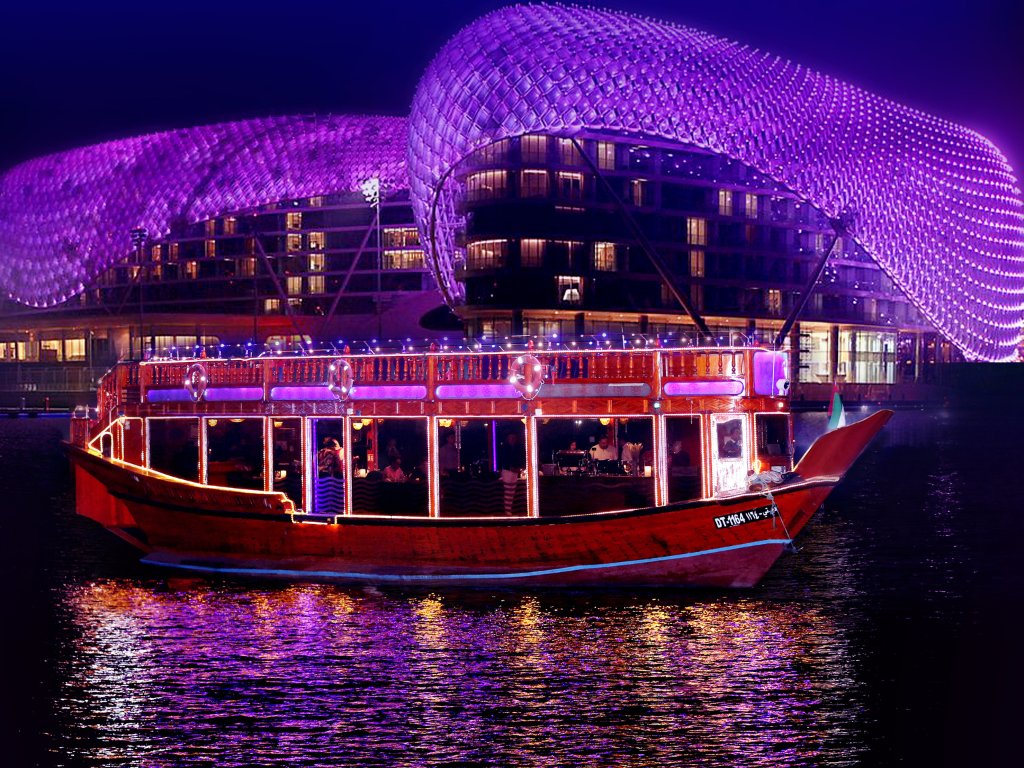
- Dhow Cruise Dinner on Yas Island combines a traditional wooden boat cruise with an evening of authentic Arabian food against a backdrop of the Yas Island waterfront and marina at night. It is a relaxed, atmospheric way to experience the city from the water.
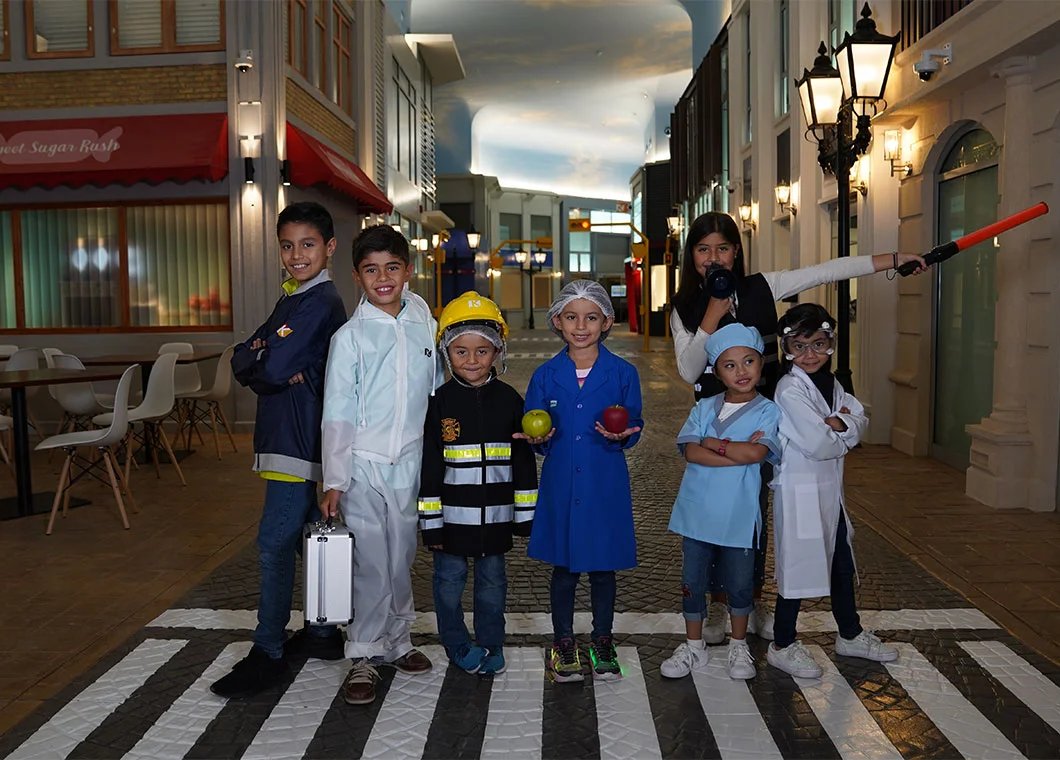
- KidZania Abu Dhabi at Yas Mall is a purpose-built city for children, where kids take on real-world jobs and professions in a fully miniaturized urban environment. It is designed for children aged 4 to 16 and very well suited to families spending a day on Yas Island.
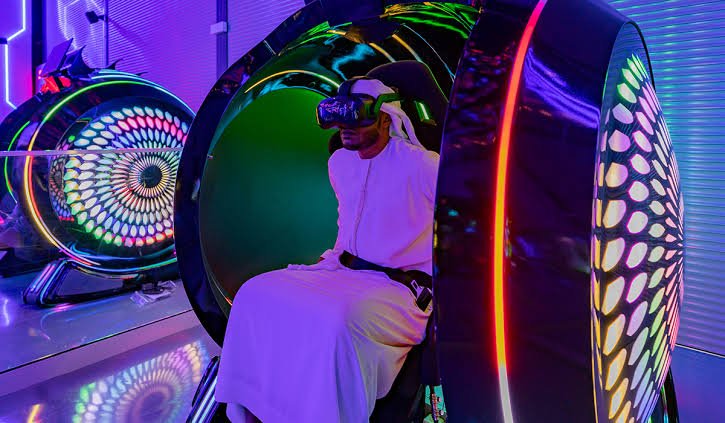
- Pixoul Gaming Abu Dhabi at Yas Mall is an advanced gaming and virtual reality entertainment centre with immersive VR experiences, racing simulators, and gaming setups that go well beyond a standard arcade. This is a strong rainy-day or afternoon option for older children and adults.
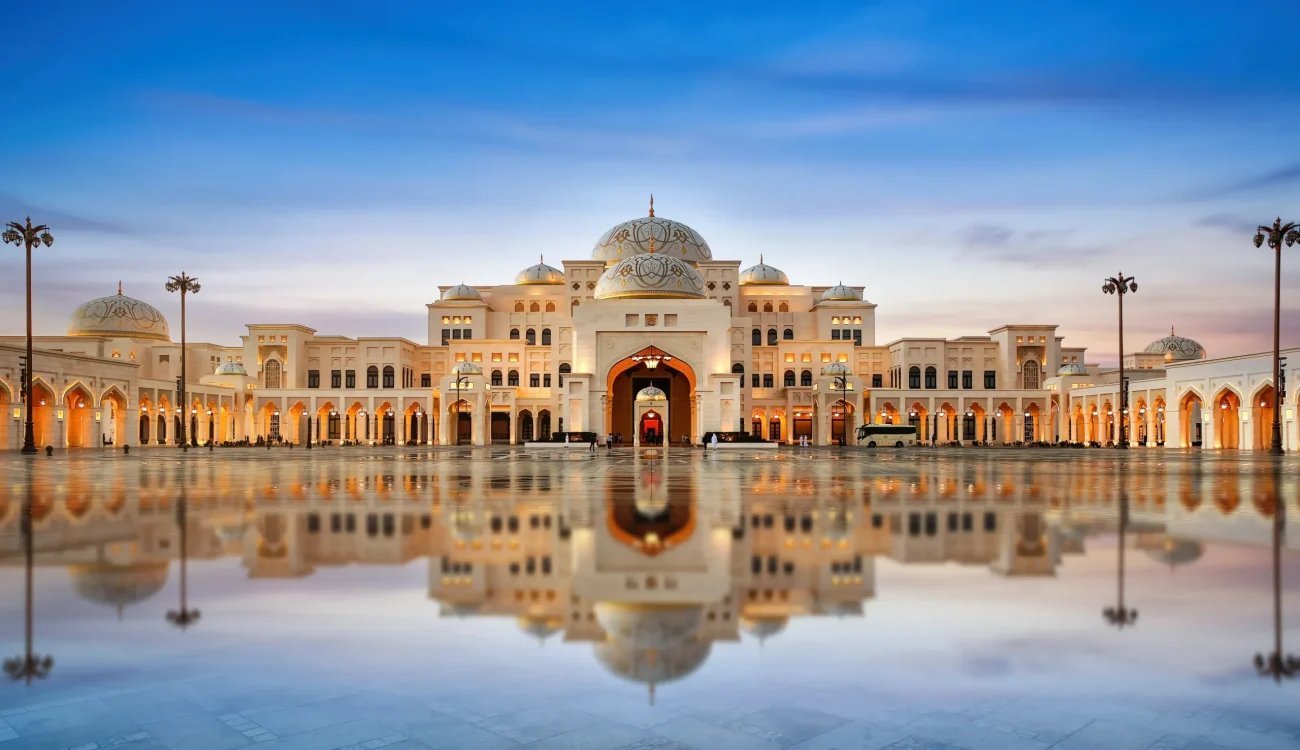
- Qasr Al Watan is the Presidential Palace of the UAE, opened for public visits in 2019. The scale is extraordinary, with a vast dome, marble-inlaid floors, and a permanent collection of rare manuscripts, scientific instruments, and artifacts from across the Arab world. The Great Hall is one of the most impressive interior spaces in the city.
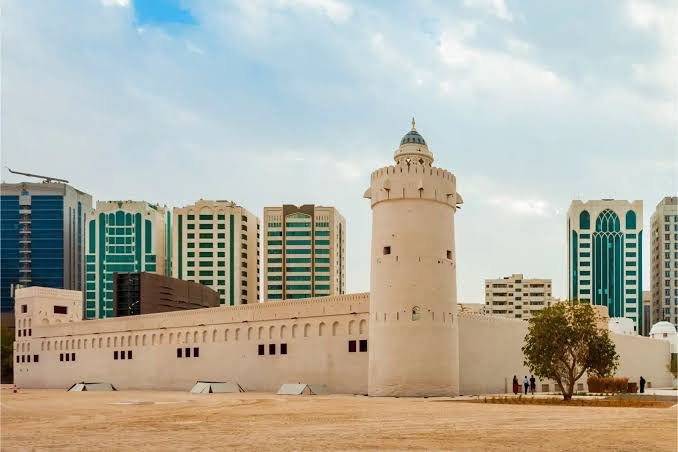
- Qasr Al Hosn is the oldest building in Abu Dhabi, a fort that once served as the seat of government and the home of the ruling family. Today, it is a heritage museum and cultural centre that tells the full story of how Abu Dhabi grew from a small pearl-diving settlement into a modern capital. The contrast between the ancient fort and the skyscrapers surrounding it is one of the city's most striking visual moments.
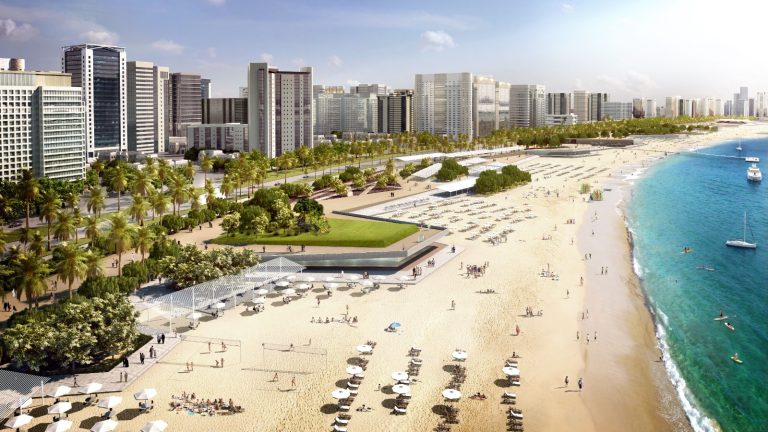
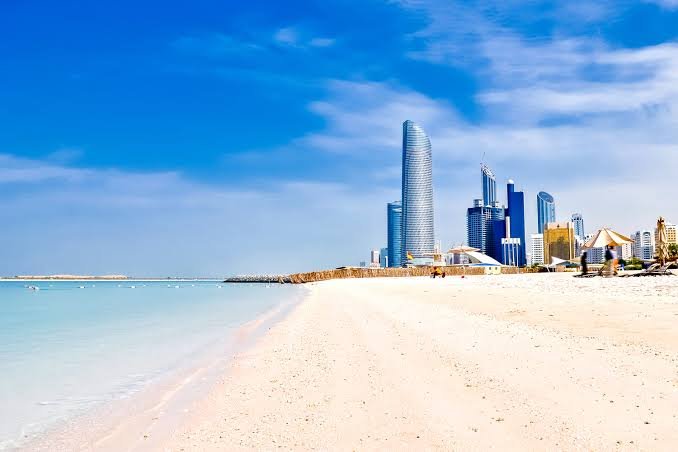
- The Corniche deserves more time than most visitors give it. The 8-kilometre beachfront promenade has a dedicated cycling and running track, public beach access at Corniche Beach (clean, well-maintained, lifeguards on duty), and views across the Arabian Gulf that are especially beautiful in the early morning and at sunset.
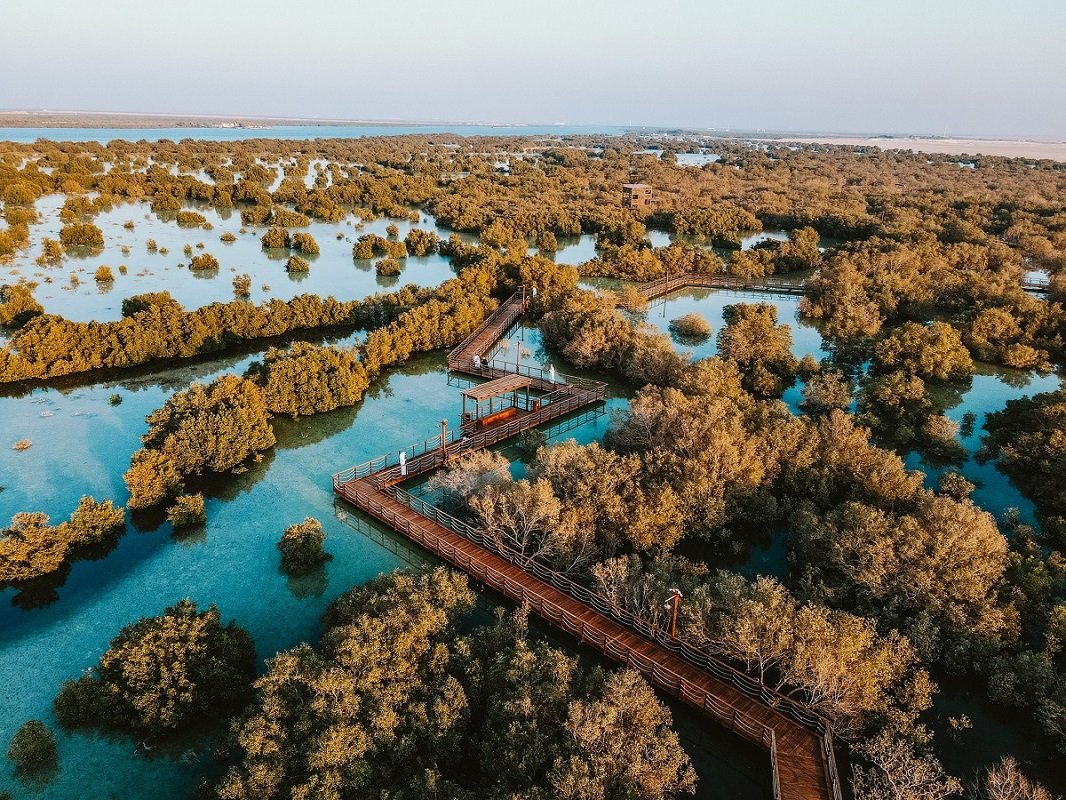
- Jubail Mangrove Park is one of the most underrated experiences in Abu Dhabi. A network of boardwalks winds through protected mangrove forest on the northeastern side of the city, with herons, flamingos, and sea turtles visible at different times of year. Kayak tours through the mangroves are available and are a really fun experience.
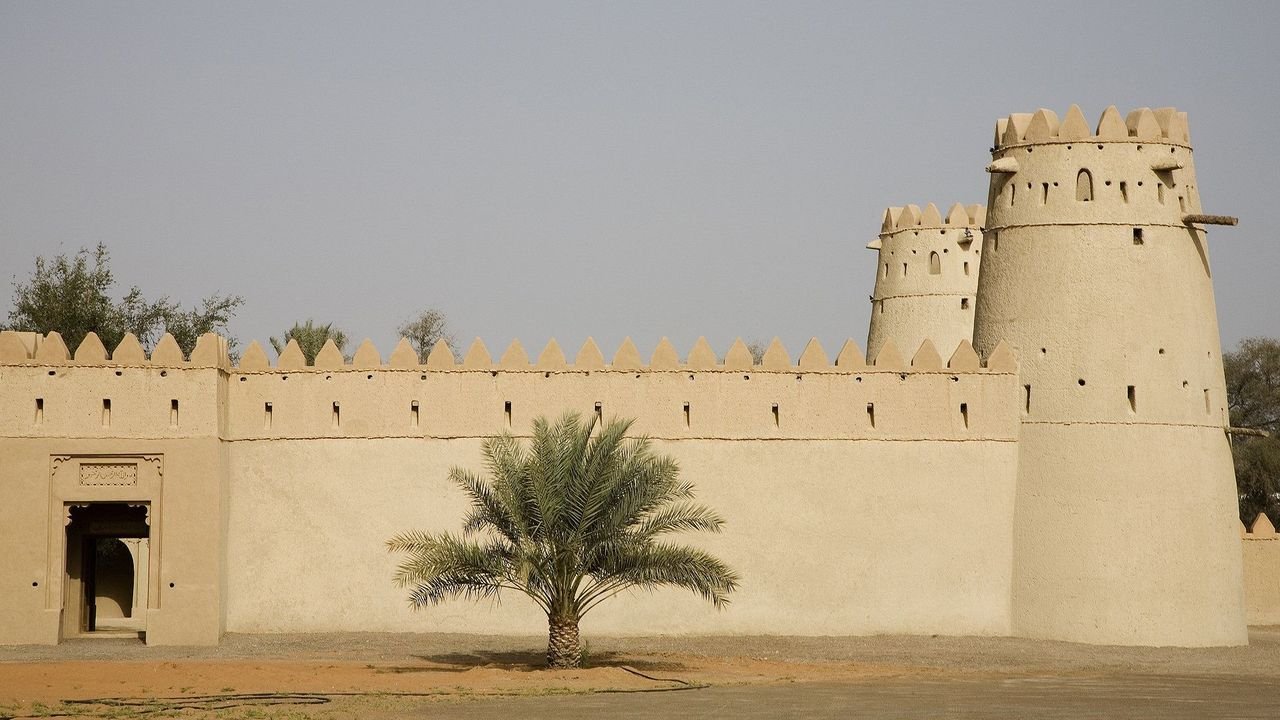
- Al Ain, about 90 minutes east of Abu Dhabi city, is a UNESCO World Heritage Site worth a full day, with the Al Ain Oasis (one of the oldest continuously inhabited settlements in the world), Al Ain Palace Museum, Jahili Fort, and the Jebel Hafeet mountain drive. It is a completely different pace from the coastal city.


Food and Drink in Abu Dhabi
Abu Dhabi's food scene reflects its population. The city is home to over 200 nationalities, and the restaurant variety that comes with that diversity is one of the genuine pleasures of being there.
Traditional Emirati food is what to seek out first: slow-cooked lamb over rice, fresh seafood from the Gulf, the sweet rice and date dessert called luqaimat, slow-brewed Arabic coffee (gahwa) served with dates, and an aromatic spice culture shaped by centuries of trade.
The Heritage Village on the Corniche and the Al Mina Fish Market are both good starting points for understanding Abu Dhabi's culinary roots.
For international dining, the waterfront areas of Saadiyat Island, Yas Bay, and Al Maryah Island all have strong restaurant concentrations. Zuma at the Galleria on Al Maryah Island is the city's most consistently excellent upscale dining option. Coya on Saadiyat Island does exceptional Peruvian food in a beautiful setting.
For something more relaxed and local, the restaurants around the Khalidiyah area of the city serve outstanding Indian, Pakistani, and Filipino food at prices that bear no resemblance to the hotel dining strip.
Alcohol is available at licensed hotel restaurants and bars, and since the UAE abolished the requirement to hold a personal alcohol license in late 2020, tourists can also purchase alcohol directly from licensed retail liquor stores such as MMI and African + Eastern by simply showing their passport and entry stamp.
Public drinking is still not permitted, and behaviour under the influence in public spaces is taken seriously under UAE law. Drink-driving carries a zero-tolerance policy (0.0% BAC) with severe penalties.
Halal food is the standard across the city. For visitors with dietary requirements, most restaurants clearly label halal options, and vegetarian and vegan dining has improved significantly across Abu Dhabi over the past few years.
Culture, Etiquette, and Local Laws
Abu Dhabi is a welcoming, tolerant, and genuinely hospitable city that makes visiting feel easy. A few things are worth knowing before you arrive.
- Dress: Regular clothing works fine in malls, hotels, and tourist areas. At religious sites, including the Sheikh Zayed Grand Mosque and the Abrahamic Family House, modest dress covering shoulders and legs is required, with a head covering for women at mosques. Swimwear is completely acceptable at beaches, pools, and water parks, but should be covered up when leaving those areas.
- Public behaviour: Loud arguments, offensive language, rude gestures, and public displays of affection beyond holding hands are all either frowned upon or outright illegal. The same applies online. Posting content that could be considered offensive, defamatory, or disrespectful to UAE leadership or religion can result in legal consequences under UAE cybercrime law.
- Photography: Always ask permission before photographing people, particularly Emirati women and families. Photographing government buildings, military installations, and other strategic sites is prohibited.
- Ramadan: If your visit falls during Ramadan (dates change annually), eating, drinking, chewing gum, or smoking in public during daylight hours is not permitted out of respect for those fasting. Hotels and malls have dedicated areas for non-fasting visitors. The city comes alive after sunset during Ramadan with iftar gatherings and a festive atmosphere that non-Muslims are warmly welcome to join.
- LGBTQ+ travellers: Same-sex relationships are illegal in the UAE. Discretion is strongly advised regarding public displays of affection. Human Dignity Trust has more detailed information on how UAE law affects LGBTQ+ travellers.
- Greetings: The traditional greeting is "As-salam alaikum" (peace be upon you), with the response "Walaykum as salam." A few words of Arabic go a long way: "shukran" (thank you) and "marhaba" (hello) are both warmly received.
When to Visit Abu Dhabi
The honest answer is October through April. Abu Dhabi is a year-round destination in theory, but summer is genuinely extreme.
October to April is the sweet spot, with daytime temperatures between 18 and 28°C, clear skies, low humidity, and conditions that make outdoor activities genuinely enjoyable. The Corniche, the desert, the mangroves, and the outdoor dining scene all come into their own during this window. The Abu Dhabi Formula 1 Grand Prix takes place in December, which is one of the great sporting events to attend if you can time your trip around it. The Abu Dhabi Marathon also runs in December.
May through September is the summer period, and temperatures regularly exceed 40 to 45°C with humidity up to 80 to 90% near the coast. Outdoor activity between 11 am and 4 pm is genuinely challenging. Yas Island's indoor theme parks, the Louvre, Yas Mall, and the other air-conditioned attractions all work perfectly well in summer, and hotel rates drop significantly during this period, making it a better value for travellers whose priority is indoor experiences.
Practical Tips Before You Go
- Bring a Type G plug (same as the UK) at 220-240V. Pack a universal adapter if you are not coming from the UK
- SIM cards are available at the airport from Etisalat and du. Both offer competitive visitor packages covering calls, texts, and data. You will need your passport and UAE visa to purchase
- Cash is king at souks, markets, and smaller food stalls. Most large venues accept contactless cards, including Visa, Mastercard, and Apple Pay, but carry 100 to 200 AED in cash for smaller purchases
- Hotel taxes in Abu Dhabi stack up fast. A 10% room rate tax, a 10% service charge, a 10% municipality fee, and a tourism fee are all common additions on top of the listed room rate. Check what is included before booking
- Travel insurance is mandatory for visitors to Abu Dhabi. Hospitals are world-class, but treatment must be paid for unless you are insured. Always carry your insurance details and a copy of your passport
- Sun protection year-round. UV levels are extreme even in winter. SPF 50+, a hat, and staying hydrated are essential regardless of the season
Abu Dhabi does not shout for your attention. It simply earns it: quietly, confidently, and with a hospitality that catches most visitors completely off guard. Whether you spend your time at the Louvre, screaming through Ferrari World at 240 km/h, or sitting with a cup of gahwa in the old port watching the boats come in, this city has a way of getting into your head and staying there.
Stop waiting for the right time. Head to Thrillark to book your Abu Dhabi experiences and attractions, and start planning the trip you will be glad you finally took.
Frequently Asked Questions About Abu Dhabi
Is the Sheikh Zayed Grand Mosque free to visit, and what should you wear?
The Sheikh Zayed Grand Mosque is free to enter for non-Muslims and open outside of prayer times, typically in the morning, midday, and evening, with specific visiting windows that are worth checking before you go. Both men and women are required to wear loose, modest clothing covering their shoulders and legs, and women must also cover their heads. Abayas and head scarves are available to borrow or purchase at the entrance, so there is no need to pack your own if you are not sure. Photography is permitted in outdoor areas, but physical contact between visitors, gesturing, and lying on the prayer carpet for photos are all prohibited.
What is Yas Island, and is it worth staying there?
Yas Island is Abu Dhabi's purpose-built entertainment district, about 30 minutes from the city centre, home to four major theme parks: Ferrari World, Warner Bros. World, Yas Waterworld, and SeaWorld. It also has a Formula 1 circuit, a large mall, beaches, a marina, and a wide range of hotels at various price points. Staying on Yas Island is worth it if theme parks are the main reason for your trip, since the hotels are within walking distance of the parks, and multi-park passes make sense logistically. If cultural sightseeing is the priority, basing yourself closer to central Abu Dhabi or Saadiyat Island, and making a day trip to Yas makes more sense.
When is the best time to visit Abu Dhabi?
October through April is the best time to visit, with temperatures between 18 and 28°C and conditions that make outdoor attractions genuinely enjoyable. November is particularly good if you want to combine sightseeing with the Abu Dhabi Formula 1 Grand Prix, which closes the season at Yas Marina Circuit in one of the most dramatic race-weekend settings in motorsport. May through September is hot and humid (40 to 45°C with high coastal humidity), but hotel rates drop significantly and indoor attractions, including the theme parks, the Louvre, and the malls, are perfectly comfortable.
Do you need to cover your head at the Sheikh Zayed Grand Mosque if you are not Muslim?
Women are required to cover their heads when entering the Sheikh Zayed Grand Mosque, regardless of religion, as a sign of respect for the active place of worship. Headscarves are available to borrow or purchase at the entrance if you have not brought your own. Men do not need to cover their heads but must wear clothing covering their shoulders and legs. The mosque is generally accommodating to visitors from all backgrounds, and the entrance staff is helpful in explaining the dress requirements if you are unsure.
What is the Louvre Abu Dhabi, and is it worth visiting?
The Louvre Abu Dhabi is a universal museum opened in 2017 under a partnership with the Louvre Paris, designed by French architect Jean Nouvel on Saadiyat Island. The permanent collection spans human history across twelve galleries, tracing the shared connections between civilizations from prehistoric objects to contemporary art. The building is considered one of the great works of 21st-century architecture: a vast dome of overlapping geometric panels that creates a shifting pattern of light across the water. It is absolutely worth visiting, and allocating a full morning or afternoon rather than a quick hour will do it proper justice.
Browse by themes
Things to Do in Abu Dhabi