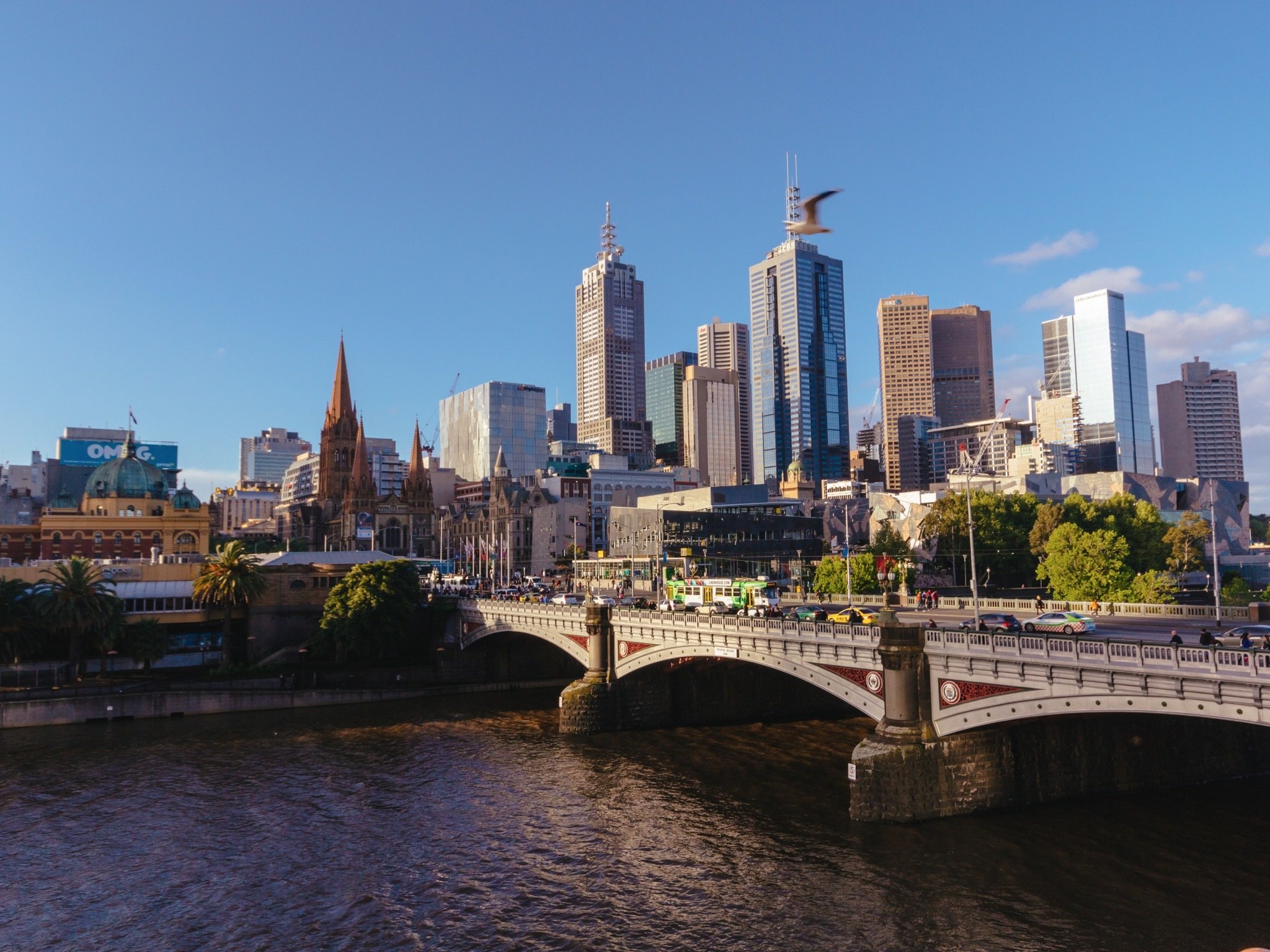
Melbourne is the kind of city that gets under your skin quietly. No dramatic harbour views, no single postcard landmark that defines the place at a glance. What it offers instead is something harder to photograph and more difficult to leave: a city built around the pleasures of daily life done extraordinarily well.
Great coffee. Brilliant food. World-class live music spilling out of pubs on Tuesday nights. Laneway bars tucked into alleys you only find by accident. An arts calendar that would embarrass cities three times its size.
Known to the Wurundjeri people of the Kulin Nation as Narrm, Melbourne is Victoria’s capital and Australia’s second-largest city, sitting on the Yarra River and opening onto Port Phillip Bay in the southeastern corner of the continent.
It has been ranked the world’s most liveable city plenty of times, holds more licensed restaurants and cafes per capita than almost any city in the world, and produces a coffee culture so particular that it has influenced café standards globally.
It invented Australian rules football, hosts the Australian Open Grand Slam, and takes its laneway street art, Saturday farmers’ market, and gallery openings with a seriousness that visitors find either charming or slightly intimidating. Usually both.
City essentials
Where to Stay in Melbourne
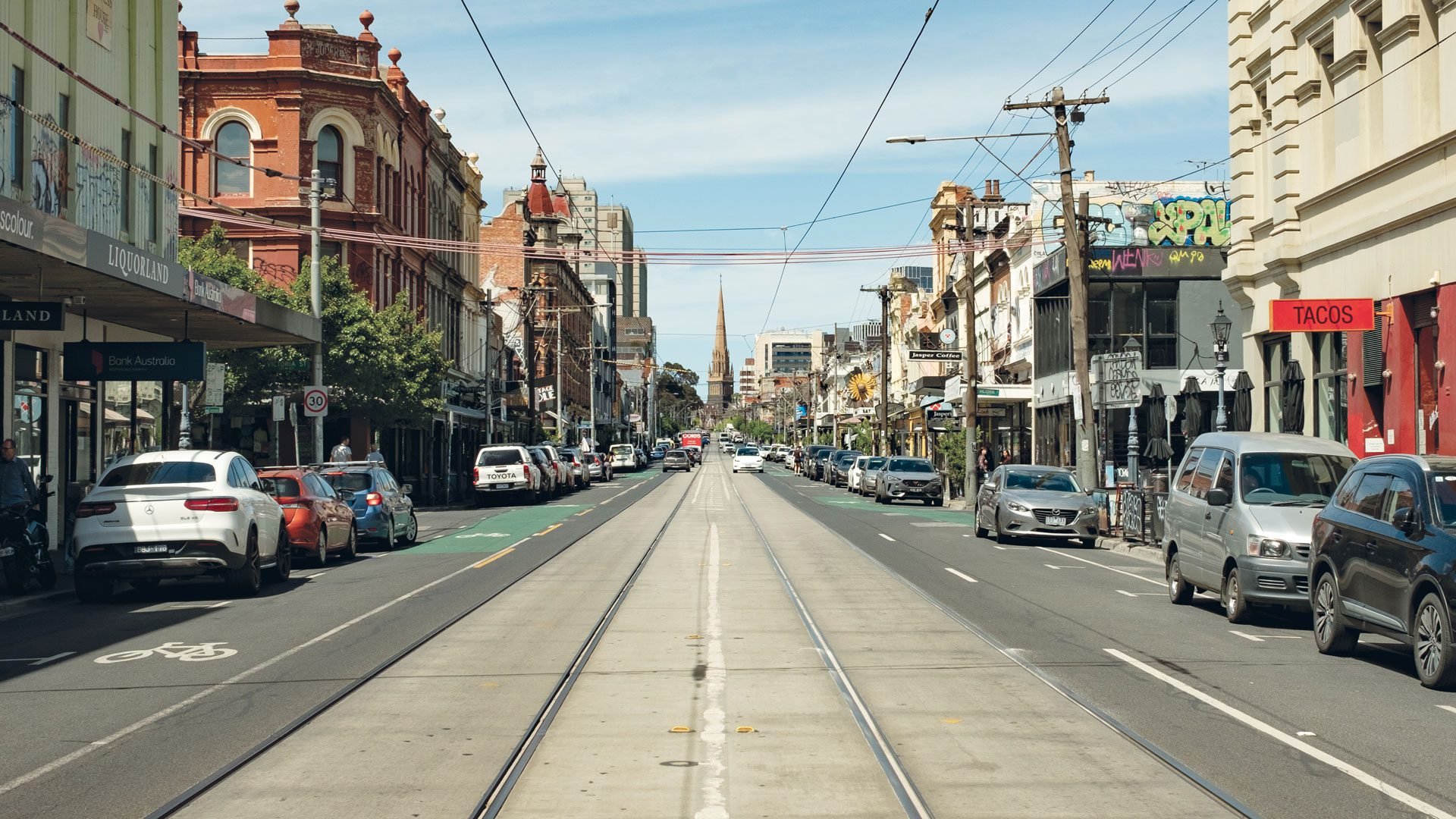
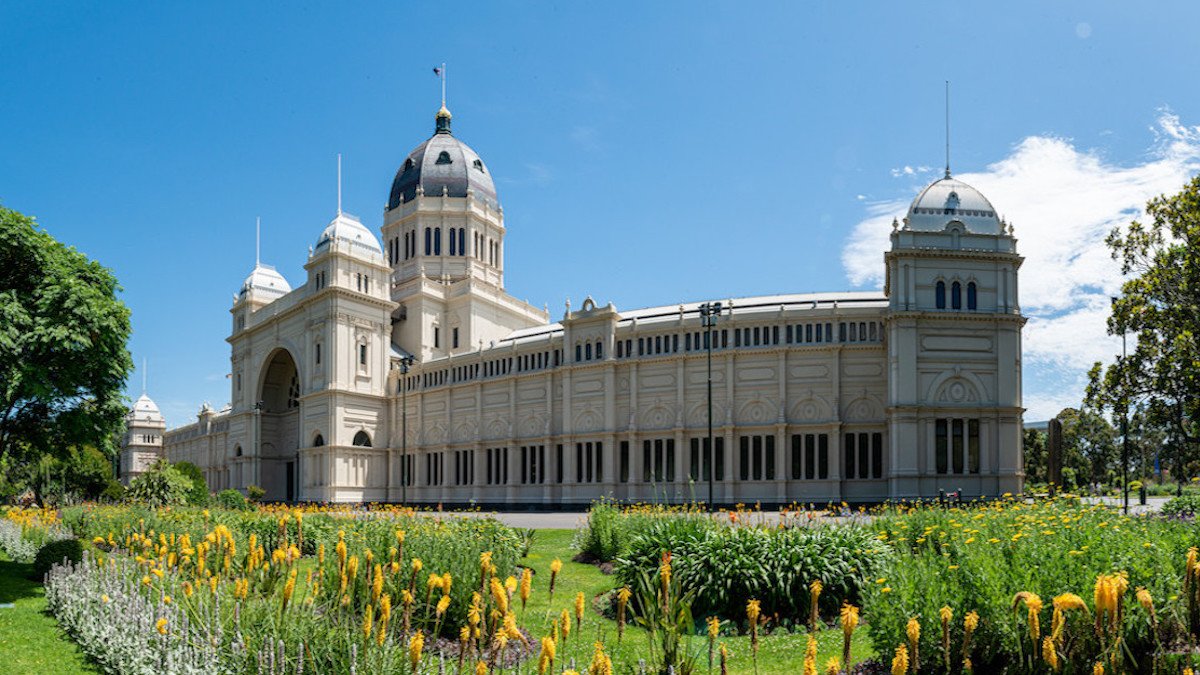
The CBD and Southbank are the most convenient bases for first-time visitors, located close to Flinders Street Station, Federation Square, the NGV, and the main tram corridors. Hotel Indigo Melbourne on Flinders is a design-forward boutique option in a restored heritage building. The Langham Melbourne on Southbank is the top-end pick with impeccable service and river views.
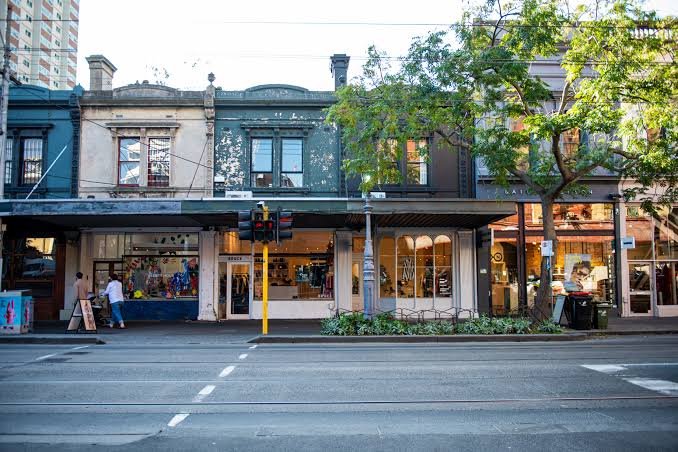
Fitzroy and Collingwood are where Melbourne's creative class actually lives. Brunswick Street in Fitzroy has the bookshops, brunch spots, and live music venues; Smith Street in Collingwood is the slightly younger sibling. Both put you close to the city's best eating and drinking, with a short tram ride from the CBD.
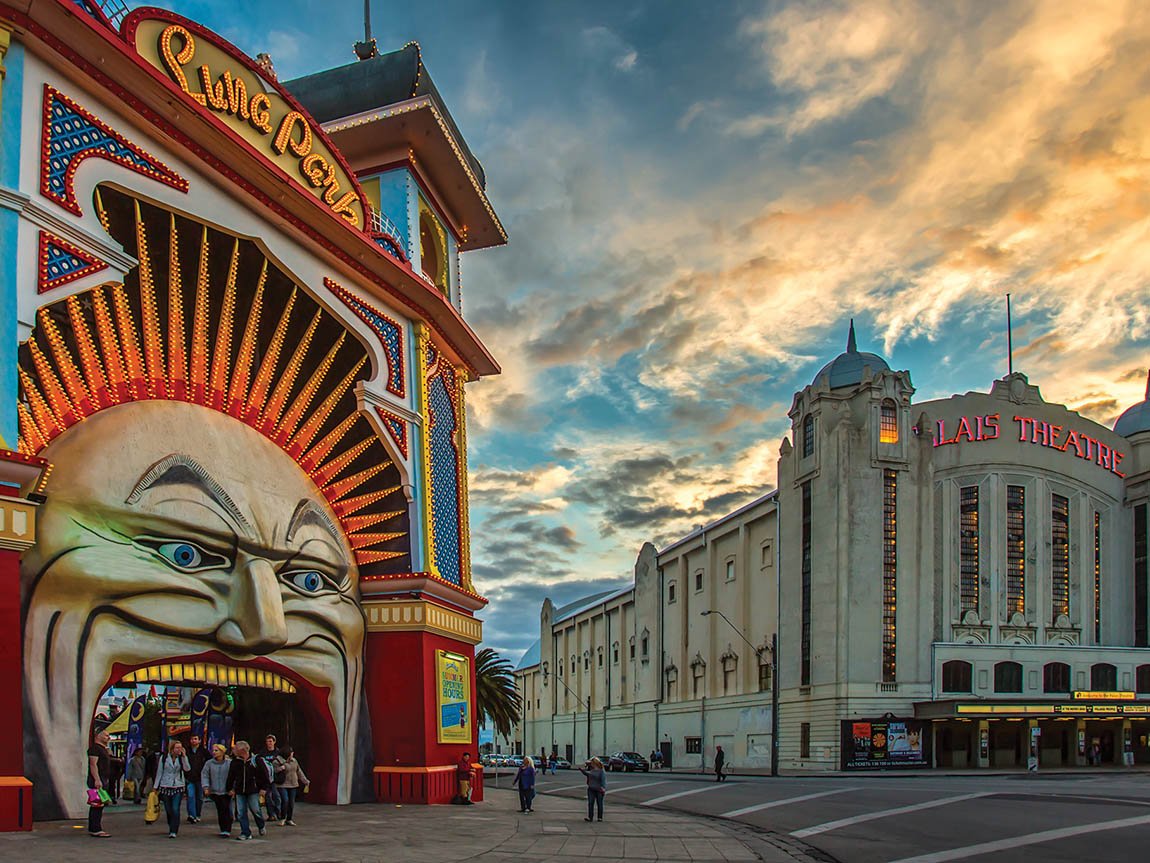
St. Kilda is the beachside option, with a pier, art deco foreshore, Luna Park, and Acland Street's cake shops. It is lively, occasionally chaotic, and excellent for families. Hotel Barkly is a solid mid-range choice here.
Carlton is Melbourne's Italian quarter, with Lygon Street's pasta restaurants and gelaterias sitting alongside the University of Melbourne. Quieter than Fitzroy and suits visitors who want neighbourhood character without the noise.
Getting There and Getting Around
Flying into Melbourne means arriving at one of two airports. Melbourne Airport at Tullamarine (MEL), 22 km northwest of the CBD, handles the vast majority of international and domestic arrivals. There is no direct rail link to the city, so most visitors arrive by SkyBus coach (30 to 45 minutes depending on traffic) or by Uber and DiDi, which are available at both terminals. A rail link has been in the planning stages for years but has faced significant political and funding delays, with the timeline now pushed well into the 2030s.
The second option, Avalon Airport (AVV), sits 55 km southwest of the city and handles a smaller number of domestic and budget international routes, also connecting to the CBD via SkyBus.
Getting around once you're there:
- Trams: Melbourne has the largest operational urban tram network in the world, covering over 250 km of track. The City Circle tram (Route 35) is completely free and loops the CBD. On other trams, tap on only. There is no need to tap off in Zone 1
- Trains: Serve the five City Loop stations (Flinders Street and Southern Cross at surface level; Flagstaff, Melbourne Central, and Parliament underground) and extend to all major suburbs
- Myki card: Available at 7-Eleven, newsagents, and stations. A contactless bank card upgrade is underway, but Myki remains mandatory during the rollout.
- Rideshare: Uber and DiDi are widely available, especially useful late at night
- Cycling and e-scooters: Lime and Neuron operate across the inner city. The Yarra River trail is excellent for cycling

Melbourne’s Iconic Sights
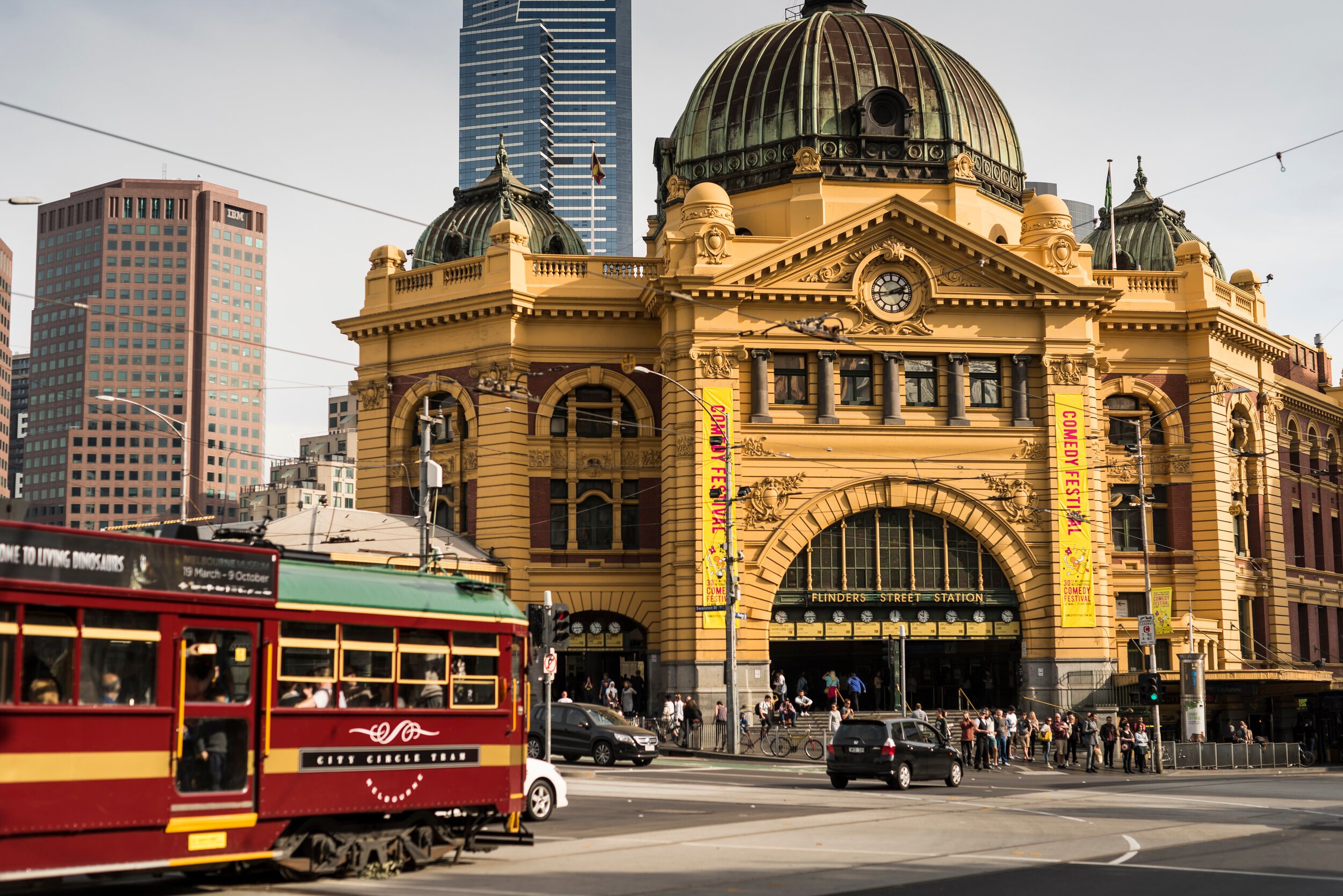
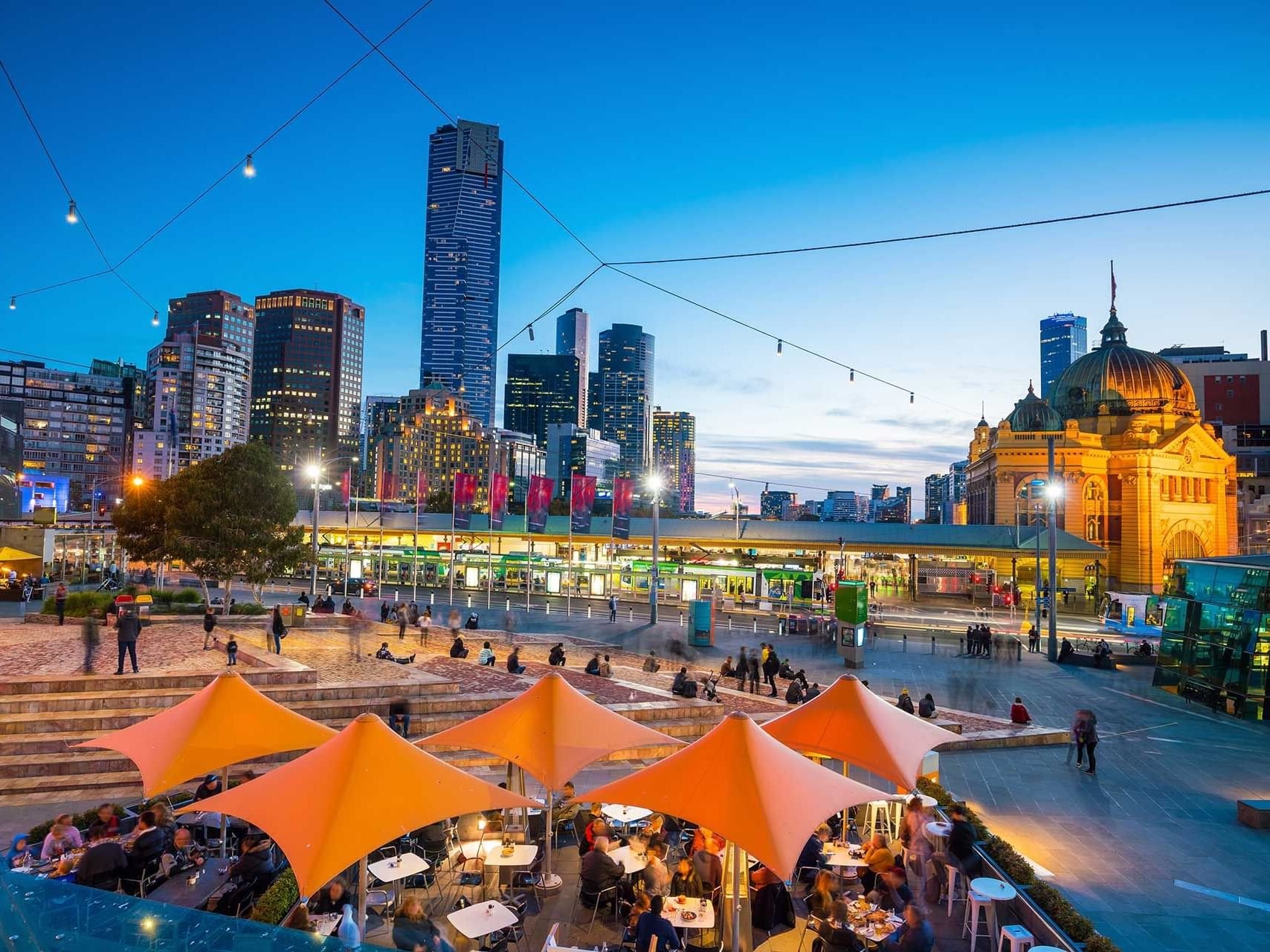
- Flinders Street Station is Melbourne's most recognisable building, the golden-domed Edwardian railway station at the corner of Flinders and Swanston Streets that has anchored city life since 1910. The steps beneath the clocks remain one of the great people-watching spots in the city.
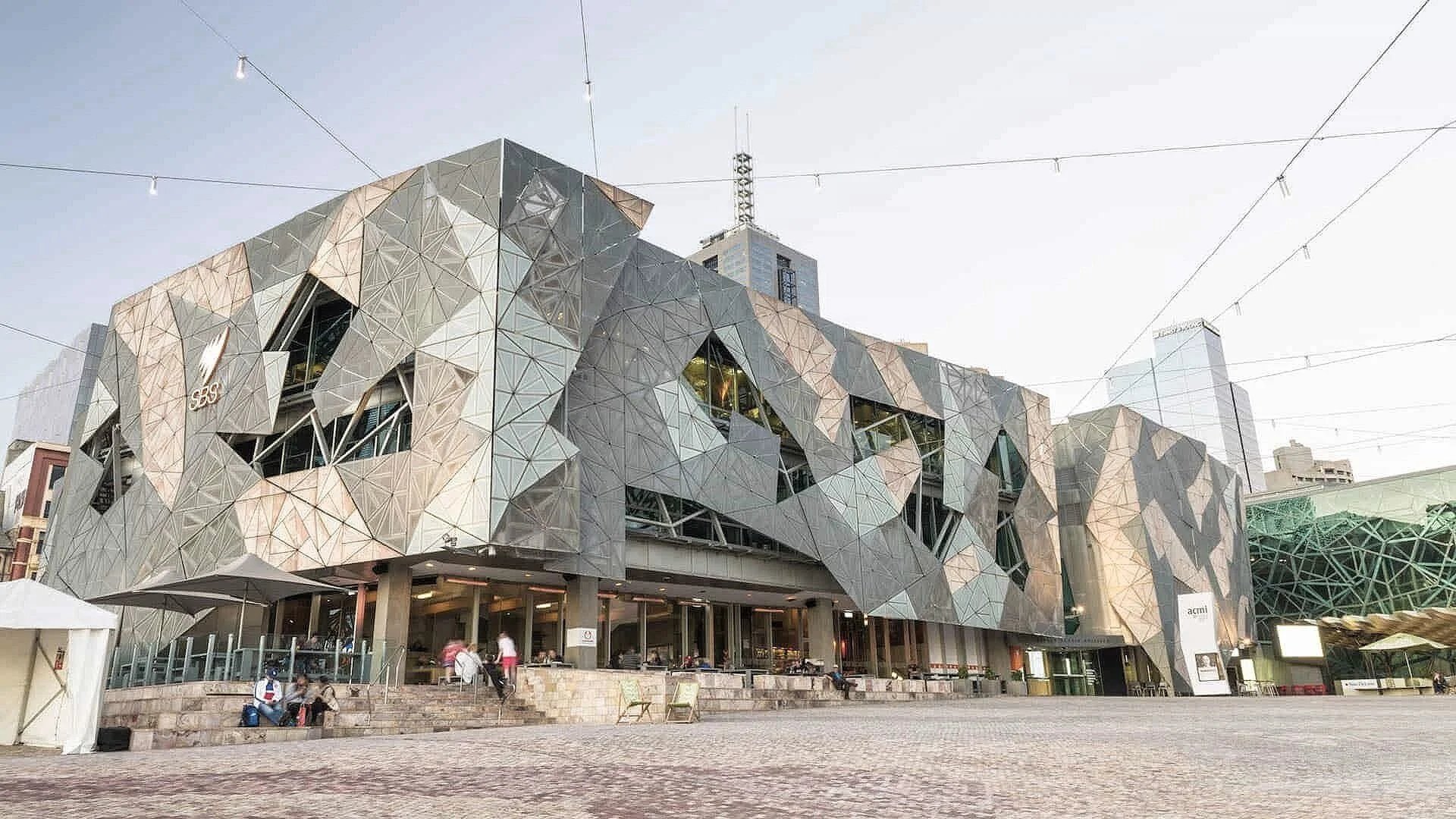
- Federation Square, directly opposite, is a fractured, angular public precinct that was deeply controversial when it opened in 2002 and is now simply part of Melbourne's identity. It houses the Ian Potter Centre: NGV Australia, with an extraordinary collection of Aboriginal and Torres Strait Islander works.
- The laneways are what most often surprise first-time visitors. Hosier Lane is the most famous for commissioned street art, but Centre Place, Degraves Street, Hardware Lane, and ACDC Lane all reward wandering. Many of Melbourne's best cafes and bars are found only by turning into laneways without signage. The absence of signage is the point.
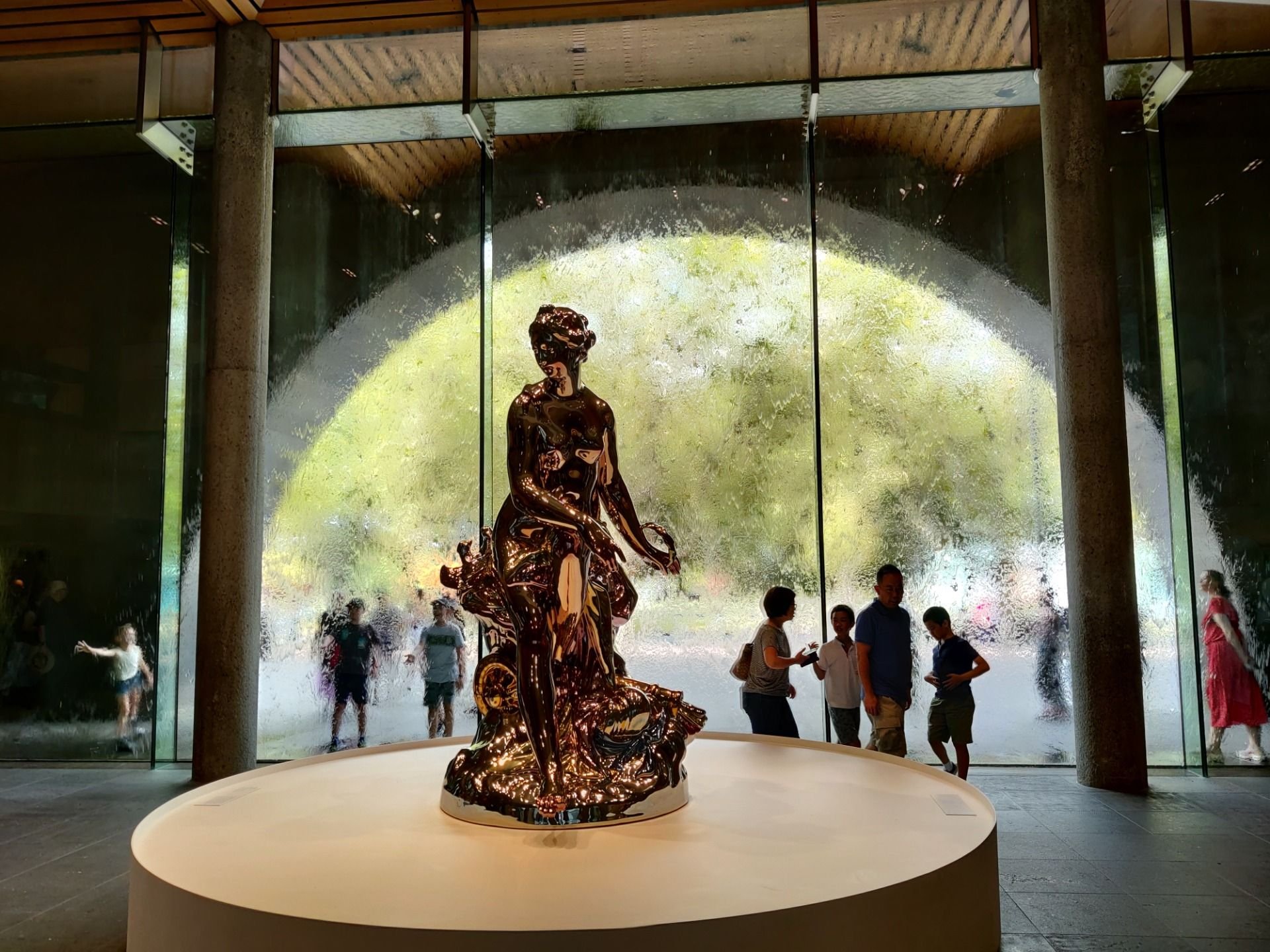
- The National Gallery of Victoria (NGV) on St Kilda Road is the oldest and most visited public art gallery in Australia. The permanent collection is free to enter. The annual NGV Triennial draws international attention alongside ticketed blockbuster exhibitions throughout the year.
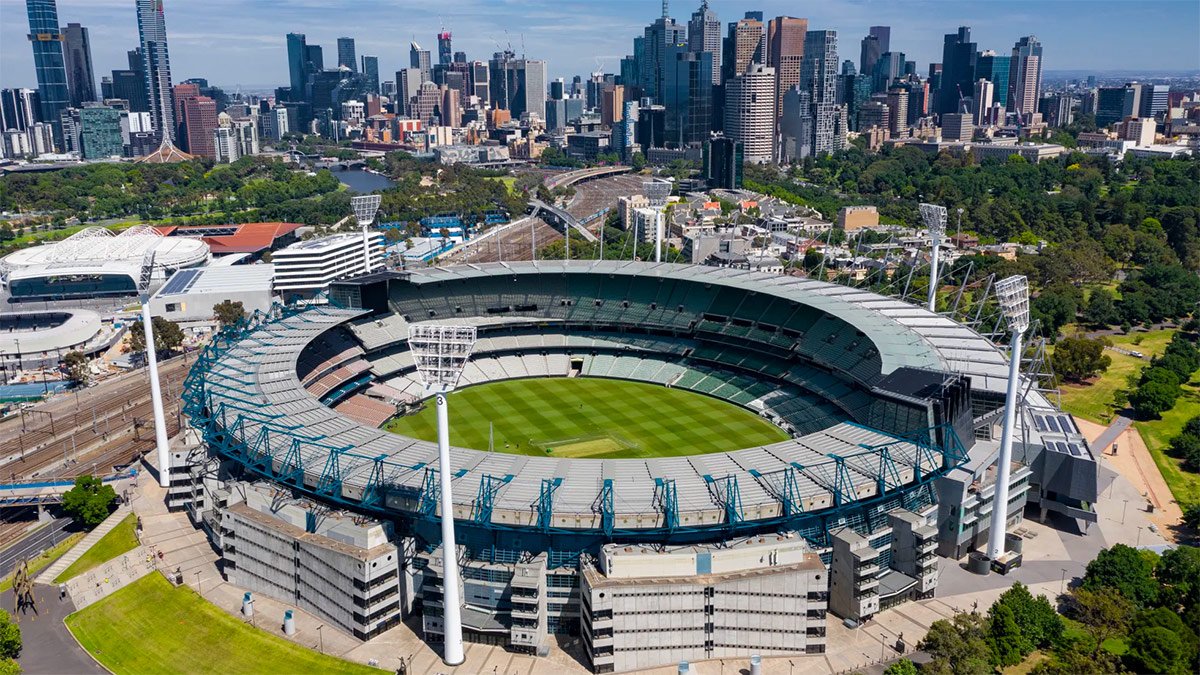
- The Melbourne Cricket Ground (MCG) holds 100,024 people, making it the largest stadium in the Southern Hemisphere. It has hosted the 1956 Olympic Games, Cricket World Cups, and more AFL grand finals than anywhere else. The MCG Tour takes visitors through the players' rooms, the Long Room, and the Australian Sports Museum. It is worth it even for non-sports fans.
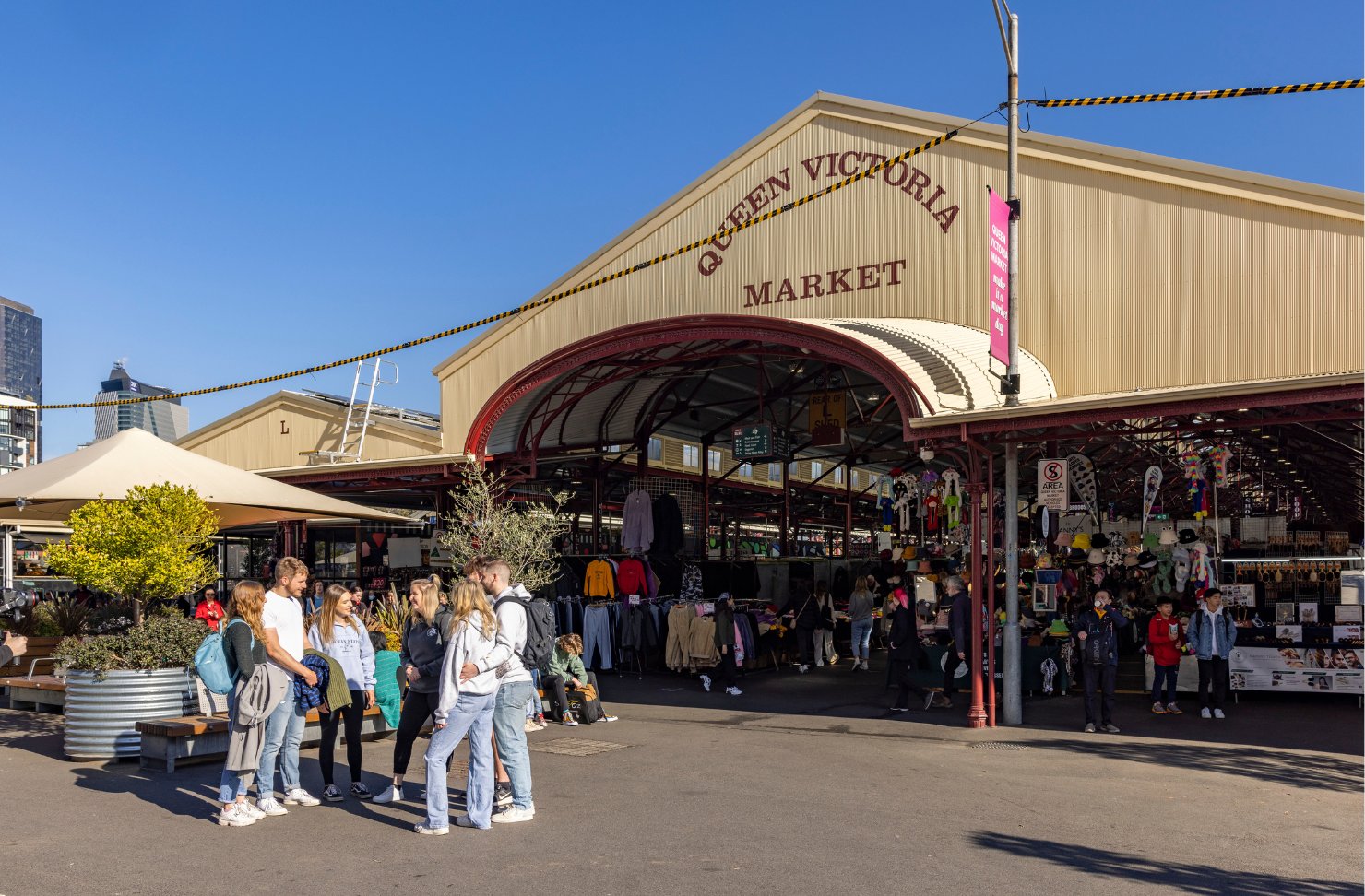
- The Queen Victoria Market, operating since 1878 across 7 hectares in the upper CBD, is the largest open-air market in the Southern Hemisphere. Saturday morning, when Melburnians shop for the week, is the best time to go. The summer night market is particularly atmospheric.
The Melbourne Food Guide
Melbourne's food culture is one of the city's primary attractions, and treating it seriously is the right approach.
Start with coffee, because in Melbourne it comes first. The flat white here is a specific, practiced thing: a double ristretto in a small ceramic cup with steamed microfoam milk, and the standard expected of it, even at an ordinary neighbourhood café, is notably higher than in most cities.
St. Ali in South Melbourne is often cited as the café that elevated the city's standards, while Market Lane Coffee (multiple locations) is the benchmark for single-origin, thoughtfully sourced beans. For neighbourhood institutions, Industry Beans on Rose Street in Fitzroy and Proud Mary in Collingwood are where locals go without thinking twice.
Breakfast culture is taken just as seriously. Auction Rooms in North Melbourne has been one of the most respected all-day spots in the city for years, and Hash Specialty Coffee and Roasters at Hardware Lane in the CBD and in Camberwell does excellent food alongside the coffee.
For dinner, the range is the point. Attica in Ripponlea is Melbourne's most celebrated fine-dining restaurant, regularly appearing on the World's 50 Best Restaurants list for Ben Shewry's intensely personal, Australian-ingredient-focused tasting menu.
Gimlet at Cavendish House in the CBD is the sophisticated modern European option for anyone who wants polished food in a beautiful room. Supernormal does excellent modern Asian with a seafood-forward menu, and Fitzroy's Tipo 00 is the destination for handmade pasta executed with quiet precision.
For something more relaxed, Lygon Street in Carlton remains Melbourne's original Little Italy and rewards an unhurried evening, while Footscray in the western suburbs is the city's best neighbourhood for Vietnamese food.
When the evening shifts to drinks, Eau de Vie in the CBD does theatrical cocktails in a speakeasy-style space. The Everleigh in Fitzroy is the benchmark for the serious, carefully made classic cocktail. And Rooftop at QT gives you an outdoor terrace above the CBD roofline for a nightcap with the city spread out below.
Arts, Culture and Music
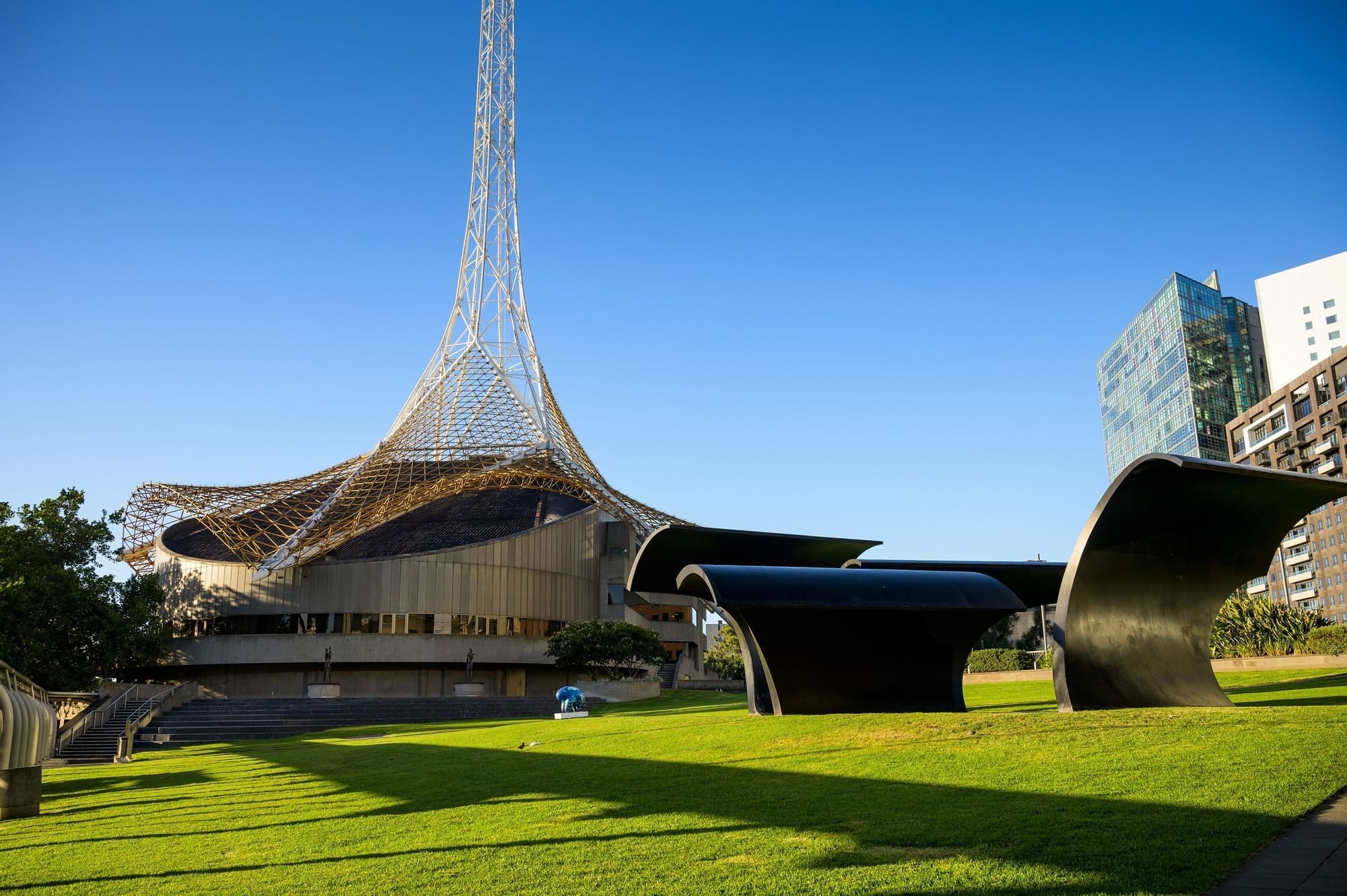
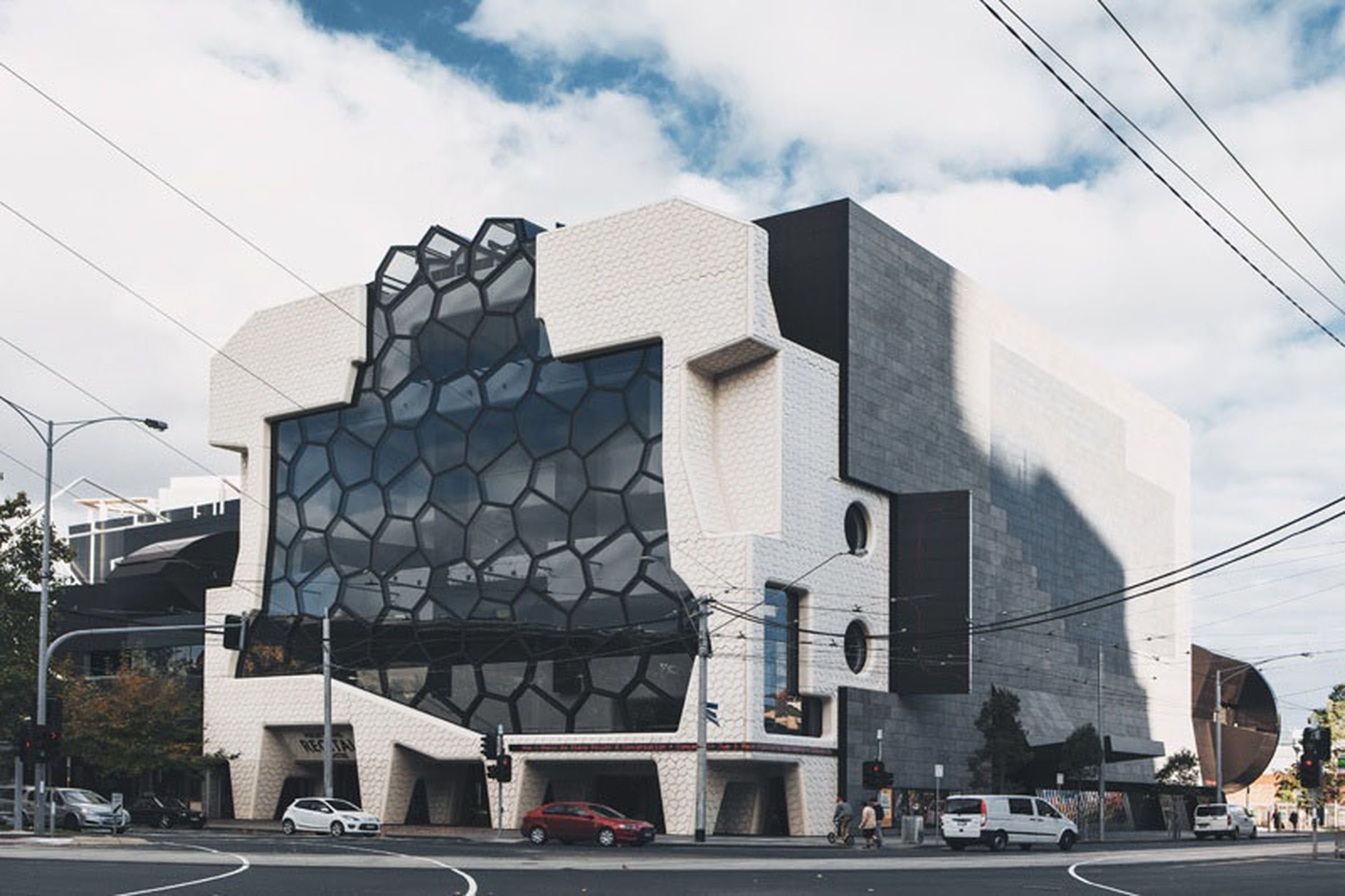
Melbourne's cultural life is anchored by the Arts Centre Melbourne in Southbank, which houses the State Theatre, Hamer Hall, and the Playhouse under one distinctive spire.
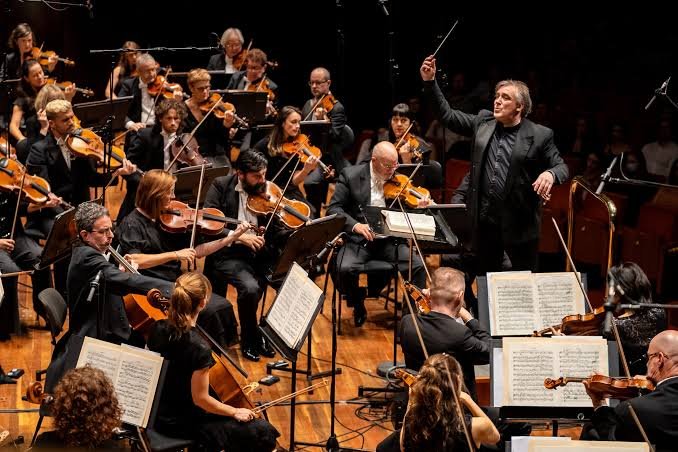
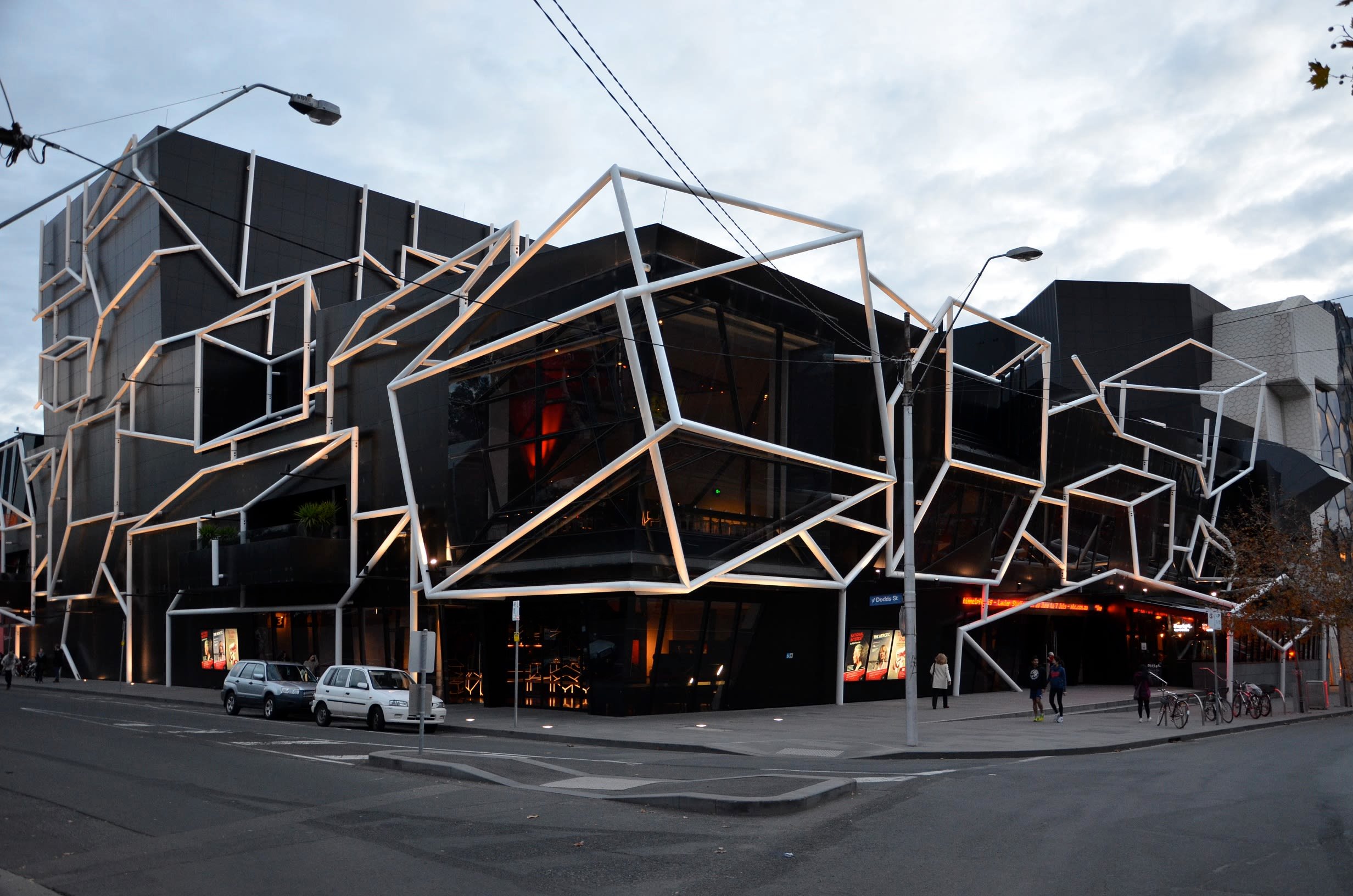
The Melbourne Symphony Orchestra performs regularly at Hamer Hall, and the Melbourne Theatre Company is one of the most significant English-language theatre companies in the Southern Hemisphere, presenting everything from new Australian writing to major international productions.
Beyond the formal venues, live music is where Melbourne's cultural identity is arguably strongest. The city has built one of the world's most active scenes relative to its size, rooted in an inner-city pub venue culture that developed from the 1970s onwards and outlasted similar scenes in other cities.
The range is considerable: The Corner Hotel in Richmond, The Tote in Collingwood, and The Espy in St Kilda cover everything from three-chord guitar bands in sticky-floored rooms to polished jazz sets at the Melbourne Recital Centre in Southbank.
Public art rounds out the picture. Street art in Melbourne is not vandalism tolerated but a commissioned, curated cultural practice, and the city wears it openly. Hosier Lane is the most famous expression of it, with cobblestones and layered murals renewed on a rolling basis, but Union Lane and a walk through Fitzroy's back streets reveal just how thoroughly the city has integrated public art into its everyday identity.
Melbourne's Sporting Obsession
Sport in Melbourne is not entertainment. It is identity.
- AFL is the dominant code, and attending a match at the MCG or Marvel Stadium during the April to September season is one of the great sporting atmospheres in the world. The game is fast, physical, and entirely unlike any other football code. Tickets for regular-season games are easy to get.
- The Australian Open transforms Melbourne Park every January into one of the most exciting grand slam environments anywhere, with Rod Laver Arena, Margaret Court Arena, and John Cain Arena creating a multi-venue festival atmosphere around the tennis. Ground passes are affordable and easy to purchase, but keep in mind that the stadium sessions book out well in advance.
- The Melbourne Cup in November is the horse race that stops the nation, held at Flemington Racecourse, 3 km from the CBD. The Melbourne Cup Carnival surrounding it turns the city into a fashion-and-champagne spectacle for an entire week.
- The Formula 1 Australian Grand Prix takes over Albert Park Lake in March, as much a city festival as a motorsport event. General admission covers most of the park. The grandstand tickets book out early.
Popular Attractions in Melbourne
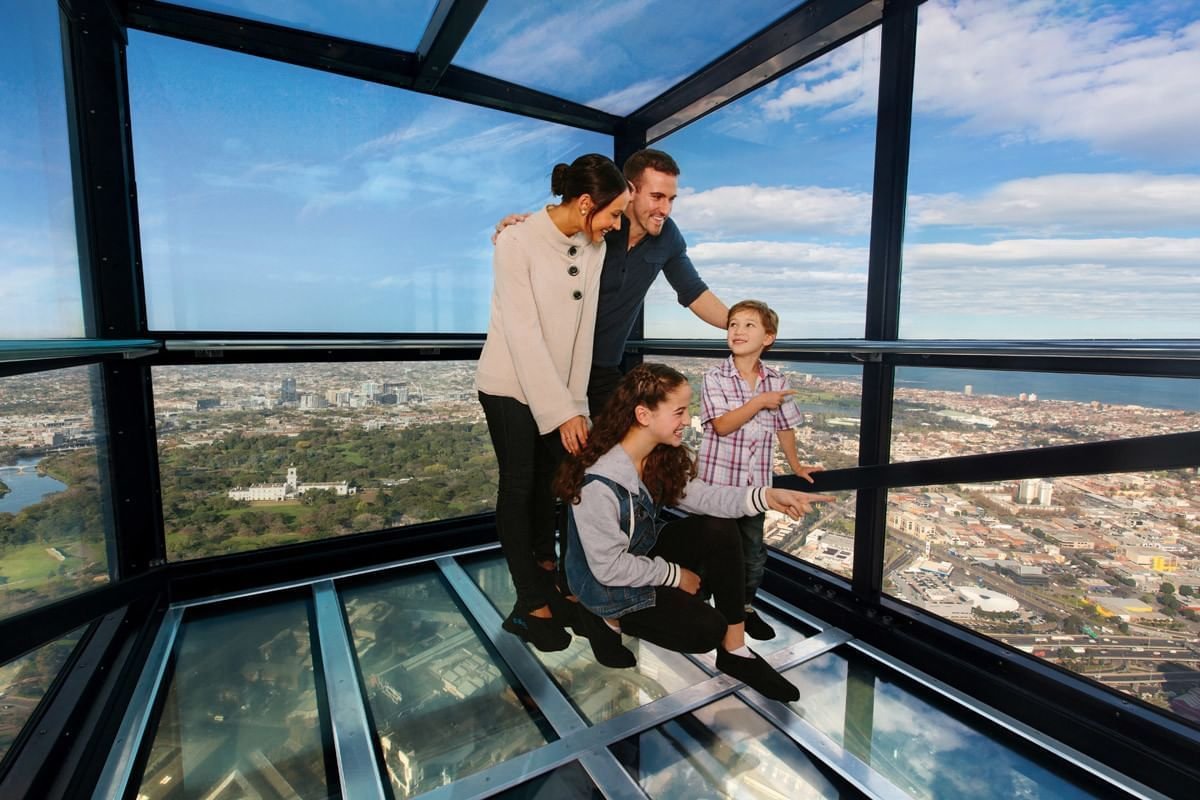
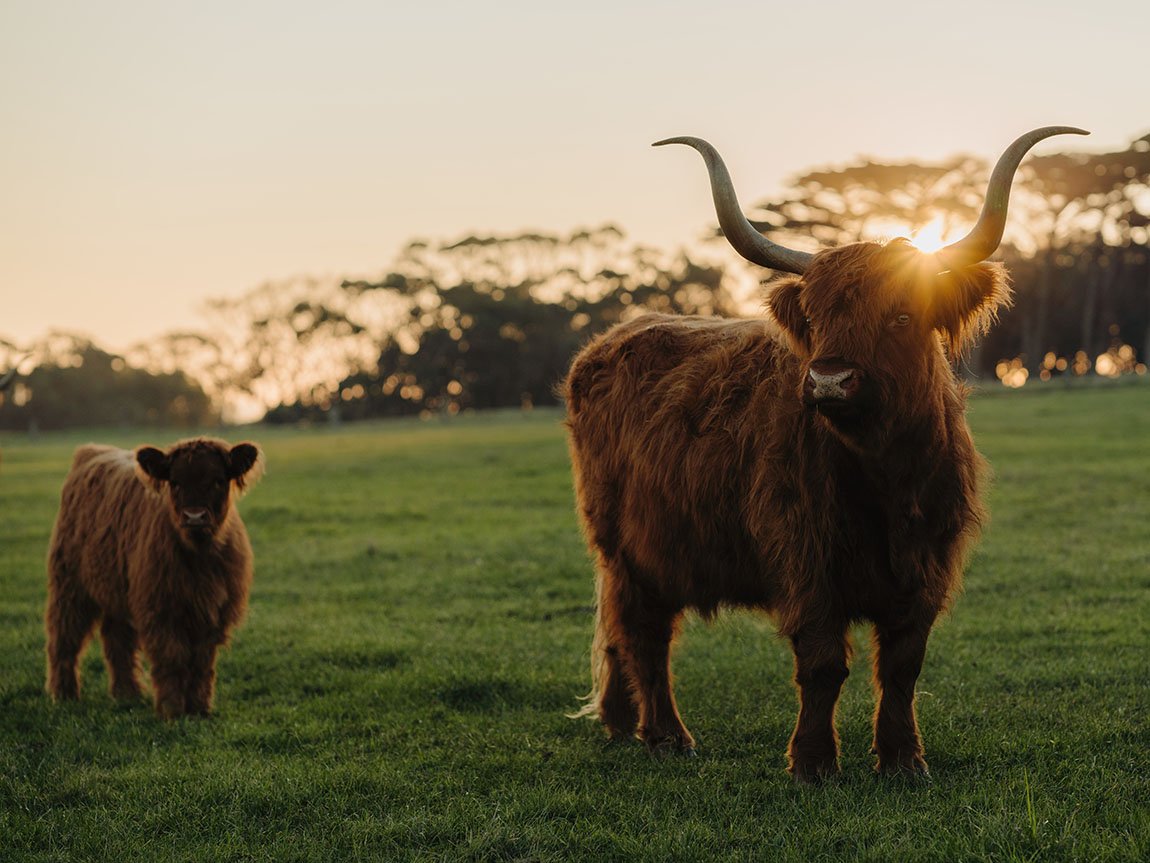
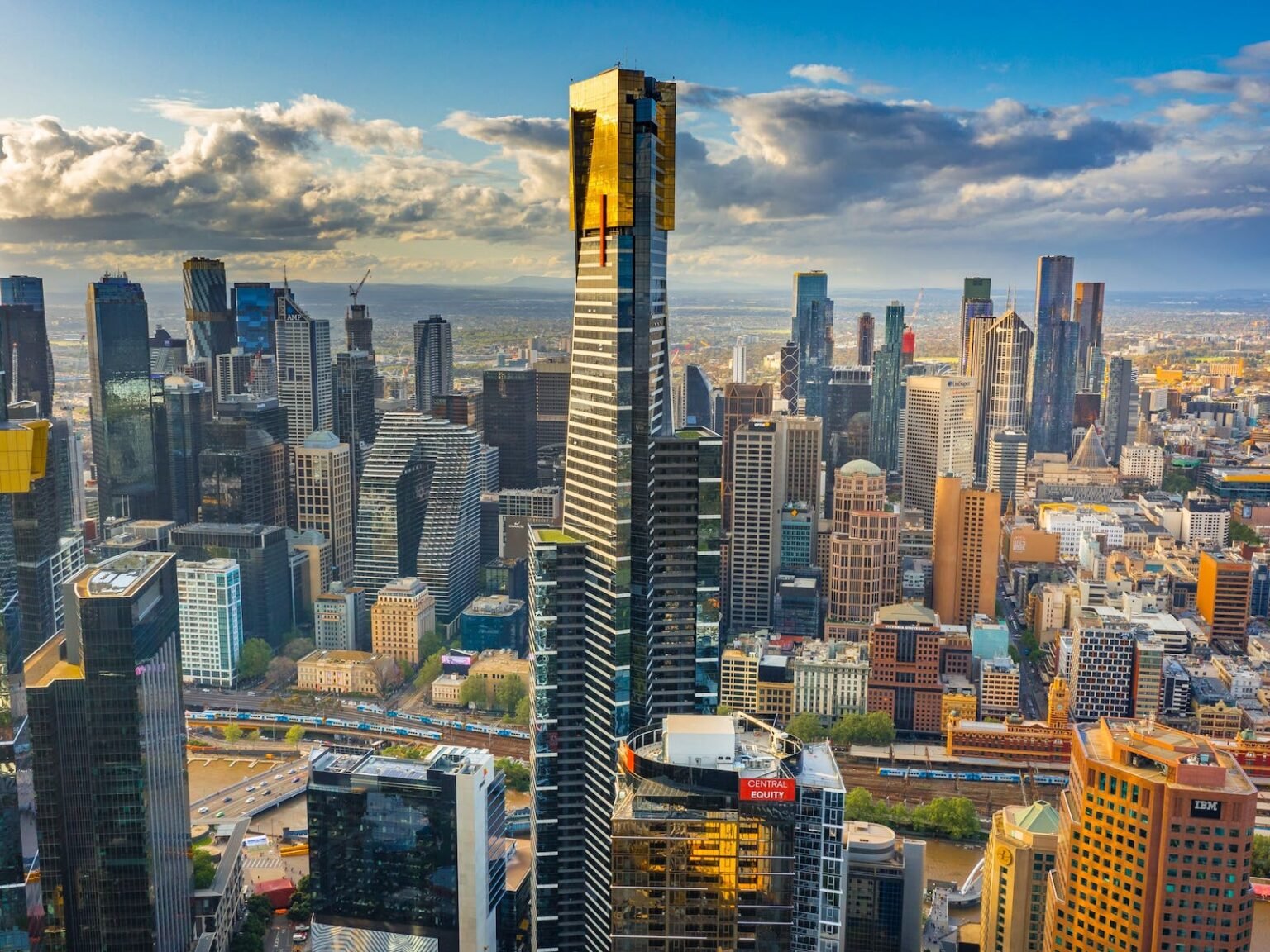
- Melbourne Skydeck at Eureka Tower is the highest observation deck in the Southern Hemisphere, on the 88th floor with 360-degree views across the city, Port Phillip Bay, and the Dandenong Ranges. The Edge extends a glass cube from the building's exterior over the city skyline and is genuinely not for the faint-hearted.
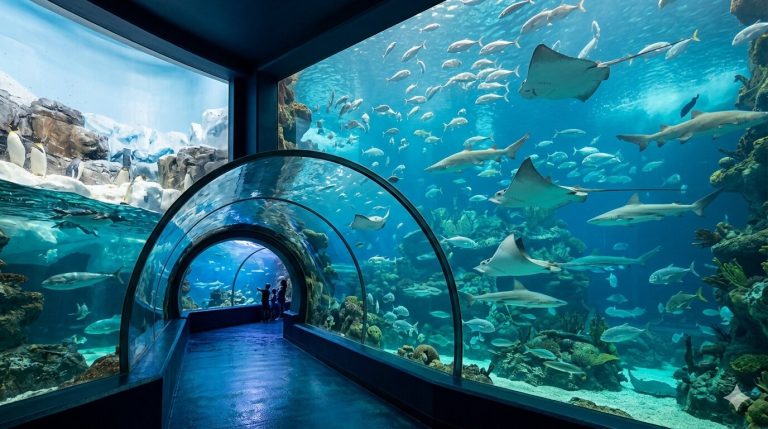
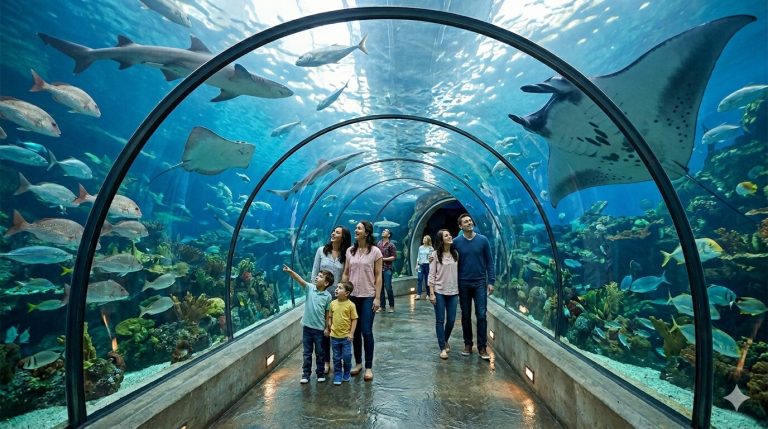
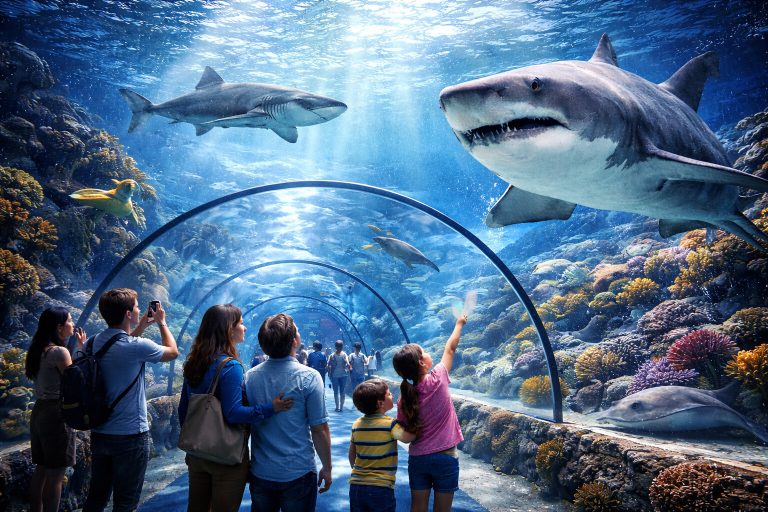
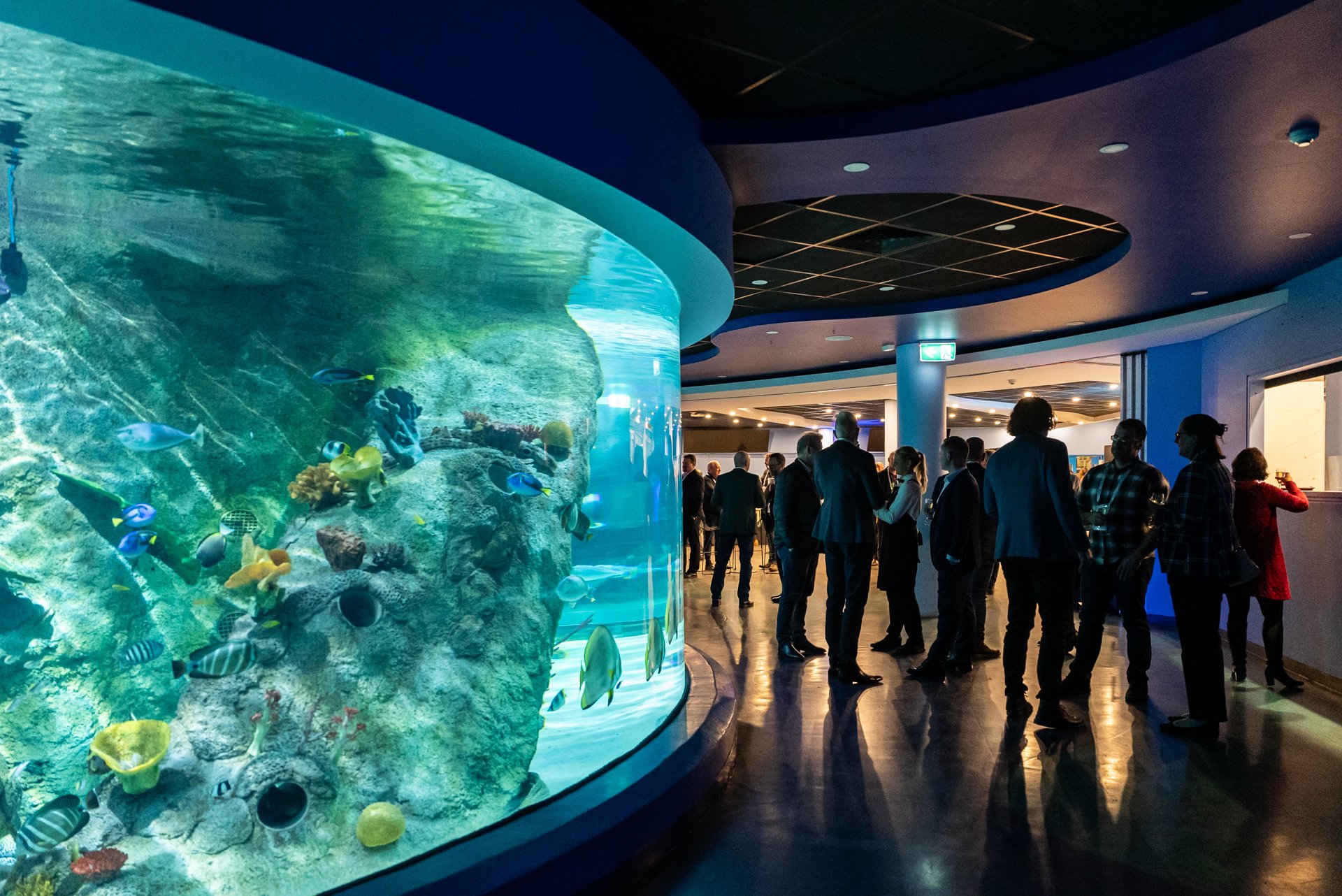
- SEA LIFE Melbourne Aquarium on the CBD waterfront houses a 2.2 million liter oceanarium, King and Gentoo penguins, and shark dive experiences for certified and non-certified divers alike. It pairs well with the Melbourne Museum as a combined visit, and there are combo options that also bundle in LEGOLAND Discovery Centre for families.
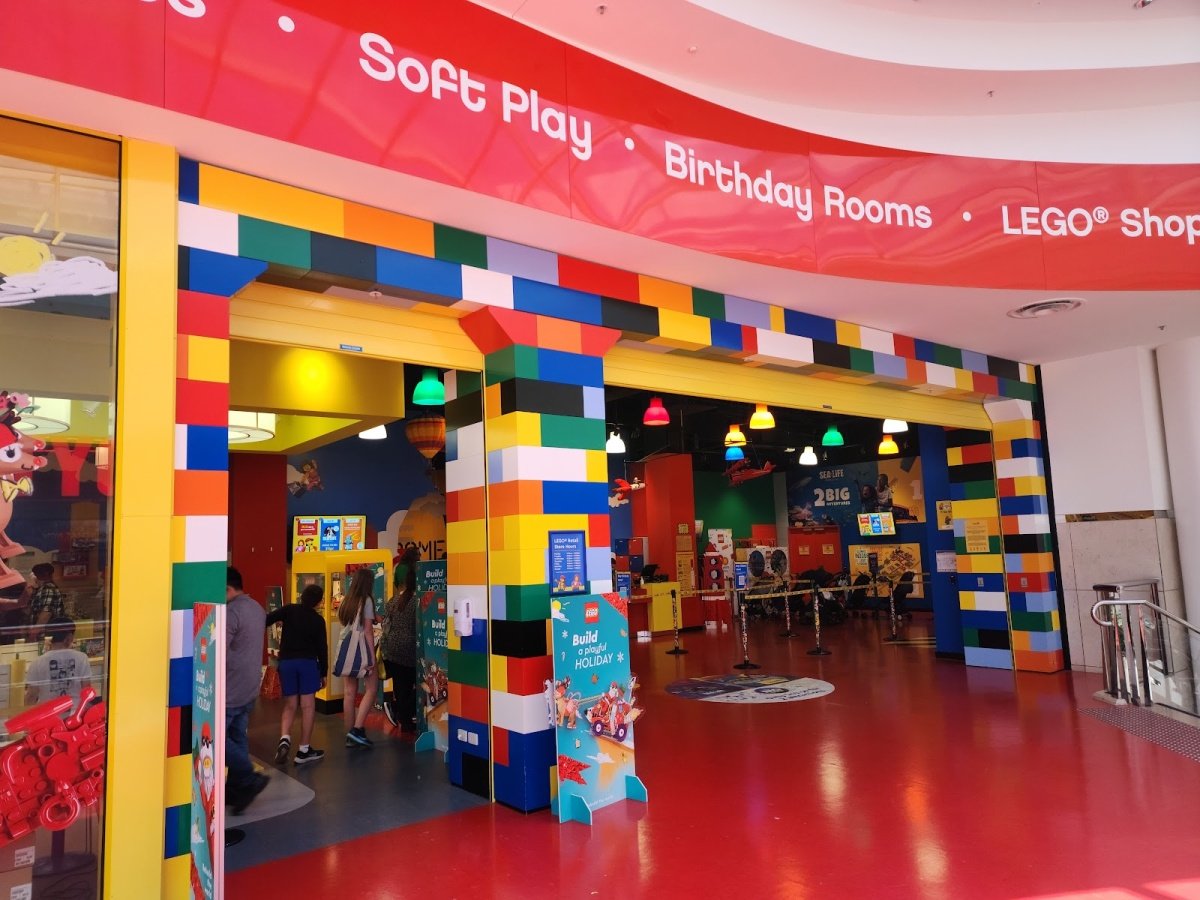
- LEGOLAND Discovery Centre Melbourne at Chadstone is a purpose-built indoor LEGO experience with rides, 4D cinema, building zones, and a factory tour explaining how LEGO bricks are made. It is designed for children under 12 and a genuinely excellent choice for families making a full day of it.
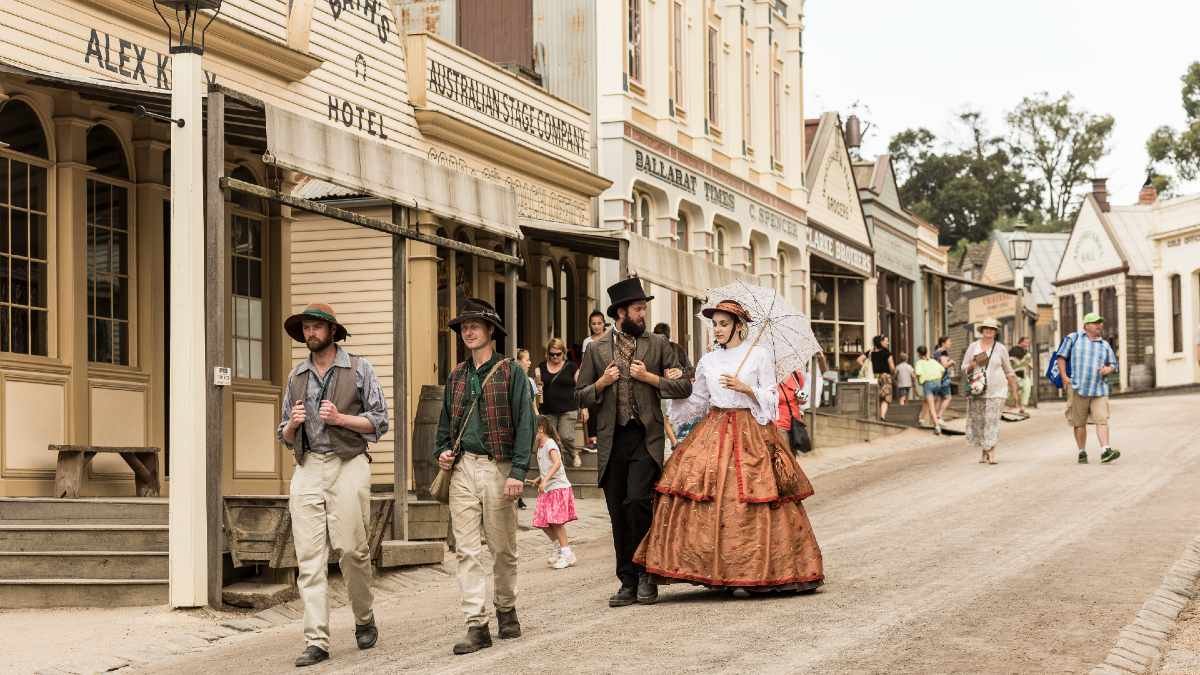
- Sovereign Hill in Ballarat, 90 minutes from Melbourne, recreates the 1850s Ballarat gold rush with costumed characters, underground mine tours, and gold panning that produces real results. One of the best living history museums in Australia and a consistently strong day-trip choice from the city.
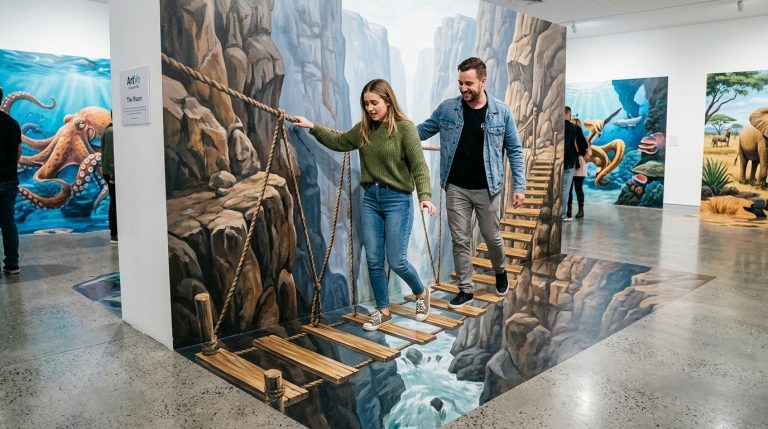
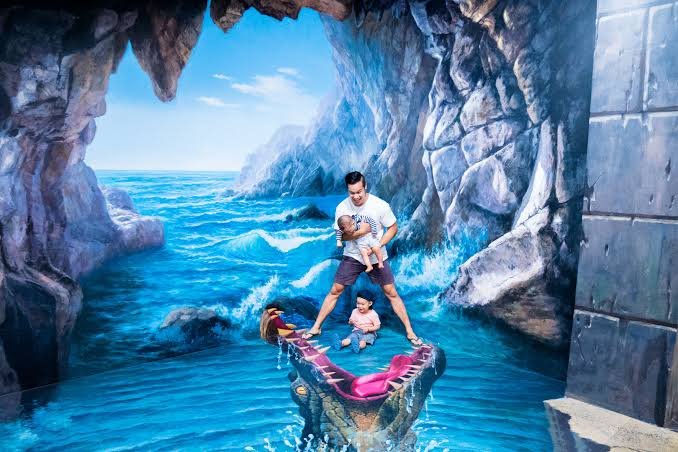
- ArtVo Melbourne at District Docklands is an immersive 3D trick-art gallery where visitors step into optical illusion installations and become part of the artwork. It is well-suited to groups, families, and anyone who enjoys interactive experiences.
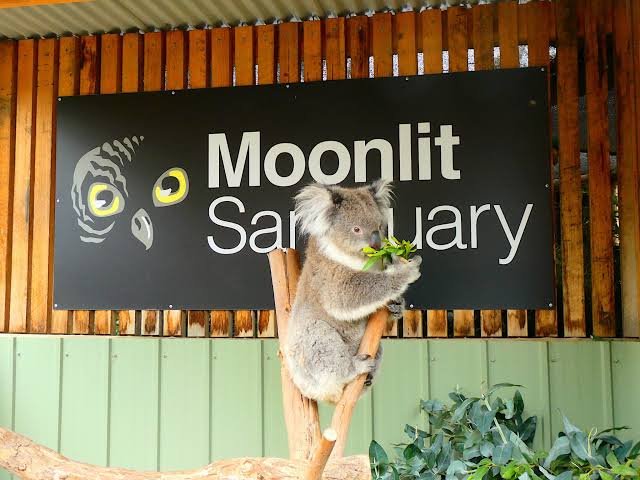
- Moonlit Sanctuary Wildlife Conservation Park on the Mornington Peninsula specialises in nocturnal wildlife encounters, with quolls, potoroos, powerful owls, and gliders most active after dark.
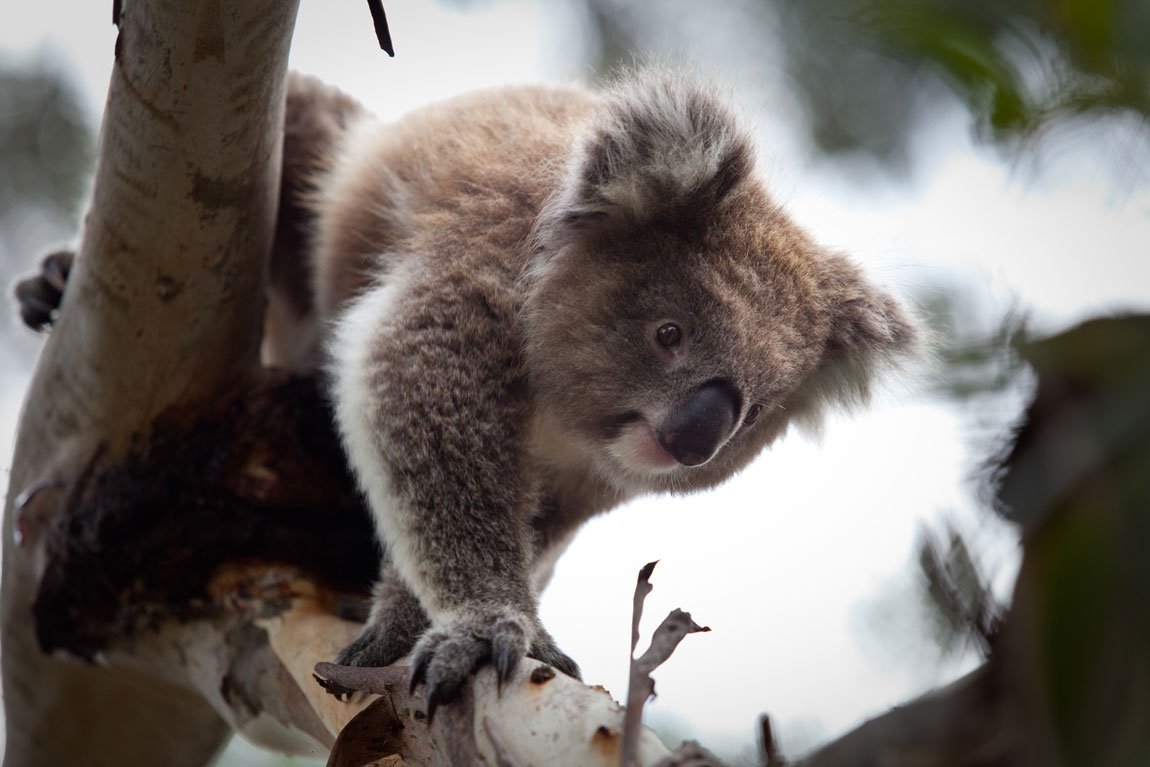
- The Koala Conservation Reserve on Phillip Island lets visitors see koalas in natural bushland treetops on raised boardwalks, while Churchill Island Heritage Farm offers a look at Victoria's first European farm with daily heritage demonstrations and one of the most peaceful settings within easy reach of the city.


Day Trips Worth Taking
- The Great Ocean Road begins just over an hour southwest of Melbourne and runs 243 km through surf towns and national parks, culminating at the Twelve Apostles limestone stacks rising from the Southern Ocean. It is best done over two days with a stop in Lorne or Apollo Bay, though the Apollo Bay to Twelve Apostles stretch is manageable as a long day trip.
- The Yarra Valley is an hour east. It is Victoria's premium cool-climate wine region, producing exceptional Pinot Noir and Chardonnay. Healesville Sanctuary here offers excellent platypus, koala, and native bird encounters. The Puffing Billy Railway at Belgrave in the Dandenong Ranges, frequently paired with a Yarra Valley visit, is a restored steam railway and a genuine family favourite.
- Phillip Island is 140 km southeast and is worth the drive for the Penguin Parade alone. The parade takes place every evening at dusk. You get to see hundreds of Little Penguins (the world's smallest penguin species) emerge from the Southern Ocean and waddle to their burrows. It is one of the most extraordinary wildlife experiences in Australia.
- The Mornington Peninsula is 80 km south, offering wineries, hot springs, surf beaches, and clifftop walks at Cape Schanck. Peninsula Hot Springs near Fingal is the most sophisticated thermal bathing experience in Victoria.
- Daylesford, 90 minutes northwest, is Victoria's spa country built around natural mineral springs. The Hepburn Bathhouse and Spa draws Melbourne weekenders for its mineral pools. The broader area is excellent for antique shops, local produce, and genuine quiet.
When to Visit and Key Events
- Autumn (March to May) is the local favourite with warm days, cool evenings, and a city that has exhaled after summer. The light in April is extraordinary. The Melbourne Food and Wine Festival (March) and Melbourne International Comedy Festival (March to April, the third-largest comedy festival in the world) both fall here.
- Summer (December to February) is peak season with the Australian Open in January as the anchor event. Melbourne summers can hit above 40°C, and the four-seasons-in-one-day phenomenon is real. Come prepared for heat and a sudden cold change in the same afternoon.
- Winter (June to August) suits the city well. Melbourne rarely drops below 5°C, and it shifts indoors, which for a city defined by bars, restaurants, galleries, and music venues, is not a problem. RISING (June, the major winter arts festival), the Melbourne International Jazz Festival (June) and MIFF (July to August, one of the world's oldest film festivals, running since 1952) all fall here.
- Spring (September to November) brings AFL finals, the Melbourne Cup Carnival, and the energy of a city emerging from winter. Gardens are in flower, and outdoor café culture resumes fully.
Melbourne Itineraries
 3 Day Itinerary
Melbourne, Australia
 5 Day Itinerary
Melbourne, Australia
 7 Day Itinerary
Melbourne, Australia
Practical Tips Before You Go
- The City Circle tram (Route 35) is completely free and loops the CBD. Use it on your first day
- Use a Myki card for all other public transport. On trams, tap on only; on trains and buses, tap on and tap off. Check ptv.vic.gov.au for the current status of contactless card acceptance during the ongoing rollout
- Four seasons in one day is real. Always carry a layer and a compact umbrella
- Book restaurants ahead on Resy or OpenTable, at least a week for weekends and two weeks for the city's most sought-after tables
- Coffee order etiquette: "large coffee" is not a recognised order. Ask for a flat white, long black, cappuccino, or latte
- Sun protection is essential in summer. UV levels are extreme, and the temperature changes fast enough that people underestimate cumulative exposure
- Late-night transport: trains run to approximately midnight on weekdays; trams stop earlier. Uber and DiDi are reliable after that
Melbourne doesn't announce itself. It accumulates: a great coffee here, a laneway you didn't expect to find, a live set that turns out to be one of the best things you've heard all year, and a long Saturday lunch that becomes dinner without anyone noticing. It rewards the traveler who slows down enough to let it happen.
Head to Thrillark to book your Melbourne experiences and make every day in Australia's culture capital count.
Frequently Asked Questions About Melbourne
What is Melbourne most famous for?
Melbourne is most famous for its food and café culture, its laneways and street art, its live music scene, and its sports culture, particularly Australian rules football and the Australian Open. It has been ranked the world's most liveable city more times than any other and has a performing arts and gallery scene that makes it Australia's undisputed culture capital. It is a city that reveals itself gradually and rewards visitors who wander beyond the obvious.
What is the best area to stay in Melbourne for first-time visitors?
The CBD and Southbank are the most convenient bases for first-timers, close to Flinders Street Station, Federation Square, the NGV, and the tram network. Fitzroy and Collingwood are the better choices for visitors who prioritise neighbourhood character and excellent food over tourist convenience. St Kilda suits families and beach-oriented visitors, with tram access to the city and a lively foreshore.
Is the Great Ocean Road worth doing as a day trip from Melbourne?
The Great Ocean Road is worth doing, though seeing it properly needs at least one overnight stay. The road begins about 90 minutes southwest of Melbourne and runs 243 km to the Twelve Apostles limestone stacks. A long day trip from Apollo Bay to the Twelve Apostles is manageable, but staying overnight in Lorne or Apollo Bay allows you to see the stacks at both sunset and sunrise before the coaches arrive.
When is the Australian Open, and how do you get tickets?
The Australian Open runs annually in January at Melbourne Park for approximately two weeks from mid-January. Ground passes giving access to all outdoor and practice courts are available daily and easy to purchase through the official website. Rod Laver Arena stadium sessions, particularly evening matches in the second week, sell out quickly and should be booked months ahead.
What wildlife can you see near Melbourne?
The Penguin Parade on Phillip Island, where hundreds of Little Penguins waddle ashore from the ocean every evening at dusk, is the most famous nearby wildlife experience. Healesville Sanctuary in the Yarra Valley offers excellent platypus, koala, and native bird viewing in a conservation setting. The Moonlit Sanctuary on the Mornington Peninsula is the best option for nocturnal wildlife after dark.
What is the Myki card, and do you need one?
The Myki card is Melbourne's reloadable transit card and the most reliable payment method across the network. On trams, tap on only; tapping off is not required unless your journey is entirely in Zone 2. On trains and buses, tap on and tap off. The City Circle tram is completely free. A contactless card upgrade is underway, but Myki remains mandatory for most travelers during the rollout period.
What makes Melbourne's coffee scene so special?
Melbourne's coffee culture developed in the 1950s through Italian and Greek immigration that brought espresso culture to Australia before it existed almost anywhere else in the English-speaking world. The flat white, a double ristretto with microfoamed milk in a small ceramic cup, is the benchmark, and the standard expected of it, even at an ordinary neighbourhood café, is notably higher than in most cities. The specialty coffee scene centered in Fitzroy, Collingwood, Northcote, and South Melbourne places Melbourne alongside London, New York, and Tokyo as one of the world's most serious coffee cities.
Browse by themes
Attractions in Melbourne