
Imagine a single building where you can stand under battling elephants, lock eyes with the most complete T. rex ever found, descend into an Egyptian tomb, and crane your neck at a dinosaur so big it makes school buses look shy. That’s the Field Museum of Natural History – Chicago’s cathedral of curiosity, packed with around 40 million specimens and artifacts spanning 4 billion years of Earth’s story.
It’s one of the largest and most beloved natural history museums on the planet, and you could visit a dozen times and still find something new.
You’ll find it at 1400 S. DuSable Lake Shore Drive, holding court on Chicago’s lakefront Museum Campus (a neighbor to the Shedd Aquarium and Adler Planetarium). The museum is open daily from 9 a.m. to 5 p.m., with last entry at 4 p.m., and closes only on Thanksgiving and Christmas Day.
Whether you’re a dino-obsessed kid, a gem-loving grown-up, or a culture buff who could spend all day in one hall, the Field has a rabbit hole with your name on it.


Born from a World’s Fair: A Quick History
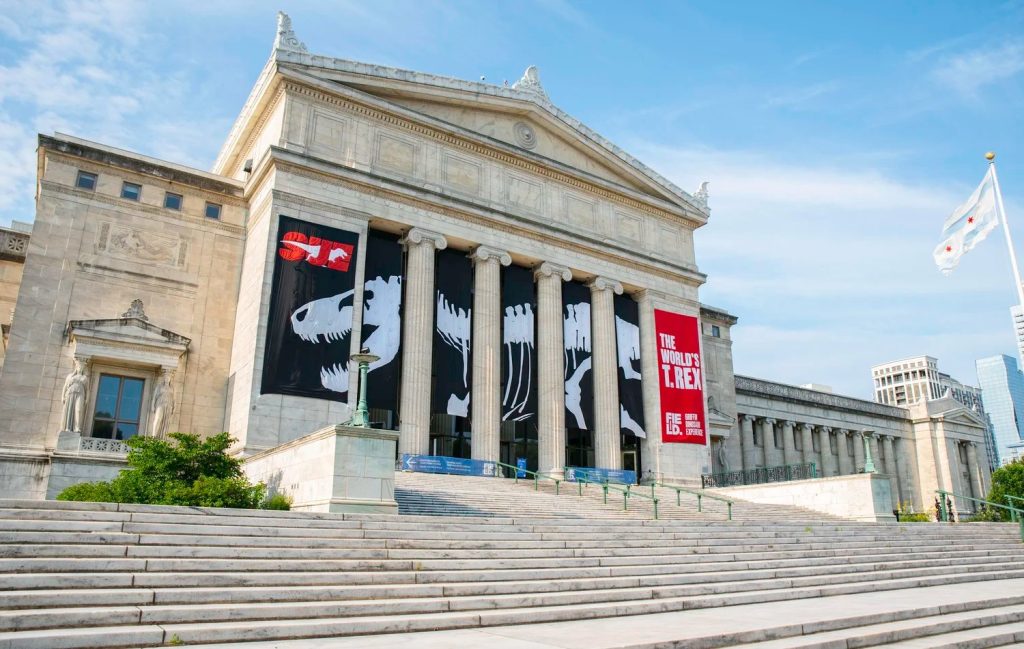
The Field Museum owes its existence to a party, specifically the 1893 World’s Columbian Exposition, Chicago’s legendary World’s Fair. When the fair ended, the city wanted to keep its dazzling scientific and cultural treasures, so the museum was founded in 1893 to do exactly that. It first opened as the Columbian Museum of Chicago.
In 1905, it was renamed the Field Museum of Natural History in honor of Marshall Field, the department-store magnate whose generous funding made it all possible. The collection eventually outgrew its first home, and in 1921 the museum moved into the grand Beaux-Arts building it still occupies today, with its soaring Stanley Field Hall as the centerpiece.
More than a century later, it’s still collecting, still researching, and still wowing millions of visitors a year. It is proof that the best souvenirs from a World’s Fair are the ones you never give back.
Meet the Megastars of Stanley Field Hall
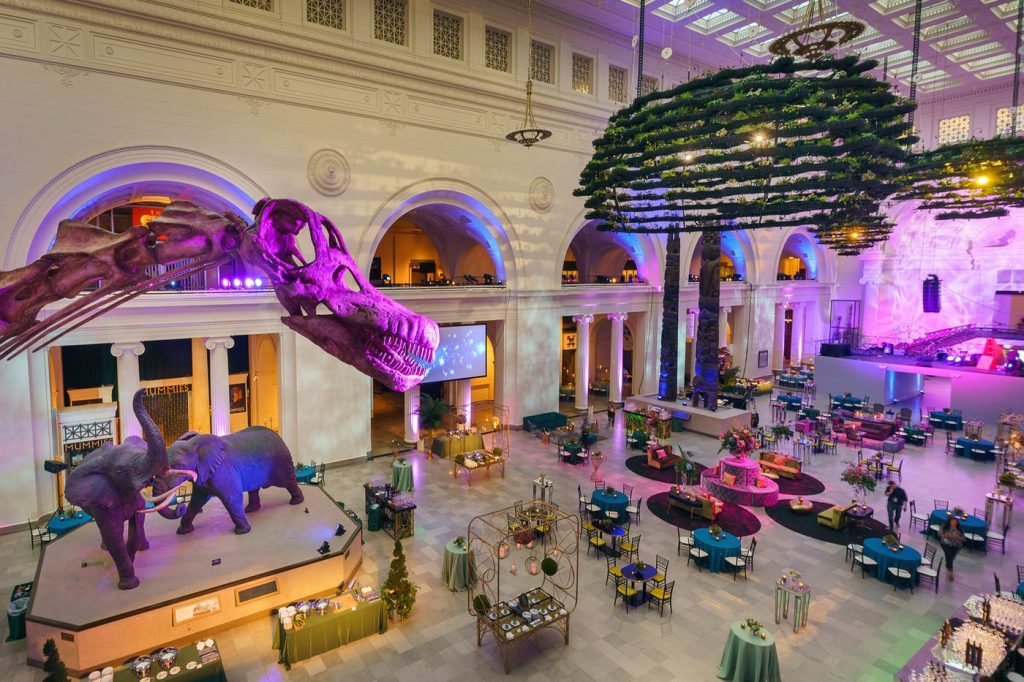
Walk through the doors, and the first room flattens you (in a good way). Stanley Field Hall, the museum’s jaw-dropping central atrium, is home to its biggest celebrities. Towering over everything is Máximo the Titanosaur, a cast of the largest dinosaur ever discovered, stretching an absurd 122 feet from nose to tail.
Floating overhead is Sobek the Spinosaurus, a fossil cast suspended dramatically from the skylit ceiling, while a pair of taxidermied battling African elephants holds the floor as if they own the place.
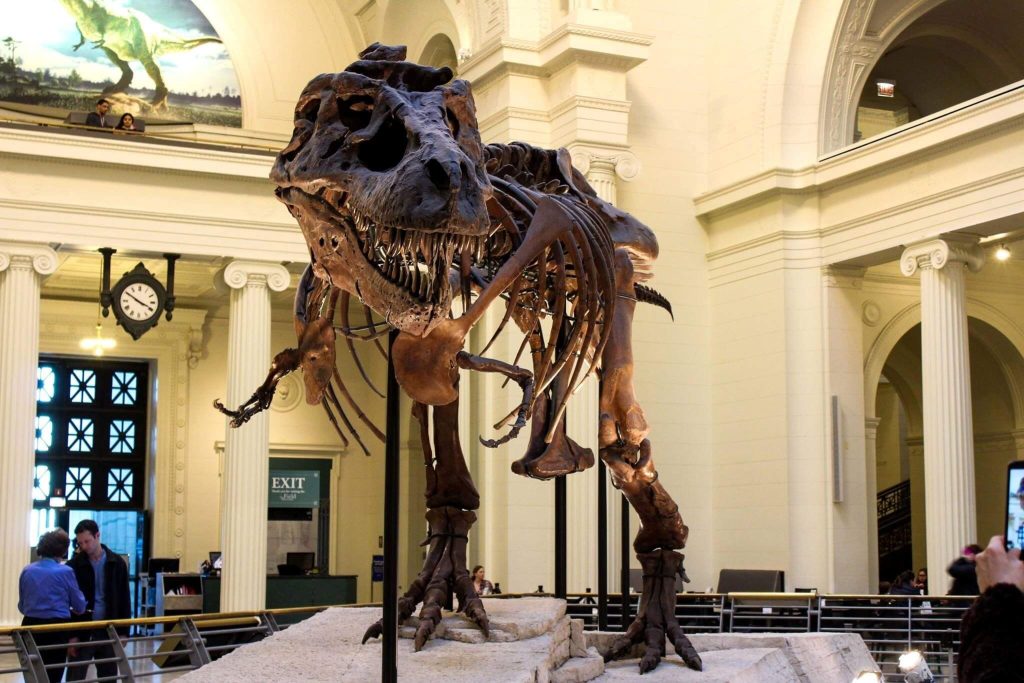
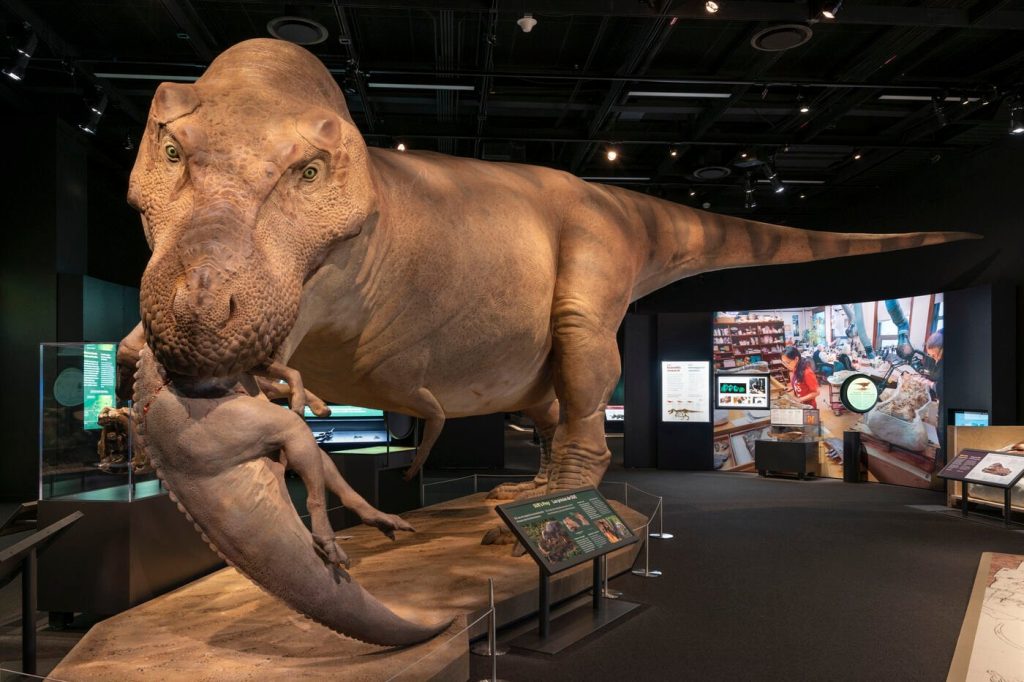
But the museum’s most famous resident lives just up the way in the Griffin Halls of Evolving Planet: SUE the T. rex, the largest, most complete, and best-preserved Tyrannosaurus rex ever unearthed. Named after fossil hunter Sue Hendrickson, who discovered the skeleton in South Dakota in 1990, SUE now reigns from a private gallery suite, complete with an earth-shaking growl you can practically feel in your chest. Standing beside those real, 67-million-year-old bones is the kind of thing you don’t forget.
Journey Through the Halls
Beyond the headliners, the Field is a globe-trotting, time-traveling maze of permanent halls. Here’s a taste of where to wander:
| Hall / Gallery | What’s Inside | Don’t Miss |
| Griffin Halls of Evolving Planet | A walk through 4 billion years of life on Earth | SUE the T. rex and the dinosaur-packed fossil halls |
| Inside Ancient Egypt | A multi-story tomb, real mummies, and daily life along the Nile | Descending into the recreated mastaba tomb |
| Grainger Hall of Gems | Dazzling gems, jewelry, and minerals | The famous stained-glass mermaid window |
| Cyrus Tang Hall of China | 5,000 years of Chinese history and art | Immersive video and rare artifacts |
| Robert R. McCormick Halls of the Ancient Americas | 13,000 years of civilizations across the Americas | The bird’s-eye replica of the city of Teotihuacan |
| Native Truths: Our Voices, Our Stories | Native American history told by Native voices | Rotating displays curated with Native communities |
| Regenstein Halls of the Pacific | Cultures and art of the Pacific Islands | The carved Maori Meeting House, Ruatepupuke II |
| Ronald and Christina Gidwitz Hall of Birds | A stunning sweep of birds from around the world | Cases of dramatic taxidermy and rare specimens |
| Plants of the World | Lifelike models of plants across the globe | Botanical artistry you’ll swear is real |
And keep an eye out for two of the museum’s most legendary residents: the Tsavo man-eating lions, the real lions that famously menaced railway workers in Kenya in 1898 and later inspired Hollywood films.
For Kids, Thrill-Seekers & Movie Buffs
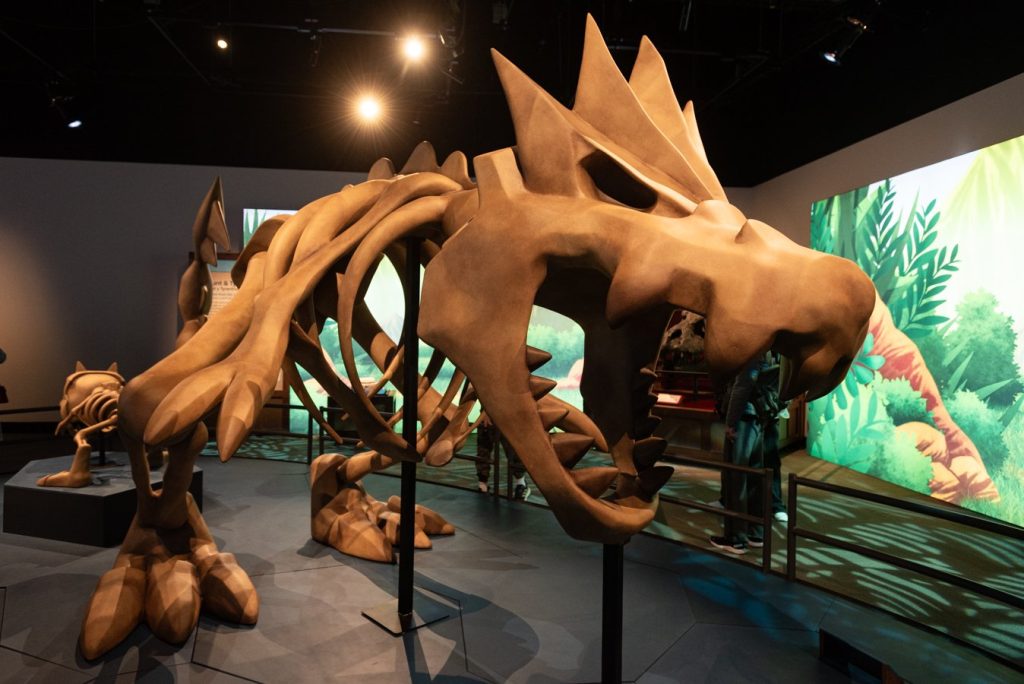

The Field knows how to keep the little ones (and the big-kid-at-heart crowd) entertained. The Crown Family PlayLab is a hands-on wonderland built for young children, full of music, dino digs, and imaginative play.
For a slightly wilder ride, head to Underground Adventure, where clever scenery shrinks you down to bug size so you can explore the secret world of life beneath the soil.
Want a dose of the cinematic? The museum’s giant-screen 3D experiences let you stomp alongside SUE in T. REX: The Story of SUE 3D, waddle with penguins in Penguin Island 3D, or strap into immersive adventures like the VR Transporter and Drop in the Ocean.
And don’t forget the rotating special exhibitions that include the wildly fun Pokémon Fossil Museum (running through April 10, 2027), which pairs beloved Pokémon “fossils” with real paleontological specimens. These limited-time shows change often, so there’s almost always a fresh reason to come back.
Plan Your Perfect Museum Day
Getting there is a breeze. The Field sits on the Museum Campus at 1400 S. DuSable Lake Shore Drive, with parking available in the nearby Soldier Field and Museum Campus garages and lots.
Skip the car if you can. Several CTA buses serve the Museum Campus, and you can pair a train ride with a short bus hop or a scenic lakefront walk to reach the front steps.
A few pro tips to make the most of it:
- Pick your must-sees first (SUE, Máximo, Ancient Egypt, the gems) so you don’t burn out before lunch.
- Arrive close to opening at 9 a.m. to enjoy the marquee halls before the crowds and school groups roll in.
- Keep an eye out for free admission Wednesdays, offered on select dates for eligible Illinois residents. Check the calendar before you go.
- Refuel on-site at the museum’s cafés so you can spend the whole day exploring, and remember the last entry is at 4 p.m.
- Members get in free every visit, snag early access to new exhibitions, and save 10% in the shops and restaurants. It’s worth it if you plan to return.
How to Book Field Museum Tickets on Thrillark
Online booking consistently delivers a lower rate than the door price at the Field Museum, and for peak-day visits (weekends, summer, and public holidays), it’s the smartest way to lock in your spot before the crowds and school groups arrive.
Thrillark lists every Field Museum ticket category clearly at the lowest available online rate, with instant confirmation to your inbox within seconds of payment.
Here’s how to book:

Step 1: Find the listing and pick your date
Open Thrillark and search for Field Museum Chicago tickets. The product page shows the key inclusions, cancellation policy, and other important information you need to know about the museum.
Once you’ve gone through all the details, click “Book Now.”
Next, select your preferred date. If your schedule has flexibility, checking across a few dates is worth doing to compare availability and pricing across different periods of the week.
Step 2: Select your ticket type
Once your date is locked in, the full range of available ticket options loads beneath it. Each listing shows what’s included, any relevant restrictions, and the price. Take a moment to read through before committing. Select the ticket that fits your group and hit “Select.”
Step 3: Choose your entry preference
Depending on the ticket type you’ve selected, you may be asked to confirm a preferred entry time or session window. Pick the option that fits your plans and click the “Continue to Payment” option.

Step 4: Set your guest count
Adjust the adult and child numbers using the + and − buttons. The running total at the top of the screen updates with each change. Confirm the count carefully before moving forward. Adjusting a booking after payment is always more effort than getting it right the first time.
Step 5: Enter your guest details
Your full name, email address, and contact number are required here. The email field is the critical one. Your e-tickets are sent there immediately after payment clears. Read it back before hitting “Next.” A typo at this stage creates an avoidable problem on the day.
Step 6: Pay and confirm
Choose your payment method and work through the checkout. The process is secured throughout. Hit “Confirm & Pay” when you’re ready.
Step 7: Receive your e-ticket and head straight in
Your booking confirmation and QR code land in your inbox within seconds of payment. On the day, pull up the email at the Field Museum entrance, scan the code, and walk right in.
No ticket window, no queue, no uncertainty about whether your spot is actually confirmed.
The Final Exhibit
From a leftover World’s Fair collection to a 40-million-piece powerhouse, the Field Museum has spent well over a century turning curiosity into wonder. It’s the rare place where you can high-five a titanosaur’s foot, meet the world’s most famous T. rex, time travel through ancient Egypt, and gawk at gems – all under one magnificent roof.
So charge your phone, wear comfy shoes (those marble halls add up), and give yourself the whole day.
The Field is waiting, and 4 billion years of stories aren’t going to explore themselves.
Frequently Asked Questions
What is SUE the T. rex at the Field Museum?
SUE is the largest, most complete, and best-preserved Tyrannosaurus rex fossil ever discovered. Named after paleontologist Sue Hendrickson, who found the skeleton in South Dakota in 1990, SUE now stands in a dedicated suite within the Griffin Halls of Evolving Planet. The display even features a simulated growl, making it one of the museum’s most thrilling stops.
How big is Máximo the Titanosaur at the Field Museum?
Máximo is a cast of the largest dinosaur ever discovered, stretching an enormous 122 feet from head to tail. This towering titanosaur greets visitors in the museum’s central Stanley Field Hall. Best of all, you’re invited to reach out and touch its massive foot.
What is Sobek the Spinosaurus at the Field Museum?
Sobek is a fossil cast of a Spinosaurus, one of the largest predatory dinosaurs known. It hangs dramatically from the skylit ceiling of Stanley Field Hall. Suspended mid-air, it gives visitors a striking sense of just how massive these creatures were.
What can you see in Inside Ancient Egypt at the Field Museum?
Inside Ancient Egypt lets you explore a multi-story recreated mastaba tomb and step into daily life along the Nile. The hall features real mummies, ancient artifacts, and immersive scenes of Egyptian culture. It’s one of the museum’s most atmospheric and memorable exhibitions.
What is the Grainger Hall of Gems at the Field Museum?
The Grainger Hall of Gems is a sparkling gallery showcasing dazzling gemstones, jewelry, and minerals from around the world. Among its highlights is a beautiful stained-glass mermaid window that anchors the space. It’s a glittering change of pace from the museum’s dinosaurs and fossils.
What are the Tsavo man-eating lions at the Field Museum?
The Tsavo lions are two real, taxidermied male lions famous for attacking railway workers in Kenya in 1898. Their dramatic story later inspired several Hollywood films. Today, they’re among the Field Museum’s most legendary specimens.
What is the Griffin Halls of Evolving Planet at the Field Museum?
The Griffin Halls of Evolving Planet take visitors on a journey through 4 billion years of life on Earth. The exhibition traces evolution from single-celled organisms all the way to the age of dinosaurs and beyond. It’s also home to SUE the T. rex and a remarkable collection of fossils.
What is the Crown Family PlayLab at the Field Museum?
The Crown Family PlayLab is a hands-on play space designed especially for young children. Kids can dig for fossils, make music with instruments from around the world, and explore through imaginative activities. It’s a favorite stop for families with little explorers.
What is the Pokémon Fossil Museum at the Field Museum?
The Pokémon Fossil Museum is a special exhibition running at the Field Museum through April 10, 2027. It playfully pairs beloved Pokémon “fossils” with real paleontological specimens to teach about fossils and science. It’s a fun, family-friendly experience for Pokémon fans and dinosaur lovers alike.
What is Underground Adventure at the Field Museum?
Underground Adventure is an immersive exhibit that uses oversized scenery to shrink you down to bug-size. As you explore, you discover the hidden world of insects, roots, and life beneath the soil. It’s a uniquely playful, eye-level look at the ecosystems under our feet.
Browse by themes
Attractions in Chicago