Langkawi is the kind of island that takes about twenty minutes to get its hooks into you. You land, step outside into the warm tropical air, and somewhere between the drive to your guesthouse and the first cold drink on a beach bar bench, you realize you have massively underestimated this place.
The Andaman Sea is exactly that shade of blue that looks photoshopped until you’re in it. The limestone formations rising from the water belong in a geography textbook under “dramatic.” The rice paddies in the interior are the kind of green that makes you want to stand still and look for a while.
Langkawi is a UNESCO Global Geopark, a duty-free island, and one of 99 islands making up the Langkawi archipelago off the northwest coast of Malaysia in the state of Kedah.
The main island is about 478 square kilometres, which is large enough to take a full day to explore by scooter and interesting enough in every direction that you will want to. Most visitors arrive, park themselves in Pantai Cenang, and spend their time between the beach and the restaurant strip. That is a perfectly fine trip. But the people who rent a scooter and go looking for the waterfalls, the mangroves, and the hidden beaches in the north leave with a completely different story to tell.
Langkawi City Essentials
Entry Requirements for Langkawi
Most visitors, including those from the US, UK, EU nations, and Australia, can enter Malaysia without a pre-arranged visa for stays of up to 30 or 90 days, depending on nationality.
Indian nationals can enter Malaysia visa-free for stays of up to 30 days under a policy active until December 31, 2026.
All foreign visitors (with the exception of Singaporean citizens, who are exempt) must complete the Malaysia Digital Arrival Card (MDAC) online within three days before arrival. It is free and takes only a few minutes to submit. Keep the confirmation accessible on your phone on arrival.
Always verify your specific requirements at imi.gov.my before travelling.
Where to Stay
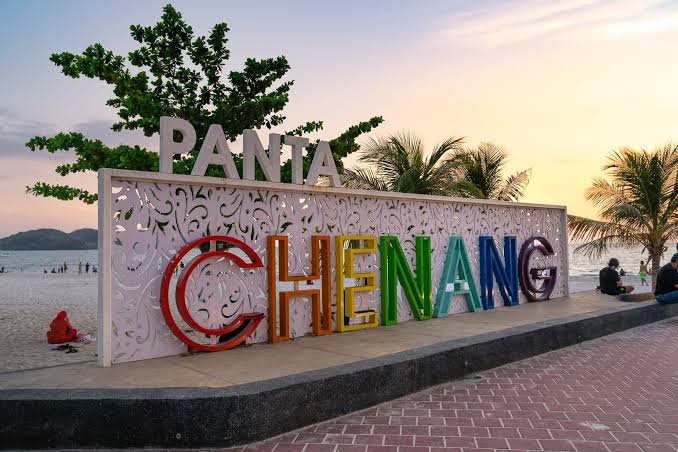
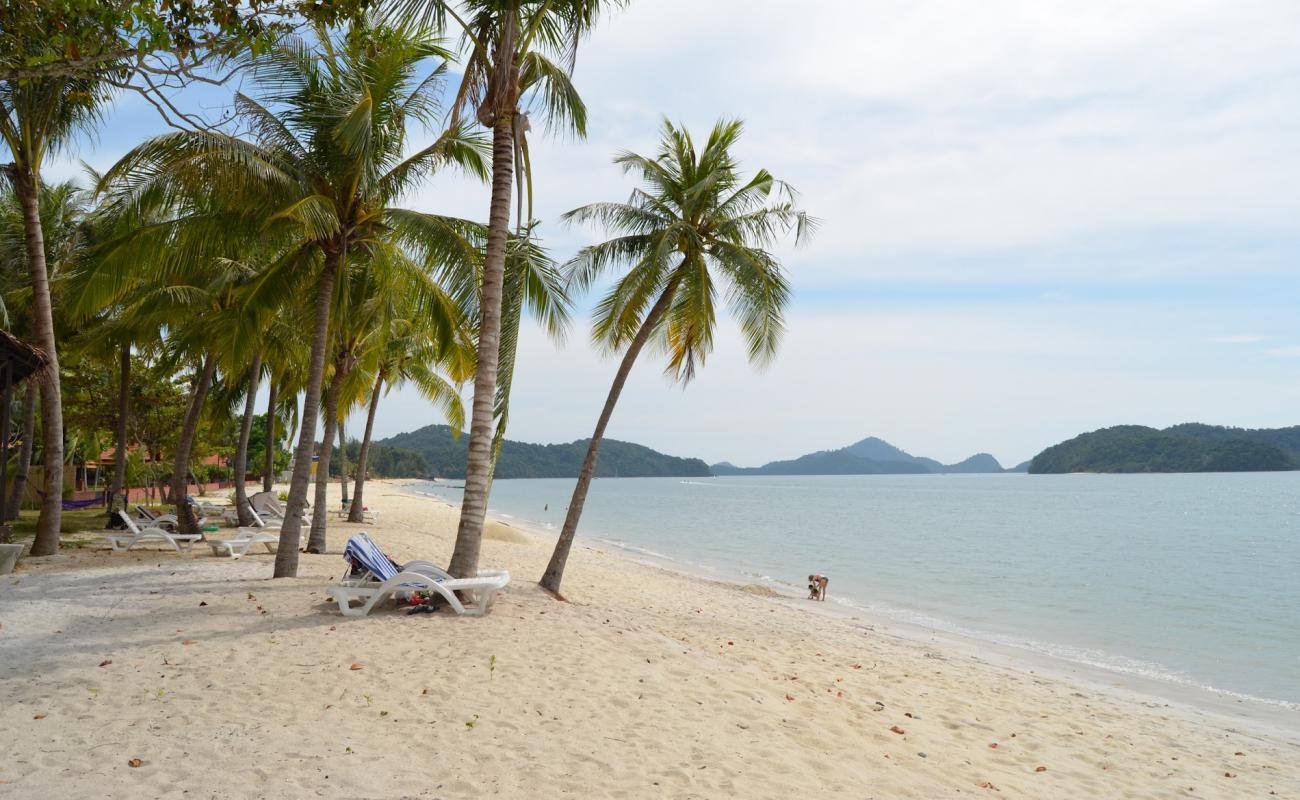
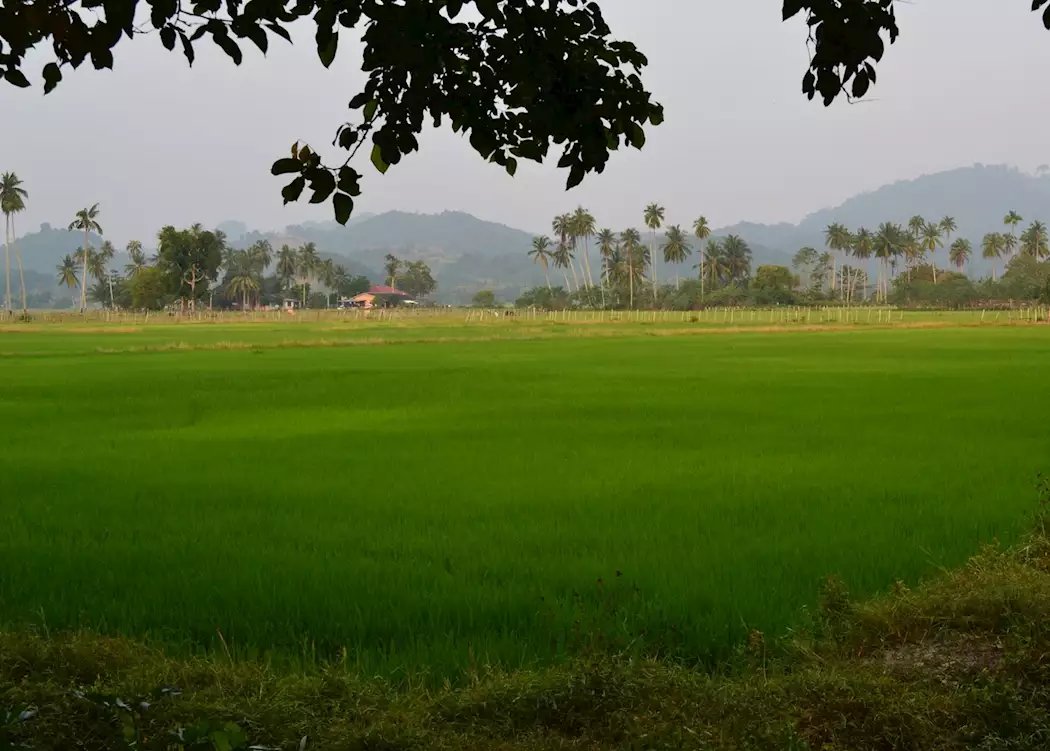
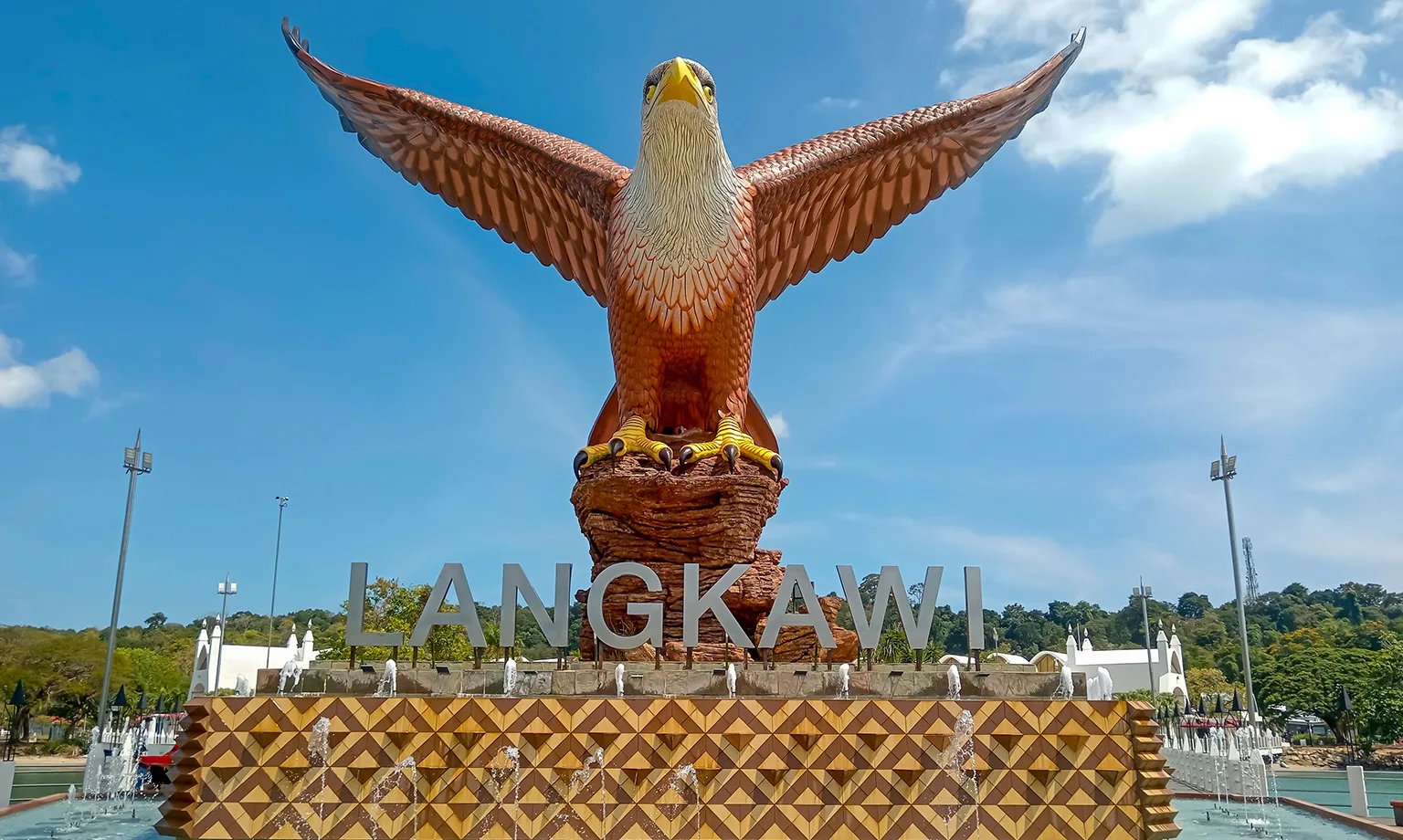
- Pantai Cenang is where most visitors base themselves, and for good reason: it has the widest range of accommodation from budget guesthouses to larger resorts, the best concentration of restaurants and bars, scooter rental shops on every corner, and the island's most popular beach at the doorstep. The main strip can feel busy and commercial, but staying on the fringes of Cenang gives you the convenience without the noise. Look for guesthouses slightly set back from the main road, particularly those with garden or rice paddy settings.
- Pantai Tengah, immediately south of Cenang and reachable on foot along the beach, is a noticeably quieter stretch with a calmer atmosphere and good beach access. Better for couples and those who want a slower pace without sacrificing beachside convenience.
- The rice paddy retreats inland are the sleeper option that rewards adventurous visitors. Guesthouses tucked among the fields give you misty mornings, frog choruses at night, and a completely different experience of the island. You will need a scooter to get around from here, but that is recommended anyway.
- Kuah, in the southeast, is the capital and ferry arrival point. It has large resort hotels at affordable prices and is useful for duty-free shopping, but it is the least interesting base for exploring the island and best treated as a transit stop.
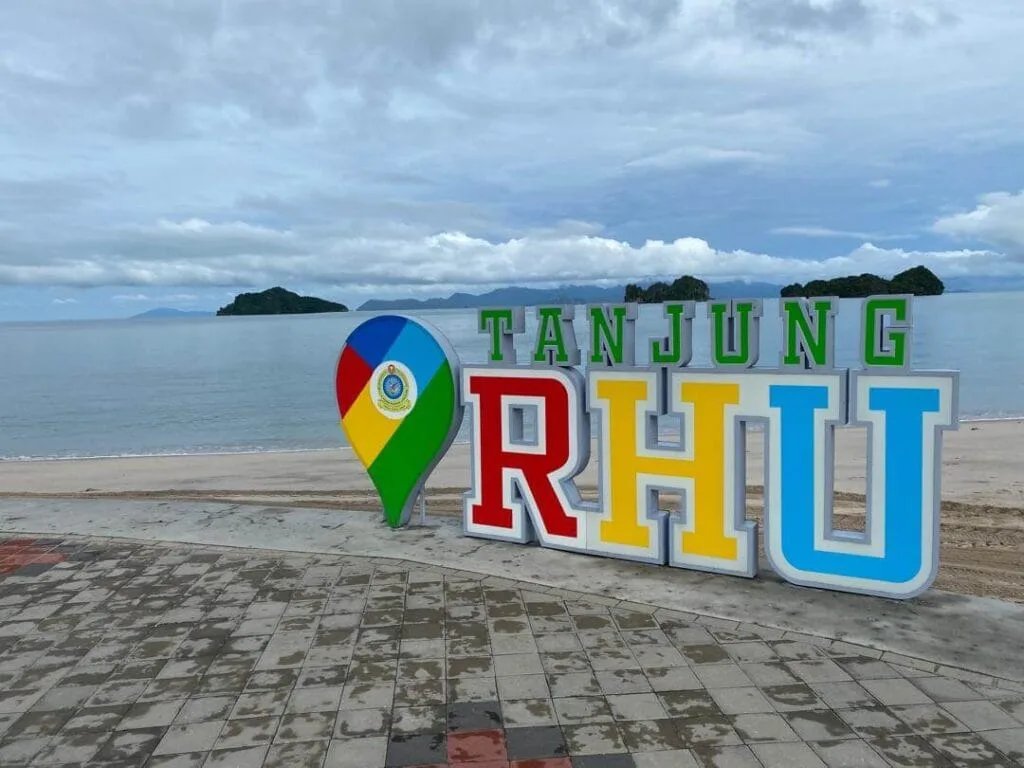
- Tanjung Rhu in the far north is the luxury end, with world-class resort hotels set against limestone outcrops and one of the most beautiful beaches on the island. It is remote, quiet, and expensive.
Getting There and Getting Around
Flying in: Langkawi International Airport (LGK) is well connected to Kuala Lumpur by AirAsia, Batik Air, and other carriers, with connections from other regional Southeast Asian hubs. The airport is only about 15 minutes from Pantai Cenang by Grab or taxi, making it a significantly more convenient arrival than the ferry.
By ferry: The main ferry routes to Langkawi arrive at Kuah Jetty on the southeastern tip of the island. Ferries run from Kuala Perlis and Kuala Kedah on the Malaysian mainland and from Koh Lipe and Tammalang (Satun) in Thailand. Note that the former ferry connection between Langkawi and Penang no longer operates. Ferry schedules vary with tides and seasons, so it is best to book in advance on weekends and during high season.
Getting around the island:
- Scooter: This is the only way to properly explore Langkawi. Roads are in good condition, traffic is manageable outside of the Cenang strip, and a scooter gives you complete freedom to stop at beaches, waterfalls, and viewpoints at your own pace. Most guesthouses in Cenang rent scooters. Bring your International Driving Permit alongside your home license, as some rental shops ask to see it. Always video the bike before you leave to document existing damage.
- Grab: It is available on the island and useful for airport or ferry transfers and longer journeys when you do not have a scooter. Book early morning airport trips the night before using the advance booking feature, as drivers are scarce before 7 am.
- Taxis: They are available but less consistent on pricing. Grab is more transparent for most journeys.
- No public buses: Langkawi has no public bus network. Your options are scooter, Grab, taxi, or organised tour transfers.
Beaches in Langkawi
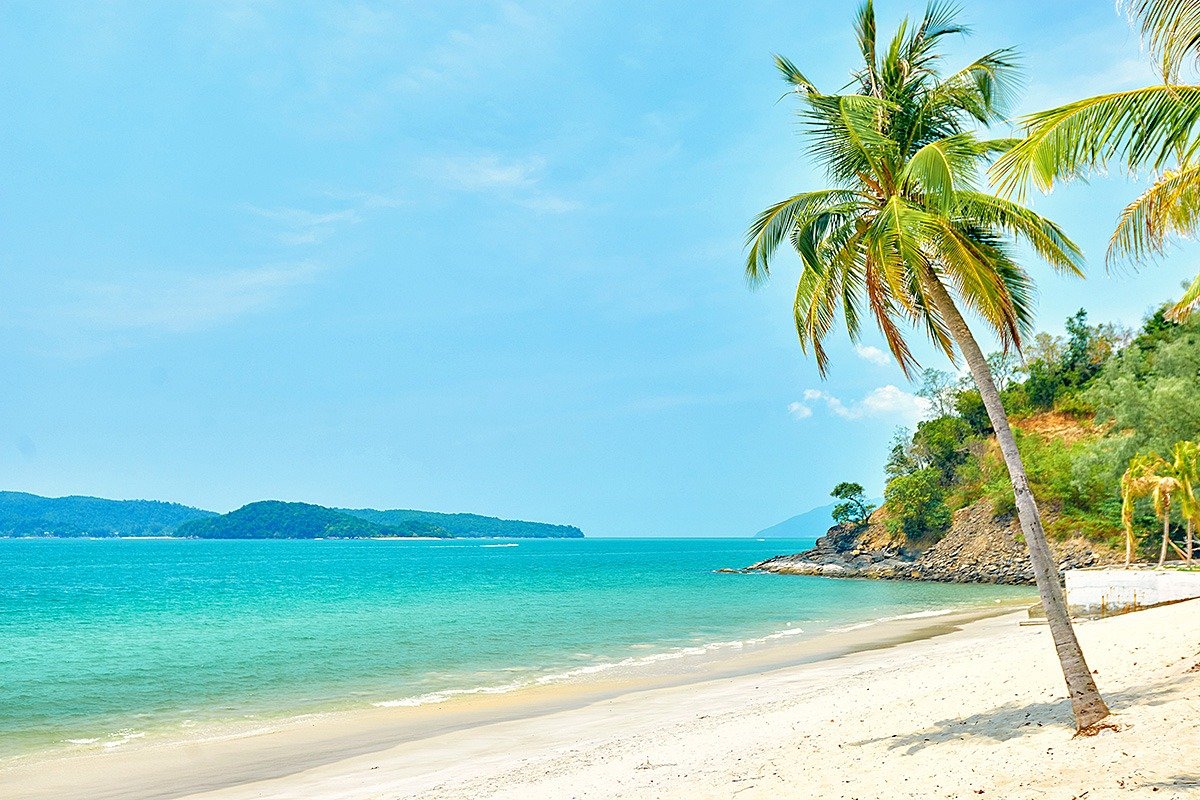
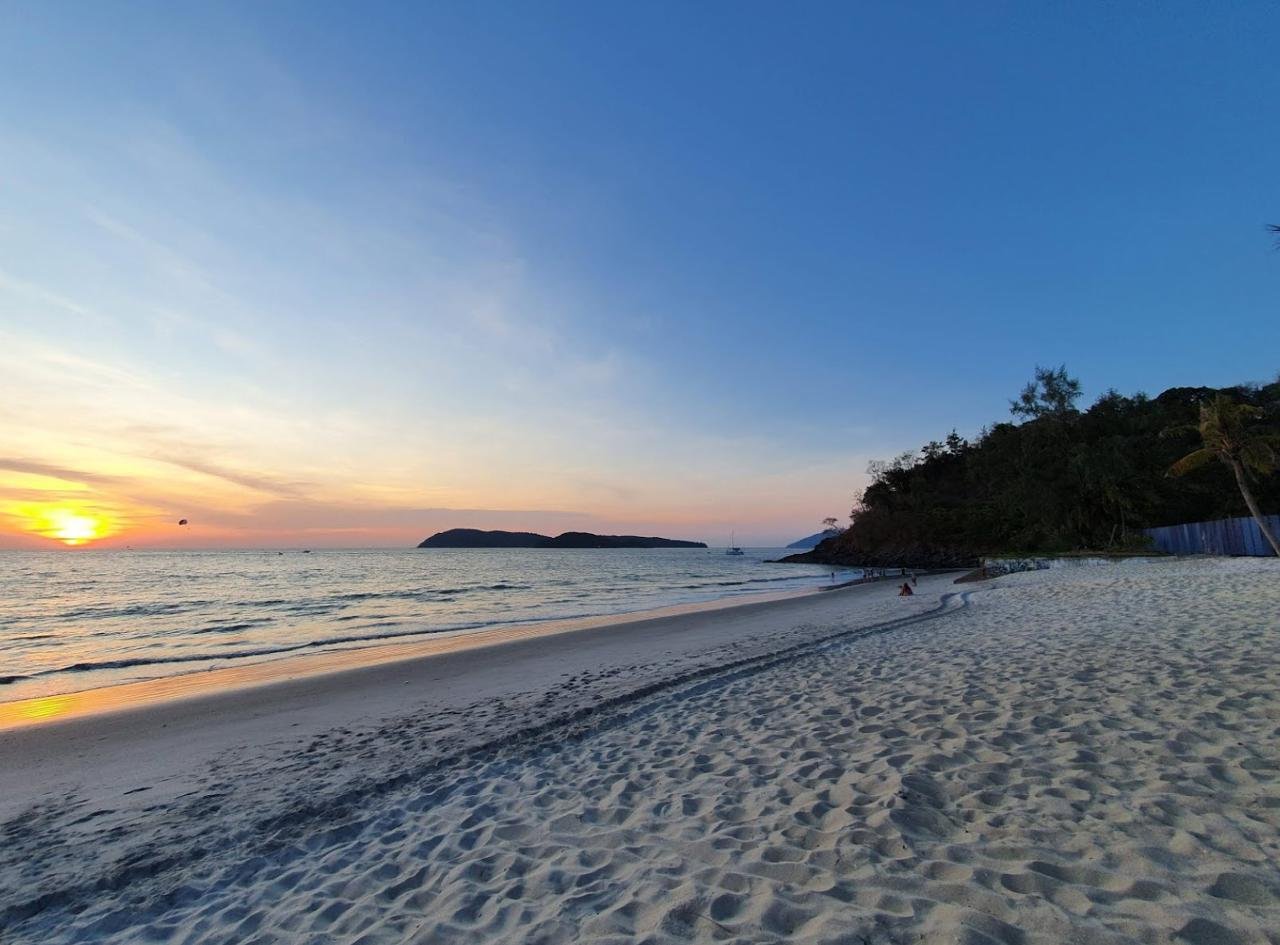
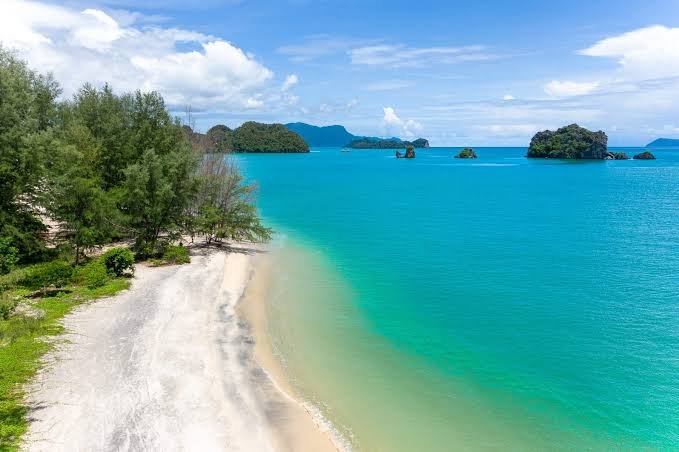
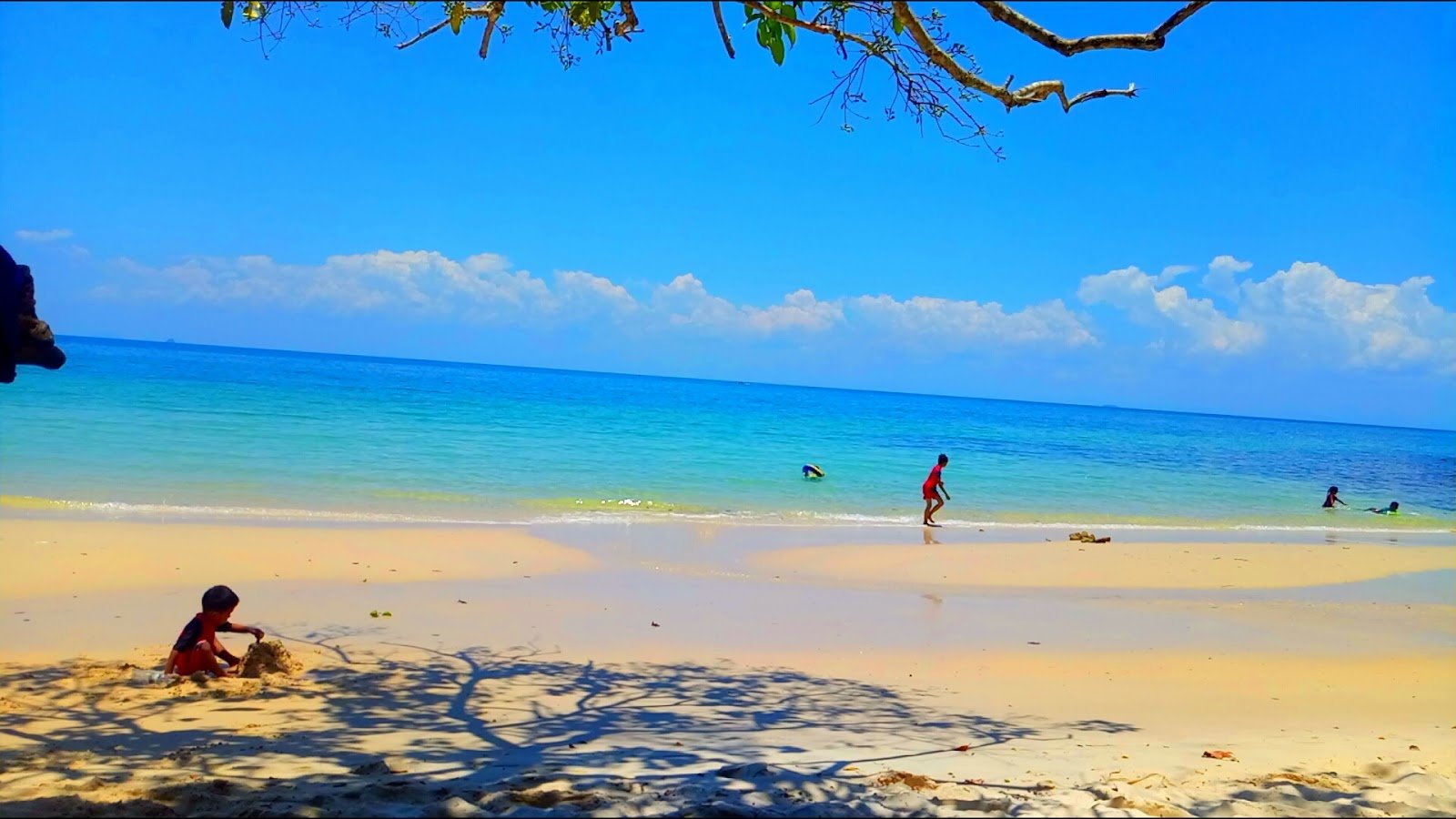
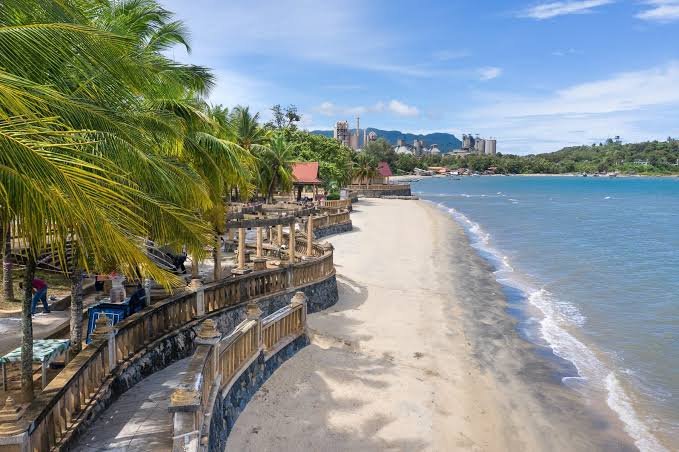
Langkawi has beaches for every mood, and the best ones are not the most obvious ones.
- Pantai Cenang is the most popular and the most convenient, a long, wide stretch of white sand with beach bars, sun loungers, and massage spots. The water is good for swimming, and the sunset from here is reliably beautiful. The downside is jet ski traffic throughout the day, which takes the edge off the tranquility somewhat.
- Pantai Tengah, just south of Cenang, is noticeably calmer. Several resorts line the shore, but there are fewer beach-strip establishments, making it a better swimming beach for anyone wanting quiet water.
- Tanjung Rhu in the far north is arguably the most beautiful beach on the island. You get to see a long arc of fine white sand framed by limestone outcrops and clear, calm water. Some sections are private resort beaches, but the public beach is accessible and extraordinary. It is definitely worth the drive.
- Pasir Tengkorak (Sandy Skulls Beach) in the northwest is a small, remote cove with crystal-clear turquoise water, natural shade from the surrounding forest, and almost no one on it. Watch for monkeys who will investigate bags with alarming efficiency.
- Teluk Yu Beach is a genuine hidden gem in the north, characterized by huge granite boulders and accessible only at low tide via a short path from the road. It is spectacular for photos and completely uncrowded.
The Langkawi SkyCab and SkyBridge
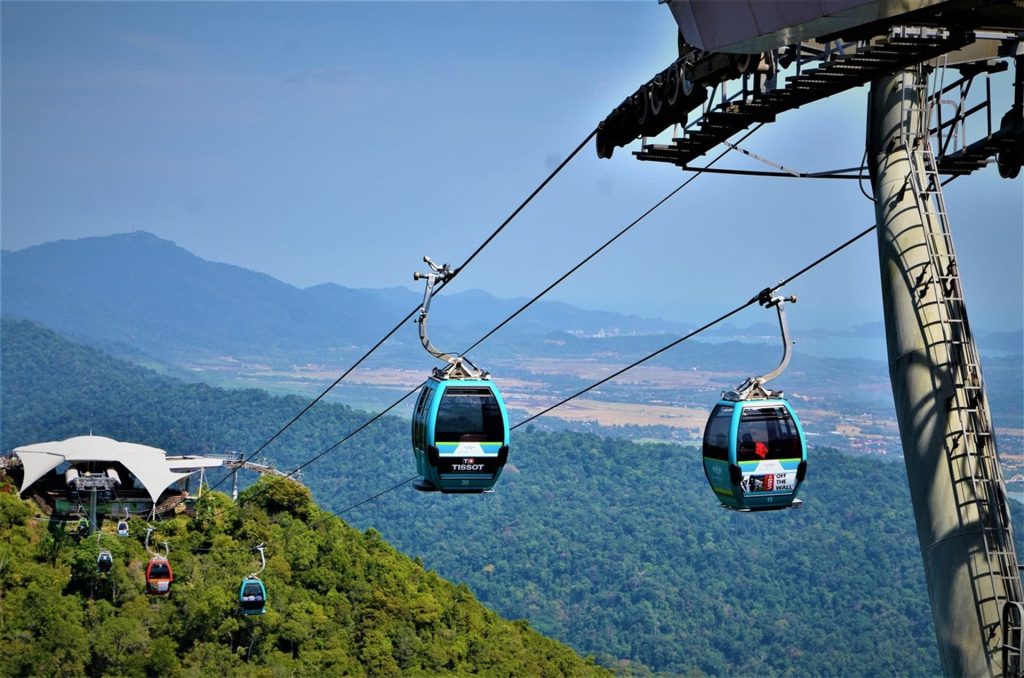
The Langkawi SkyCab is a gondola cable car that ascends the slopes of Gunung Machinchang from the Oriental Village base station to the summit ridge, giving views across the Andaman Sea and the surrounding islands that grow more dramatic with every metre of altitude gained. The ride itself, particularly the steepest upper section, is one of the more exhilarating cable car journeys in Southeast Asia.
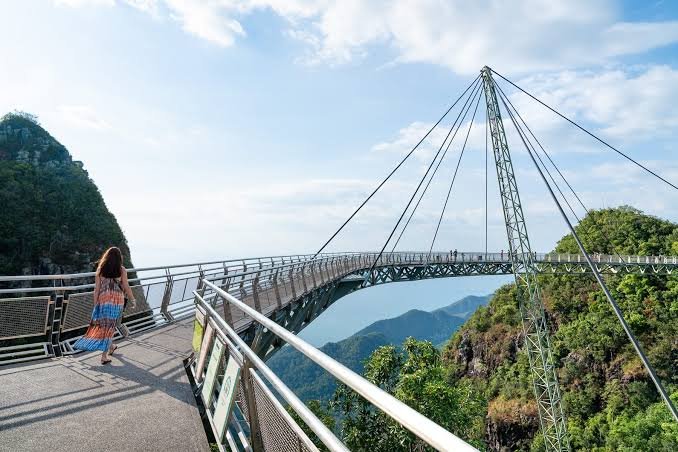
At the top, the Langkawi SkyBridge is a 125-metre curved pedestrian bridge suspended 660 metres above sea level, clinging to the mountainside with the sea and jungle canopy visible in every direction. It is one of the most photographed structures in Malaysia and earns that status. Visit in the early morning for the best chance of clear views before clouds build around the summit. A live camera at the SkyCab ticket counter shows real-time summit conditions and is worth checking before you buy your ticket.
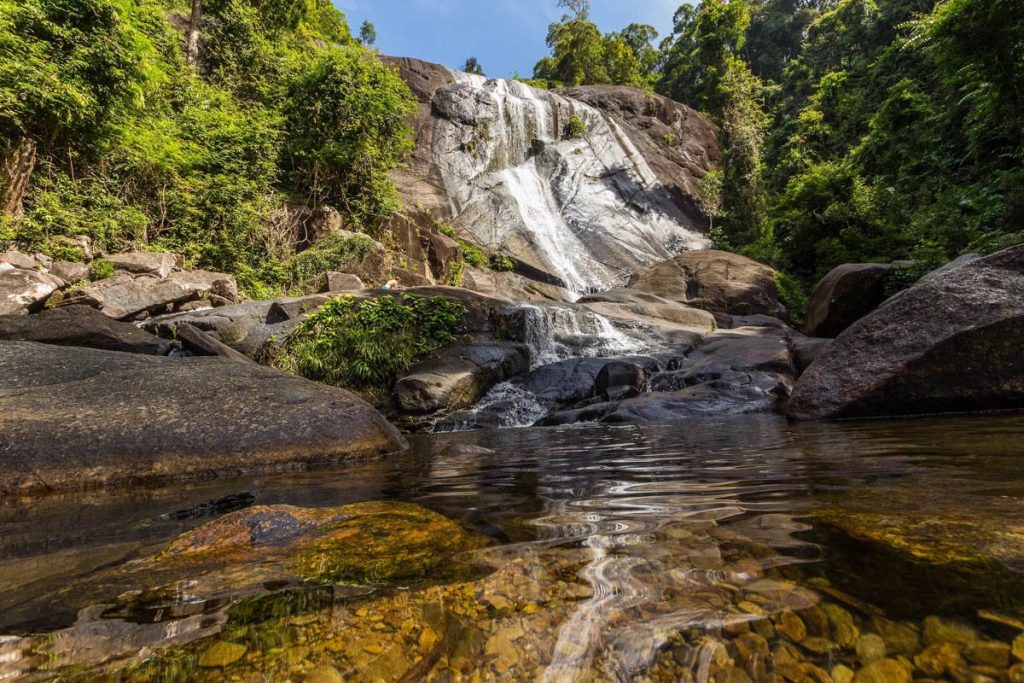
Seven Wells Waterfall (Telaga Tujuh) is located at the base of the SkyCab area and can be combined with a cable car visit on the same morning. A steep 15-minute climb up stairs brings you to the falls and a series of natural rock pools at 91 metres above sea level. Go higher along the trail for less company and better views.

Langkawi’s Waterfalls
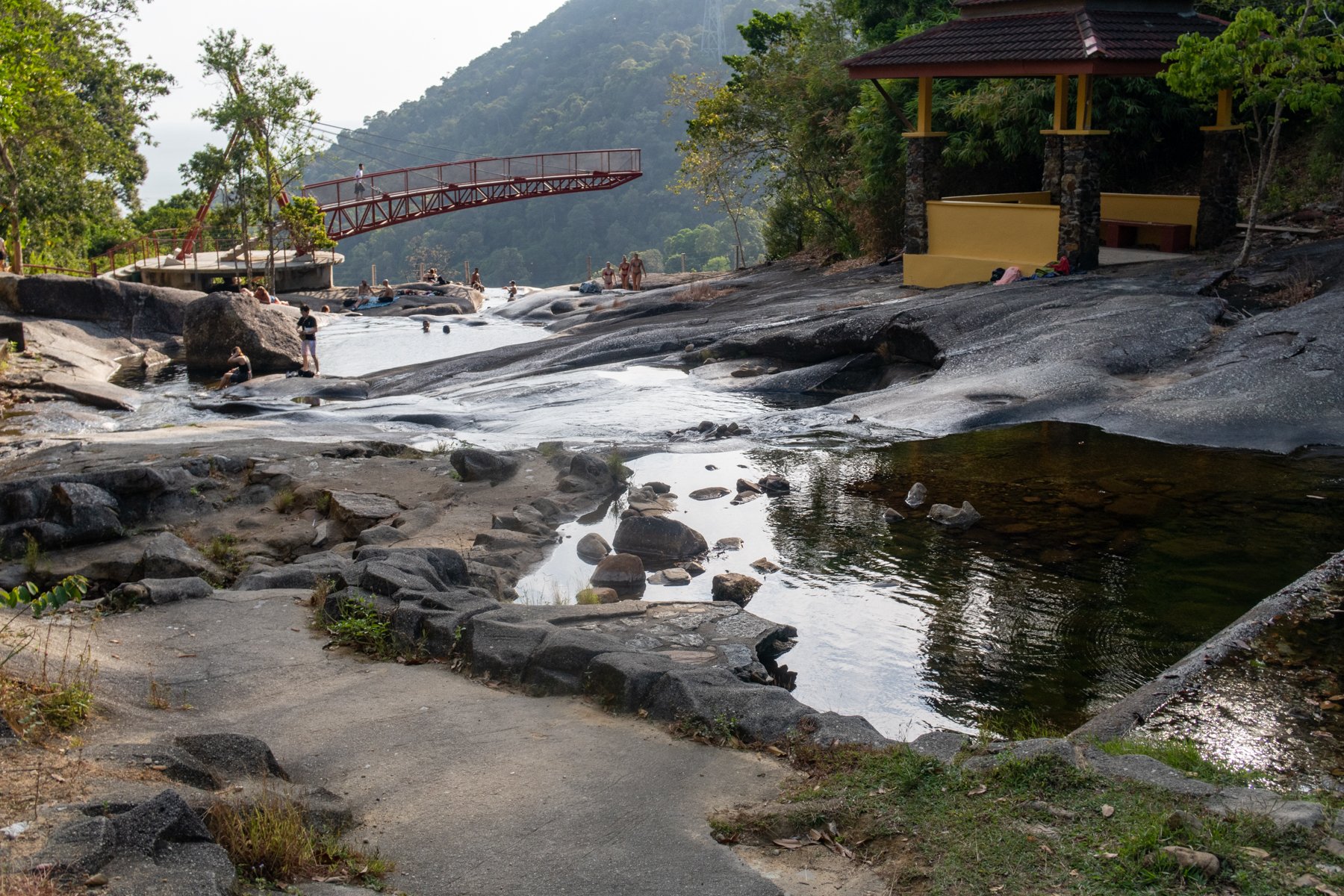
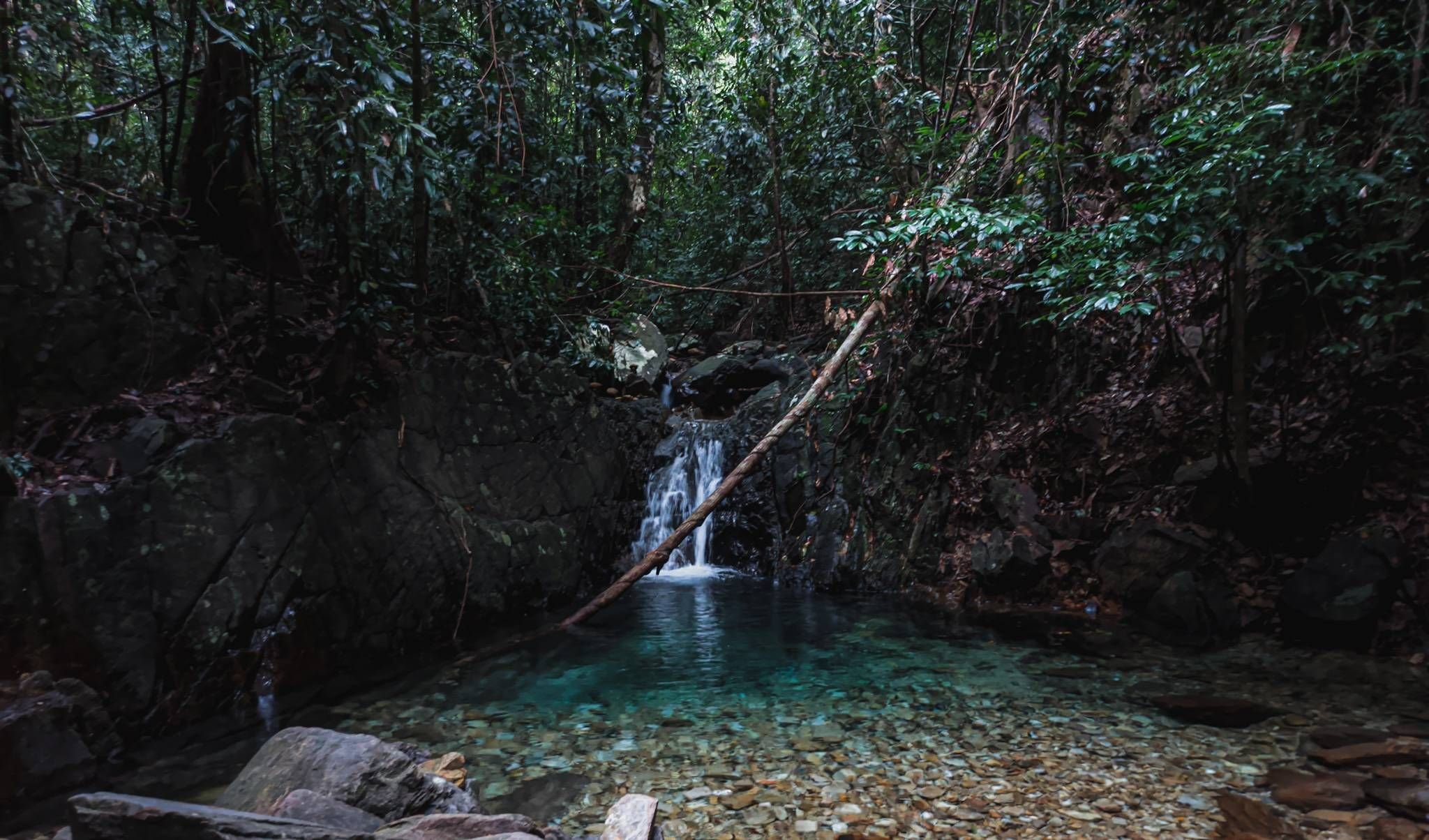
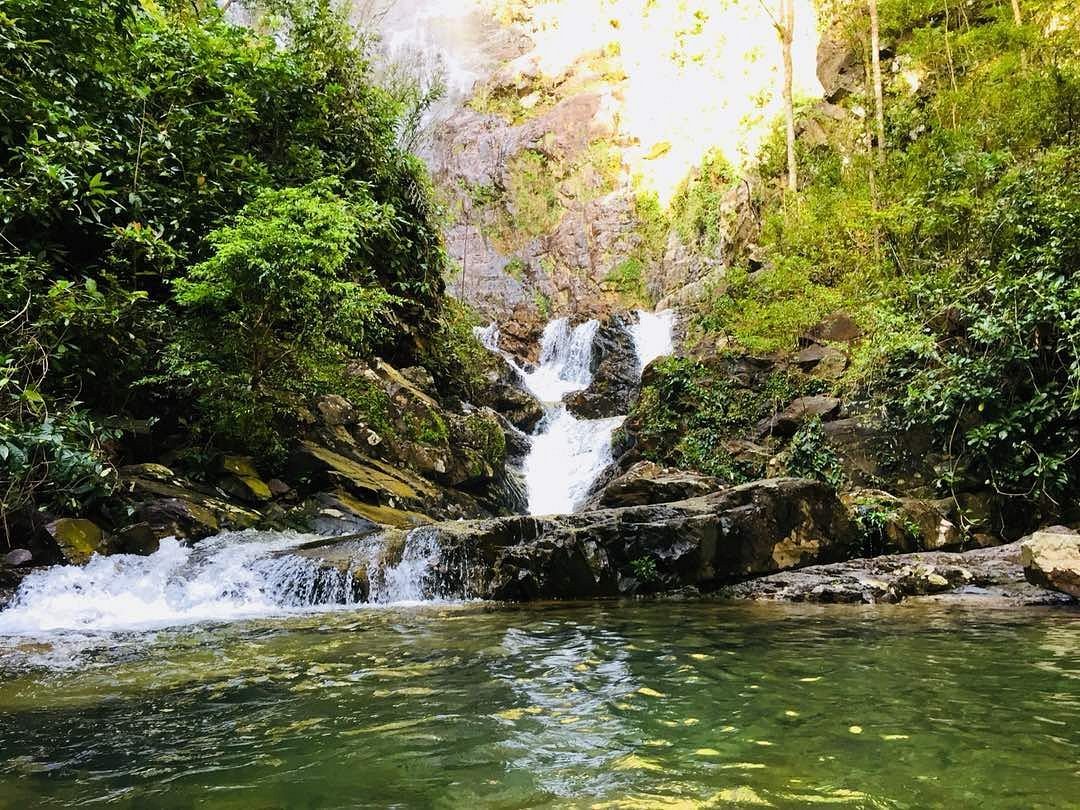
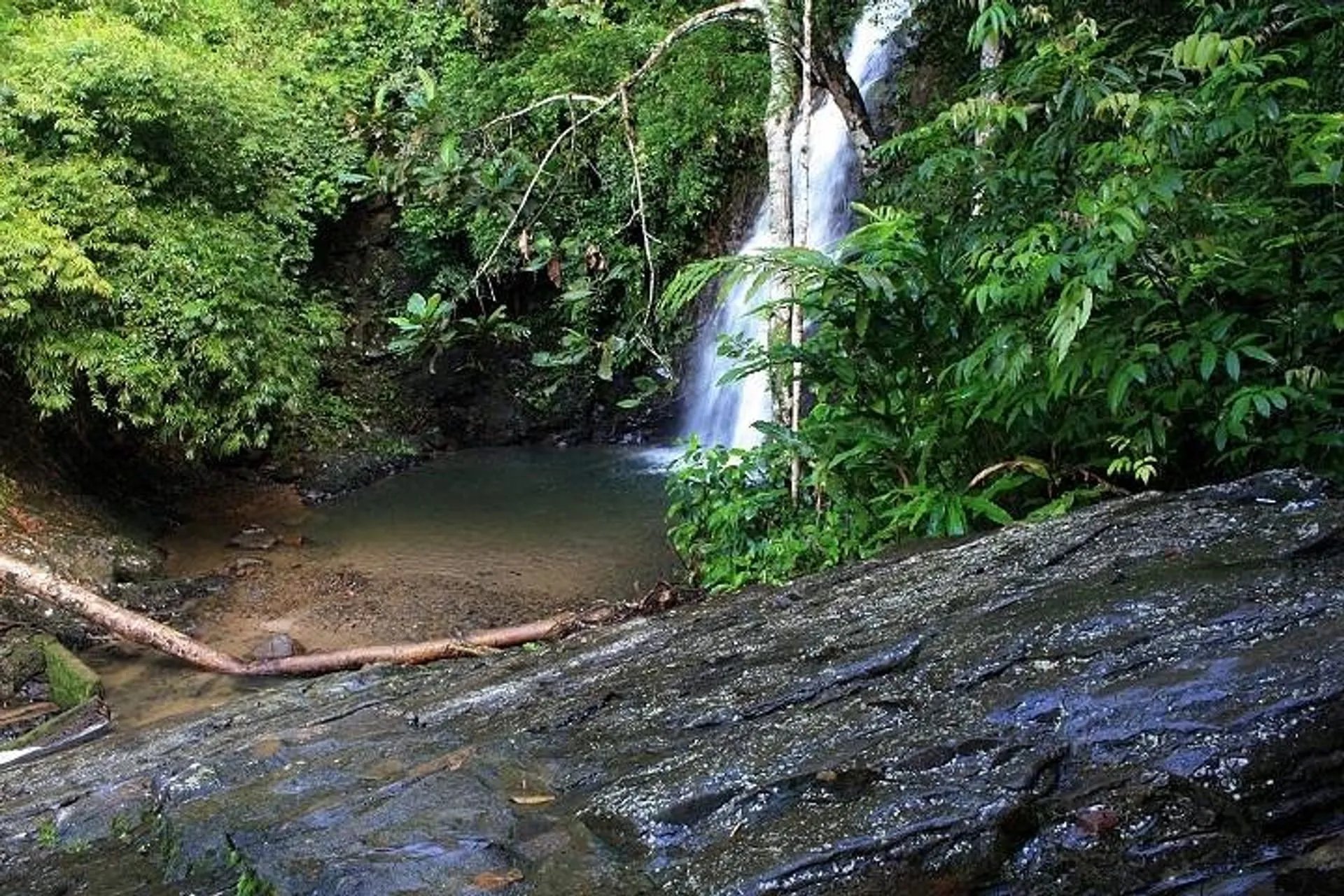
Langkawi's waterfalls are one of the more underrated aspects of the island, and visiting at least one is strongly recommended. The jungle setting that surrounds them, the wildlife visible along the way, and the possibility of a swim in a natural pool at the bottom set them apart from beach days in a way that most visitors find memorable.
- Seven Wells Waterfall (Telaga Tujuh) near the SkyCab is the most popular and most accessible, with a network of pools that makes it particularly good for swimming. The Blue Lagoon, reachable by following a trail further up from Seven Wells, is a smaller, more secluded natural pool that rewards the extra effort.
- Temurun Waterfall in the northwest drops 200 metres in a single cascade, making it the highest waterfall on the island. It is a very short walk from the road, making it an easy stop on any scooter circuit of the north.
- Durian Perangin Waterfall on the northern slope of Gunung Raya is a multi-tiered waterfall set in a garden-like environment with good shade and picnic areas. It is easier and more family-friendly than the hike to Seven Wells, and black langur monkeys are regularly spotted in the trees above.
Note: Waterfall trails in Malaysian nature reserves may close during the peak of the wet season (September to October) for safety reasons. Ask locally before setting out.
Gunung Raya and the Interior
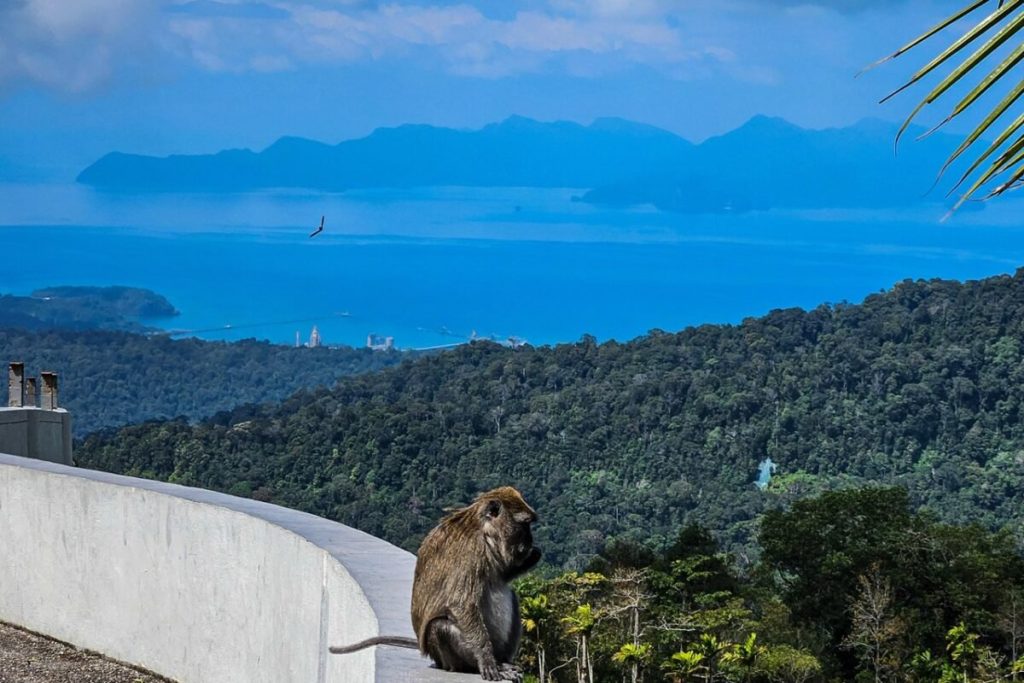
Gunung Raya is the highest point on Langkawi at 881 metres, sitting in the centre of the island. Unlike the SkyCab experience, which requires a ticket, Gunung Raya is accessible for free on a scooter or by car, via a well-maintained winding road to the summit.
The views from the top take in the island's interior, the rice paddies, and the surrounding sea. Monkeys and hornbills are commonly encountered on the way up. Go early before the summit disappears into the clouds.
The rice paddies of the island's interior are one of the most quietly beautiful aspects of Langkawi and an increasingly rare sight as development continues. The area around Kedawang, north of Cenang, and the interior stretches between the airport and Gunung Raya are the best places to find them. Mornings, when mist sits over the fields and egrets stand in the water, are the most photogenic time. Don’t forget to slow down when you ride through.
Mangroves: Kilim Geoforest Park
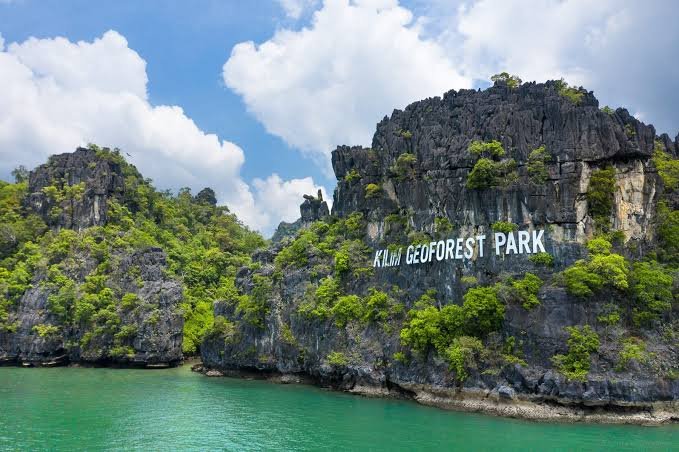
Kilim Geoforest Park in the north is where Langkawi's UNESCO Geopark status becomes most tangible. It is a vast mangrove estuary flanked by ancient limestone formations, home to sea eagles, monitor lizards, otters, mudskippers, and a cave system that includes the Bat Cave and Crocodile Cave (named for their shapes rather than their inhabitants, though wildlife encounters are possible).
Boat tours lasting two to four hours depart from the Kampung Kilim jetty and typically include a stop at a floating fish farm and a riverside lunch.
Kayak tours through the mangrove channels are a quieter and more immersive alternative to motorboat tours, getting you into narrower waterways and closer to the wildlife without the engine noise. Early morning and late afternoon are the best times if you’re going for wildlife activity.
The Kubang Badak Mangrove Reserve is a less-visited alternative if you’re looking for significantly fewer tourists and a calmer atmosphere.
Island Hopping in Langkawi
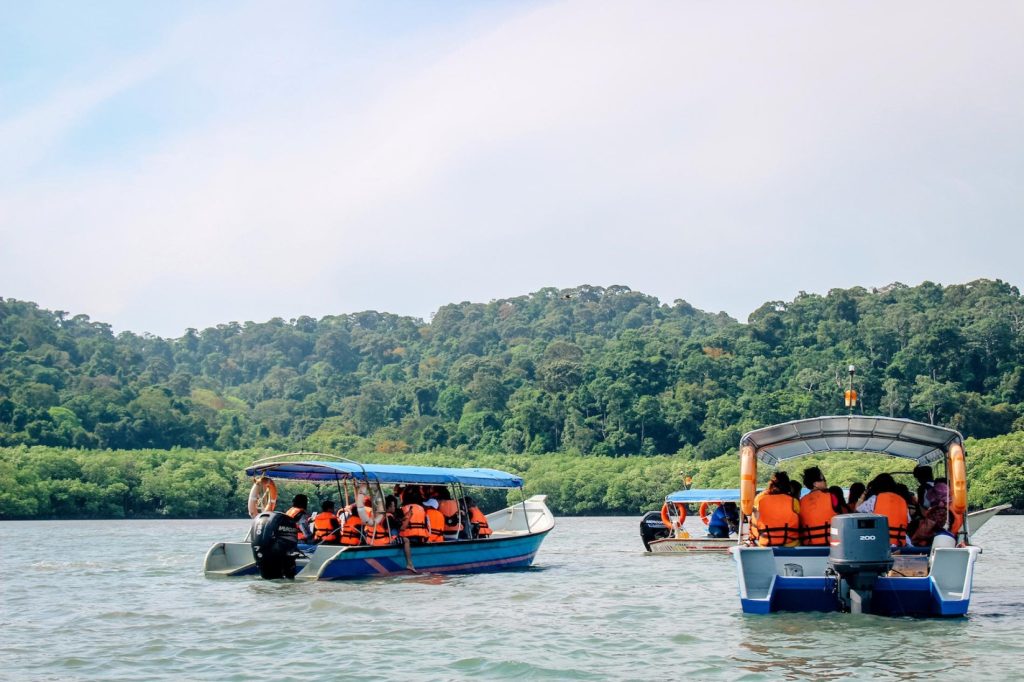
Getting off the main island and out onto the water is one of the best ways to spend a day in Langkawi.
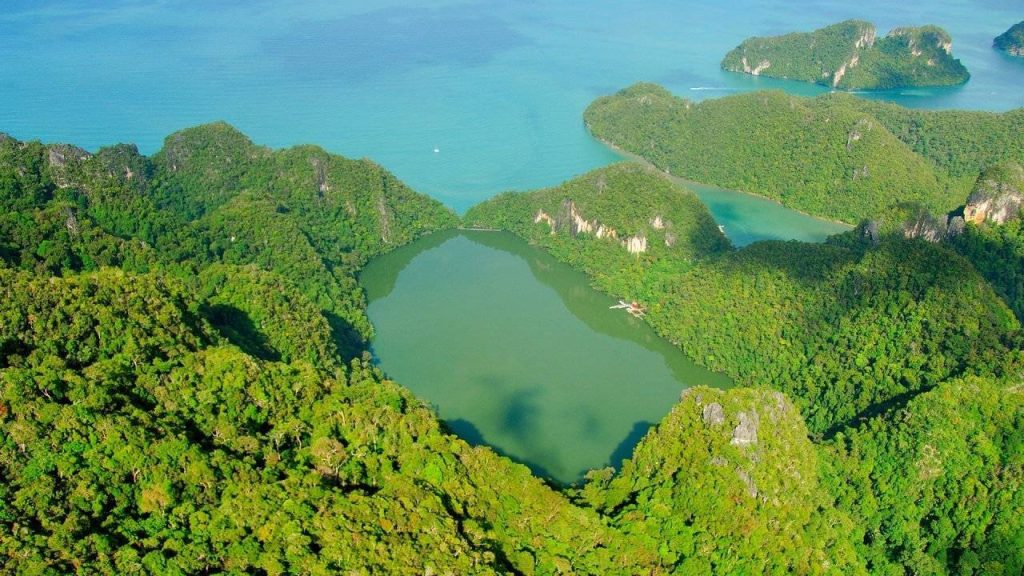
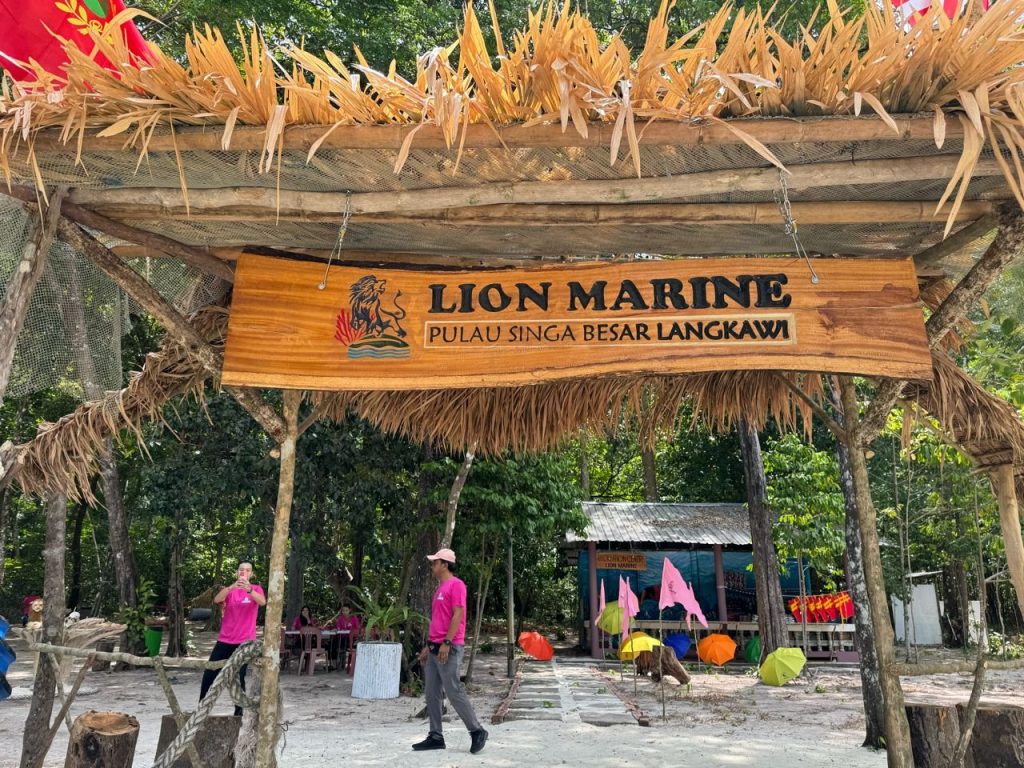
The classic island hopping tour covers three main stops: Pulau Dayang Bunting (the Lake of the Pregnant Maiden, a large freshwater lake accessible via a short forest walk on an otherwise uninhabited island), Pulau Singa Besar (an eagle-watching stop where sea eagles circle above), and Pulau Beras Basah (a picture-perfect white sand beach with clear water, good for snorkelling and swimming before the return journey). Most tours last four to five hours and depart from a jetty south of Pantai Tengah.
A word on the eagle feeding:
Some boat operators still feed sea eagles with chicken skin to guarantee their appearance for tourists. Conservation organizations actively discourage this practice, as it disrupts natural feeding behaviour and creates problematic dependency. If this matters to you, ask your operator about their policy before booking.

Popular Attractions in Langkawi
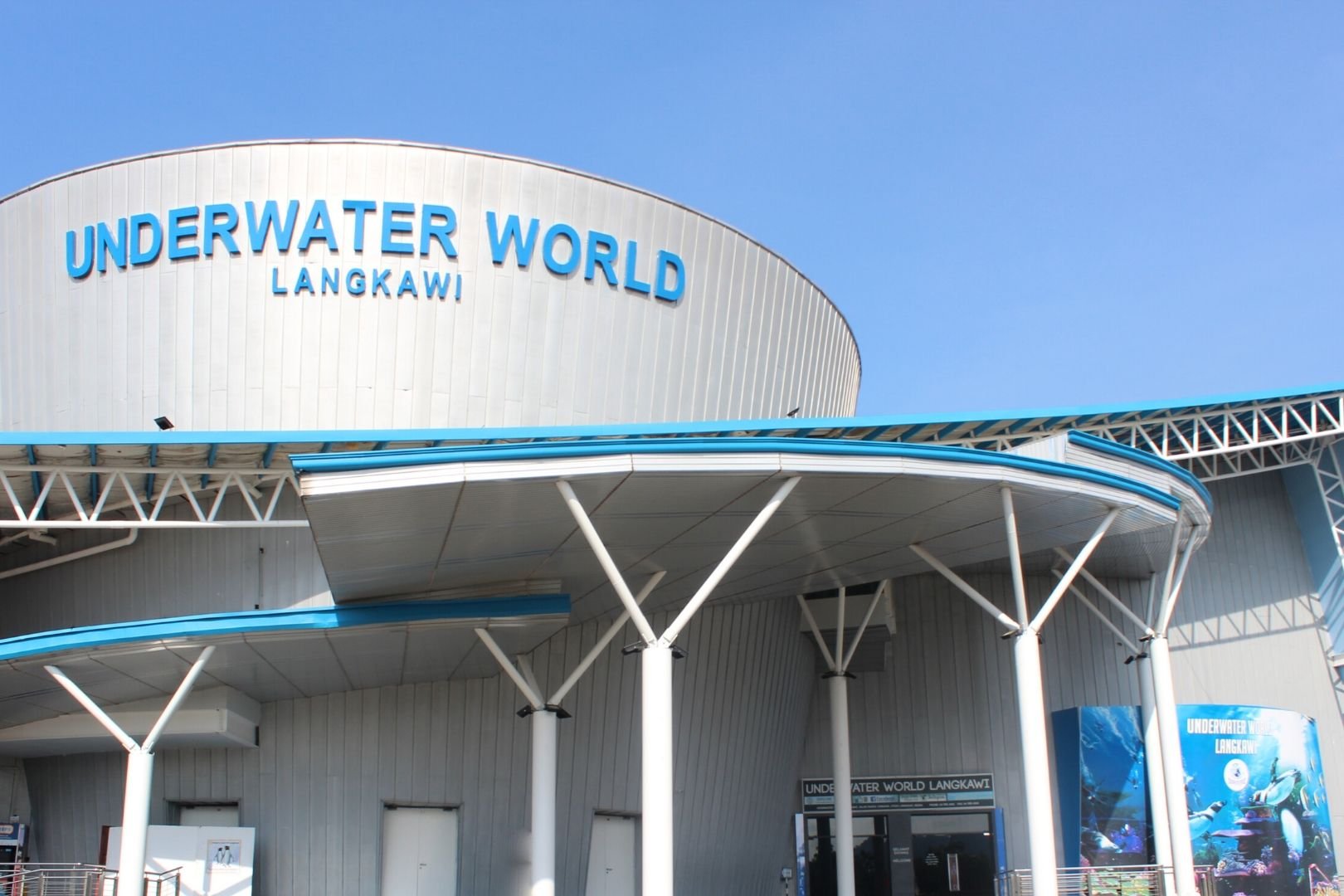
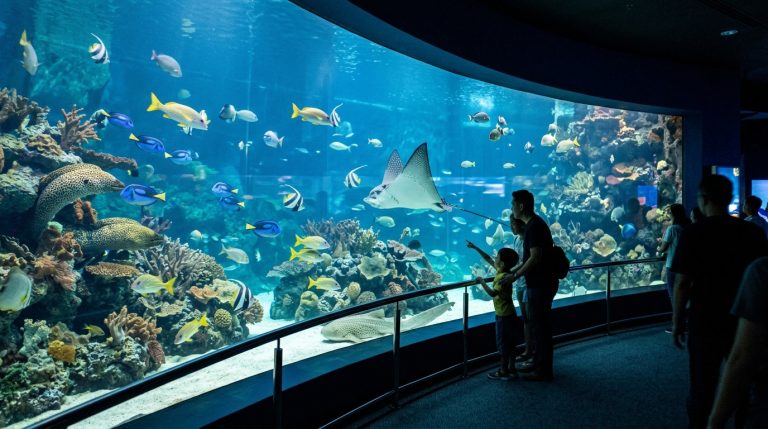
- Underwater World Langkawi is one of the largest aquariums in Southeast Asia, covering almost six acres with over 4,000 aquatic species across multiple themed ecosystems, including tropical rainforest, temperate, and sub-Antarctic zones. The highlight is a 15-metre underwater tunnel where sharks, giant stingrays, groupers, and green sea turtles pass overhead. The Penguinarium has a separate tunnel where you can watch the penguins swim. Daily feeding shows are also scheduled throughout the day.
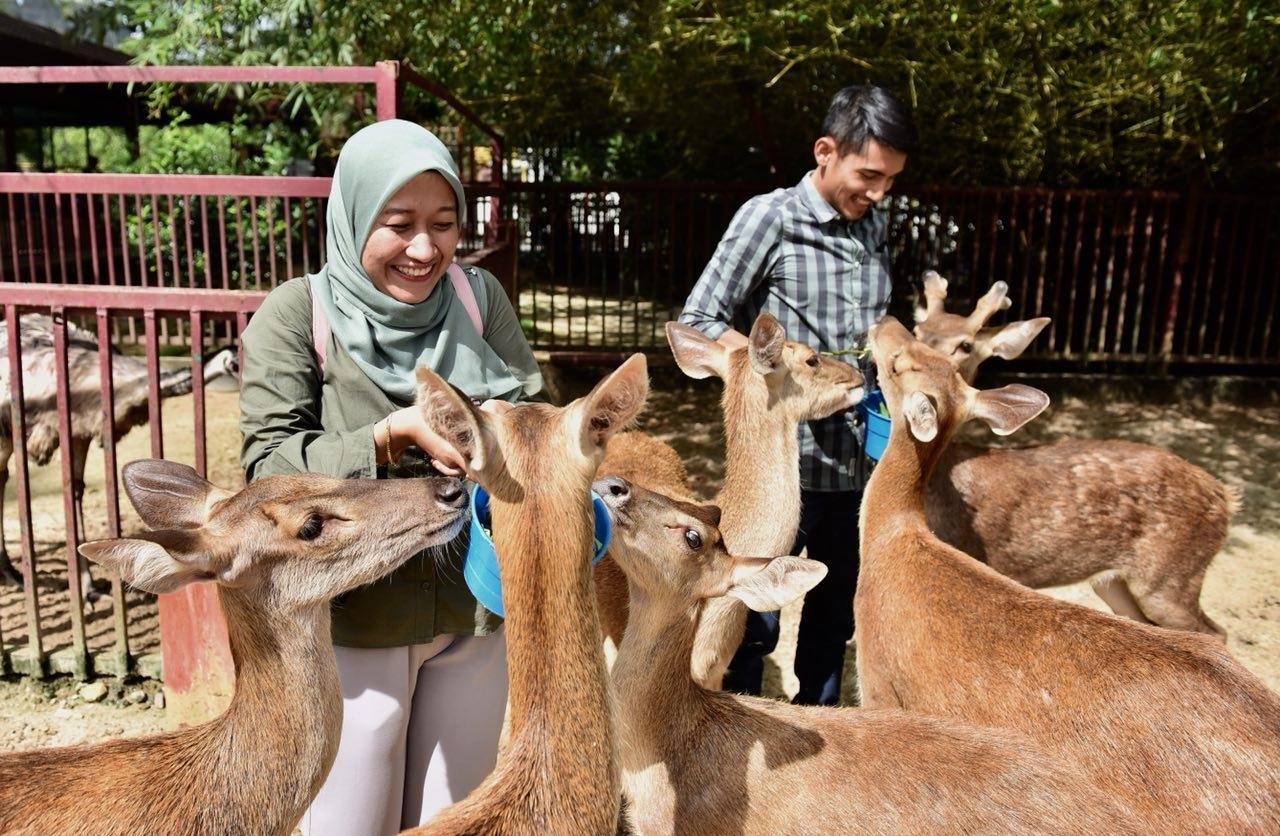
- Wildlife Park Langkawi is Asia's first fully covered wildlife park, spread across 5.5 hectares with more than 150 species of animals in lush tropical surroundings. A 15-metre man-made waterfall is the centrepiece of the park, which is also home to pink flamingos, macaws, emus, pelicans, otters, koi fish, deer, and crocodiles. Animal feeding sessions and talk shows run throughout the day.
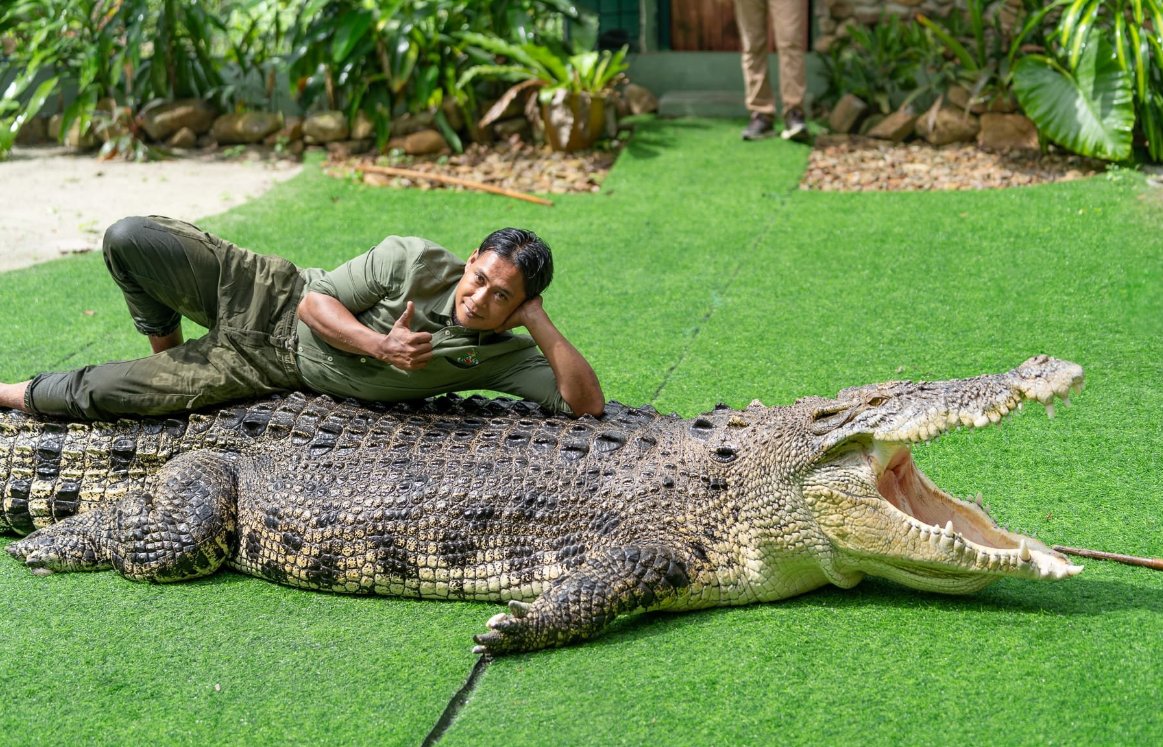
- Crocodile Adventureland Langkawi houses more than 4,000 crocodilians across multiple species, including Tomistoma, Siamese, Guinea, and saltwater crocodiles. Live shows feature trained handlers interacting with the animals, including feeding demonstrations and handling sessions. TreeTopia, a treetop walkway and hanging bridge inside the park, adds an adventure element above the canopy.
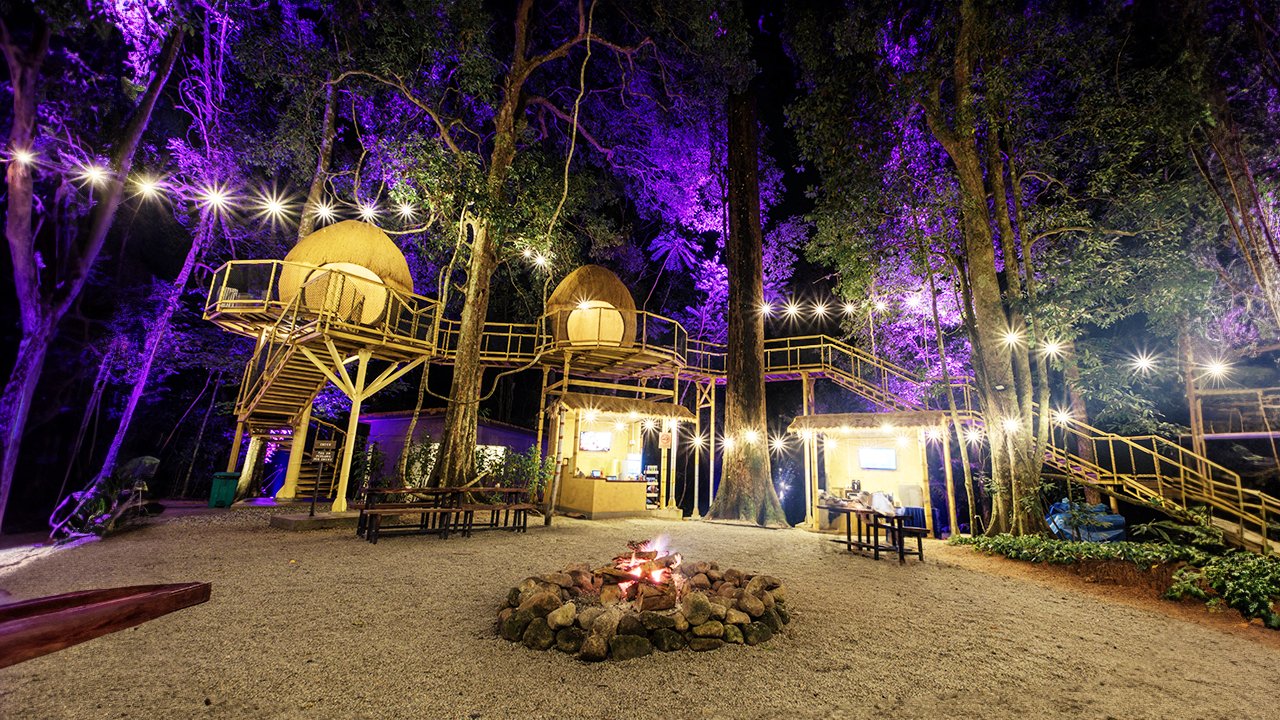
- Dream Forest Langkawi is a nighttime immersive rainforest experience, open from 7 pm to midnight daily (closed Wednesdays except on public and school holidays). Visitors walk through an illuminated forest environment with light installations, canopy walks, and interactive exhibits that bring the surrounding tropical landscape to life after dark. It is one of the most distinctive evening experiences on the island.


Langkawi’s Food Scene
Langkawi is a duty-free island, which affects the food and drink scene in a specific and welcome way. Alcohol is significantly cheaper here than almost anywhere else in Malaysia, which makes the beach bar sunset drink a notably affordable pleasure.
The food itself is as varied as Malaysia's broader culinary culture. Malay dishes dominate, with excellent Nasi Lemak, Nasi Goreng (fried rice), Mee Goreng (fried noodles), and Ikan Bakar (grilled fish) available at local restaurants and night market stalls throughout the island.
The Night Market (Pasar Malam) is the best evening food experience on the island and rotates locations daily. Stalls set up around 5 pm and serve fresh, cheap Malay street food, including grilled fish, satay, roti, and fresh fruit.
The rotating schedule is as follows: Sunday near Padang Matsirat (near the airport), Monday at Ulu Melaka, Tuesday at Kedawang (near Cenang), Wednesday and Saturday in Kuah Town, Thursday at Temoyong (near Cenang), and Friday at Ayer Hangat. It is worth planning an evening around whichever night market falls nearest your location.
Pantai Cenang's restaurant strip has everything from Italian to Thai to Indian to fresh seafood, with sunset-facing tables filling up quickly after 5 pm. Quality varies, and the best local Malay food is not usually found on the tourist strip itself but in the smaller shops and stalls set back from the main road.
For seafood specifically, the restaurants around Kuah town and the waterfront offer the best fresh catch at local prices.
When to Visit
Langkawi has two main seasons, and the choice between them is less straightforward than you might expect.
The dry season (December to April) brings reliably clear skies, calm seas, and sunshine, and is the most popular time to visit. Beaches are at their most swimmable, island-hopping conditions are ideal, and the SkyCab summit is most likely to be cloud-free. It is also peak season, which means higher accommodation prices and more visitors at popular spots.
The wet season (May to November) brings heavier rainfall, particularly from September to October when the island can receive significant downpours.
However, the weather in Langkawi during the wet season is often more manageable than visitors expect. Mornings are frequently sunny, rain typically arrives in the afternoon or evening, and the island is noticeably quieter and significantly cheaper.
Waterfalls are at their most impressive during and after the wet season. Some hiking trails in protected nature reserves close during the wettest months for safety reasons.
The honest view: many experienced travellers prefer the wet season for its quieter beaches, lower prices, and lush green landscape, as long as they are flexible enough to work around afternoon rain.
Practical Tips Before You Go
- A scooter is non-negotiable for seeing the real Langkawi. Without one, you are limited to the Cenang strip and organized tours. Rentals are widely available in Cenang, so don’t forget to bring your international driving permit.
- Always video the scooter before you leave the rental shop. Check brakes and lights. Document any existing scratches to avoid disputes when you return it.
- Sun protection is essential year-round. UV levels in Langkawi are extreme; SPF 50+, a hat, and regular reapplication are non-negotiable at the beach and on the scooter.
- Carry cash. The night markets, smaller restaurants, and local stalls are cash-only. ATMs are available in Cenang and Kuah.
- Langkawi is duty-free. Alcohol, cigarettes, and certain goods are significantly cheaper here than on the Malaysian mainland. Stock up if relevant before you leave.
- The MDAC is mandatory for most foreign visitors arriving in Malaysia. Singaporean citizens are exempt. Complete it online within three days before your arrival.
- Book early-morning Grab rides the night before. Drivers are scarce before 7 am, and the advance booking feature in the app is the most reliable option for airport and ferry transfers.
- Check trail conditions before hiking. In the wet season, some waterfall trails and forest paths in protected areas are closed for safety. Ask at your accommodation before heading out.
- Monkeys are intelligent and opportunistic. Keep bags closed, do not feed them, and do not try to take food or drinks near them, particularly at Pasir Tengkorak and around the waterfall areas.
Langkawi is ready to surprise you. The beach at Pantai Cenang is lovely, but the island shows you something better the moment you get on a scooter and go looking. You get to see a limestone arch over clear water at low tide, a waterfall in a jungle clearing that smells like rain and leaves, and an eagle riding a thermal above a mangrove channel at sunset.
These are the moments Langkawi is actually built for. So what’s the wait? Head to Thrillark to book your Langkawi attractions and experiences, and give this island the exploration it deserves.
Frequently Asked Questions About Langkawi
What is the best time to visit Langkawi?
The dry season from December to April gives the most reliably sunny weather, calm seas for island hopping, and the best conditions for the SkyCab and SkyBridge. It is also peak season with higher prices and more visitors. The wet season from May to November is significantly cheaper, the island is quieter, and the landscape is dramatically green. Afternoon rain is common, but mornings are often clear. Many experienced travellers prefer May through August as a middle ground before the heaviest rains arrive in September and October.
How do you get around Langkawi?
A scooter is by far the best way to get around Langkawi and the only practical option for reaching most of the island's best beaches, waterfalls, and viewpoints independently. Rentals are available throughout Pantai Cenang. Bring your International Driving Permit alongside your home license. Grab is available on the island for longer transfers and is useful for airport pickups, but it should not be relied upon as the sole transport option. There are no public buses on Langkawi.
Is Langkawi duty-free, and what does that mean for visitors?
Langkawi holds duty-free status, which means alcohol, cigarettes, and certain consumer goods are sold without the taxes that apply on the Malaysian mainland. In practice, this makes drinks at beach bars and restaurants noticeably cheaper than in Kuala Lumpur or Penang, and bottle shops in Cenang and Kuah stock international brands at significantly reduced prices. The duty-free status also attracts Malaysian day-trippers to Kuah for cheaper imported goods and chocolate, though this matters less to international tourists.
What are the Langkawi SkyCab and SkyBridge, and are they worth visiting?
The Langkawi SkyCab is a gondola cable car ascending the slopes of Gunung Machinchang from the Oriental Village base station, with the SkyBridge at the top. It is a 125-metre curved pedestrian walkway suspended 660 metres above sea level with views across the Andaman Sea and the surrounding island archipelago. It is one of the most dramatic viewpoints in Malaysia and is worth visiting, though prices have risen in recent years. Aim for an early morning visit and check the live summit camera at the ticket counter before committing, as clouds frequently obscure the views by mid-morning.
What is the island-hopping tour in Langkawi?
The classic Langkawi island-hopping tour covers three main stops in a half-day motorboat trip departing from a jetty south of Pantai Tengah: Pulau Dayang Bunting (the Lake of the Pregnant Maiden, a large freshwater lake on an uninhabited island), an eagle-watching stop at Pulau Singa Besar, and a beach and snorkelling stop at Pulau Beras Basah. The tour typically lasts four to five hours and is one of the most popular activities on the island. Morning departures have calmer seas and cooler temperatures.
What are the best beaches in Langkawi?
Tanjung Rhu in the far north is widely considered the most beautiful beach on the island, with a long arc of fine white sand framed by limestone outcrops and calm, clear water. Pasir Tengkorak in the northwest is a hidden cove with extraordinary water and very few visitors. Pantai Cenang is the most convenient and lively, good for swimming and sunset drinks. Pantai Tengah, immediately south of Cenang, is quieter and cleaner. Teluk Yu in the north is only accessible at low tide, but it rewards the effort with spectacular granite boulder scenery and complete solitude.
Is Langkawi good for families with children?
Langkawi works very well for families, with a good combination of accessible beaches, wildlife parks, and attractions suited to children of different ages. Underwater World Langkawi, Wildlife Park Langkawi, and Crocodile Adventureland all have strong family appeal. The island-hopping tour is suitable for children who are comfortable on boats. Dream Forest at night is magical for older children and teenagers. The beach at Pantai Cenang is safe for swimming and well-patrolled. The main challenge for families is transport: a scooter is not suitable for young children, so families typically rely on Grab, taxis, or organized tour transfers.
Browse by themes
Top Things to Do in Malaysia