Malacca is the city that made Malaysia. Long before Kuala Lumpur had its towers, before Penang had its food fame, before Singapore even existed as a modern nation, Malacca was the most important port in Southeast Asia. It was a trading hub where Chinese, Indian, Arab, Portuguese, Dutch, and British merchants converged to buy and sell spices, silk, and tin, and in doing so left behind a layered cultural heritage that no other city in the region can match. The UNESCO World Heritage designation is well earned and, for once, does not feel like a label applied to something ordinary.
Also known as Melaka (the official Bahasa Malaysia spelling), this is a city of two hours from Kuala Lumpur, with one river, one iconic red square, hundreds of temples and shophouses, extraordinary food, and a street art scene that catches you by surprise around every corner.
People come for a day trip and end up staying three nights. This is the correct outcome. The city reveals itself in layers, and the layers are good.
Malacca City Essentials
What are the Entry Requirements For Malacca?
Most visitors, including those from the US, UK, EU nations, and Australia, can enter Malaysia without a pre-arranged visa for stays of up to 30 or 90 days, depending on nationality.
Indian nationals can enter Malaysia visa-free for stays of up to 30 days under a policy active until December 31, 2026.
All foreign visitors (except Singaporean citizens, who are exempt) must complete the Malaysia Digital Arrival Card (MDAC) online within three days before arrival. Make sure to verify your specific requirements at imi.gov.my before travelling.
Why Malacca Is Worth the Trip
Malacca is one of those places where history is genuinely present rather than merely referenced.
The A Famosa fort was built in 1511 by Portuguese conquerors. The Dutch Square was built in the 1650s. The Cheng Hoon Teng Temple has been in continuous operation since the 1670s. The Kampung Kling Mosque dates to 1748. Malacca already sounds fun with these places, right? Walking between these buildings, which takes perhaps fifteen minutes, you cover five centuries of overlapping empires on a single afternoon stroll.
The result of all that layering is a city unlike anywhere else: Peranakan (Straits Chinese) culture, Portuguese Eurasian heritage, Malay royalty, Hindu temples, Dutch colonial architecture, and some of the most distinctive regional food in Malaysia all packed into a compact, walkable UNESCO heritage core.
Add the Jonker Street night market, a river cruise, an extraordinary café scene, and some of the most creative street art in the country, and you have a destination that earns considerably more than a day trip.
Getting There and Getting Around
From Kuala Lumpur: Long-distance buses from Terminal Bersepadu Selatan (TBS) in KL depart for Melaka Sentral bus terminal every 30 to 45 minutes. The journey takes approximately 2 hours, depending on traffic. Online booking is a straightforward and reliable option.
By car, the drive follows the North-South Expressway south from KL and takes about 1.5 to 2.5 hours, depending on traffic.
From Singapore: Buses run from multiple terminals in Singapore (including Golden Mile Complex) to Melaka Sentral, taking about 4 to 5 hours depending on border crossing wait times. This is a popular route, and booking ahead during weekends and school holidays is advised.
Getting around Malacca:
- Walking: The entire UNESCO heritage core is walkable. The Dutch Square, St. Paul’s Hill, Jonker Street, the river, the mosques, and the main temples are all within comfortable walking distance of each other.
- City buses (BAS.MY): Buses run routes from Melaka Sentral to the Old Town and surrounding areas. The M100 serves Jonker Walk and the Dutch Square. The system is fully cashless, so pay by Touch ‘n Go card, credit/debit card, or QR code. Note that the buses are now red and white rather than the older pink fleet that visitors may have read about in older guides.
- Grab: Available throughout the city and the best option for reaching A Famosa Water Park, Zoo Melaka, and other out-of-town attractions.
- Trishaw (beca): Malacca’s decorated bicycle rickshaws are an icon of the city, covered in flowers, fairy lights, and themed decorations (Hello Kitty, Pikachu, and similar). They are tourist-oriented, loud, and completely unavoidable near the Dutch Square. It’s worth trying for a short circuit of the old town at least once.
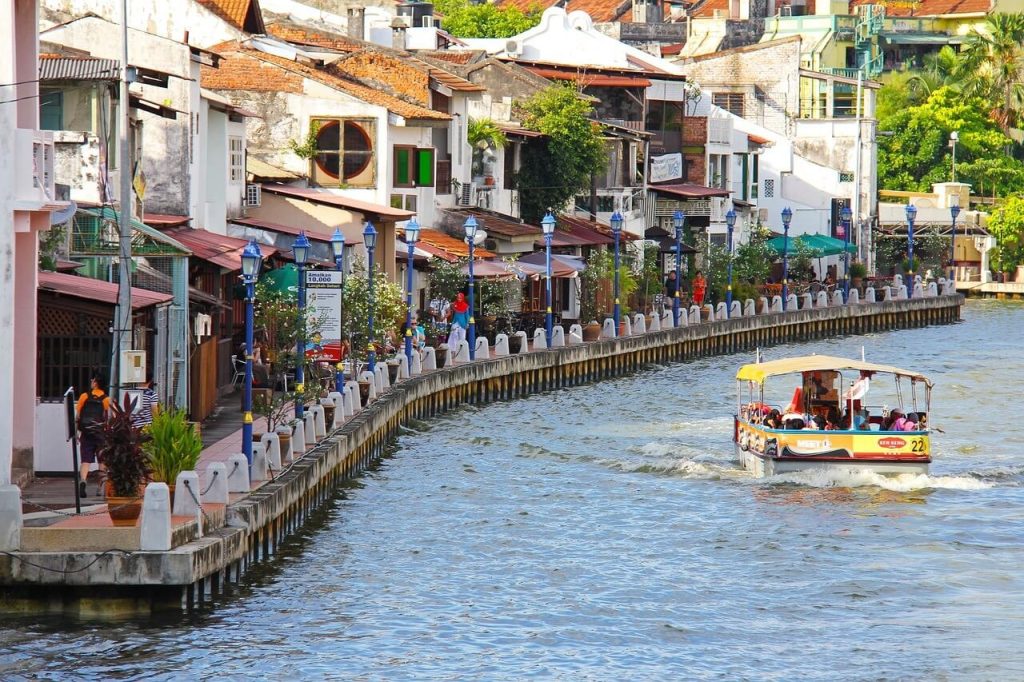
- River cruise: Boats depart from the Spice Garden Jetty and the Melaka River Square Jetty for 30-minute cruises along the Malacca River, passing colourful shophouses, street art, and the old town. It’s a pleasant way to see the riverside from a different angle.
The Dutch Square and the Heritage Core
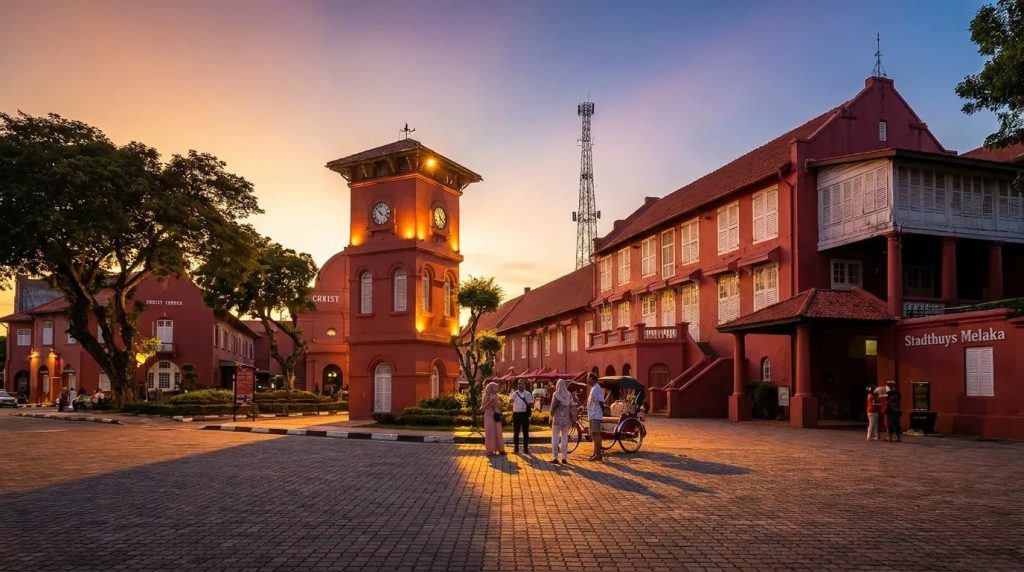
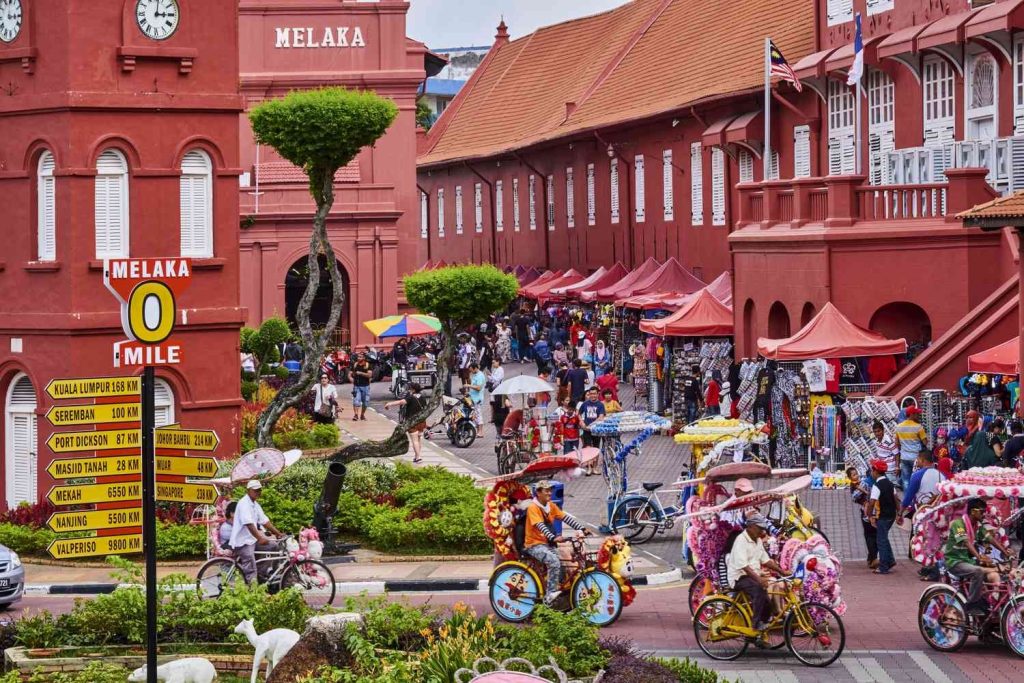
The Dutch Square (Dataran Dutch) is the focal point of Malacca’s old town and the area you will inevitably spend most of your time gravitating around.
Its distinctive terracotta red buildings make it immediately recognizable, with the Stadthuys (the oldest surviving Dutch building in the East, now housing the History and Ethnography Museum), Christ Church Melaka (built in 1753, the oldest functioning Protestant church in Malaysia), the Tan Beng Swee Clock Tower, and Queen Victoria’s Fountain all clustering around the square in one of the most photographed streetscapes in Malaysia.
The square is busy with tourists most hours. Early morning (before 9 a.m.) and the hottest part of the afternoon are the least crowded times. Evenings, when the decorated trishaws light up and the river bars fill up, have their own energy.
The History and Ethnography Museum inside the Stadthuys is worth an hour for anyone who wants context on the layers of empire that shaped the city.
St. Paul’s Hill and A Famosa Fort
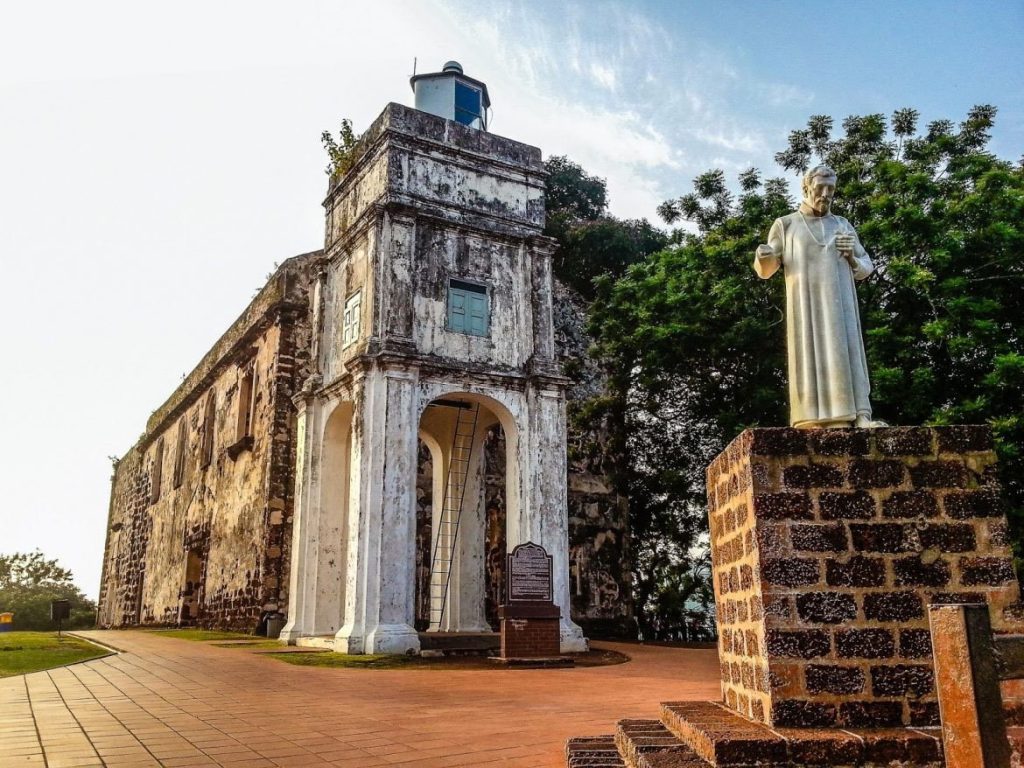
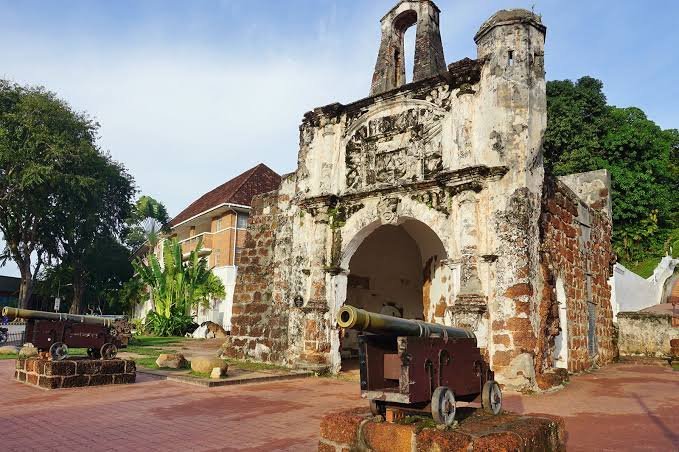
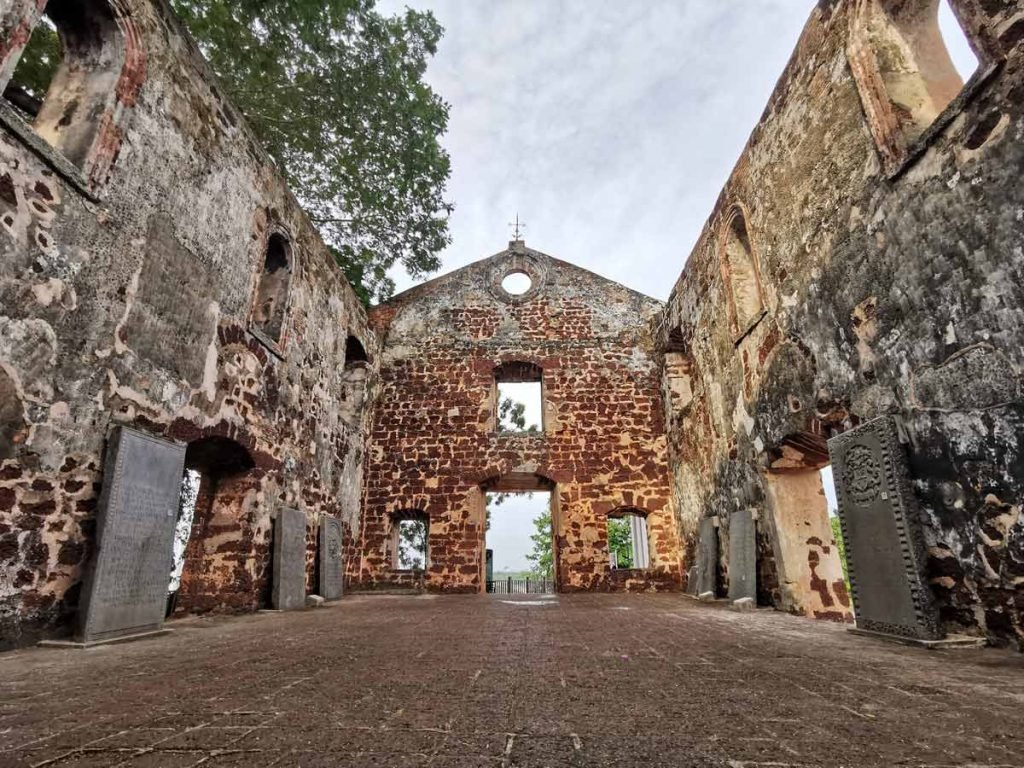
A short walk uphill from the Dutch Square brings you to St. Paul’s Hill, the site of the Church of Saint Paul and the commanding Portuguese fortification that once controlled the entire strait.
The church was built by the Portuguese in 1521 (originally as a private chapel) and used by the Dutch as a burial site for Dutch nobles and dignitaries in the 17th century.
Today, the roofless stone walls stand above the hilltop, surrounded by old Portuguese tombstones, their inscriptions still legible. The view from the hilltop over the Malacca Strait is one of the best in the city.
At the base of the hill, next to the Melaka Sultanate Palace Museum, stands A Famosa (Porta de Santiago), what remains of the once-massive Portuguese fortress built by Alfonso de Albuquerque after the conquest of Malacca in 1511.
Most of the fortress was demolished by the British in the early 19th century. The surviving gatehouse is one of the oldest European architectural remains in Southeast Asia and a primary reason for the UNESCO listing.
The small size of what remains tends to surprise visitors who expect something grander, but the historical weight it carries is genuinely significant.
Jonker Street and the Old Town
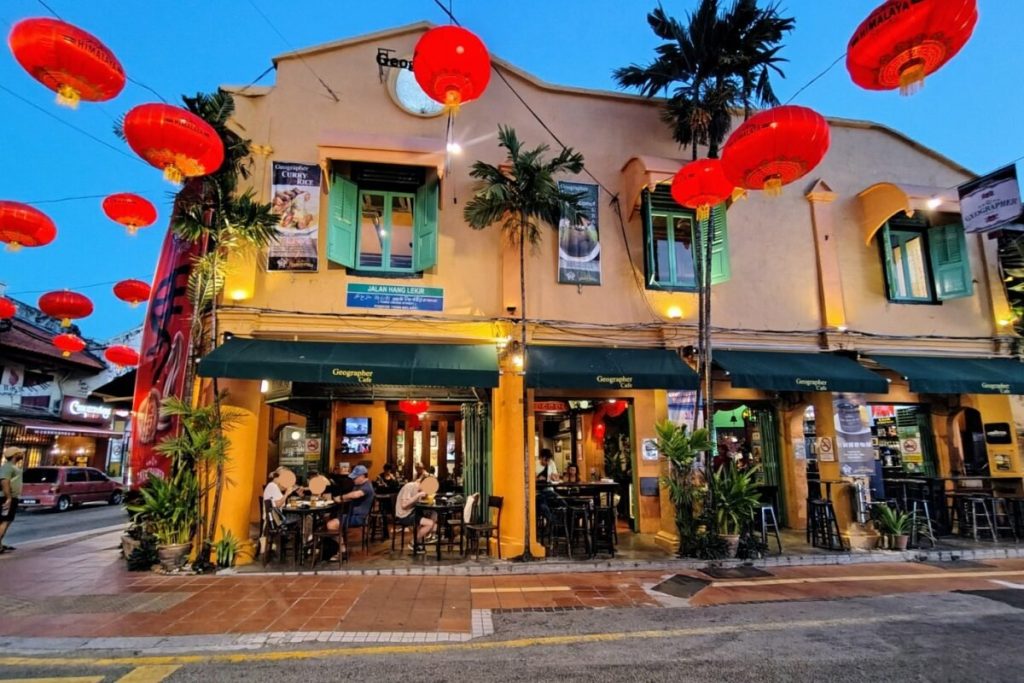
Jonker Street (Jalan Hang Jebat) is the central artery of Malacca’s Chinatown district, a long street of heritage shophouses lined with antique dealers, galleries, cafes, and souvenir shops that, by day, is a pleasant stroll and, from Friday to Sunday evening, becomes one of the best night markets in Malaysia.
The Jonker Street Night Market runs every Friday, Saturday, and Sunday from approximately 6 pm, when the road closes to traffic and vendors set up for an evening of street food, live music, and crowds.
The food is the main draw. You should try out their Korean fried chicken, prawn mee, assam laksa, Klebang coconut shake, freshly grilled satay, and Nyonya snacks, which represent a cross-section of Malacca’s culinary heritage.
The market fills up by 7 pm and runs to around midnight. Going early gives better access to the popular food stalls before they sell out.
Beyond the night market, the Jonker Street area rewards daytime exploration. The Baba and Nyonya Heritage Museum on Jalan Tun Tan Cheng Lock (the most beautiful street in Malacca’s Chinatown, known as “Millionaires’ Row” for the mansions that line it) is a private museum in a 19th-century Peranakan townhouse showing how the Straits-born Chinese community lived in extraordinary detail.
The house itself, with its carved wooden screens, Belgian floor tiles, and ornate furniture, is the exhibit.
Keep in mind: Entry is by timed guided tour.
The Cheng Hoon Teng Temple on Jalan Tokong is the oldest functioning Chinese temple in Malaysia, established in the 1670s and continuously active for over 350 years. The temple is dedicated equally to Confucianism, Taoism, and Chinese Buddhism and is one of the most architecturally beautiful religious buildings in the country. The temple is open from 7 am to 6:30 pm free entry.
The streets around Jonker, particularly Jalan Tokong (Temple Street), Lorong Hang Jebat, and the riverside walkway, reward slow, unplanned wandering. Clan houses, Hindu temples, mosques, and antique shophouses appear in a density that reflects the genuine multicultural history of the city rather than any curated recreation of it.
The Floating Mosque and Other Mosques
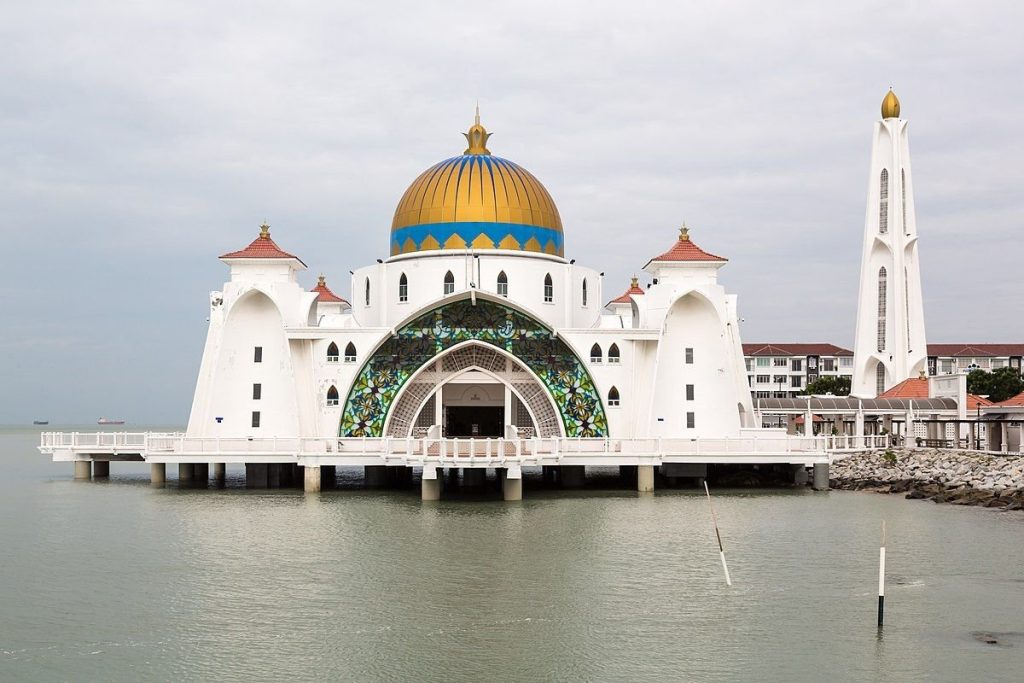
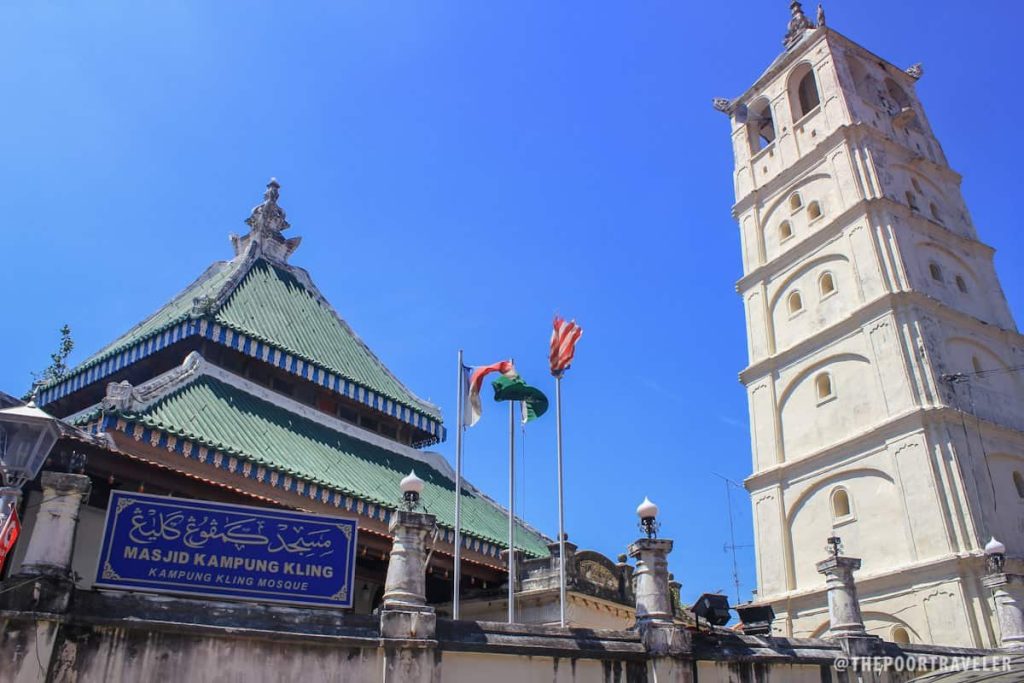
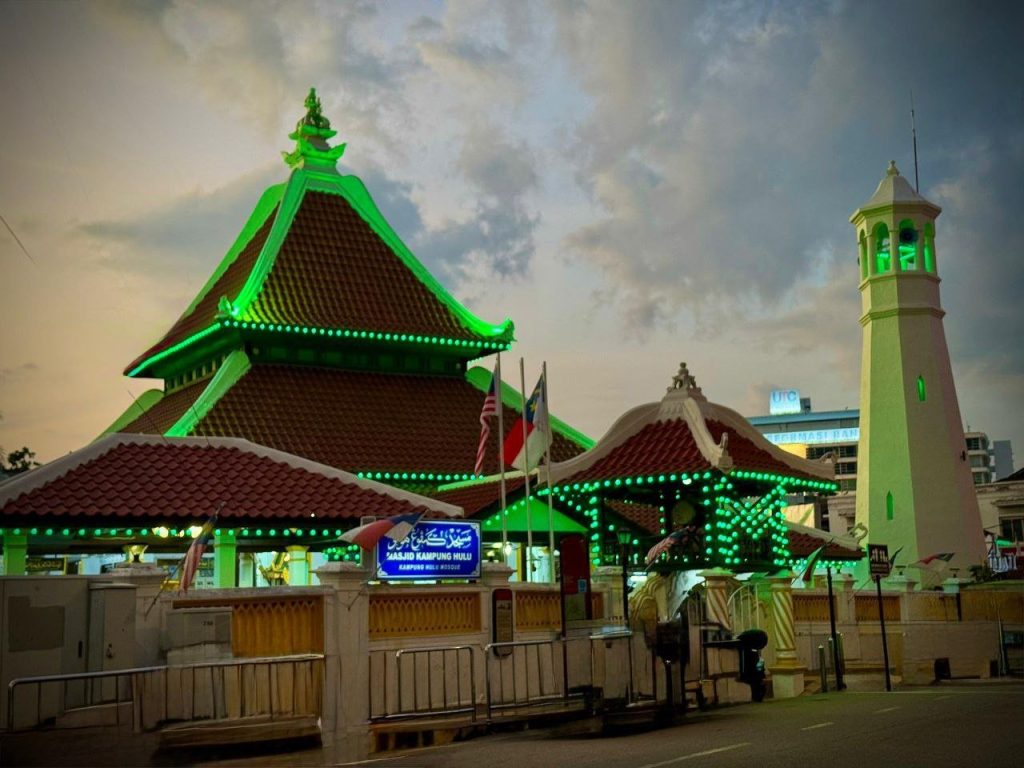
Masjid Selat Melaka (the Floating Mosque) on the shores of the Strait of Malacca is one of the most distinctive pieces of contemporary architecture in Malaysia. It’s a modern mosque with a golden dome and tall white minaret built on a platform that appears to float on the water at high tide.
You get the most dramatic views from the rock jetty a hundred metres from the mosque, particularly at sunset when the silhouette against the strait and the evening sky makes for one of the most photographed sunsets in the region.
Entry to the mosque itself is permitted for non-Muslim visitors outside of prayer times, with modest dress required. Coverings are available on site. Always check locally for current entry times and availability.
Malacca has several other mosques worth noting for their historical significance. The Kampung Kling Mosque (1748) and Kampung Hulu Mosque (one of the oldest in the country) both feature distinctive pagoda-style minarets that reflect the Chinese architectural influence absorbed over centuries of cultural mixing in Malacca. Both are in the heart of the Old Town and easily combined with a temple and Jonker Street circuit.
The Malacca River and Street Art
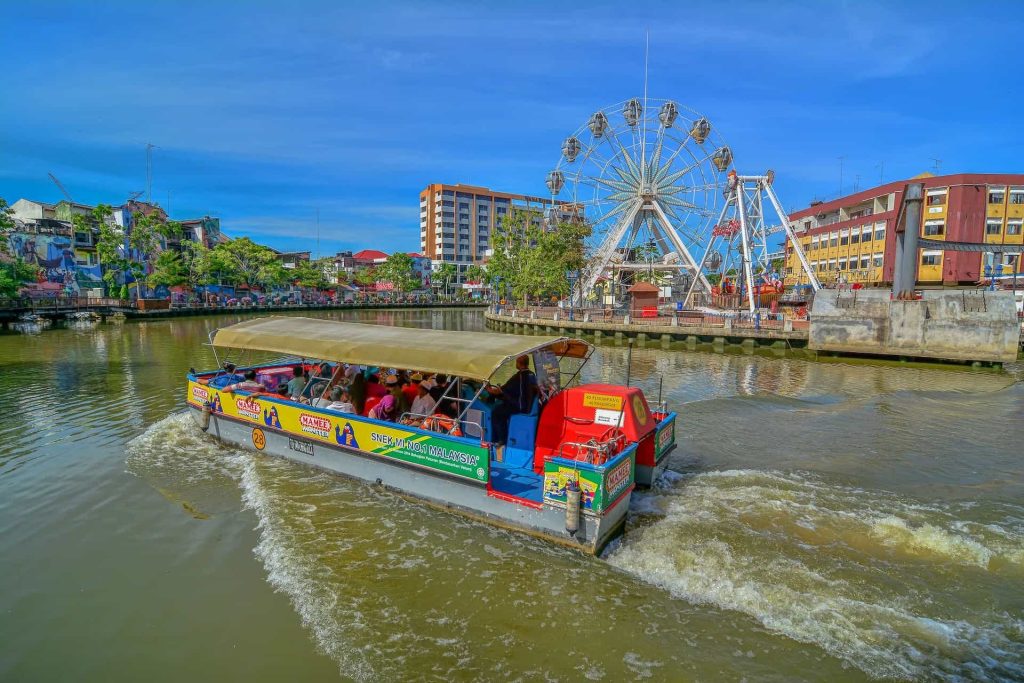
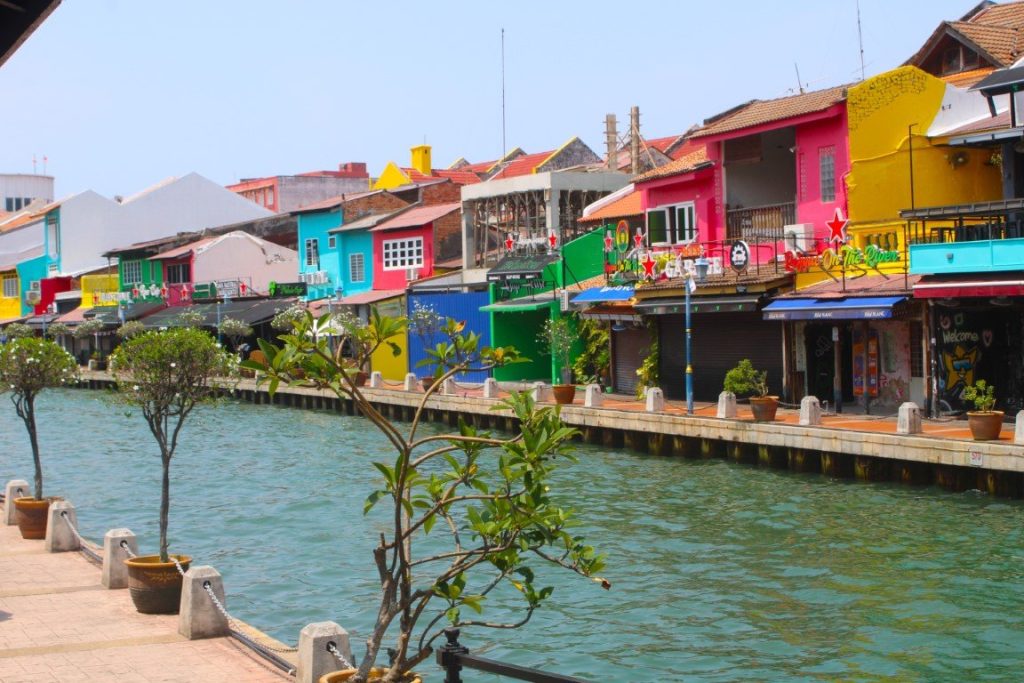
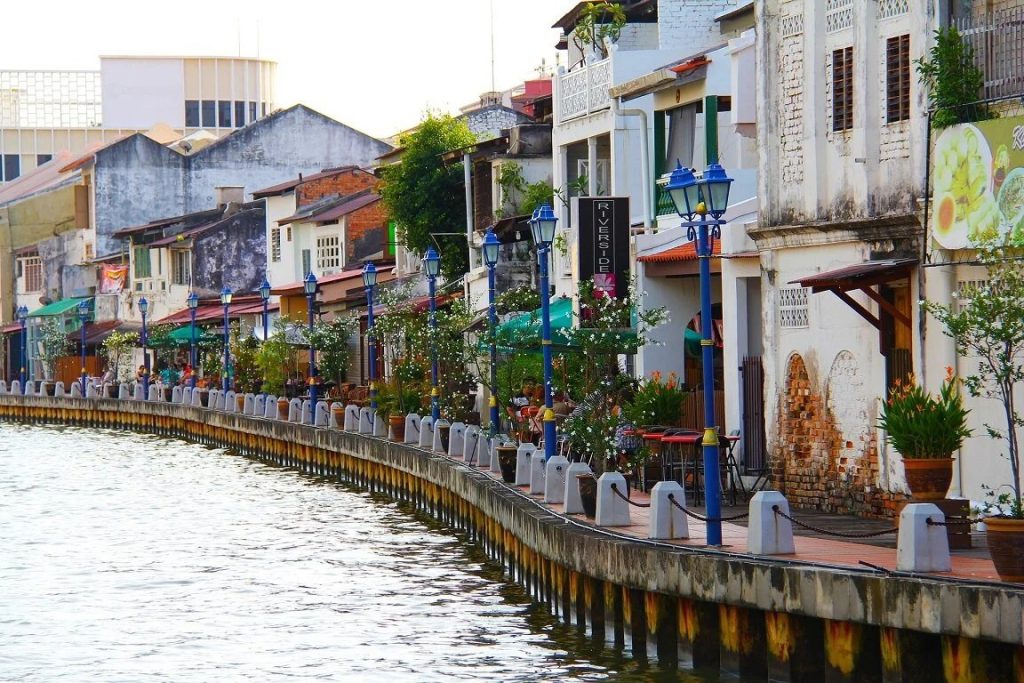
The Malacca River winds through the old town and is at its most beautiful in the early morning and at dusk, when the light catches the coloured shophouses lining the banks. A river cruise departing from either the Spice Garden Jetty or the Melaka River Square Jetty covers the main stretch in about 30 minutes.
Walking the riverfront path from near the Dutch Square up to Hang Jebat Bridge is one of the most pleasant things to do in the city, particularly in the cooler early morning before the heat builds.
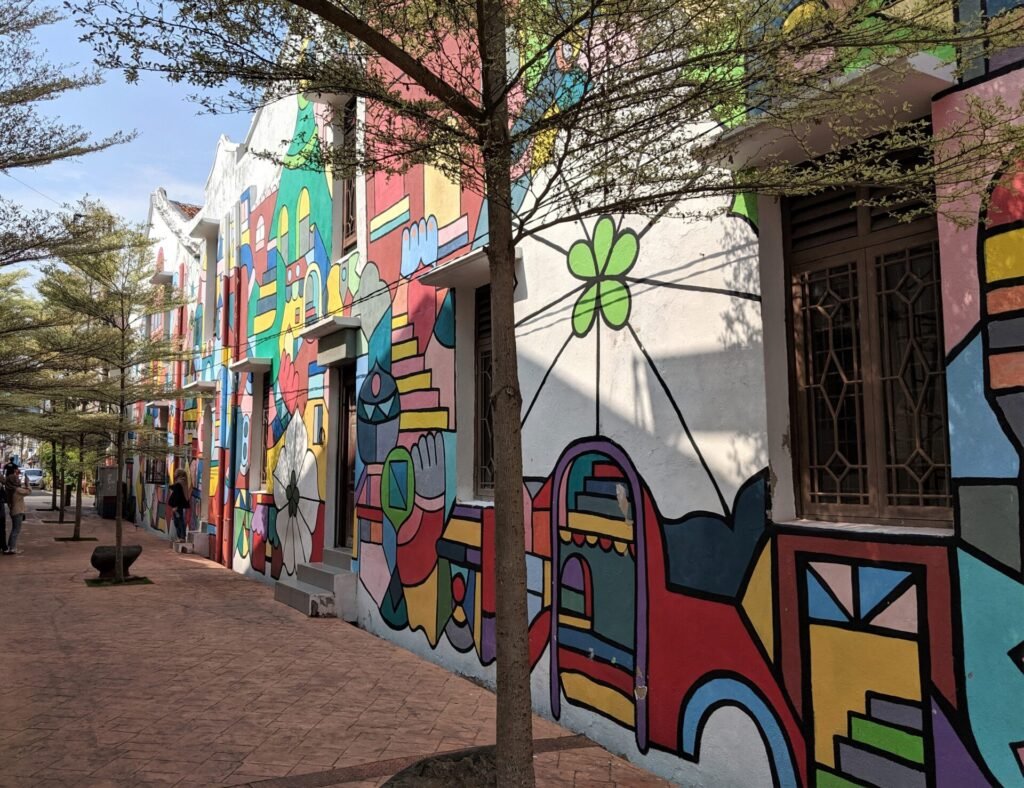
The riverside and Old Town laneways have a genuinely excellent street art scene spread across alley walls, shophouse facades, and unexpected corners. Notable locations include the laneway beside The Old Station Café (which has one of the most concentrated collections of murals in the city), the riverside stretch heading north from Tan Kim Seng Bridge, Lorong Hang Jebat (with the Orangutan House mural and several smaller works), and Friendship Square off Jalan Tokong. The murals change regularly. Some celebrated pieces have been painted over and replaced. Walk without a map and just look upward.
The Portuguese Settlement
About 3 km from the Old Town on the Strait of Malacca, the Portuguese Settlement (Padri Sa Aban) is a community of Kristang people, descendants of marriages between Portuguese colonists and local Malay women in the 16th and 17th centuries.
They have maintained a distinct culture, language (a Portuguese-Malay creole), and traditions for nearly 500 years in the same neighbourhood.
The settlement is best known for its seafood restaurants, a dozen or so establishments serving fresh catch from the strait with a directness of flavour and price that differs from the tourist-facing restaurants in the Old Town. It is a lively and atmospheric evening destination, particularly if you sit outside facing the water.
Food in Malacca
Malacca is one of the most distinctive food destinations in Malaysia, with a culinary culture built on the same multicultural layering that produced the city’s architecture.
Nyonya food (also called Peranakan cuisine) is the defining cuisine of Malacca and is found nowhere else in quite the same form. It is the cooking that emerged from intermarriage between Chinese immigrants and local Malay communities from the 15th century onward, with Chinese techniques, Malay spices, and a unique Peranakan sensibility that produces dishes of remarkable complexity.
Nyonya Laksa (a rich coconut broth with fish, chicken, and noodles), Asam Pedas (a sour and spicy fish stew), Satay Celup (skewers of seafood, meat, and vegetables cooked in aromatic gravy), and Oh Chien (fried oyster egg omelette) are the non-negotiable dishes.
Chicken Rice Ball (Nasi Ayam Bola) is Malacca’s most famous single dish. It is a Hainanese-style poached chicken served alongside rice shaped into compact balls, cooked in chicken stock. Multiple stalls on Jonker Street and in Chinatown claim the best version. The argument has no resolution.
Cendol is the essential Malacca dessert: a bowl of shaved ice, coconut milk, palm sugar syrup, pandan-flavoured green rice flour jelly, and red beans. The Durian Cendol version adds fresh durian pulp and is deeply divisive and deeply regional.
Klebang Coconut Shake is a Malacca institution: fresh coconut milk blended with ice cream and crushed ice. The original is found at Klebang Beach, about 4 km from the Old Town.
For evening eating, the Jonker Street Night Market (Friday to Sunday) is the most fun, and the Portuguese Settlement seafood restaurants are the most atmospheric. For daytime hawker food, the Jonker Kopitiam stalls away from the main tourist strip and Lock Ten Food near Jonker Street offer well-priced local dishes.
For Nyonya cuisine in a sit-down setting, Baba Kanya Restaurant on the riverside and The Kappan House nearby are consistently recommended.
Popular Attractions in Malacca
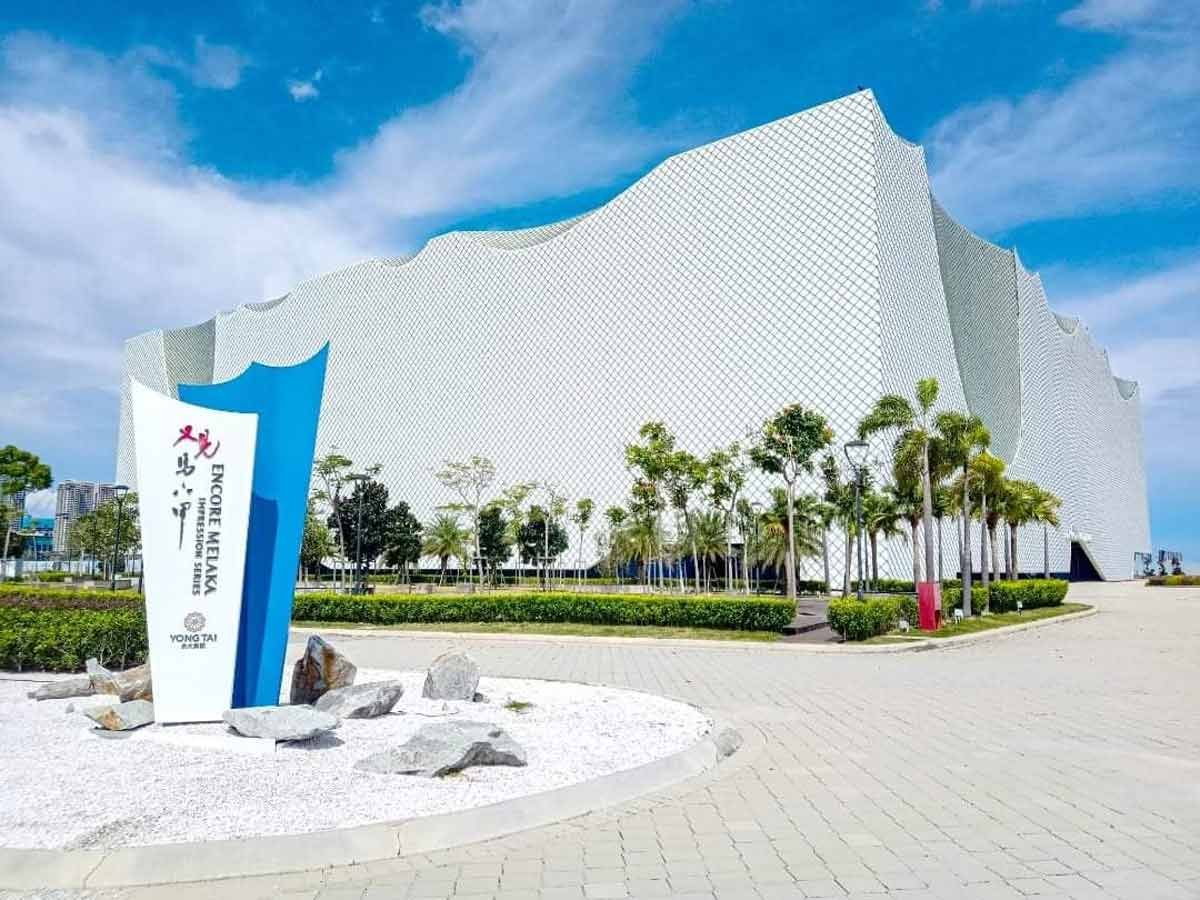

- Encore Melaka is Southeast Asia's first 360-degree rotating theatre, located along the Malacca waterfront close to the UNESCO Heritage Zone. The 70-minute show combines traditional Malay dance, music, and storytelling with contemporary theatrical technology, including rotating audience seating, immersive sets, and special effects, narrating the history and soul of Malacca through the lives of its people. One of the most technically ambitious cultural performances in Malaysia and a genuinely memorable evening experience, distinct from anything else available in the region.
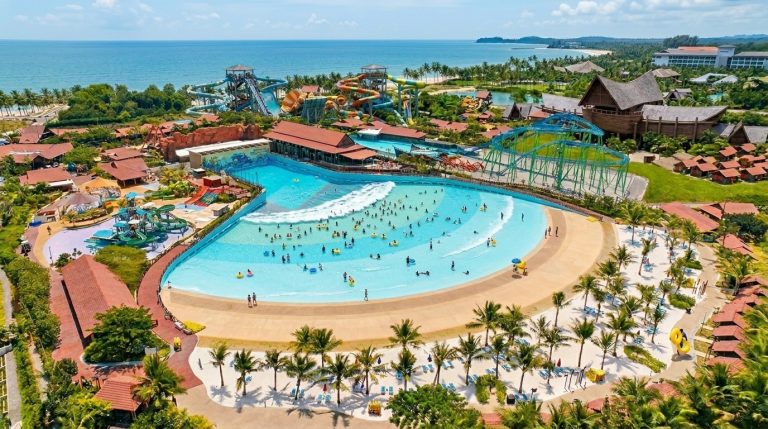
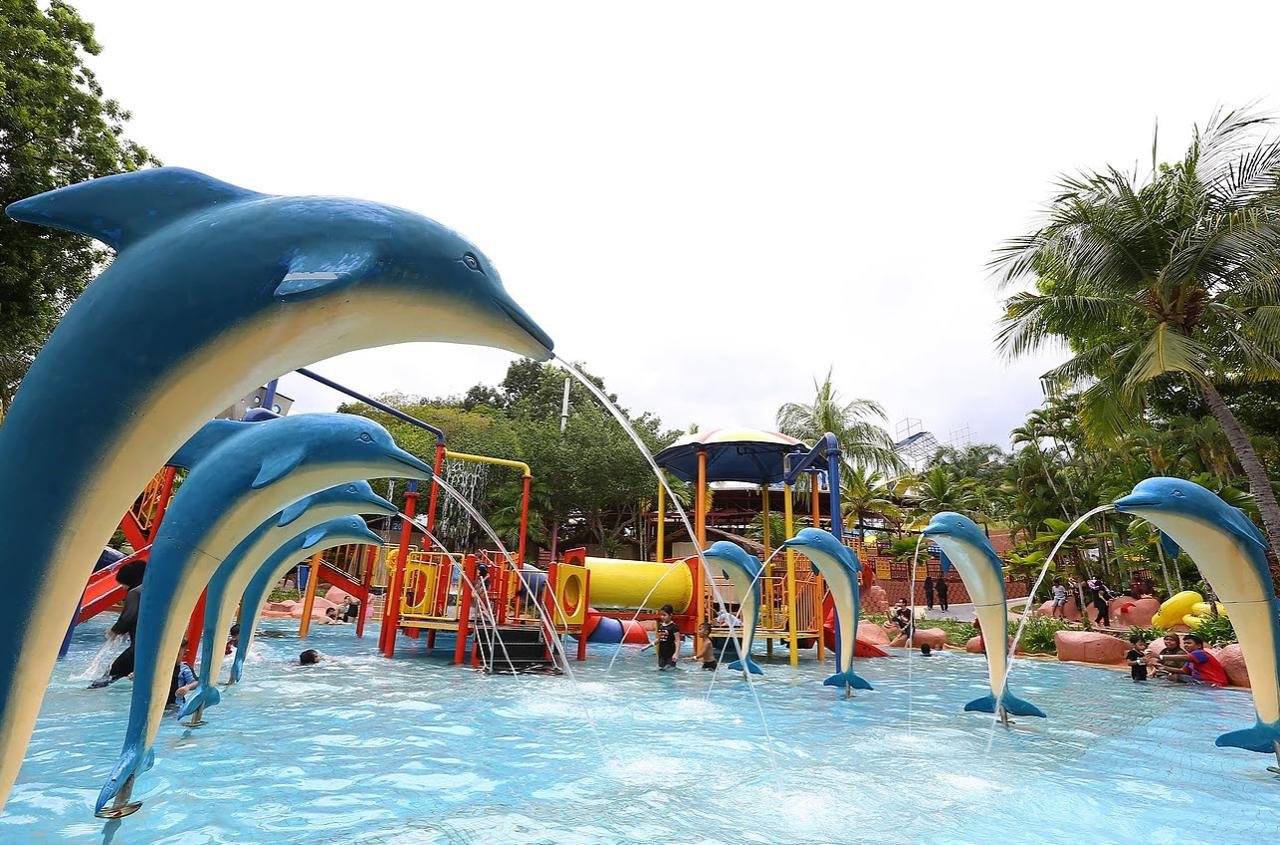
- A Famosa Water Theme Park at Alor Gajah, about 25 km from central Malacca, is the largest water park in Malaysia, with over 12 rides and attractions, including wave pools, high-speed slides, a kids' adventure pool, and the Arabian Village themed zone. A full-day family attraction and an excellent option for visitors who want a break from heritage sightseeing.
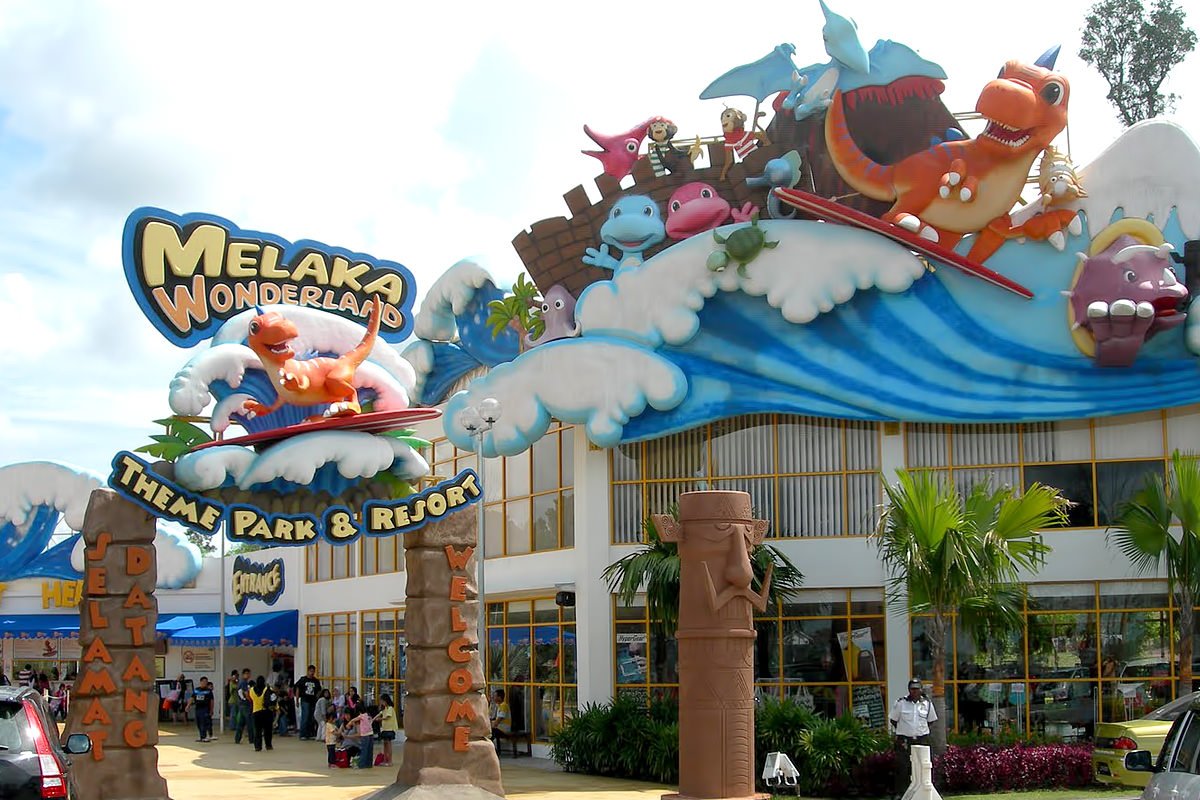
- Melaka Wonderland Theme Park and Resort at Ayer Keroh features 11 water attractions across 360 hectares of greenery, including the Tornado Chaser (the first of its kind in Malaysia), the Big Wave Pool, the Kamikaze Racer, Adventure Island, and a Lazy River. It also includes a pedal boat zone and animal feeding (fish and rabbits) for younger visitors. A newer park compared to A Famosa, with a more contemporary layout.
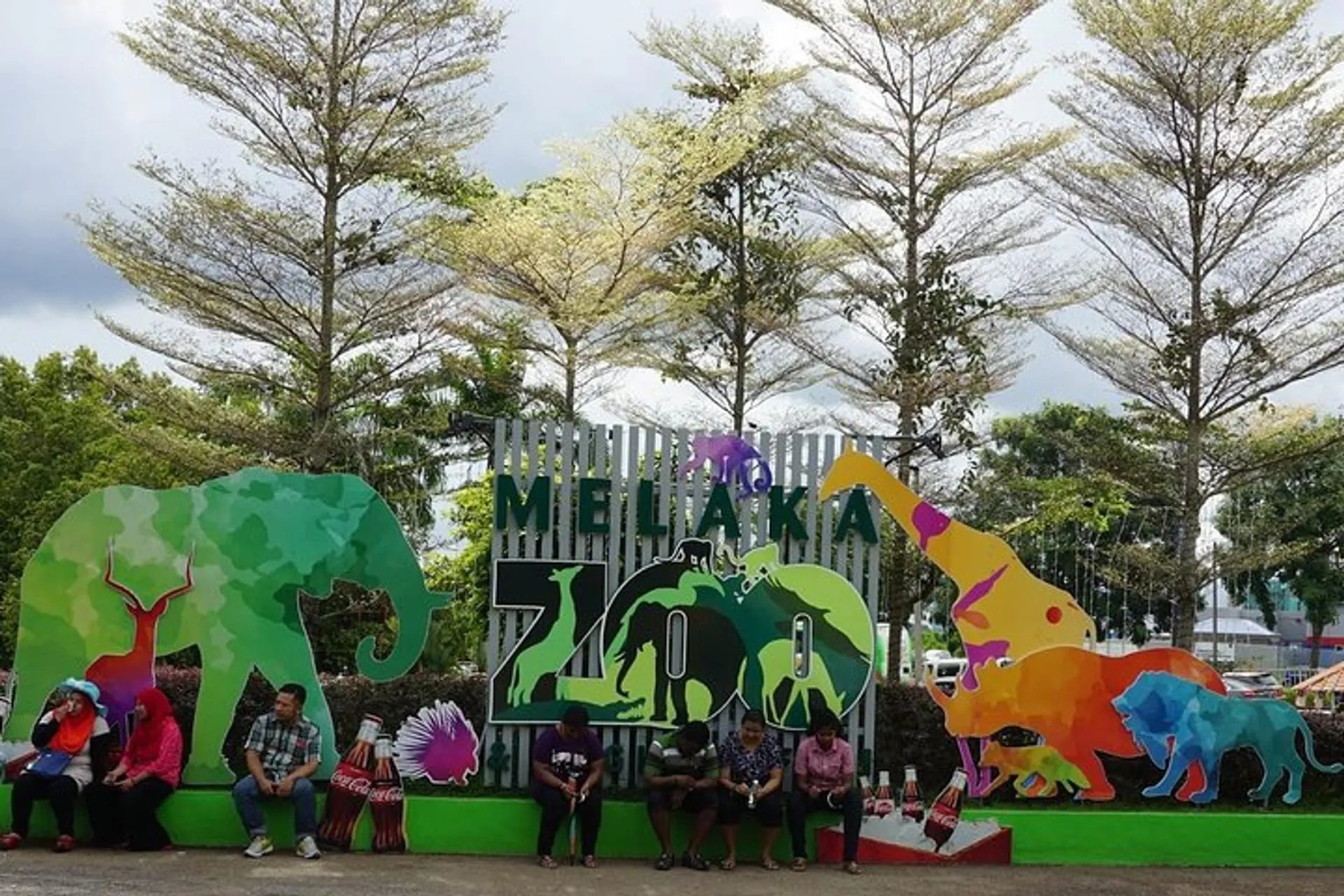
- Zoo Melaka at Ayer Keroh is a 54-acre zoo housing over 1,200 animals, including tigers, giraffes, elephants, and a range of Malaysian native species. The zoo offers elephant feeding sessions, a petting zone, bird shows, tram rides, and a dinosaur park feature. A Melaka Night Safari runs on selected evenings with nocturnal animal viewing.
- Upside Down House Melaka is an interactive optical illusion attraction where rooms are entirely inverted, with furniture, appliances, and décor fixed to the ceiling, creating disorienting and highly photographic perspectives throughout. It is a popular family and group experience suited to all ages.
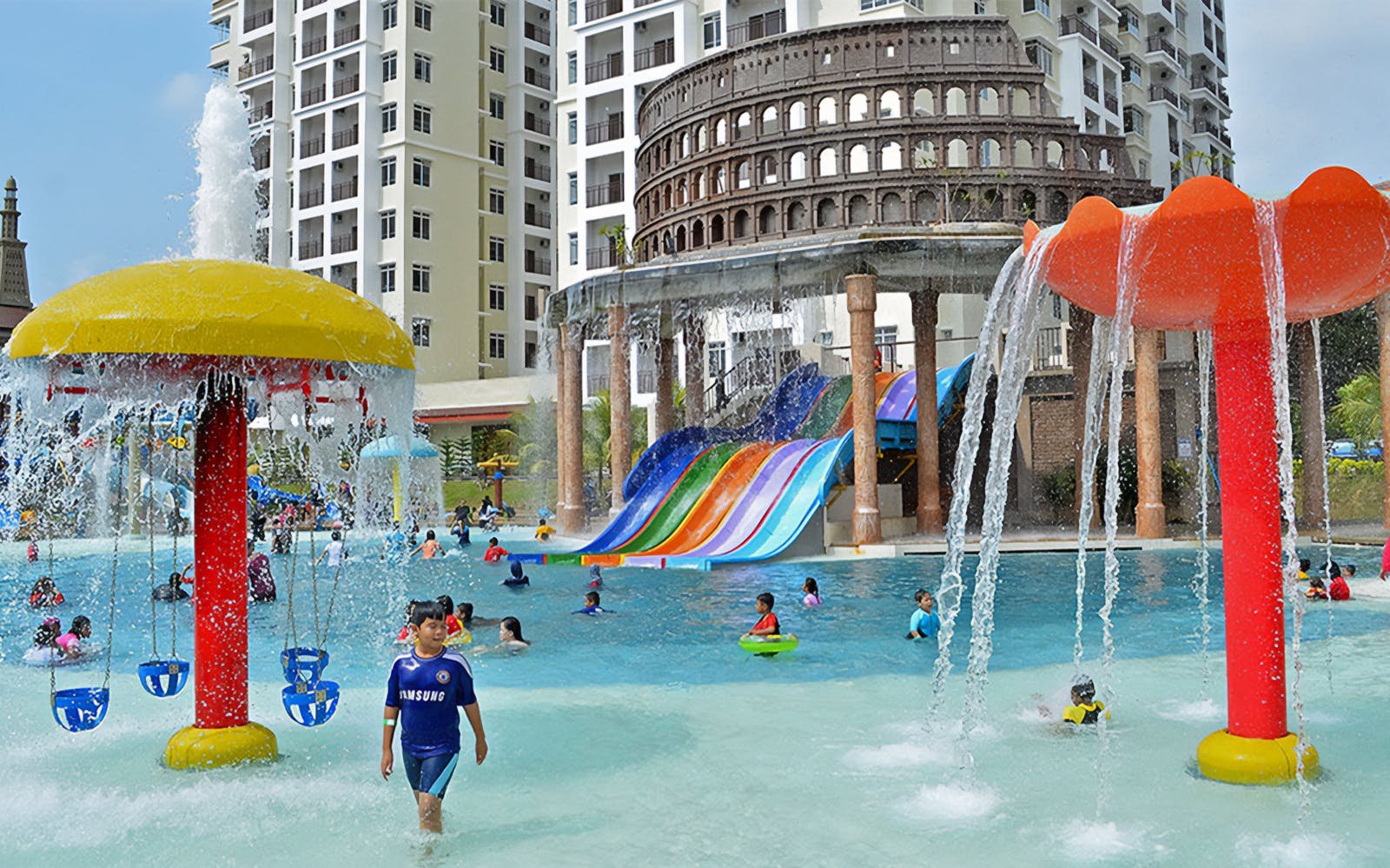
- Bayou Lagoon Melaka Park is one of the most convenient waterpark options near Malacca, about 10 km from the Old Town. The park features lazy landing pools, water slides, and a children's play zone in a tropical setting, with on-site resort accommodation for families who want to stay right beside the park. Its proximity to the city centre makes it a practical half-day alternative to the larger waterparks further out at Alor Gajah.


When Should You Visit Malacca?
Malacca is a year-round destination. The west coast of Peninsular Malaysia is largely sheltered from the northeast monsoon that affects the east coast between November and February, making it more reliably pleasant than Terengganu or Kelantan during this period.
The best time to visit Malacca is October to March, when conditions are generally drier and temperatures slightly less oppressive than the peak of the dry season. March to May and September to October are the shoulder months with good weather and lower crowd levels.
The Jonker Street Night Market runs every Friday, Saturday, and Sunday regardless of the season. Visiting on a weekend means experiencing the market at its most lively. If you want to avoid the biggest tourist crowds at the heritage core, mid-week visits are noticeably quieter.
Major Malaysian public holidays (Chinese New Year, Hari Raya, Deepavali) bring large numbers of domestic visitors and should be factored in when booking accommodation, particularly in the Old Town.
Where Can You Stay in Malacca?
The most atmospheric and convenient place to stay is in or immediately adjacent to the Old Town heritage district. Heritage shophouse hotels on and around Jalan Tokong and Jalan Tun Tan Cheng Lock (Millionaires' Row) provide the most characterful accommodation and put everything in the UNESCO zone within walking distance.
Casa del Rio on the riverfront is the top luxury option in Malacca, with a pool, spa, river views, and a daily breakfast buffet.
For mid-range stays with character, Liu Men Melaka near Jonker Street offers clean, comfortable accommodation in the historic district.
Budget travelers will find several good hostel options in the Old Town, including The Cardamom Hostel (which shares management with The Haven Inn nearby) for quiet, well-located private room stays.
Practical Tips Before You Go
- Stay in or near the Old Town. The heritage district is compact and entirely walkable. Staying outside means taking a taxi or Grab for every meal and sight.
- Visit the Dutch Square early. It is at its most photogenic before 9 am, before the trishaw operators and tour groups arrive.
- The Jonker Street Night Market runs Friday, Saturday, and Sunday only. Plan your visit to overlap with at least one of these evenings.
- Dress modestly for temples and mosques. Shoulders and knees should be covered. Shoes are removed before prayer halls. A light scarf is worth packing.
- Cash is still widely used. The night market stalls and smaller eateries prefer cash; have RM 50 to 100 in small bills on hand at all times.
- City buses (BAS.MY) run from Melaka Sentral to the Old Town. The M100 serves the Dutch Square and Jonker Walk. Payment is fully cashless: Touch 'n Go, credit/debit card, or QR code only.
- Download Grab for journeys to A Famosa, Zoo Melaka, Ayer Keroh, and other out-of-town attractions.
- The MDAC is mandatory for most foreign visitors entering Malaysia (Singaporean citizens are exempt). Complete it online within three days before arrival.
Malacca earns everything the UNESCO inscription promises and then a little more. The history is genuinely present, not performed. The food is extraordinary. The river at dusk, the Cheng Hoon Teng Temple at dawn, a slow evening in the Portuguese Settlement with fresh seafood, and the Strait behind you. These are moments that belong to a city that has been accumulating stories for six hundred years and shows no sign of stopping.
Head to Thrillark to book your Malacca tickets and experiences, and give Malaysia's most historic city the time it deserves.
Frequently Asked Questions
Is Malacca a day trip, or does it deserve more time?
Malacca rewards more than a day trip, though a well-planned day from KL can cover the main heritage highlights. Two nights allow a proper pace: the first evening for the Jonker Street Night Market and the second afternoon for the Floating Mosque sunset, with the Dutch Square, St. Paul's Hill, A Famosa, the river, and the temples across the middle of the day. Three nights is ideal for anyone who wants to add the Portuguese Settlement, the Baba and Nyonya Museum, Encore Melaka, and a day at the waterpark.
What is Nyonya food, and where do you find the best of it in Malacca?
Nyonya (Peranakan) food is the distinctive cuisine that emerged from the intermarriage of Chinese immigrants and local Malay communities from the 15th century onward, combining Chinese techniques with Malay spices to produce dishes found nowhere else in quite the same form. The non-negotiables in Malacca are Nyonya Laksa, Asam Pedas, Satay Celup, and Chicken Rice Ball. Baba Kanya Restaurant on the riverside and The Kappan House nearby are the most consistently recommended sit-down Nyonya options; the Jonker Street Night Market is the best casual introduction to the full range of local food.
What is Encore Melaka, and is it worth attending?
Encore Melaka is Southeast Asia's first 360-degree rotating theatre, a 70-minute theatrical production on the Malacca waterfront that tells the history and stories of the city through traditional Malay dance, music, and contemporary staging technology, including rotating audience seating and immersive special effects. It is one of the most technically ambitious cultural performances in Malaysia and a genuinely distinctive evening experience; visitors with even a passing interest in Malacca's history find it a memorable complement to a day of walking the heritage core.
What is A Famosa in Malacca, and how are the fort and the waterpark related?
The original A Famosa was the Portuguese fortress built in Malacca in 1511, of which only the Porta de Santiago gatehouse now survives near St. Paul's Hill in the Old Town. The A Famosa Water Theme Park is an entirely separate attraction about 25 km from the Old Town at Alor Gajah, a large water park that takes its name from the historical fortress. The two share only the name: the fort is a UNESCO heritage site at the heart of the city; the water park is Malaysia's largest water theme park and a full family day out in its own right.
How do you get from Kuala Lumpur to Malacca?
Long-distance buses from KL's Terminal Bersepadu Selatan (TBS) to Melaka Sentral bus terminal run every 30 to 45 minutes and take approximately 2 hours. By car, the North-South Expressway south from KL reaches Malacca in 1.5 to 2.5 hours, depending on traffic. A direct Grab from central KL is possible but expensive; the bus is significantly better value and comparable in journey time.
What are the best things to do in Malacca in one day?
A well-structured day in Malacca covers the morning at the Dutch Square and the History and Ethnography Museum, followed by St. Paul's Hill and the A Famosa gatehouse, lunch near Jonker Street with chicken rice balls or Nyonya Laksa, an afternoon walk through Jonker Street and the Cheng Hoon Teng Temple, a river cruise in the late afternoon, and dinner at either the Jonker Street Night Market (Friday to Sunday) or the Portuguese Settlement seafood restaurants for the evening. The Floating Mosque at sunset requires a Grab out to the waterfront, but rewards the short detour with one of the most memorable views of the day.
Browse by themes
Top Things to Do in Malaysia