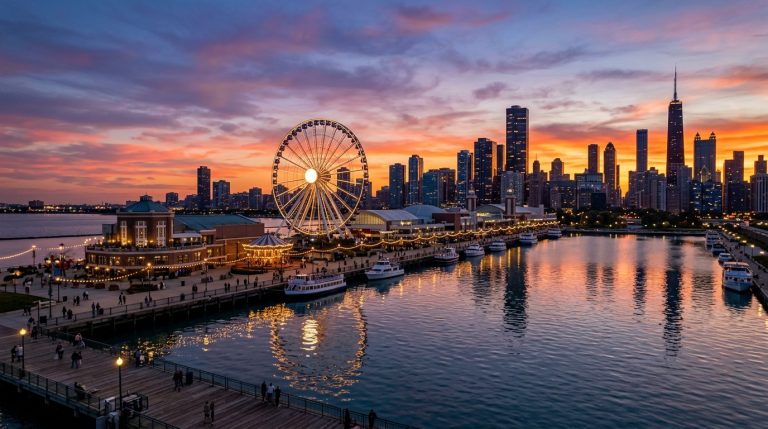
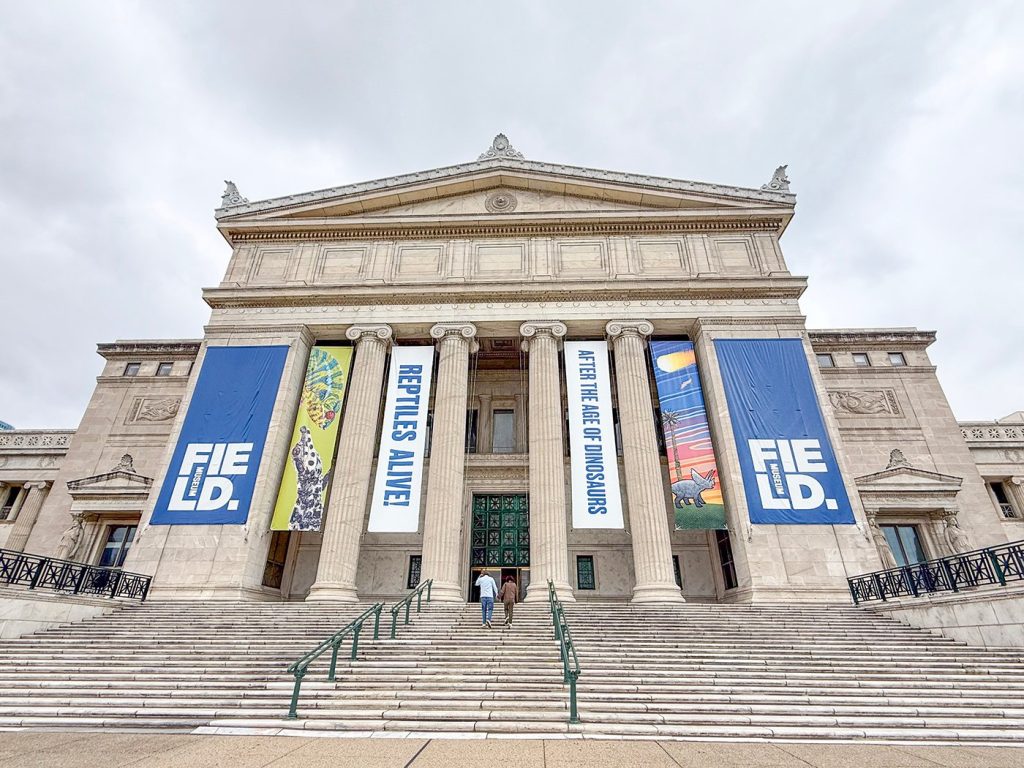
Chicago’s Museum Campus is one of the greatest concentrations of world-class attractions on the planet, and right at its heart sit two absolute icons: the Field Museum of Natural History and the Shedd Aquarium.
They share a lakefront zip code, they’re steps apart, and they’ve both been wowing visitors for nearly a century. But they are wildly different experiences, and choosing between them (or figuring out which one to tackle first) deserves more than a coin flip.
Whether you’re a first-time Chicago visitor with one afternoon to spare, a family trying to plan the ultimate Museum Campus day, or a local who keeps meaning to revisit one of them, this breakdown covers every major category so you can make the call with confidence.


The Quick Verdict: Head-to-Head Comparison

| Category | Field Museum | Shedd Aquarium |
| Address | 1400 S. DuSable Lake Shore Drive | 1200 S. DuSable Lake Shore Drive |
| Opened | 1893 (current building 1921) | 1930 |
| Size | 480,000 sq ft across multiple floors | 90,000 sq ft of exhibit space |
| Collection | ~40 million specimens & artifacts | 32,000+ animals across 1,500+ species |
| Signature Experience | SUE the T. rex | Abbott Oceanarium (belugas & dolphins) |
| Touch Experiences | Máximo’s foot | Sea Star Touch, Sturgeon Touch, Stingray Touch (seasonal) |
| Immersive Add-On | VR Transporter, Giant-screen 3D films | 4D Experience, Animal Encounters |
| Special Exhibit (2026) | Pokémon Fossil Museum (May to April 2026) | Wonder of Water |
| Evening Events | Occasional after-hours programming | Jazzin’ at the Shedd (Wednesdays, May–Sept) |
| Free Days | Select dates for IL residents | Free Tuesdays (evenings, IL residents, summer) |
| Time Needed | Full day (5–7 hours) | Half to full day (3–5 hours) |
| Best For | History, culture, dino lovers | Animal lovers, families, sensory experiences |
The Collections: Bones vs. Fins
This is the defining difference between the two, and it’s a big one.
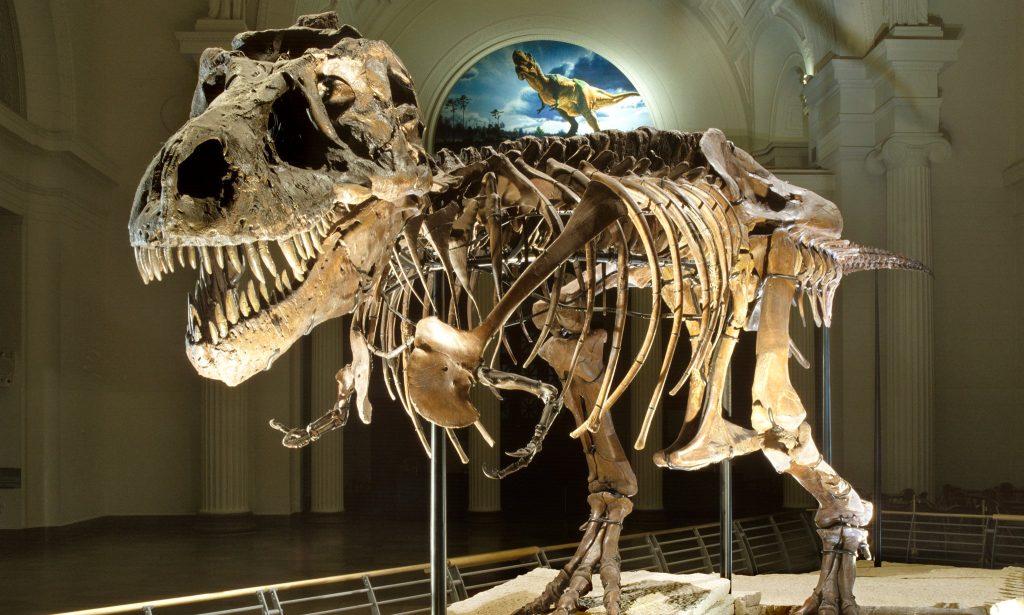
The Field Museum is a time machine. Its collection of roughly 40 million specimens spans 4 billion years of Earth’s story, with dinosaur fossils, Egyptian mummies, meteorites, ancient civilizations, gems and minerals, birds, butterflies, and more.
Its star resident is SUE the T. rex, the largest and most complete Tyrannosaurus rex ever discovered, whose 67-million-year-old bones sit in a dedicated gallery that genuinely stops people in their tracks.
Nearby, Máximo the Titanosaur stretches an absurd 122 feet across Stanley Field Hall, and suspended overhead is Sobek the Spinosaurus fossil cast. The sheer scale of what’s preserved here is staggering.
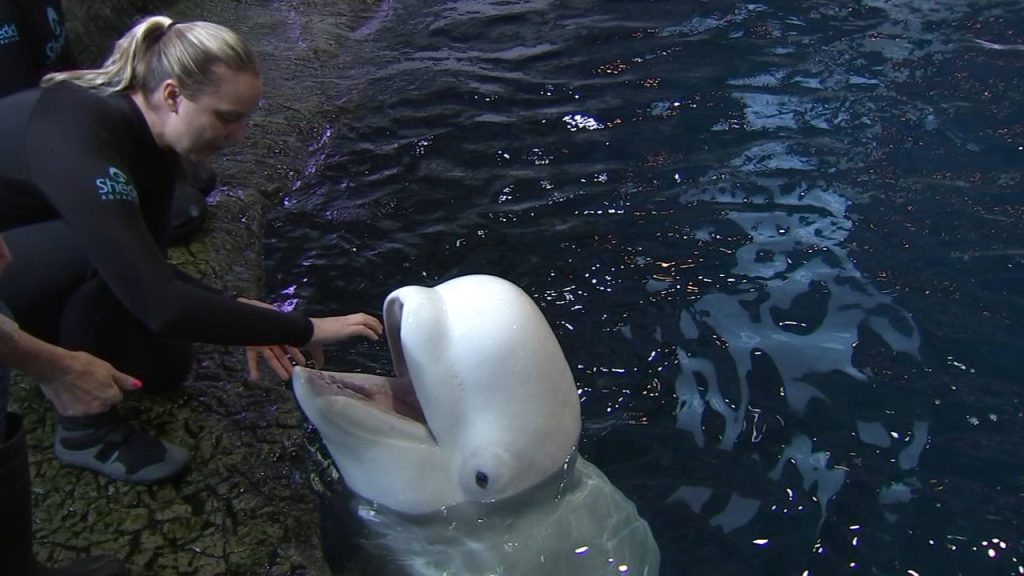
The Shedd Aquarium is a living, breathing world beneath the waves. More than 32,000 animals across 1,500-plus species call it home, from beluga whales and Pacific white-sided dolphins in the massive Abbott Oceanarium to sharks, rays, and octopuses in the award-winning Wild Reef, a 400,000-gallon coral reef habitat that puts you at a diver’s eye level.
The Amazon Rising exhibit takes you through the flooded forests of the Amazon River Basin, complete with arapaima, electric eels, and a massive anaconda.
The Wonder of Water exhibit steps between freshwater and saltwater worlds. And because these are live animals, every visit is genuinely different.
Whether you choose the Field Museum or the Shedd Aquarium depends entirely on you. This one comes down to whether your heart races at 67-million-year-old bones or at a beluga whale gliding three feet in front of your face.
Hands-On Experiences

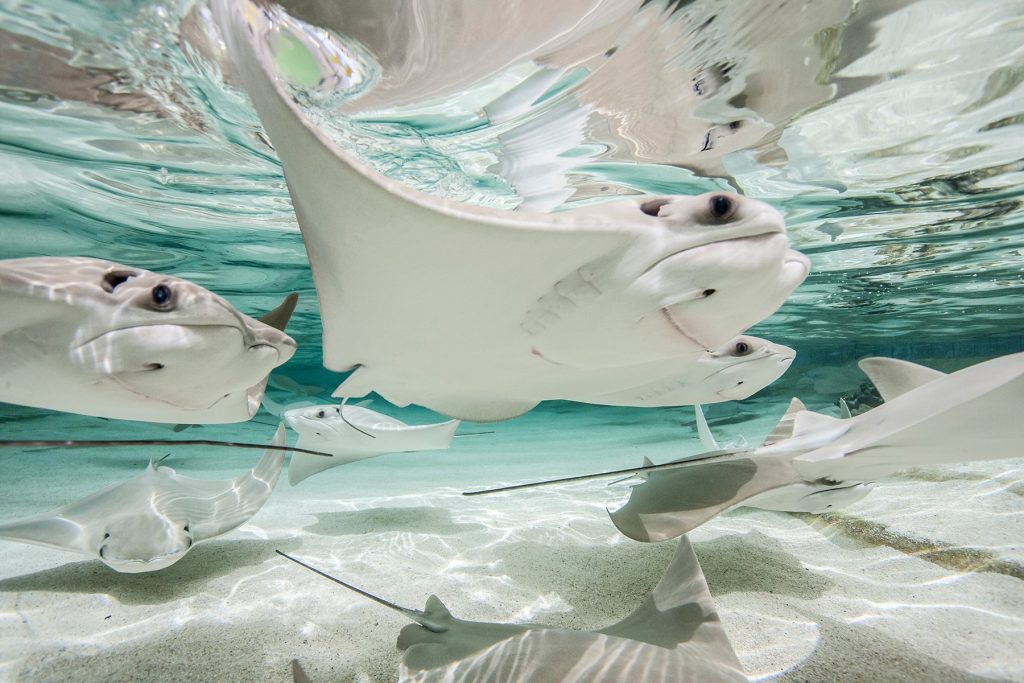
If you want to actually touch something, Shedd Aquarium is the runaway winner. The Sea Star Touch and Sturgeon Touch experiences are open every single day, letting visitors put their hands in the water and make contact with real animals.
In summer, Stingray Touch and Stingray Feeding bring cownose rays into the mix, with animal experts on hand to share their fascinating adaptations. It’s the kind of experience that makes kids completely forget they’re in an educational institution.
The Field Museum isn’t entirely hands-off. You’re actively encouraged to touch Máximo’s foot, and interactive elements are woven into halls like the Crown Family PlayLab and Underground Adventure.
But it’s a more visual and intellectual experience than a tactile one. For younger kids, especially, Shedd’s touch pools tend to generate the louder squeals of delight.
Winner: Definitely the Shedd Aquarium. Nothing in the Field Museum quite matches the thrill of a stingray gliding under your fingers.
Family & Kids’ Experience
Both attractions are excellent for families, but they hit differently depending on the age of your kids.
Shedd Aquarium tends to win with the very youngest visitors. Toddlers and children under eight are absolutely mesmerized by the animals.
The Abbott Oceanarium dolphin and beluga presentations are pure magic at any age, and the 4D Experience (an add-on featuring moving seats, mist, and scent) makes a genuine impression on little ones.
The Animal Encounters program offers paid, behind-the-scenes experiences, including a Penguin Encounter, Shark Feeding Tour, Beluga Encounter, Sea Otter Encounter, and Sea Lion Encounter – all of which book out weeks ahead in peak season.
The Field Museum shines brightest for kids aged roughly 6 and up, who can actually absorb the history and science on offer. The Crown Family PlayLab is a dedicated hands-on play space for younger children with fossil digs and world music instruments.
Underground Adventure shrinks kids to bug-size in a wildly fun, immersive exhibit. And honestly, it’s hard to overstate the impact of standing next to SUE the T. rex. For dinosaur-obsessed kids, it’s a full-on spiritual experience.
Winner: Shedd Aquarium for under-6s; Field Museum for 6 and up. But both are genuinely excellent family days.
Evening & Special Events
Here’s where Shedd Aquarium builds a serious lead for adult visitors and date-night seekers.
Jazzin’ at the Shedd runs every Wednesday from late May through early September, turning the aquarium into a lakeside jazz venue from 5–10 p.m. Live local musicians perform against a backdrop of glowing tanks, and you can wander the exhibits with a drink in hand.
Then there’s Heatwave House Party, with DJs spinning next to electric eels; Ritmo del Mar (August 15 and September 19, 2026) for Latin rhythms; and Pride Night (June 13, 2026) with drag performances and DJs.
Shedd’s after-dark programming is genuinely one of Chicago’s best-kept event secrets.
The Field Museum runs occasional evening events and after-hours programming, but nothing with the regularity or variety of Shedd’s summer calendar. It’s primarily a daytime destination.
Scale, Depth & Time Required
The Field Museum is enormous, with 480,000 square feet across multiple floors, with nine major permanent hall groupings and a rotating calendar of special exhibitions. Trying to see everything in one visit is a fool’s errand; most visitors spend 5–7 hours and still feel like they’ve only scratched the surface.
The sheer intellectual depth on offer, from 4 billion years of evolution in the Griffin Halls of Evolving Planet to 5,000 years of Chinese history in the Cyrus Tang Hall of China to 13,000 years of the Americas in the McCormick Halls of the Ancient Americas, means there’s genuinely no such thing as having “done” the Field Museum.
Shedd Aquarium is more compact, with around 90,000 square feet of exhibit space, and most visitors cover it thoroughly in 3–5 hours. That’s not a knock; it means the experience feels complete and satisfying rather than overwhelming.
It’s also currently mid-transformation, with new exhibits being developed as part of an ongoing “Experience Evolution,” so select areas may be temporarily unavailable.
Location, Getting There & Practical Tips
Here’s the best news: both attractions sit on the Museum Campus just a few hundred yards apart, share the same parking lots, and are served by the same CTA bus routes. Arrive early, book tickets online in advance, and aim for Monday through Thursday mornings for the lightest crowds.
Field Museum
- Located at 1400 S. DuSable Lake Shore Drive; park in the Soldier Field garage or Museum Campus lots.
- The last entry is at 4 p.m., and the museum closes at 5 p.m. Get there early, or you’ll run out of day fast.
- Illinois residents can visit for free on select dates throughout the year; check the calendar before you go.
Shedd Aquarium
- Located at 1200 S. DuSable Lake Shore Drive, a short walk from the Field Museum.
- In summer 2026, the aquarium stays open until 10 p.m. on select late-close days. It is a brilliant evening option after a morning at the Field.
- Illinois residents get free admission on Tuesday evenings throughout the summer; advance reservations are strongly recommended due to high demand.
- Valet parking is available most weekends for aquarium guests.
Doing both in one day?
- Absolutely doable. Start at the Field Museum when it opens, fuel up at one of its cafés, then walk over to Shedd for the afternoon.
- On Wednesdays, stay for Jazzin’ at the Shedd in the evening and make it a full lakefront day to remember.
So Which One Should You Visit?
Here’s the honest answer: if you can only pick one, it comes down to what makes you lean forward.
Choose the Field Museum if
- Dinosaurs, ancient civilizations, gems, and natural history send you into a happy spiral
- You have older kids or adults in the group who can absorb the depth of the exhibits
- You want the single most jaw-dropping room in Chicago (Stanley Field Hall with Máximo, SUE, and Sobek)
- You could happily spend an entire day getting lost in one building
Choose the Shedd Aquarium if
- Living animals are your thing, especially beluga whales, dolphins, sharks, and sea otters
- You have young children (especially under 6) who need hands-on, sensory magic
- You’re looking for a fantastic evening out (Jazzin’, House Party, Pride Night)
- You want a complete, satisfying experience in half a day
Or just do both. Chicago’s Museum Campus makes it embarrassingly easy. Start with the Field Museum in the morning, cross the lawn to Shedd after lunch, and let the evening find you sipping something cold next to a tank of glowing jellyfish.
Chicago’s Museum Campus doesn’t really do bad options, and the Field Museum and Shedd Aquarium are proof. One gives you SUE the T. rex and 4 billion years of Earth’s story; the other puts a stingray under your fingers and a beluga whale in front of your face.
Either way, grab your tickets on Thrillark and lock in the lowest price before you go. Pick the one that matches your crew, or just do both and call it the best day you’ve had in a long time.
Frequently Asked Questions
What is the Abbott Oceanarium at Shedd Aquarium?
The Abbott Oceanarium is Shedd Aquarium’s signature marine mammal habitat, home to beluga whales and Pacific white-sided dolphins. It features a large performance area where daily animal presentations showcase the animals’ natural behaviors and intelligence. It’s one of the most popular and awe-inspiring stops in the entire aquarium.
What is SUE the T. rex at the Field Museum, and can you see the real bones?
SUE, the T. rex is the largest, most complete, and best-preserved Tyrannosaurus rex ever discovered, and yes, the bones on display at the Field Museum are the real, original fossils. Found in South Dakota in 1990 by paleontologist Sue Hendrickson, SUE now stands in a dedicated gallery in the Griffin Halls of Evolving Planet. The exhibit also features a simulated growl that makes the experience feel even more visceral.
What is the Wild Reef exhibit at Shedd Aquarium?
Wild Reef is an award-winning coral reef habitat at Shedd Aquarium that immerses visitors in the waters of the Philippines. It holds 400,000 gallons of water and puts guests at eye level with sharks, stingrays, and an extraordinary variety of reef fish. It’s widely considered one of the most stunning aquarium exhibits in the United States.
What is Máximo the Titanosaur at the Field Museum?
Máximo is a cast of the largest dinosaur ever discovered, a titanosaur stretching an extraordinary 122 feet from head to tail. It greets visitors in Stanley Field Hall, the Field Museum’s soaring central atrium, and guests are actively encouraged to reach out and touch its foot. Displayed alongside Sobek the Spinosaurus overhead and the famous battling elephants, Máximo makes Stanley Field Hall one of the most dramatic rooms in any museum in the world.
What is the Stingray Touch experience at Shedd Aquarium?
Stingray Touch is a seasonal, hands-on experience at Shedd Aquarium where guests can reach into a shallow pool and feel the texture of live cownose rays.There is also an optional Stingray Feeding available as an add-on. Animal care experts are on hand throughout to share fascinating facts about the rays’ unique adaptations.
What is the 4D Experience at Shedd Aquarium?
The 4D Experience at Shedd Aquarium is a short immersive film that adds physical sensations, like moving seats, air blasts, mist, and scents, to underwater-themed content about penguins, sharks, or octopuses. It’s housed in a reimagined theater and carries an additional fee on top of general admission. Families with young children tend to find it a highlight, while adults can enjoy it as a fun bonus rather than a must-do.
What is Underground Adventure at the Field Museum?
Underground Adventure is an immersive exhibit at the Field Museum that uses oversized scenery to make visitors feel shrunk down to insect size. Once “miniaturized,” guests explore the hidden ecosystem beneath the soil, coming face to face with giant crayfish, beetles, and plant roots. It’s one of the most playful and inventive experiences in the museum, especially popular with kids.
Browse by themes
Attractions in Chicago