
Chiang Mai 5-Day Itinerary: A Practical Guide to Your Trip
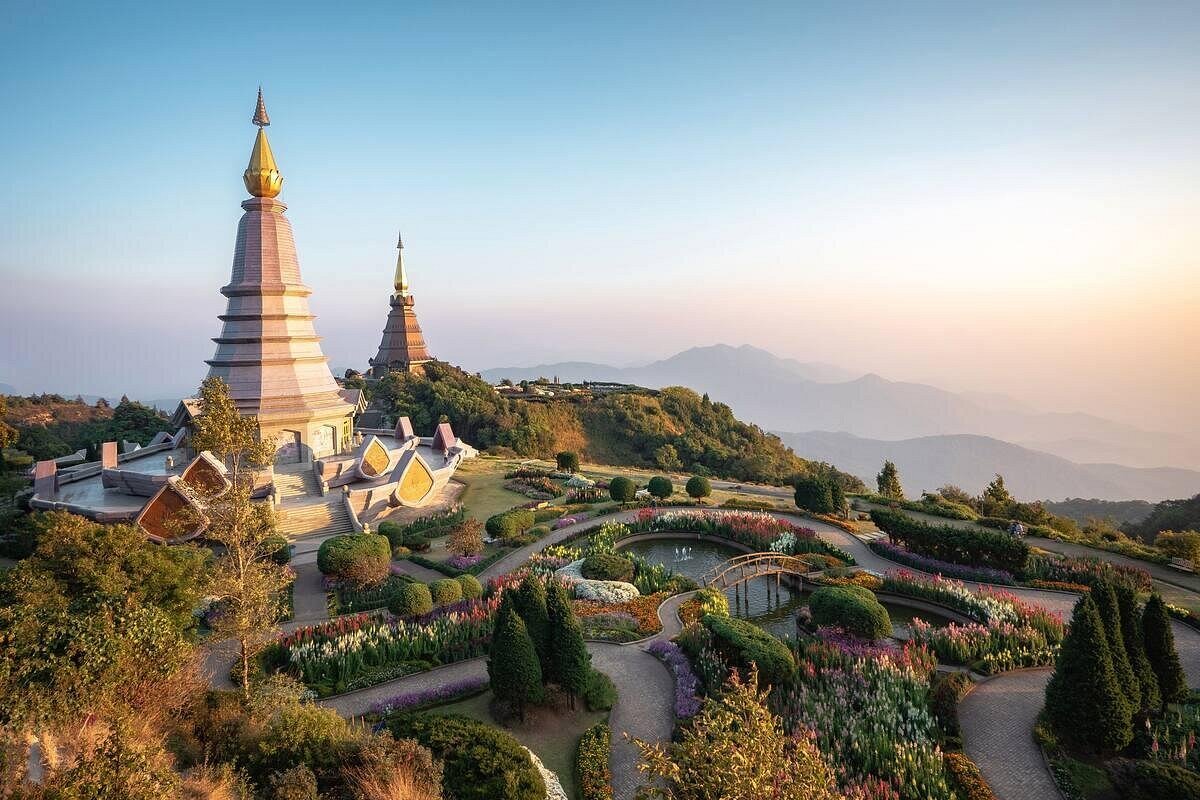
Chiang Mai moves at a genuinely different pace from anywhere else in Thailand, with temples inside a walkable old city, elephants and waterfalls in the mountains around it, and a night market culture that makes evenings as much a part of the itinerary as the days. This five-day plan keeps the city's own sights to an easy first day, gives the region's standout nature excursions proper time, and folds in Doi Suthep, a rafting and safari day, and the city's evening food culture around them.
- Temples, elephants, and a waterfall you climb
- Doi Suthep and a twilight bike ride
- Finish with bamboo rafting and the Night Safari
The plan at a glance
- Explore Chiang Mai's walled center, Buddhist temples within walking distance of each other, closing with an evening street food walking tour.
- A full day with rescued elephants, feeding and bathing rather than riding or performing.
- Explore the Sticky Waterfall and the Mae Taeng corridor. A genuinely unusual limestone waterfall you climb barefoot, paired with the temple and cave right beside it and a nearby reservoir, so the day earns its full length.
- Visit Doi Suthep and the city by bike. A mountain temple in the morning, a twilight cycling tour through the old city once the heat breaks.
- Enjoy bamboo rafting on the Mae Wang River by day, and Chiang Mai's Night Safari once the sun goes down.
New to Chiang Mai? Start with the city guide
This page is the day-by-day plan. If you're still deciding what Chiang Mai is actually like, which experiences are worth your money, and what else the region has to offer beyond these five days, our full Chiang Mai city guide covers the whole picture. It's the better place to start if your dates aren't locked in yet.
Read our complete Chiang Mai city guide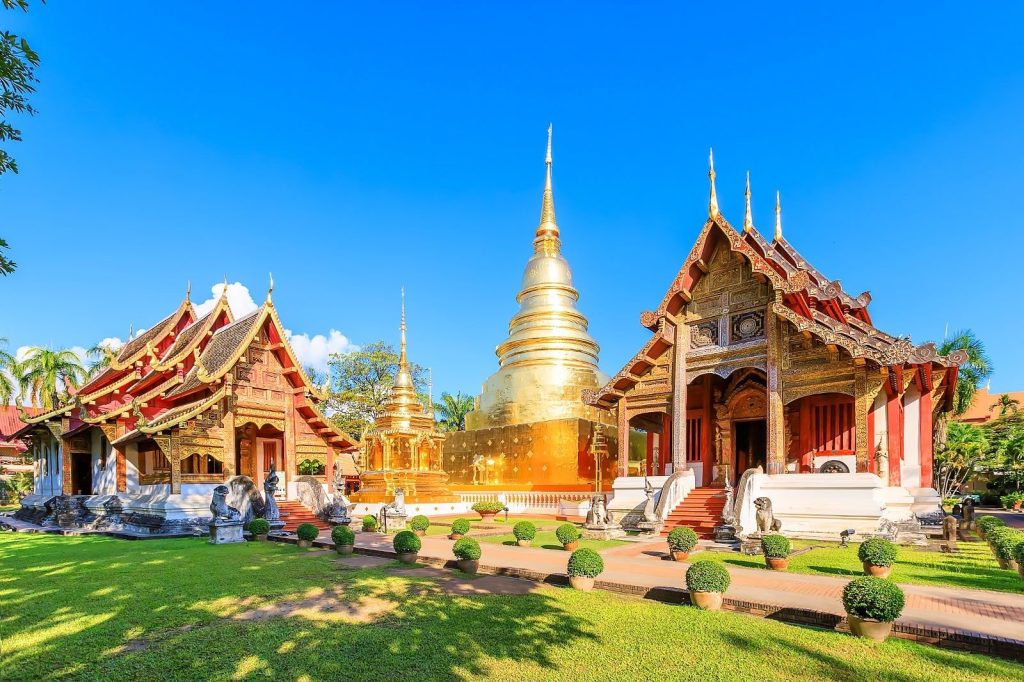
Chiang Mai City Tour: Northern Temples
A guided tour through the old city's most significant temples, giving context to sites that don't explain themselves to a visitor walking past.
- Wat Phra Singh and Wat Chedi Luang are typically the anchors of this tour, among the oldest and most revered temples in northern Thailand, both sitting inside the old city itself and easy to reach on foot or a short songthaew hop.
- Chiang Mai's temples lean toward a distinct Lanna architectural style, noticeably different from what you'd see further south in Bangkok or Ayutthaya, worth having a guide point out.
- The old city's compact size means moving between temples takes minutes rather than requiring much transport planning.
Cover shoulders and knees before you set out. The same dress code that applies everywhere else in Thailand applies here, and Chiang Mai's temples are no more lenient about it than Bangkok's.
Tickets not available.
Chiang Mai Evening Street Food Walking Tour
A guided walk through the city's night market streets, stopping at a curated run of food stalls rather than leaving you to guess what's worth trying.
- Northern Thai cuisine differs meaningfully from what's served in Bangkok or the south, and a guide makes it far easier to try dishes you wouldn't otherwise know to order.
- The tour typically includes tastings at multiple stops rather than one sit-down meal, so come hungry and pace yourself across the evening.
- Chiang Mai's night markets are genuinely central to the city's evening culture, so this doubles as orientation for the rest of the week.
Let the guide order for you at each stop rather than trying to navigate menus yourself. Half the value here is being introduced to dishes you wouldn't have picked on your own.
Tickets not available.
Evening
The walking tour effectively is tonight's evening. Head back to your accommodation once it wraps up. Tomorrow starts with elephants.
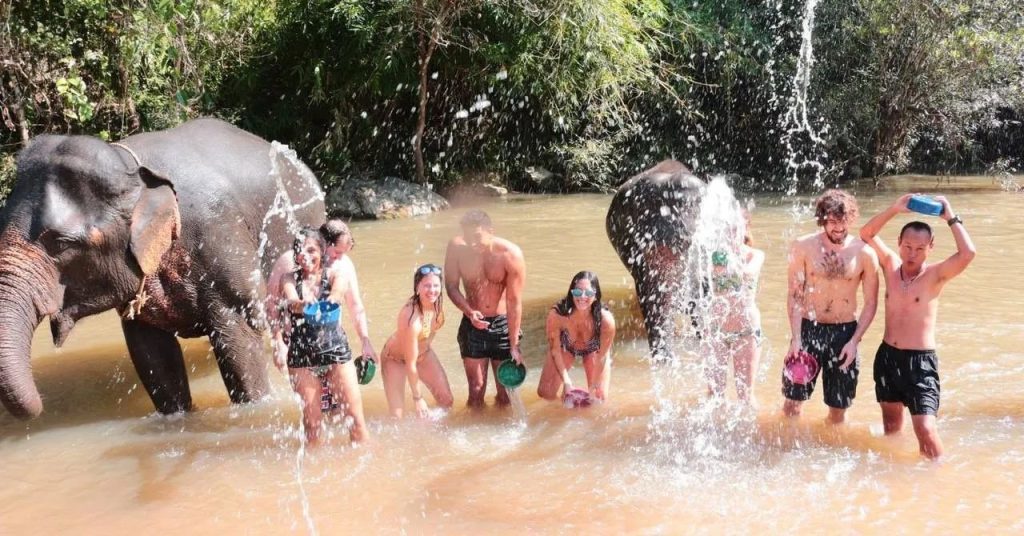
Hug Elephant Sanctuary
Set in the mountains outside Chiang Mai, this sanctuary rescues elephants from logging and tourism industries and gives them space to live without performance-based work.
- Most programs run with hotel pickup included, generally taking around 1 to 1.5 hours each way out toward the Mae Wang or Mae Taeng valleys depending on which sanctuary you book.
- The day typically includes feeding the elephants, walking with them through their habitat, and a mud bath or river bathing session, genuinely hands-on rather than observational.
- Guides explain the individual elephants' backgrounds, worth paying attention to for a sense of why sanctuary-style tourism has replaced riding camps in recent years.
- Lunch is generally included, often a simple Thai meal served at the sanctuary itself.
Bring a full change of clothes. The bathing and mud sessions are genuinely messy, and you don't want to be stuck in wet clothes for the drive back to the city.


Evening
After a full day outdoors, keep dinner simple and close to your accommodation. Tomorrow heads north into a different valley.
Getting there
The Sticky Waterfall, properly called Bua Tong, sits about 60 kilometres north of Chiang Mai in Mae Taeng district, along Highway 1001.
- Budget closer to 1.5 hours each way rather than a flat hour, particularly if you're setting off during the morning traffic window out of the city.
- The drive itself is scenic, winding through rice fields and hillside countryside on the way north toward Chiang Dao.
- Independent transport out here is genuinely risky. Ride-hailing apps like Grab or Bolt rarely accept the return pickup once you're at the falls, since drivers are reluctant to make the trip back out to such a rural spot. A booked tour, a private songthaew driver hired for the full day, or a self-driven scooter (only if you're an experienced rider) are the realistic options, with a guided tour the simplest of the three.
Climbing the Sticky Waterfall
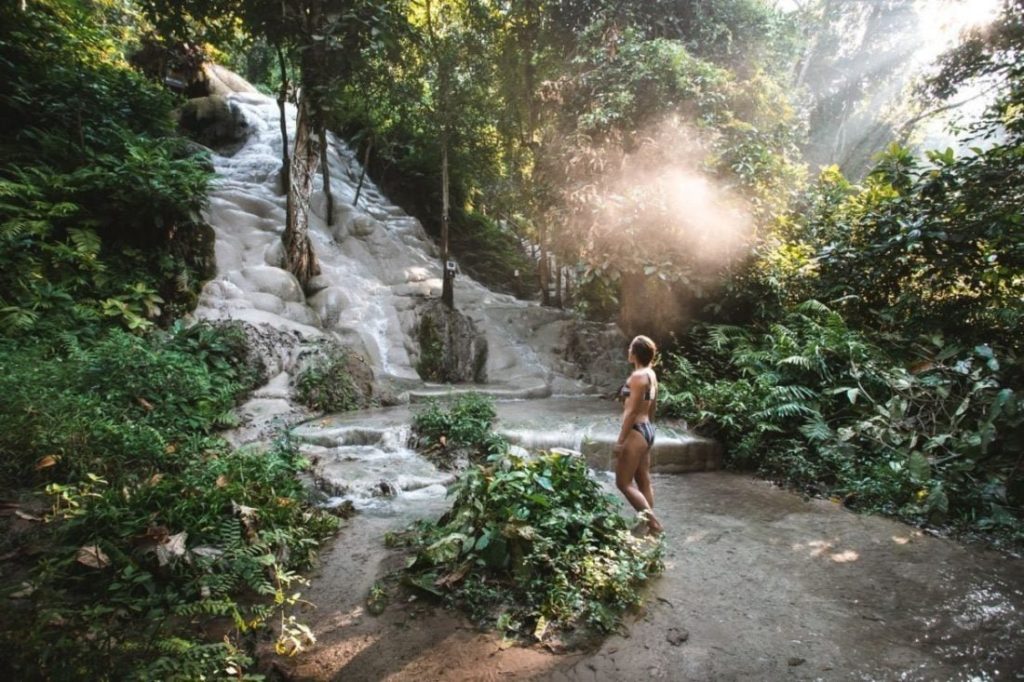
This is a limestone waterfall with a genuinely unusual property, the mineral-crystallised rock surface grips bare feet well enough that you can climb the cascading water without slipping. Entry to the falls themselves is free.
- The falls run across three tiers totalling around 100 metres, with climbing routes ranging from gentle to considerably steeper depending on which section you tackle.
- Going barefoot is standard practice here and part of what makes the waterfall unusual. Most visitors leave their shoes at the base.
- The surrounding Sri Lanna National Park setting adds a proper jungle backdrop to the climb, which is worth a slower pace rather than rushing straight up and back down.
Visit on a weekday morning if your schedule allows. Weekends draw considerably larger crowds, given how popular this spot has become with both tourists and Chiang Mai locals.
Tickets not available.
Bua Tong Temple and Cave
Right on the approach road to the falls sits a small temple and cave complex, easy to fold into the same trip rather than a separate outing.
- The temple holds a bamboo-woven Buddha image, an unusual and locally distinctive piece of craftsmanship worth seeing even briefly.
- A staircase leads up to a small cave containing a gilded Buddha statue, tied to local legend about two princesses who once took refuge there.
This stop takes very little extra time given how close it sits to the waterfall car park. It is definitely worth the short detour rather than skipping straight past it.
Mae Ngat Dam
A large reservoir further along the same Highway 1001 corridor, offering a genuinely different landscape to round out the day, with open water and hills rather than jungle and falls.
- Boat trips and floating restaurants operate on the reservoir, making this a relaxed way to spend an hour or two before the drive back to the city.
- Since this sits along the same road as the waterfall, it adds meaningfully to the day without backtracking or adding a separate excursion.
Treat this as the unhurried close to the day rather than another attraction to rush through. After the waterfall climb, a slower final stop suits the pace better than a packed schedule.
Evening
Have an easy dinner and an early night once you're back in the city. Given the longer drive time today, expect to arrive back later than a typical half-day excursion. Tomorrow moves in a different direction entirely.
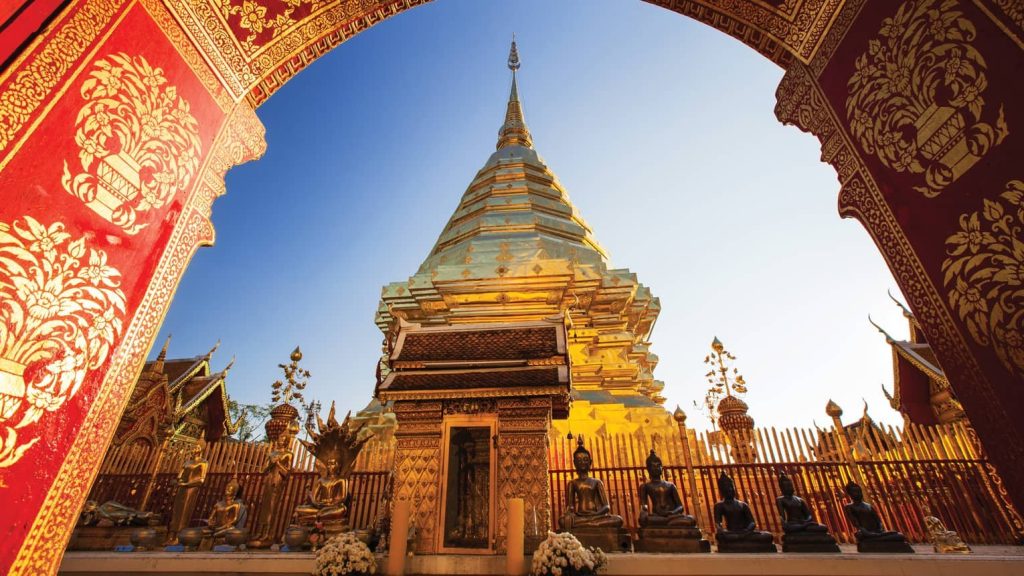
Doi Suthep
Perched on a mountainside above the city, Wat Phra That Doi Suthep is Chiang Mai's most sacred temple and one of the most visited sites in northern Thailand.
- A 306-step naga staircase leads up to the temple itself, though a funicular is available for anyone who'd rather skip the climb.
- The golden chedi at the summit is the temple's centrepiece, and on a clear day the views back over Chiang Mai from the mountainside are genuinely worth the trip on their own.
- Arrange transport up the mountain independently. Generally, a songthaew or a half-day tour from the city.
Go early, ideally before 9am. The temple gets progressively busier through the day, and the morning light also happens to be the best time for photos of the chedi. The same shoulders-and-knees dress code from Day 1's old city temples applies here too.
The afternoon
With the morning at Doi Suthep behind you, keep the early afternoon genuinely unstructured before tonight's cycling tour.
- Head back into the old city and rest, grab a late lunch, or wander at your own pace rather than booking anything else in.
- This gap matters more than it might seem. Going straight from a mountain morning into an evening bike ride without a break makes for a noticeably more tiring day than spacing the two out.
Use this window to also rest up before the physical activity of cycling this evening, rather than treating it as time to squeeze in another attraction.
Twilight Chiang Mai City Cycling Tour
Take a guided bike ride through the old city and surrounding neighbourhoods, typically departing around 5 to 6pm and timed to start as the day's heat eases and finish after dark.
- The route typically weaves through temple grounds, local neighbourhoods and market areas that are harder to properly see on foot in a single evening.
- Riding at twilight avoids the worst of the daytime heat entirely. This is genuinely a more comfortable way to cover this much ground than walking or a hot afternoon ride.
- Guides generally stop at a handful of points along the way, so this functions as much as a sightseeing tour as it does exercise.
Wear light, breathable clothing rather than anything restrictive. Between the riding and the evening humidity, comfort matters more here than it might on a daytime tour.


Evening
The cycling tour effectively covers your evening. An easy dinner once you're back closes out a day split between mountain and city.
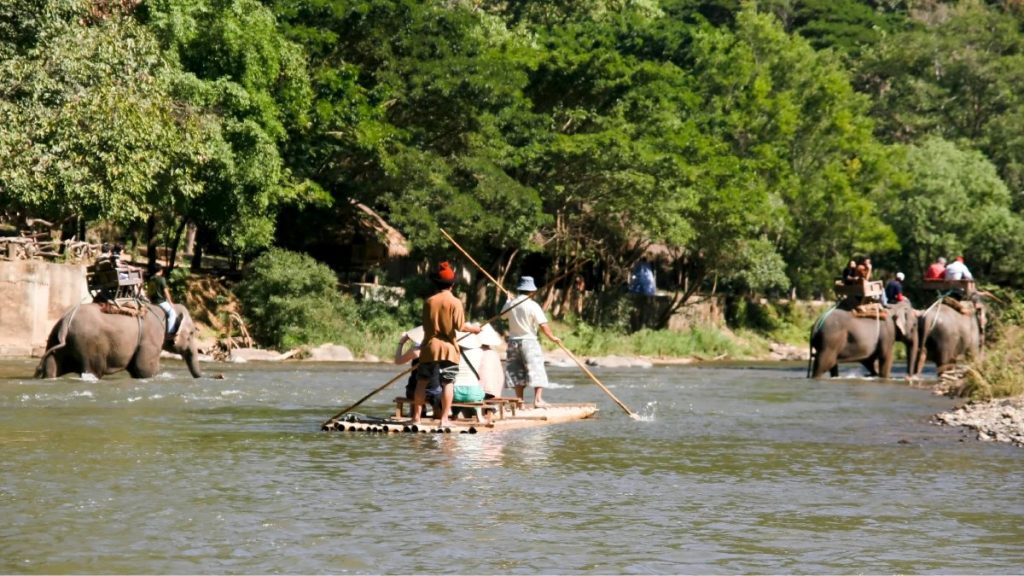
Bamboo rafting on the Mae Wang River
This is a traditional bamboo raft trip down the Mae Wang River. It’s a slower, more scenic alternative to whitewater rafting, guided by a local raftsman poling you along.
- The pace here is gentle rather than adrenaline-focused, and more about the surrounding jungle scenery than the thrill of the ride itself.
- Mae Wang sits southwest of Chiang Mai, the same general direction as tonight's Night Safari, which is what keeps today's travel efficient rather than backtracking through the city centre twice.
- Tours typically include return transport from your accommodation, worth confirming when booking.
Bring a dry bag or waterproof phone case if you want to photograph the trip. The raft sits low in the water, and you will get splashed.
Tickets not available.
Chiang Mai Night Safari
Explore an after-dark safari park in Hang Dong, also south-west of the old city and close enough to the Mae Wang direction that today's route stays consistent rather than doubling back.
- The park runs open-air tram tours through predator and prey zones after dark, generally between around 6:30pm and 8:30pm, alongside walking trails and animal shows earlier in the evening before full darkness sets in.
- Arriving before full dark gets you the walking trails and daytime shows as well as the tram safari once night properly falls.
- This stands well as a full evening on its own. No need to pair it with anything else across town afterward.
If you're set on adding a cabaret show to your trip, treat it as its own separate evening rather than combining it with the Night Safari. Chiang Mai's cabaret venues sit on the opposite side of the city, up near Huay Kaew Road, and both shows run on fixed start times that don't leave comfortable room for cross-town traffic between them.


Evening
The Night Safari is tonight's evening. A final trip closes out five days covering temples, elephants, a waterfall corridor, a mountain, and a river. You get a full look at what surrounds Chiang Mai beyond its old city walls.
Swap any day for one of these
The structure above suits most first-time visitors, but individual days are easy to swap.
Elephant Jungle Sanctuary
Elephant Jungle Sanctuary, in place of Hug Elephant Sanctuary on Day 2, for a similarly ethical, hands-on sanctuary experience if you'd rather compare operators or one has availability and the other doesn't.
Book Now →Siam Dragon Cabaret Show or Miracle Cabaret Show
Siam Dragon Cabaret Show or Miracle Cabaret Show, added as their own evening rather than paired with the Night Safari, since the cabaret venues sit up near Huay Kaew Road, a genuinely different part of the city from Hang Dong. It is worth adding to Day 1's evening in place of the street food tour, or as a reason to extend the trip to six days.
Half-Day Chiang Mai City Cycling Tour
Half-Day Chiang Mai City Cycling Tour, instead of the twilight version on Day 4, for a daytime ride if evening cycling doesn't suit your schedule, though expect more heat during the ride itself.
Book Now →Getting Around
Chiang Mai's old city is genuinely walkable, but every excursion into the surrounding mountains and valleys, the elephant sanctuary, the waterfall corridor, and the rafting, needs a tour transfer or private transport.
| Route | Without a car | By car |
|---|---|---|
| Chiang Mai Airport to the old city | Taxi, songthaew, or private transfer, about 15 to 20 minutes | About 15 to 20 minutes |
| Within the old city | Walking or songthaew, 5 to 20 minutes between most points | Not worth driving |
| Chiang Mai to elephant sanctuaries | Included tour transfer, about 1 to 1.5 hours each way | About 1 to 1.5 hours each way |
| Chiang Mai to Sticky Waterfall (Mae Taeng) | Included tour transfer or a private songthaew hired for the day, about 1.5 hours each way | Self-driven scooter, experienced riders only, about 1.5 hours each way |
| Chiang Mai to Doi Suthep | Songthaew, taxi, or half-day tour, about 30 to 45 minutes | About 30 to 45 minutes |
| Chiang Mai to Mae Wang River | Included tour transfer, about 1 to 1.5 hours each way | About 1 to 1.5 hours each way |
| Chiang Mai to the Night Safari (Hang Dong) | Taxi or included tour transfer, about 20 to 25 minutes | About 20 to 25 minutes |
| Chiang Mai cabaret venues (Huay Kaew Road) | Taxi or included transfer, about 10 to 15 minutes from the old city | About 10 to 15 minutes |
The Best Time to Visit Chiang Mai
In Chiang Mai, the season affects more than the temperature. Most of this itinerary happens in the mountains and valleys around the city, so air quality, rainfall, and how much water is running over the Sticky Waterfall all depend on when you go, and one stretch of the year is worth avoiding altogether.
November to February
The cool season, and the most comfortable window of the year, with clear skies and manageable daytime temperatures well suited to a mountain-heavy itinerary like this one.
March to April
The burning season, when agricultural burning across the region creates significant haze and air quality concerns, particularly noticeable up in the mountains around Doi Suthep and the Mae Taeng valley. If your trip falls in this window, pack N95 masks and lean toward indoor or river-based activities over mountain days where possible.
May to October
The wet season, with the countryside at its greenest and the waterfall at its strongest flow, though regular rain, particularly from July to September, needs to be factored into outdoor plans.
If the Sticky Waterfall is a priority, the wet season actually gives you the strongest water flow, worth weighing against the cool season's more reliable weather elsewhere in the trip. Avoid March and April altogether if you can, both for air quality and for how it affects the mountain views on Day 3 and Day 4.
Where to Stay
The old city itself is the natural base for this itinerary, keeping Day 1 and the evening activities on Day 4 within easy walking distance.
Old city (within the moat)
It is closest to the temples, the night markets and most tour pickup points, genuinely the most convenient base for this trip.
Nimmanhaemin
This is a trendier district just west of the old city, known for cafés and a younger crowd, still an easy songthaew ride from the old city's sights.
Riverside
It is along the Ping River east of the old city, quieter and slightly more scenic, with a short ride into the old city for most daytime activities.
Chiang Mai 5-Day Itinerary FAQs
Is 5 days enough for Chiang Mai?
Yes, and it comfortably covers the old city's temples alongside the region's best nature excursions, an elephant sanctuary, the Sticky Waterfall corridor, Doi Suthep, and river rafting. It won't stretch to Chiang Rai's White Temple or the Golden Triangle as well, those are better suited to a separate trip further north.
Isn't the Sticky Waterfall itself only a couple of hours? Why does Day 3 take the whole day?
The waterfall climb alone is genuinely short and free to enter, but the day is built around the wider Mae Taeng corridor along Highway 1001 rather than just the falls. The temple and cave sit right at the entrance, and Mae Ngat Dam is a short distance further along the same road, so the day fills naturally without backtracking or padding. Between the drive time in both directions and these added stops, it's a genuine full day rather than a rushed half-day trip.
Can I get to the Sticky Waterfall independently with Grab or Bolt?
Getting there isn't usually the problem, getting back is. Ride-hailing drivers frequently decline the return pickup from such a rural spot, leaving visitors stranded without a plan. A booked tour with return transport confirmed, a private songthaew driver hired for the full day, or self-driving a scooter if you're experienced are the three realistic options.
Should I visit Hug Elephant Sanctuary or Elephant Jungle Sanctuary?
Both follow similar ethical, sanctuary-style models built around feeding and bathing rather than riding. The choice often comes down to availability on your travel dates, or personal preference if you've researched specific reviews for each operator.
Can I combine the Night Safari with a cabaret show on the same evening?
It's not recommended. The Night Safari sits in Hang Dong, south-west of the old city, while Chiang Mai's cabaret venues sit up near Huay Kaew Road, a different part of the city entirely. Both run on fixed start times in the evening, and the cross-town transit between them during peak traffic makes combining them genuinely stressful rather than a smooth double-header.
Is Doi Suthep worth visiting if I've already seen the old city temples?
Yes, it's a genuinely different experience. The old city temples are flat, walkable, and set within the city itself, while Doi Suthep sits on a mountainside with a dramatic staircase climb and sweeping views over Chiang Mai, a different kind of temple visit entirely.
What should I pack if I'm visiting during burning season?
If your trip falls between March and April, pack N95 masks given the agricultural haze that settles over the region, particularly in the mountains. Consider leaning toward river-based activities like Day 5's rafting over mountain days like Doi Suthep or the Sticky Waterfall corridor if air quality is a concern during your visit.
Do I need a car in Chiang Mai?
Not for the old city itself, which is walkable, or for most of the day trips, which are best booked as guided tours with transport included given how remote several of them are. A car or scooter adds flexibility if you want to explore independently, but isn't necessary for anything in this itinerary, with the Sticky Waterfall being the one exception where self-driving (for experienced riders only) is a genuine alternative to a tour.
What is the best month to visit Chiang Mai?
November to February, the cool season, is generally considered the best window, with clear air and comfortable temperatures. Avoid March and April if possible, when seasonal burning creates significant haze. The wet season from May to October is still workable, and actually gives the Sticky Waterfall its strongest flow, just with more rain to plan around.
Ready to book your five days?
Compare live prices on the Chiang Mai attractions worth booking ahead, with instant confirmation on your booking.