Chicago hits you harder than you expect and stays with you longer than you planned. That is just what this city does.
It invented the skyscraper, perfected deep dish pizza, dyed its river green every St. Patrick’s Day, and somehow still manages to be the most underrated major destination in the United States.
New York gets the global fame. Los Angeles gets the sunshine mythology. Chicago gets the people who actually show up and then quietly decide not to leave.
It has 77 neighbourhoods, 26 miles of lakefront, a river you can kayak on a Tuesday morning, the finest art museum in the country, and a food scene with enough James Beard Award wins to keep a serious eater busy for a week without repeating a cuisine.
It is also worth stating plainly that it is home to deep-dish pizza so good it will ruin every other pizza you eat for the rest of your life. Give it four days at a minimum. Five is better. The architecture alone justifies the flight.
Chicago City Essentials
Getting There and Getting Around
By air: O’Hare International Airport (ORD) is 17 miles northwest of downtown Chicago and one of the busiest airports in the world, handling flights from virtually every major domestic and international destination. The Blue Line CTA train connects O’Hare directly to the Loop (downtown) in approximately 45 minutes, running 24 hours a day. Midway International Airport (MDW) is 10 miles southwest of downtown and primarily handles domestic budget carriers; the Orange Line CTA connects it to the Loop in about 30 minutes.
From O’Hare, taxis and rideshare are available at the designated pickup zones outside baggage claim (follow airport signage).
A taxi to downtown costs approximately $45 to $55. Rideshare fares are similar but subject to surge pricing during peak times.
By train: Chicago is the hub of Amtrak’s national rail network, with Union Station receiving trains from New York, Los Angeles, New Orleans, Seattle, and many other cities. From Milwaukee, it is about 90 minutes, from Indianapolis, about 5 hours, and from St. Louis, about 5 hours.
Getting around the city:
- The L (CTA Elevated Train): This is the most important thing to know about getting around Chicago. Eight color-coded lines radiate from the loop, covering the entire city. The Pink, Green, Orange, Purple, and Brown Lines run through the elevated Loop circuit. The Red Line runs north-south from Howard to 95th Street and is the most useful for visitors. The Ventra card (reloadable tap card), contactless bank cards, and Apple Pay work across all CTA trains and buses. A 1-day or 3-day unlimited pass is a good value for visitors covering multiple journeys.
- CTA Bus: It covers areas the L does not reach. The same Ventra card works across buses and trains. Bus routes are numbered. The 147 runs along Lake Shore Drive, and the 22 runs along Clark Street through Lincoln Park and Wrigleyville.
- Uber and Lyft: They are widely available and practical for late nights, airport journeys, and destinations off the L grid. Surge pricing applies during events at Wrigley Field and the United Center.
- Divvy Bike Share: It is Chicago’s public bike share system with over 800 stations across the city. Single rides and day passes are available via the Divvy app or at any station. The Lakefront Trail from Navy Pier north to Montrose is one of the best urban cycling routes in the country.
- Water Taxi: Chicago Water Taxi runs along the Chicago River between Michigan Avenue, the Loop, and Chinatown from spring through autumn. It is one of the most enjoyable ways to commute and sightsee simultaneously.
Millennium Park and the Loop
Millennium Park is Chicago’s public living room and the first place most visitors should spend their first morning. The 24.5-acre park in the heart of the Loop opened in 2004 and has become one of the most visited public spaces in the United States, entirely free to enter.
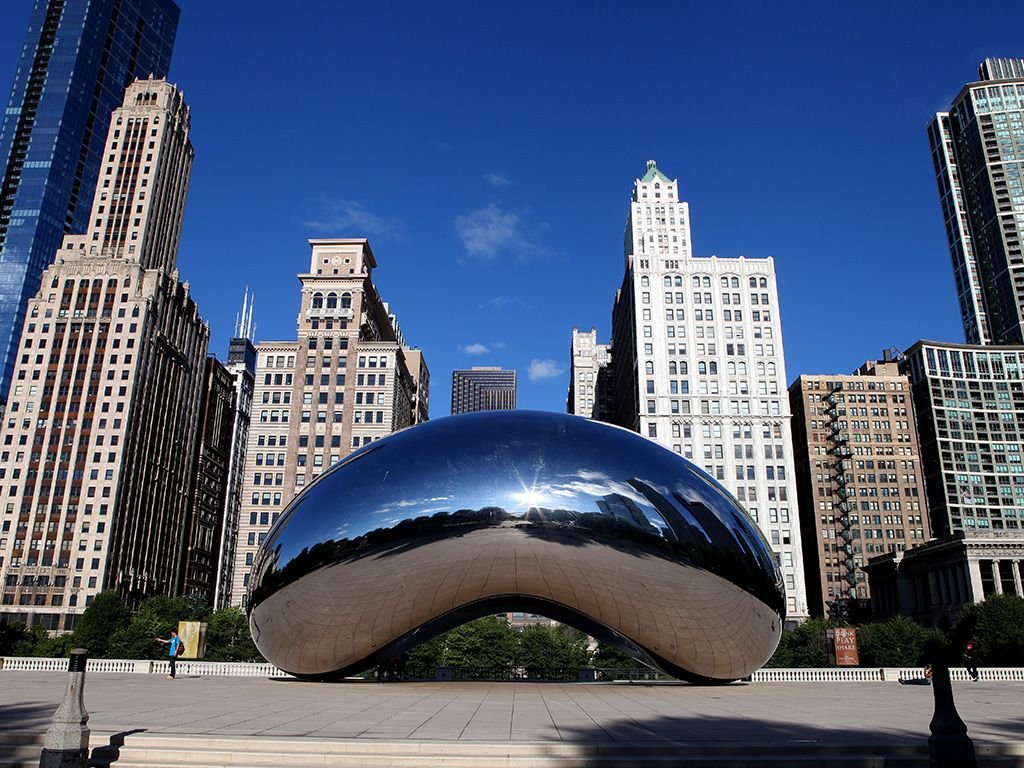
Cloud Gate (universally known as “The Bean”), Anish Kapoor’s 110-tonne polished steel sculpture in the shape of a mercury droplet, reflects the city skyline and the surrounding visitors in endlessly distorted images. It is impossible to photograph without accidentally making art. The best time to visit is early morning before the crowds arrive, when the reflection of the sunrise across the bean’s surface is unmatched.
Crown Fountain on the eastern edge of the park consists of two 50-foot glass-brick towers that project the faces of Chicagoans and release water from their lips in summer. Part public art, part splash park, entirely enjoyable.
Jay Pritzker Pavilion, the outdoor concert venue designed by Frank Gehry, hosts the Grant Park Music Festival (free classical music summer concerts) and a packed calendar of summer performances. The trellis system that extends over the Great Lawn distributes sound to every corner of the park.
Maggie Daley Park adjoins Millennium Park and has a climbing wall, a mini golf course, a skating ribbon in winter, and an extraordinary children’s playground built around a whimsical play garden structure.
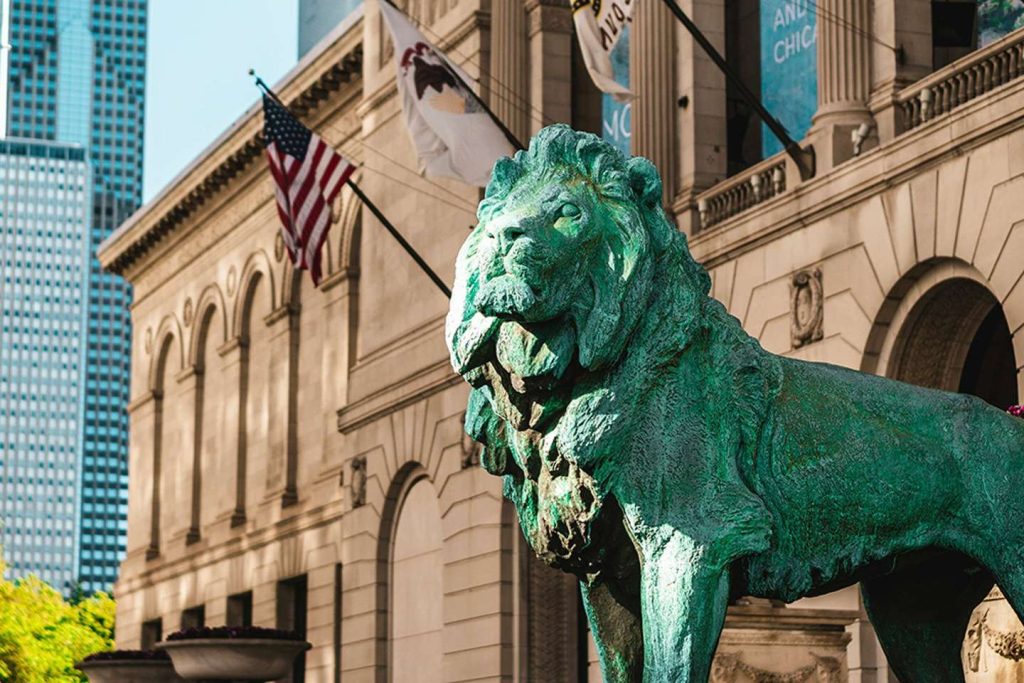
The Art Institute of Chicago on Michigan Avenue at the south end of the park is the second-most-visited art museum in the United States and one of the finest in the world. The permanent collection spans 5,000 years of human creative history and includes Georges Seurat’s A Sunday on La Grande Jatte, Grant Wood’s American Gothic, Edward Hopper’s Nighthawks, and one of the most significant Impressionist collections outside of France. Allow the museum a full morning or afternoon.
The Chicago Cultural Center on Washington Street nearby houses the largest Tiffany stained-glass dome in the world in its Preston Bradley Hall, free to visit, one of the most beautiful interior spaces in the city, and genuinely unknown to most visitors.

The Chicago Architecture
Chicago's architecture is the primary reason serious travelers come from around the world. The city invented the skyscraper in the 1880s after the Great Fire of 1871 forced a complete rebuild, and the 150 years of architectural innovation that followed have produced the most significant collection of modern buildings on Earth.
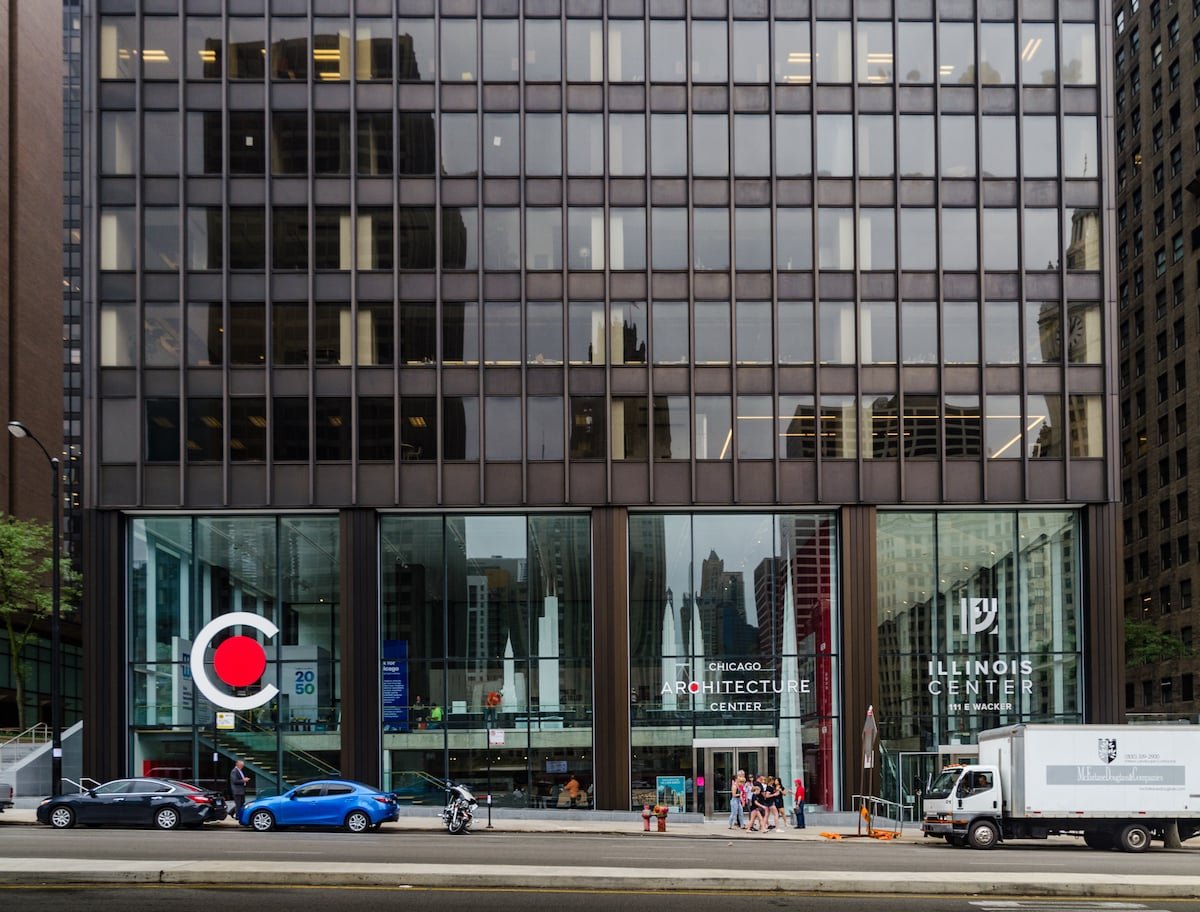
The Chicago Architecture Center on the river at 111 East Wacker Drive is the starting point for any serious architectural exploration. The centre houses exhibits on Chicago's building history and operates the best architecture boat tours in the city, departing from the Michigan Avenue bridge landing.
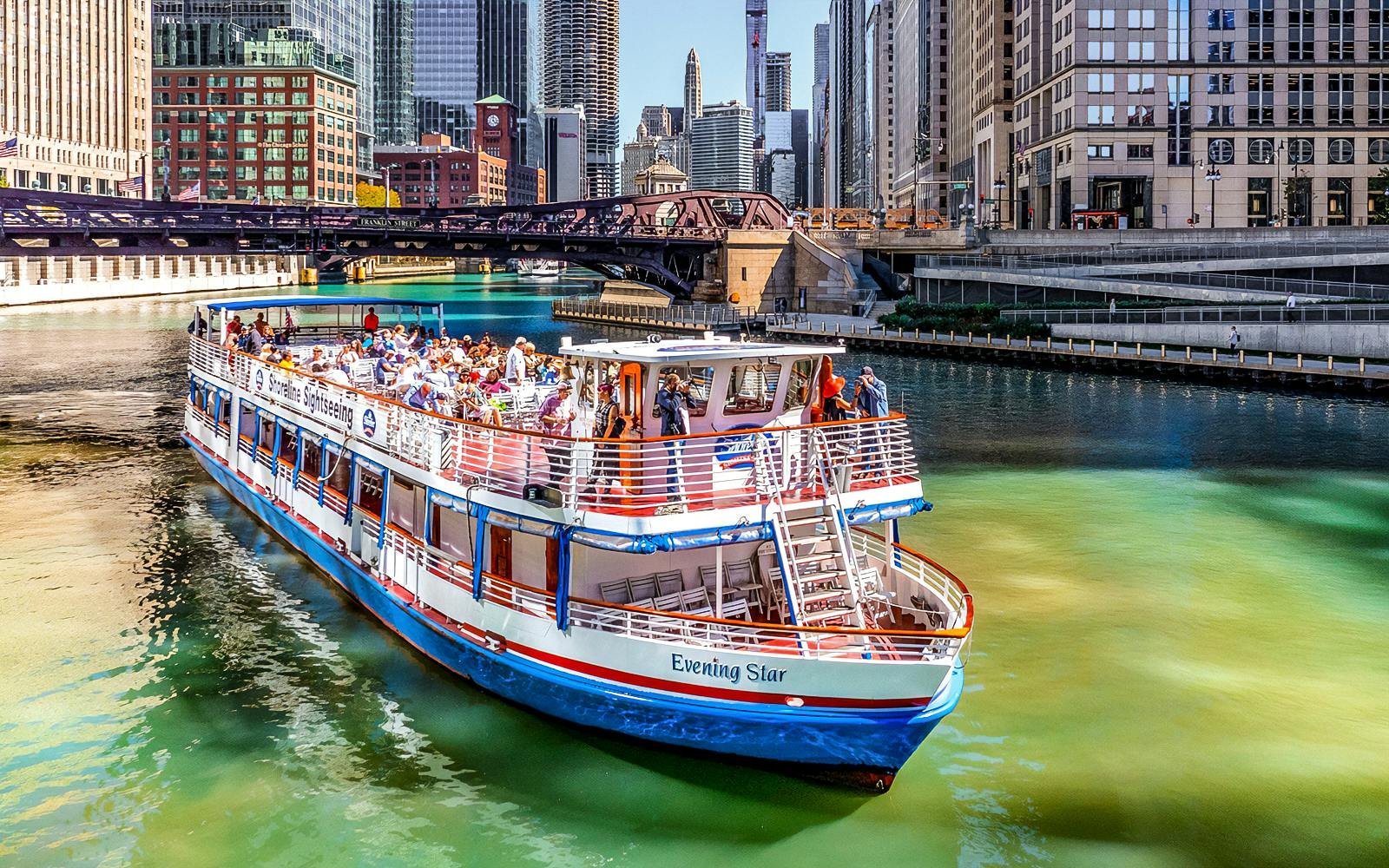
The Chicago River Architecture Boat Tour is the single best introduction to the city for any visitor. The 90-minute cruise along the Chicago River through the downtown canyon of buildings, with expert commentary covering the history and design of every major structure, is one of the finest urban experiences in the United States. The Chicago First Lady and Chicago's First Lady cruise boats (operated by Chicago's First Lady Cruises) are the most highly regarded operators. Make sure to book in advance.
On foot, the Chicago Architecture Foundation Walking Tours cover specific thematic or neighbourhood circuits with guides who can explain why the 1893 Reliance Building mattered, what Daniel Burnham's 1909 Plan of Chicago did for the lakefront, and how the Miesian legacy of glass-and-steel construction changed cities globally.
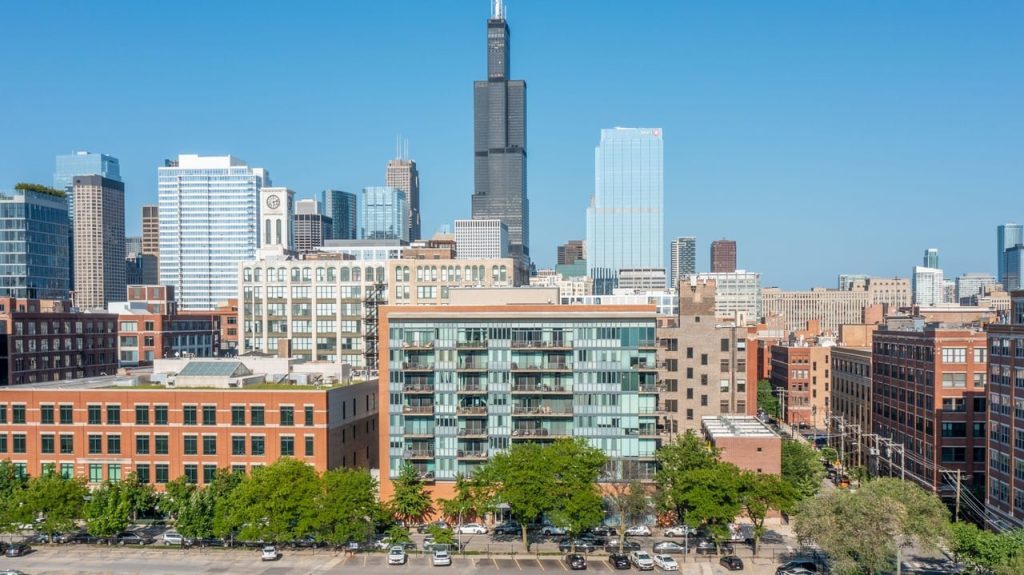
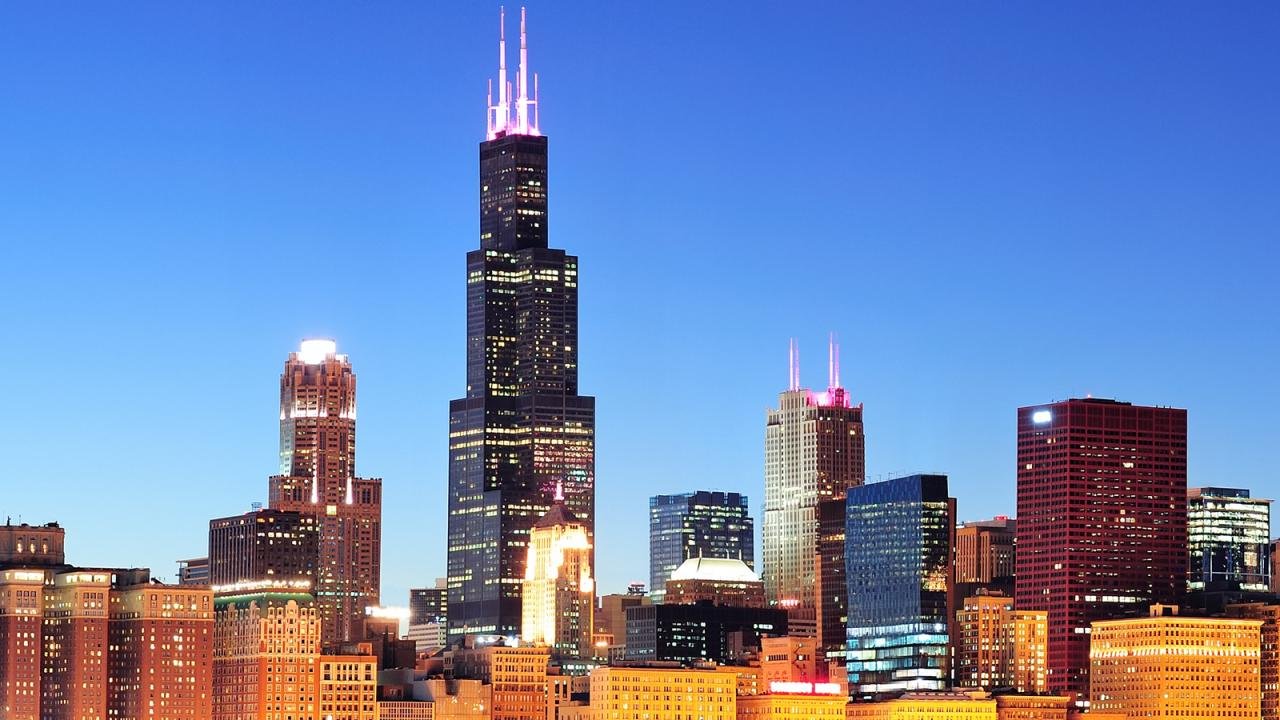
The Willis Tower (formerly Sears Tower), completed in 1973 and the tallest building in the world from its completion until 1998, anchors the western edge of the Loop at 110 stories and 1,451 feet. The Skydeck on the 103rd floor has the Ledge, a glass-floored box that extends approximately 4 feet from the building's exterior over 1,300 feet of Chicago below. The view from the top on a clear day extends to Indiana, Michigan, and Wisconsin.
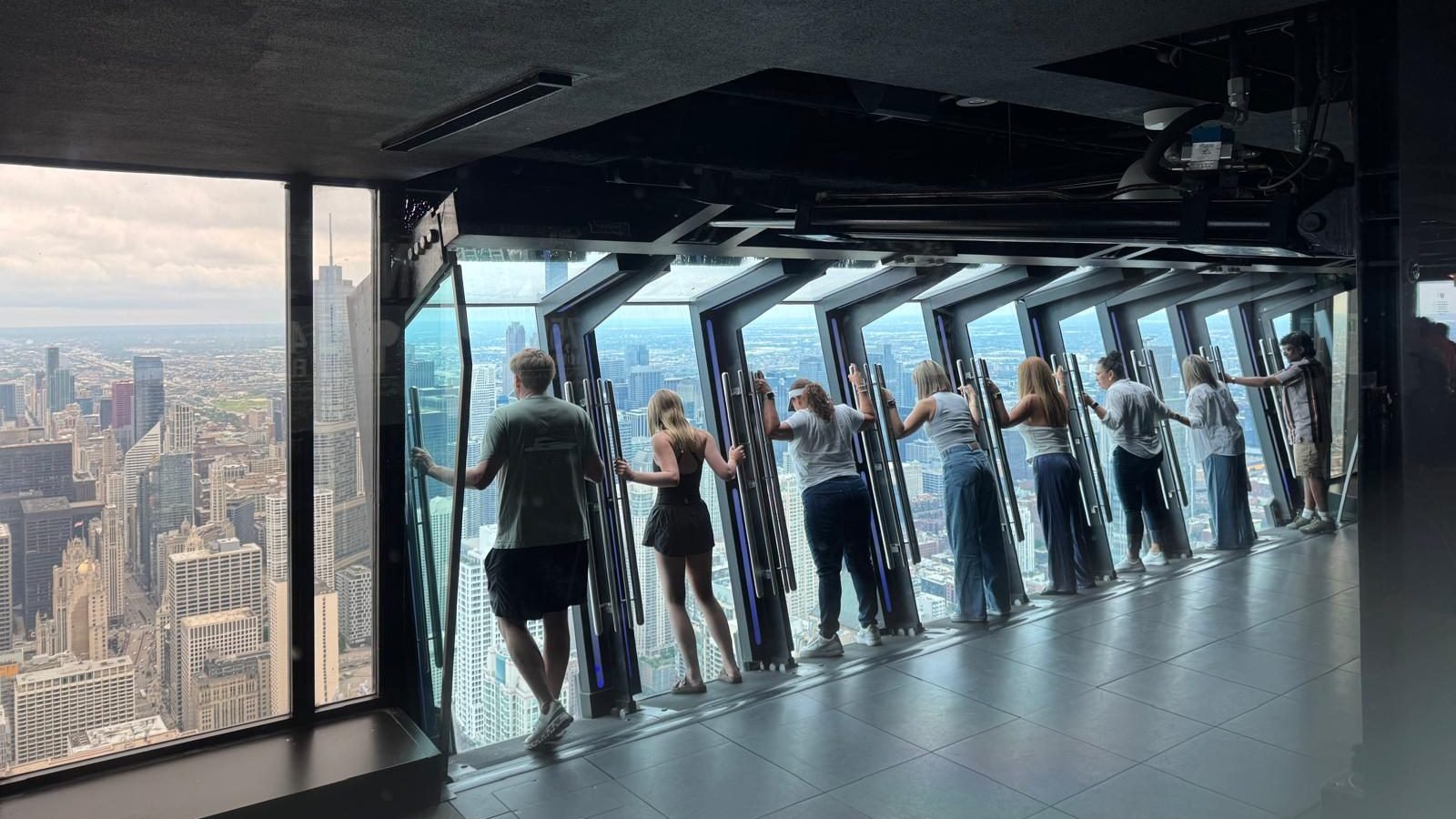
360 CHICAGO on the 94th floor of 875 North Michigan Avenue (formerly the John Hancock Center) offers views north toward the lakefront neighbourhoods and Navy Pier at 1,000 feet, with the TILT experience tilting visitors toward the glass at a 30-degree angle over the Magnificent Mile below.

Navy Pier and the Lakefront
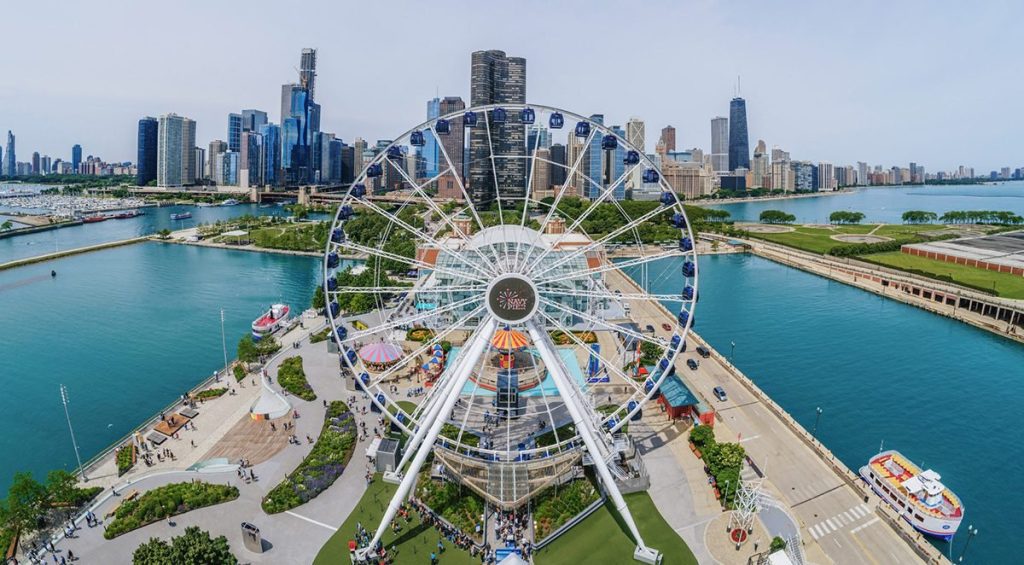
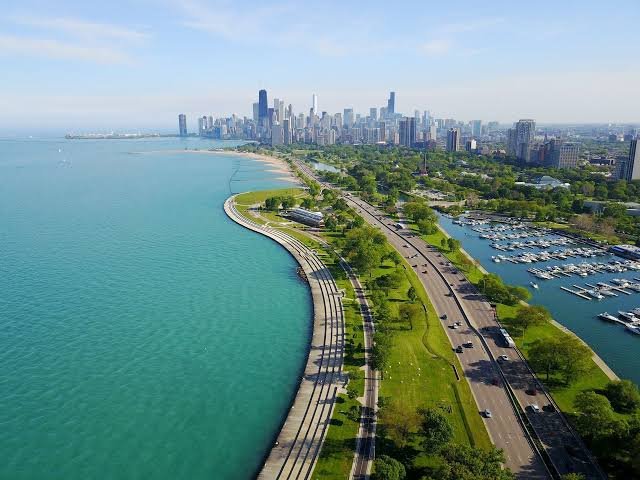
Navy Pier extends 3,300 feet into Lake Michigan from the Streeterville neighbourhood and is one of Chicago's most visited destinations, combining food, entertainment, cruises, and one of the most dramatic lakefront views in the city.
The Centennial Wheel, a 196-foot climate-controlled Ferris wheel at the pier's tip, was designed as a tribute to the world's first Ferris wheel, which debuted at Chicago's 1893 World's Fair. The enclosed gondolas give excellent views over the lake and the skyline.
The pier's Offshore Rooftop and Bar is the largest rooftop bar in the country by area, with panoramic lake and skyline views and a particularly excellent perch for summer sunsets. The Chicago Shakespeare Theater on the pier is a Tony Award-winning company running more than 650 performances annually in its Yard flexible-stage format.
From May through Labor Day, Navy Pier fireworks run every Wednesday and Saturday evening, best viewed from the water on one of the pier's many cruise boats.
The Chicago Riverwalk running west from Michigan Avenue along the south bank of the Chicago River is one of the most pleasant urban waterfront walks in the country, with restaurants, bars, kayak rentals, and the best ground-level view of the architectural canyon along the river.
The Lakefront Trail runs approximately 18.5 miles along the Lake Michigan shoreline from Ardmore in the north to South Shore in the south, with beaches, parks, and skyline views the entire way. Cycling the trail from the Museum Campus north to Lincoln Park takes about 45 minutes and covers the most scenic stretch.


The Museum Campus
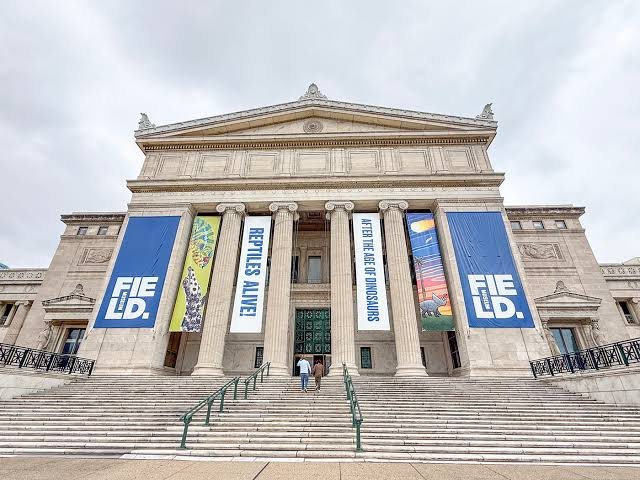
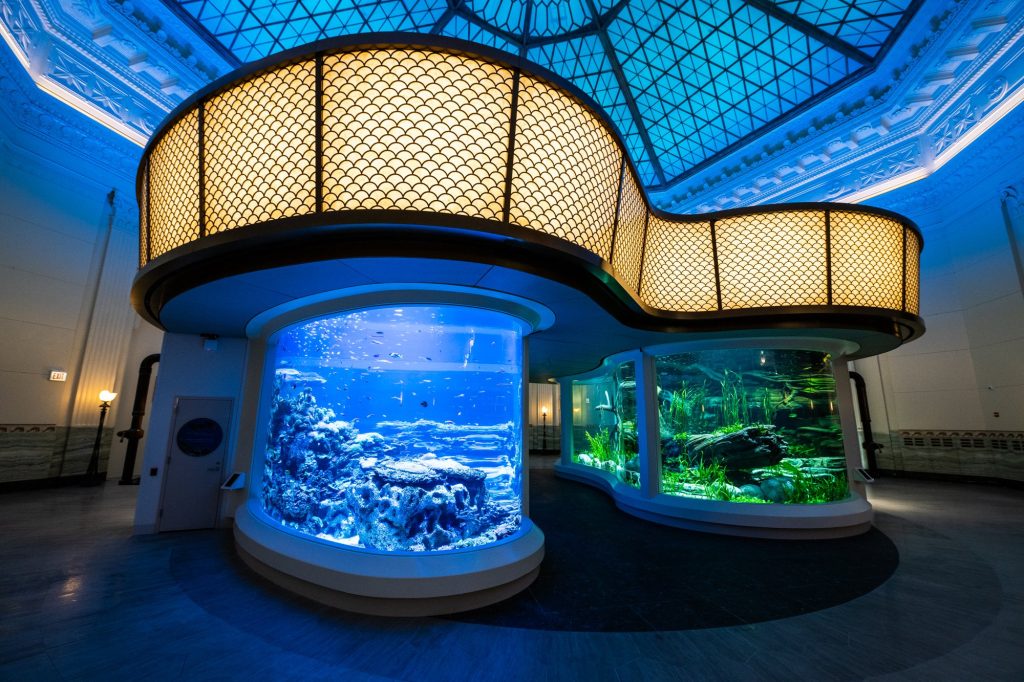
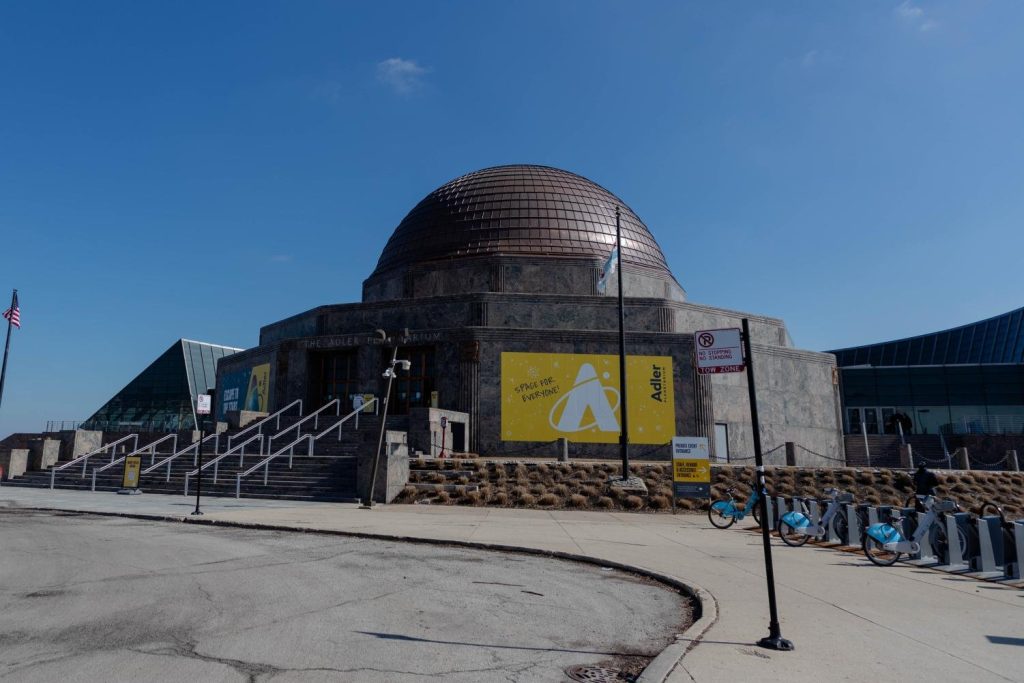
The Museum Campus on the lakefront south of downtown concentrates three of the finest institutions in the city on a single peninsula, each accessible on foot from the others.
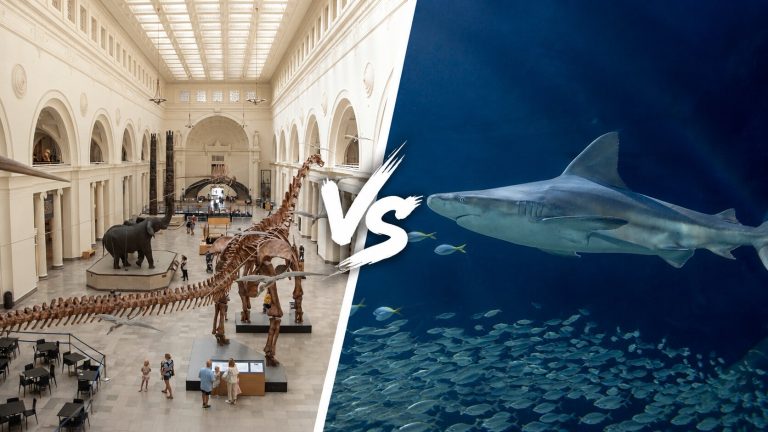
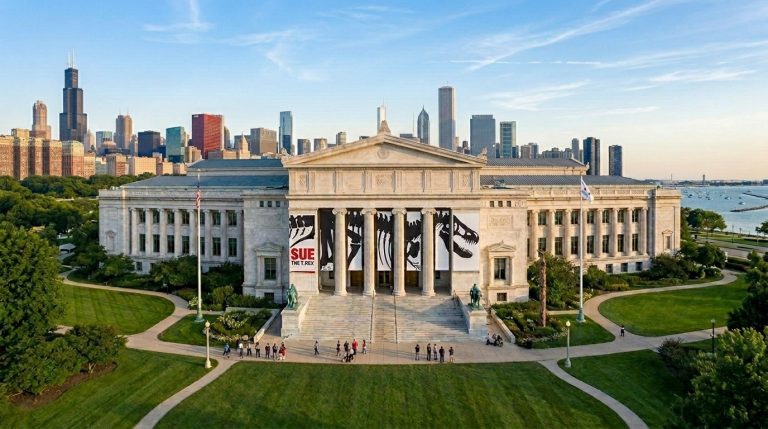
- The Field Museum of Natural History is one of the great natural history museums in the world, housing 40 million specimens and objects across collections covering ancient Egypt, the Pacific Islands, Native American cultures, and the natural history of life on Earth. Sue the T. rex, one of the most complete Tyrannosaurus specimens ever found, stands in the main hall. Maximo the Titanosaur, the largest creature to have ever walked the Earth, is the most recent headline addition. Allow it a full day for proper exploration.
- Shedd Aquarium is consistently one of the most visited aquariums in the United States, with a collection covering the full range of aquatic life from beluga whales and dolphins to sharks, sea otters, and sea lions. The oceanarium show and the 4D experience are the most popular timed components. Book well in advance for weekends and school holidays.
- Adler Planetarium is the oldest planetarium in the Western Hemisphere, with multiple digital sky shows, telescope access, and exhibits covering both historical and contemporary astronomical science. The terrace behind the planetarium gives one of the best skyline views in the city.


Chicago’s Neighbourhoods
Chicago's 77 neighbourhoods are its most underrated feature, and spending time in at least three or four of them is the difference between a tourist visit and an actual Chicago experience.
Lincoln Park is the North Side's tree-lined residential neighbourhood built around the 1,200-acre Lincoln Park itself. The Lincoln Park Zoo is free to enter year-round, one of the last free major zoos in the country, with 200 species on 49 acres. The restaurants and bars of Armitage Avenue and the surrounding streets are among the best on the North Side.
Wicker Park and Bucktown are the creative, independent-business neighbourhoods of the Northwest Side, with the highest density of vintage clothing, independent bookshops, specialty coffee, and restaurants that reflect what the city actually looks like outside the tourist corridor.
Logan Square has the best independent restaurant and bar scene in the city by most local accounts: the Logan Square Farmers Market on Sunday mornings (May through October), the boulevard architecture of Logan Boulevard, and a nightlife strip along Milwaukee Avenue that runs genuinely late.
Pilsen on the Lower West Side is Chicago's Mexican-American neighbourhood and home to the National Museum of Mexican Art, the largest Latino art museum in the United States, with free admission. The murals throughout the neighbourhood are the most concentrated public art in the city.
Hyde Park on the South Side houses the University of Chicago, the Museum of Science and Industry (the largest science museum in the Western Hemisphere), and the site of the Obama Presidential Center, under construction. It is one of the most architecturally interesting areas of the city.
Chinatown at the southern edge of the Loop is compact, active, and excellent for food. You get dim sum restaurants along Wentworth Avenue, the new Chinatown Square outdoor mall, and the Ten Thousand Buddhas sculpture garden near the Ping Tom Memorial Park.
Food: Chicago's Other Great Claim
Chicago's food identity starts and ends with two dishes that the city defends with the intensity that other places reserve for sports teams. The city consistently ranks among the top American cities for James Beard Foundation Award wins, behind only New York in overall numbers but rivalling it per capita in many categories.
Deep dish pizza is the one that gets the most attention and the most debate. Chicago's deep dish is not a thick regular pizza. It is a pie with a buttery, flaky crust pressed up the sides of a deep pan, with chunky tomato sauce on top of the cheese rather than underneath, and substantial toppings between the layers. It takes 30 to 45 minutes to bake and is eaten with a fork.
Pizzeria Uno (founded 1943 at 29 East Ohio Street, the original home of Chicago deep dish) and Lou Malnati's (a separate institution founded in 1971, whose founder's father worked at Uno) are the two most celebrated names, alongside Giordano's. Although you expect a wait.
The Chicago-style hot dog is the other sacred food: a Vienna Beef frankfurter on a poppy-seed bun, topped with yellow mustard, white onions, bright green sweet pickle relish, a pickle spear, sport peppers, tomato slices, and celery salt.
Notice what is not there? It’s ketchup. Asking for ketchup on a Chicago hot dog is a social error that locals will acknowledge with a pained expression. Portillo's is the most famous chain serving the dog, but any street vendor hot dog cart will do equally well.
Italian beef sandwiches are the third contender. It is thin-sliced beef slow-cooked in seasoned broth, piled into a French roll that is dipped (or "dunked") in the cooking jus and topped with giardiniera (pickled vegetables in oil) or sweet peppers. Al's Beef on Taylor Street has been making the definitive version since 1938. Order it "wet" with extra jus and "hot" with giardiniera.
Beyond the classics, Chicago's fine dining scene has earned the city more James Beard Foundation Awards than almost any other American city, ranking consistently behind only New York in overall wins, with concentrations of excellent independent restaurants in River North, the West Loop, Wicker Park, and Logan Square.
The West Loop's Randolph Street restaurant corridor has the highest density of serious dining in the city. Alinea in Lincoln Park is the most celebrated, a three-Michelin-star tasting menu experience that requires booking months ahead.
The city has over a dozen Michelin-starred restaurants and a thriving craft beer scene with more than 150 breweries across Cook County.
Popular Ticket Options & Things to Do in Chicago
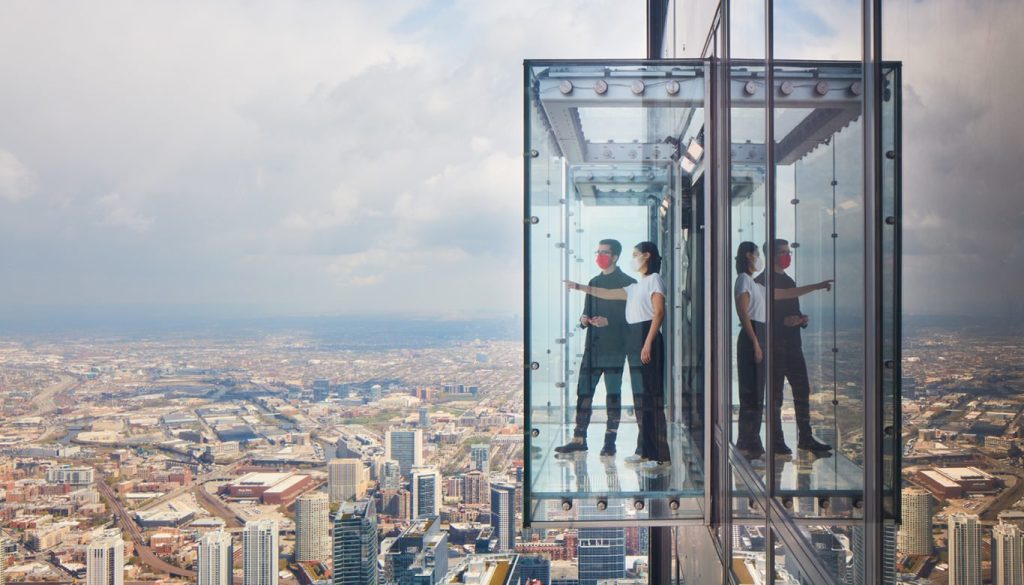
- Skydeck Chicago on the 103rd floor of Willis Tower is the most dramatic observation deck experience in the city. The Ledge, a glass-floored box that extends 4 feet from the building's exterior at over 1,300 feet above street level, is genuinely not for the faint-hearted. The views on a clear day stretch into four states.
- The Art Institute of Chicago on Michigan Avenue is the second-most-visited art museum in the United States and one of the finest in the world, with a permanent collection spanning 5,000 years of human creative history. The Impressionist and Post-Impressionist galleries alone justify a dedicated morning.
- Go City Chicago Explorer Pass lets you choose between 2 and 7 attractions from over 25 Chicago experiences, with a 30-day window to use all chosen attractions. The selection covers Skydeck at Willis Tower, 360 CHICAGO, the Art Institute, the Field Museum, Shedd Aquarium, the Adler Planetarium, Navy Pier's Centennial Wheel, Big Bus tours, Wendella boat tours, and more. A 3- or 4-attraction pass covers the headline experiences; a larger pass extends the savings across a longer stay.
- The Go City Chicago All-Inclusive Pass gives access to all covered attractions on consecutive days, the best option for visitors planning a full multi-day Chicago experience across museums, observation decks, cruises, and guided tours.
- Chicago City Cards: 5 Top Attractions covers access to 5 of the city's most significant paid attractions in a single pass, valid across a set number of days, and well-suited to visitors with a focused shortlist.
- Chicago Architecture River Cruise is the single best introduction to the city for any first-time visitor: a 90-minute boat journey along the Chicago River through the canyon of downtown buildings with expert architectural commentary from guides who have spent careers studying these structures. Book in advance for evening and weekend departures, which sell out consistently.
- Sightseeing Cruise on Lake Michigan and Chicago River extends the water experience beyond the river canyon to the open lake, covering both waterways in a combined tour that takes in the full sweep of the Chicago shoreline alongside the downtown architecture.
- The Chicago Food Tour covers the city's culinary identity with a local guide across a 2- to 3-hour walking tour, with stops typically including deep dish pizza, Italian beef, a Chicago-style hot dog, and neighbourhood-specific specialties. The most efficient way to eat the city's essential dishes is with context rather than just coordinates.
- The Big Bus Chicago Hop-On Hop-Off Bus Tour runs open-top double-decker routes covering the main Chicago highlights with live commentary. The most practical first-day orientation for visitors arriving in an unfamiliar city is before committing time and money to specific attractions.


When to Visit Chicago
Chicago's weather is one of the most dramatic in any major American city, and the season you visit genuinely shapes what the city is like.
Summer (June to August) is Chicago at its peak with outdoor festivals running almost every weekend (Lollapalooza in August, Taste of Chicago, and the Jazz Festival in September), the lakefront beaches fully operational, restaurant terraces filling up from early afternoon, and the city has an energy and a communal outdoor culture that is unlike anything it produces in other seasons.
The trade-off is heat and humidity. Temperatures regularly reach 30 to 35°C in July and August, and the lake can moderate but does not always cool the city sufficiently. Book your accommodation early because summer is peak season.
Spring (April to May) is the best value window for pleasant weather, with temperatures climbing from 10 to 20°C and the city's parks and outdoor spaces coming back to life after winter. May, in particular, with tulips in Millennium Park and the first outdoor concerts at the Pritzker Pavilion, is one of the most enjoyable months to be in Chicago.
Autumn (September to November) is arguably the city's finest season. The summer crowds thin, temperatures drop to a comfortable 15 to 22°C, the trees across Lincoln Park and the boulevards turn gold, and the restaurant scene is at its most active with harvest menus and the James Beard dinners. October is the sweet spot.
Winter (December to February) is genuinely cold, with temperatures regularly below 0°C and the famous lake-effect wind ("the Hawk") adding a significant chill factor. The city does not slow down.
The Christkindlmarket on Daley Plaza (a German Christmas market in November and December), the ice- skating ribbon at Millennium Park, and the extraordinary indoor museum life all make Chicago a valid winter destination for visitors who do not mind the cold. Hotel rates drop significantly, and the Loop is notably quieter. Come prepared with serious winter gear.
Practical Tips Before You Go
- Get a Ventra card at any L station or online before arriving. Load it with a 1-day or 3-day pass for unlimited CTA rides, or tap contactless credit/debit cards or Apple Pay directly at the turnstile.
- The Red Line runs 24 hours and is the most useful train for North Side visitors. The Blue Line also runs 24 hours and connects O'Hare Airport to the Loop. All other lines stop running in the late night/early morning.
- Architecture boat tours book out on weekends and summer evenings. Book in advance through Thrillark to secure your preferred departure time.
- Deep dish pizza takes 30 to 45 minutes to bake. Plan accordingly. Do not show up hungry and expect to eat within 10 minutes. Order when seated and be patient.
- The Bean is most photogenic at sunrise and before 9 am. After that, the crowds in the reflection and around the sculpture significantly affect the experience.
- Wrigley Field and United Center events create significant traffic on the L and in rideshare surge pricing in surrounding areas. Allow extra time on event days.
- Sun protection is needed in summer, particularly on the beach and the lakefront trail, where the combination of UV reflection off the lake and exposed position intensifies exposure.
- Chicago's Divvy bike share is excellent for the Lakefront Trail, but less practical in traffic on city streets. The lakefront route from Navy Pier to Lincoln Park and beyond is specifically designed for cycling.
Chicago does not announce itself the way New York or Los Angeles does. It reveals itself gradually through the architecture that catches you off guard on a Tuesday morning, through a pizza that takes 40 minutes to arrive and justifies every minute of the wait, through a jazz set in a basement bar in the West Loop that turns into the best two hours of the trip. It is a city of rewards that go to the people who give it proper time.
Don’t wait! Head to Thrillark to book your Skydeck tickets, Art Institute admission, architecture river cruises, Go City passes, and everything else Chicago has waiting for you.
Frequently Asked Questions About Chicago
What is the best way to get from O'Hare Airport to downtown Chicago?
The Blue Line CTA train from O'Hare runs directly to the Loop (downtown) in approximately 45 minutes, operates 24 hours a day, and is by far the most cost-effective option. The Ventra card or contactless bank cards work at the fare gates. Note that the Blue Line from O'Hare carries a special airport surcharge, making the fare $5.00 rather than the standard $2.50 for a regular CTA trip. Taxis and rideshares from O'Hare to downtown typically cost $45 to $55 plus tip under normal traffic conditions but can be significantly more during peak hours. The CTA is almost always faster than road transport during rush hour and considerably cheaper at any time.
What is The Bean in Chicago, and where is it?
Cloud Gate (universally called "The Bean") is a 110-tonne polished stainless-steel sculpture by British artist Anish Kapoor in Millennium Park, just east of Michigan Avenue in the Loop. Its mercury-droplet shape reflects the city skyline and the surrounding visitors in distorted images from every angle. Entry to Millennium Park and viewing the Bean is completely free. The best time to visit is before 9 am, when the park is quiet and the morning light across the sculpture is at its most striking.
What is the Chicago Architecture River Cruise, and is it worth doing?
The Chicago Architecture River Cruise is a 90-minute guided boat tour along the Chicago River through the canyon of downtown buildings, with expert commentary covering the history and design of the structures on both banks. It is widely considered the single best introduction to Chicago for first-time visitors and one of the finest urban experiences available in the United States. Chicago's First Lady Cruises operates the most highly regarded tours; book in advance for weekend and evening departures, which sell out consistently.
What is deep dish pizza, and where should you try it in Chicago?
Deep dish pizza is Chicago's contribution to pizza culture: a pie with a buttery, biscuit-like crust pressed up the sides of a deep pan, with chunky tomato sauce on top of the cheese and substantial toppings in between. It takes 30 to 45 minutes to bake, is eaten with a fork, and bears minimal resemblance to any pizza style found elsewhere. Pizzeria Uno (founded 1943 at 29 East Ohio Street, the birthplace of Chicago deep dish) and Lou Malnati's (a separately founded institution from 1971) are the most famous names alongside Giordano's. Order before you are hungry; the wait is part of the experience.
What is the Go City Chicago Explorer Pass, and how does it work?
The Go City Chicago Explorer Pass lets you choose between 2 and 7 attractions from a selection of over 25 Chicago experiences, with a 30-day window to use all your chosen attractions after first use. The included options cover Skydeck at Willis Tower, 360 CHICAGO, the Art Institute of Chicago, the Field Museum, Shedd Aquarium, the Adler Planetarium, the Navy Pier Centennial Wheel, Big Bus tours, and architecture boat cruises among others. For visitors covering three or more paid attractions, the pass saves money compared to individual ticket purchases; a 3- or 4-attraction selection is the sweet spot for a three-to-four-day visit.
What are the best free things to do in Chicago?
Millennium Park, including Cloud Gate, Crown Fountain, and the Jay Pritzker Pavilion is entirely free. The Lakefront Trail running 18.5 miles along Lake Michigan is free and one of the best urban outdoor experiences in the country. The Lincoln Park Zoo is free to enter year-round. The Chicago Cultural Center with its Tiffany stained-glass dome is free. The Chicago Riverwalk is free to walk. Public beach access at Oak Street Beach, North Avenue Beach, and multiple other lakefront beaches is free. The Art on theMART projections on the Merchandise Mart building run free most evenings across multiple seasons from spring through autumn.
When is the best time to visit Chicago?
May and September to October are the best months for a balance of good weather, manageable crowds, and reasonable accommodation rates. Summer (June to August) is the most vibrant and the most crowded, with outdoor festivals running nearly every weekend and the lakefront at its most active. The Chicago Jazz Festival and Taste of Chicago (both in September) are the most significant annual events for visitors. Winter (December to February) is genuinely cold but delivers the Christmas market on Daley Plaza, ice skating in Millennium Park, and the lowest hotel rates of the year.
Browse by themes
Top Things to Do in the U.S.