Here is the thing about Paris: it is exactly as good as advertised, and somehow that is still a surprise. The light really is like that. The croissants really do make every other croissant taste like a lie. The cafes really are full of people sitting for two hours over a single coffee, and nobody is in any hurry about it.
Paris is one of those cities that has been mythologised so thoroughly that you expect to be slightly disappointed, and then you turn a corner on the Île Saint-Louis at dusk, and the Seine is gold, and the bridges are lit, and you are not disappointed at all.
France’s capital has been the cultural capital of the Western world for the better part of four centuries, with more than 40 million visitors a year and the remarkable ability to remain genuinely itself despite all of them.
Give it four days minimum. The city reveals itself slowly, one neighbourhood at a time, and the people who stay long enough to find a favourite boulangerie leave with something the two-day rushed itinerary simply cannot give them.
Paris City Essentials
Entry Requirements for Paris
- EU and Schengen Area citizens need no pre-travel requirements.
- Citizens of the US, UK, Canada, Australia, and most Western countries can visit without a visa for up to 90 days in any 180-day Schengen period.
- Indian nationals require a Schengen visa from the French Embassy before departure.
- The EU’s ETIAS pre-travel authorization for visa-exempt non-EU nationals is being progressively rolled out, so make sure to check travel.ec.europa.eu before booking.
Getting There and Getting Around
CDG Airport is 25 km northeast of central Paris. The RER B train reaches Châtelet-Les Halles in about 35 minutes and runs every 10 to 15 minutes, and taxis take 45 to 90 minutes, depending on traffic. They also cost considerably more.
Orly Airport is 14 km south. Metro Line 14, extended to Orly in June 2024, now connects directly to Châtelet in about 25 minutes and is the fastest option. The Orlyval shuttle to the RER B at Antony is still available as an alternative.
Once in the city, the Metro does almost everything. Sixteen lines cover every significant corner of Paris with impressive frequency.
- Metro: Runs from approximately 5:30 am to 1:15 am on weekdays and until 2:15 am on Friday and Saturday nights. Buy a Navigo Easy card (reloadable for individual journeys) or a Navigo Semaine/Mois pass for unlimited weekly or monthly travel. Apple Pay and Google Pay, linked to a Navigo account, work at the gates. The standard physical credit cards do not tap directly at Metro turnstiles.
- RER (Regional Express Rail): It is the fast suburban train that runs under the city and out to the wider region. It is also essential for reaching Versailles (RER C), Disneyland Paris (RER A), and both airports. Within central Paris zones 1 and 2, the same ticket as the Metro covers your journey.
- Vélib’: This is Paris’s public bike-share system with over 20,000 bikes at 1,400 stations across the city. Download the Vélib’ app for day or week passes. It is the most enjoyable way to get between neighbourhoods when the weather cooperates.
- Batobus: It is the hop-on hop-off river bus covering eight stops along the Seine, including the Eiffel Tower, the Louvre, Notre Dame, and Musée d’Orsay. You get the most scenic commute in Europe, available as a day or multi-day pass.
The Eiffel Tower
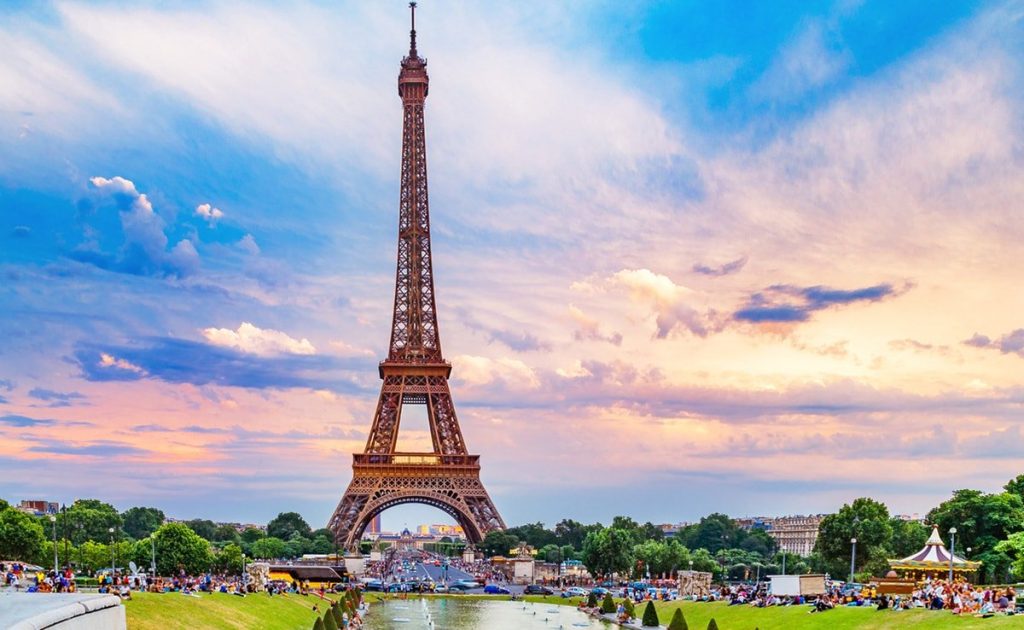
Start here. You have to. It was built as a temporary structure for the 1889 World’s Fair, was nearly demolished when the exhibition ended, and has been the most recognized man-made structure on Earth ever since. Gustave Eiffel arguably had a better quarter-century of afterthought than most architects have in their entire careers.
The tower stands 330 metres tall, including its broadcast antenna, weighs approximately 10,100 tonnes of wrought iron, and has three publicly accessible levels: the first floor at 57 metres (with a glass floor section that is alarming in the best possible way), the second floor at 115 metres, and the summit at 276 metres with views extending to 70 km on clear days.
Every evening from dusk to 1 am, it sparkles for five minutes at the top of every hour, which sounds gimmicky until you are standing on the Champ de Mars at 10 pm watching it happen, and you completely forget to be cynical.
Make sure to book in advance, particularly for summit and evening slots, which sell out weeks ahead.


The Louvre, Musée d’Orsay, and the Museum District
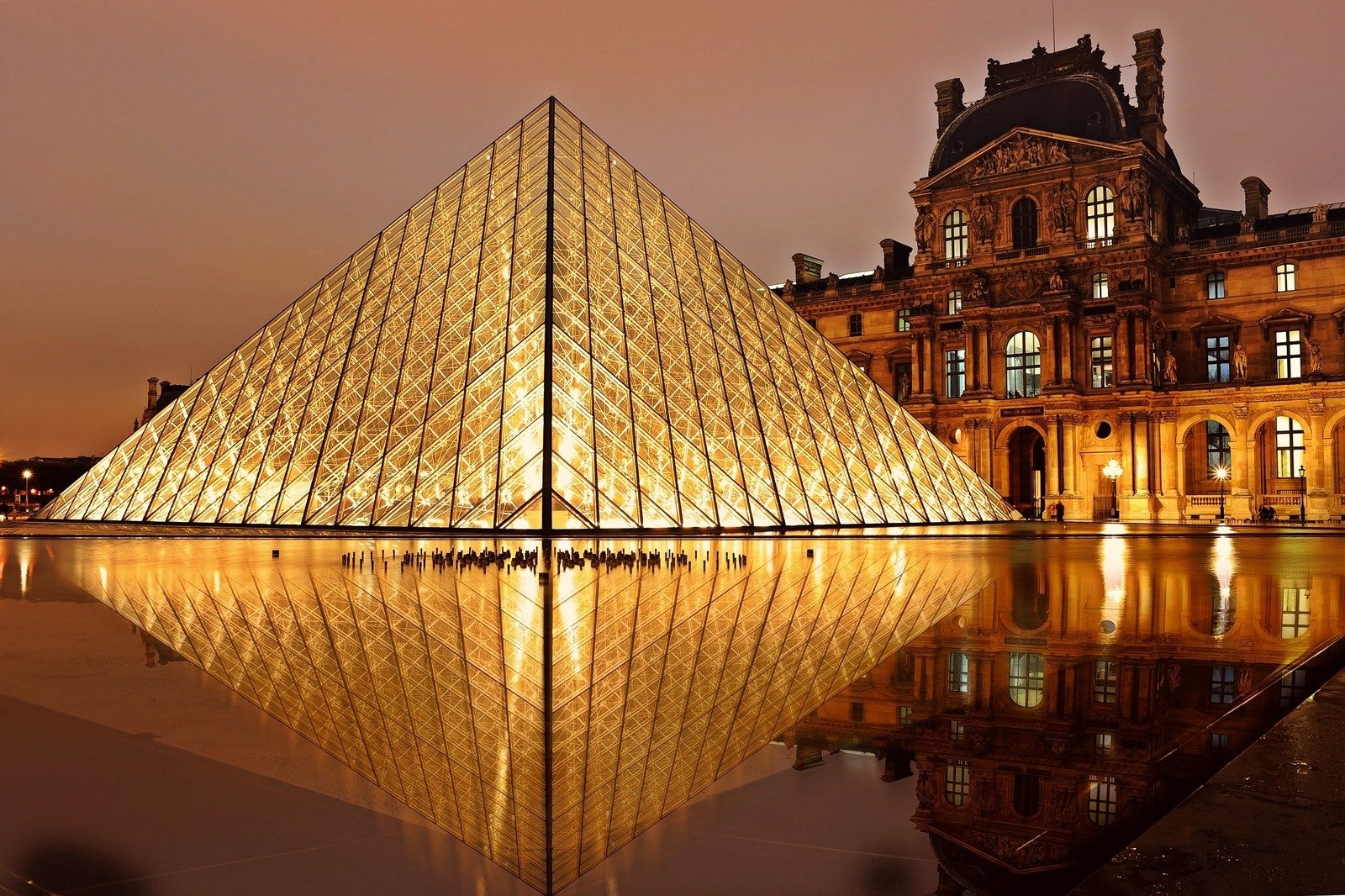
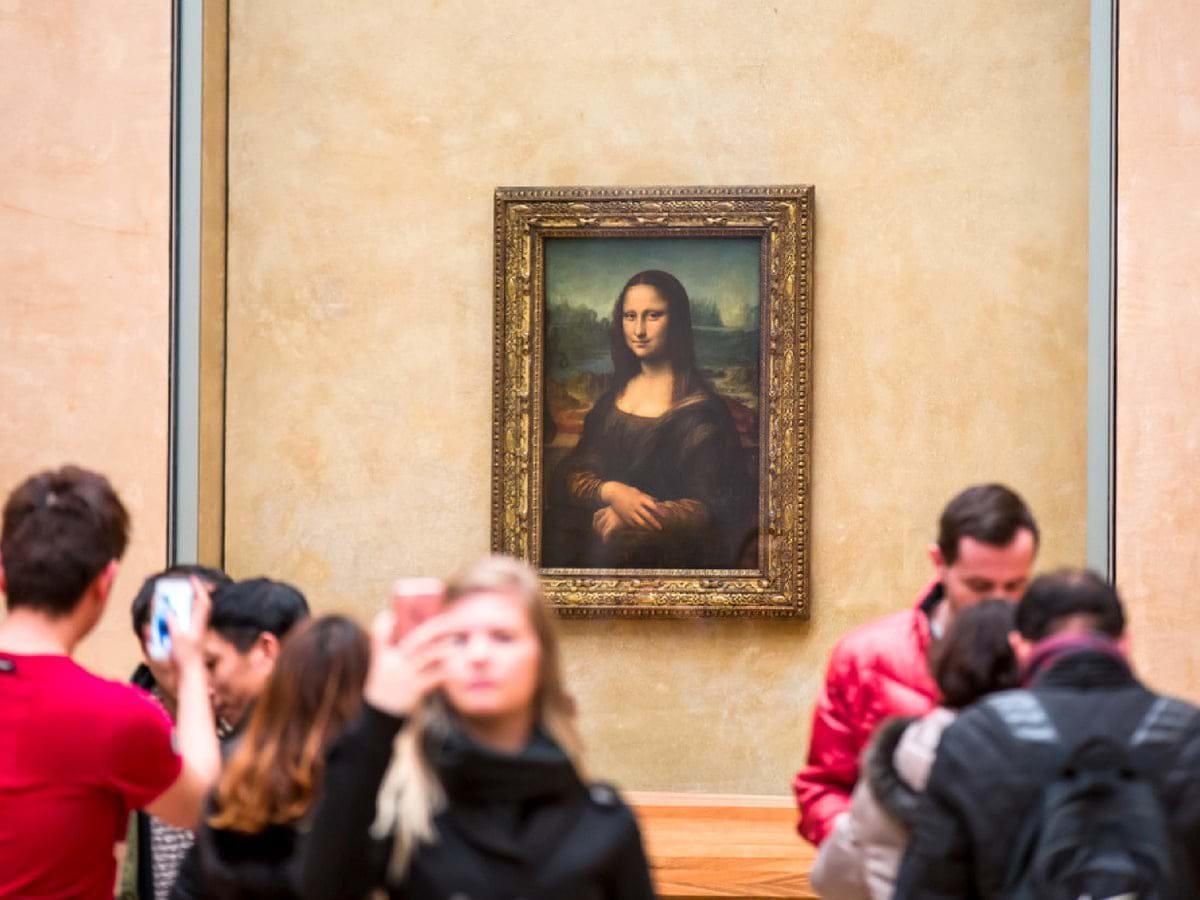
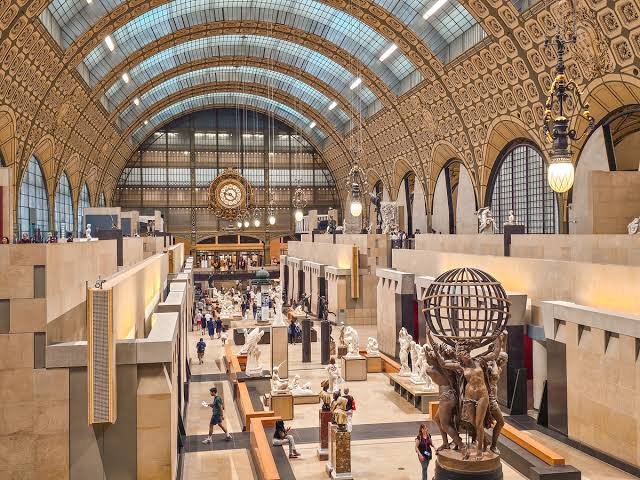
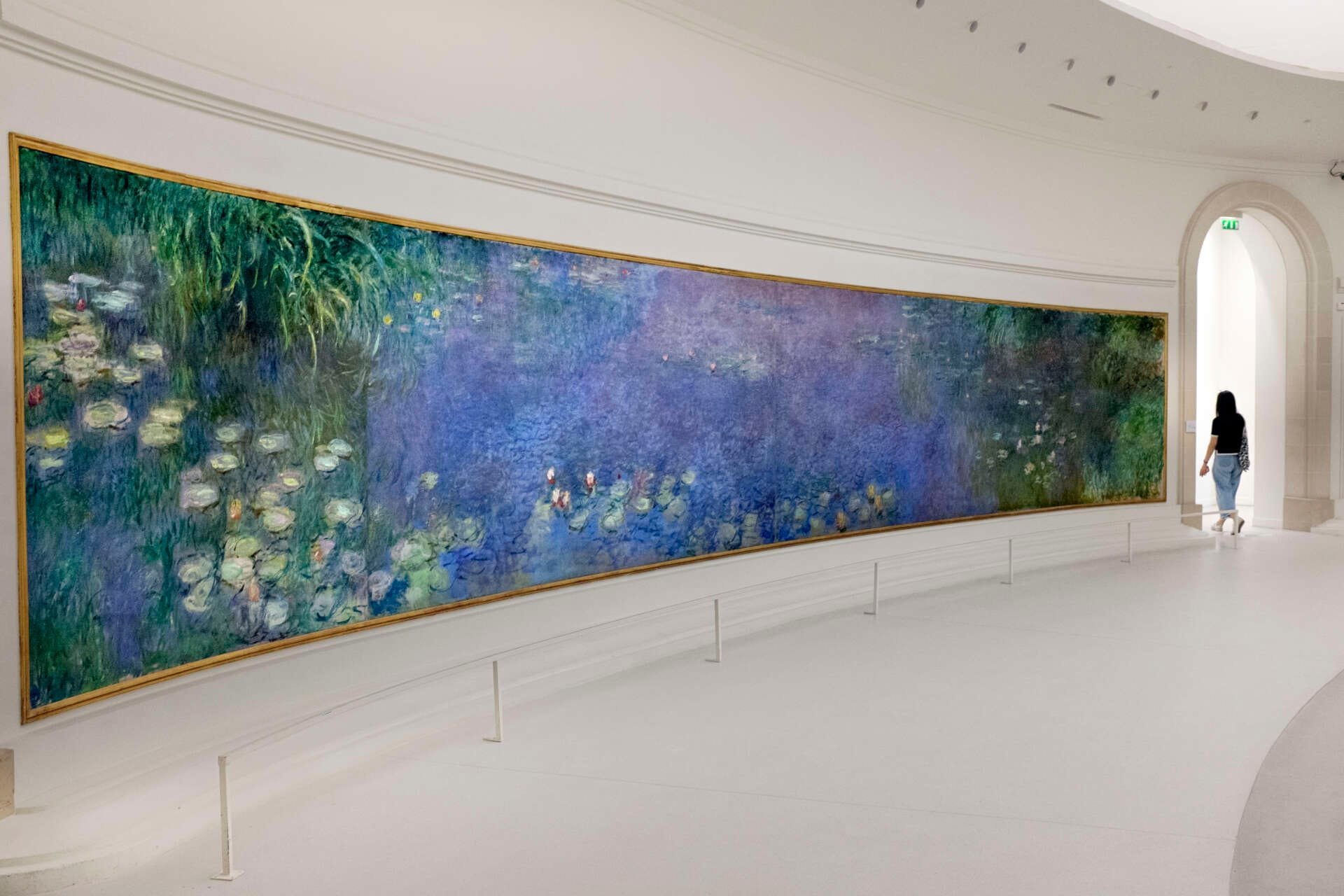
Once the Eiffel Tower is handled, the museums beckon, and Paris has more world-class museums than any other city on Earth. This is where the Paris Museum Pass earns its keep.
The Louvre is the world's largest art museum, housed in the former royal palace, with 35,000 works covering everything from Near Eastern antiquities to French Impressionism.
The Mona Lisa is in Room 711 (go directly at opening; it gets very crowded), the Winged Victory of Samothrace is on its staircase looking imperious, and the Venus de Milo is in the Greek antiquities section, being timeless.
Book in advance. The Louvre is closed on Tuesdays and open until 9 pm on Wednesday and Friday evenings.
The hosted access to the Mona Lisa option, bookable through Thrillark, gives a quieter and significantly more meaningful encounter with the painting than the standard gallery access, where you are primarily photographing other people's phones.
A short walk along the river leads to the Musée d'Orsay, the greatest Impressionist collection in the world, housed in a converted 19th-century railway station with the most beautiful bones of any museum building in Paris.
Monet, Renoir, Degas, Van Gogh, Cézanne, Seurat, all under one roof, and the views of the Seine from the clock-face windows are worth the visit alone.
From there, the Musée de l'Orangerie in the Tuileries Garden is ten minutes on foot and holds Monet's monumental Water Lilies panels in two oval rooms that the artist designed himself. It is smaller, quieter, and arguably more powerful than anything at the Orsay.


Notre Dame and the Île de la Cité
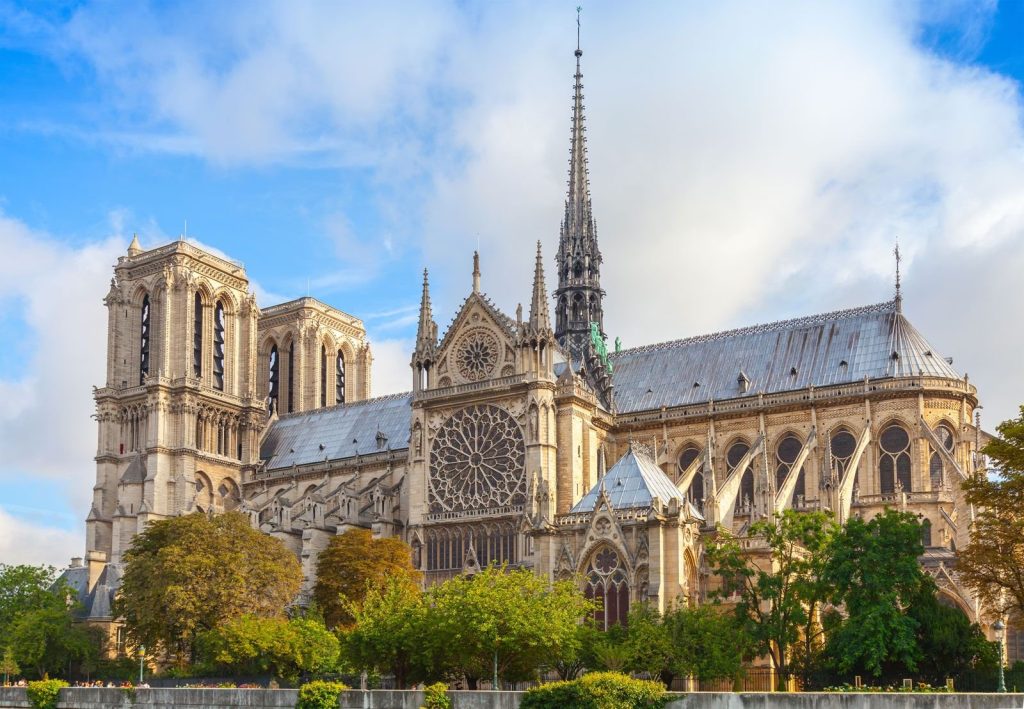
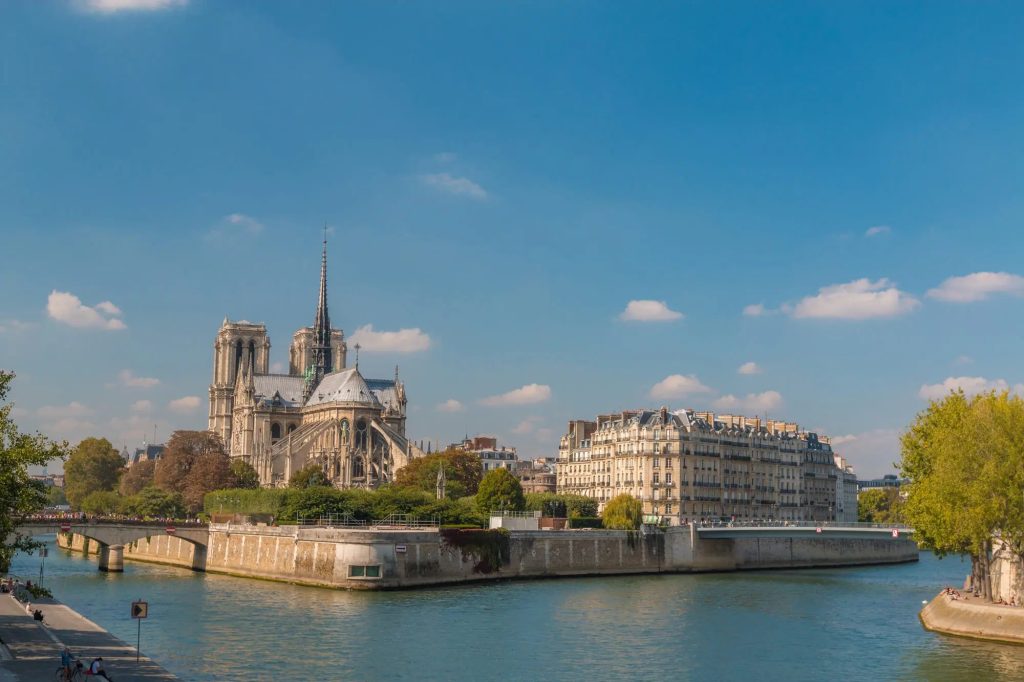
From the museum district, the Seine draws you east toward the islands. The Île de la Cité is the historic heart of Paris, the patch of river island where the city began, and it is where you will find Notre Dame.
Notre Dame Cathedral, begun in 1163 and largely completed by 1345, is the most technically ambitious building of the medieval period in France. The fire of April 2019 that destroyed the spire and the roof shocked the world, and the rebuilding, funded by donations from across the globe, culminated in a reopening in December 2024.
The restored interior, the rebuilt spire, and the new visitor experience are worth seeing for what France's craftspeople and architects accomplished in five years. Admission is now ticketed, so book in advance.
A short walk away, Sainte-Chapelle is the single most beautiful room in Paris. It is a 13th-century royal chapel where 1,113 stained glass panels covering 600 square metres replace almost every wall, filling the space with coloured light that makes the building feel less like architecture and more like the inside of a jewel.

Montmartre
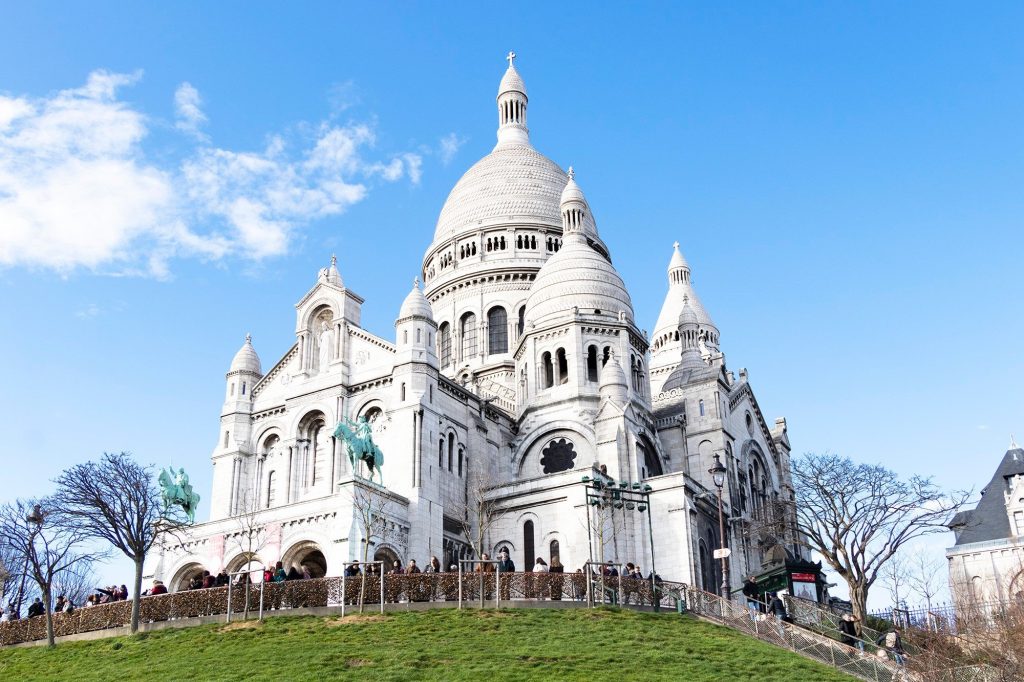
From the islands, it is a metro ride north to a completely different Paris. Montmartre in the 18th arrondissement is the hilltop village that has housed artists, musicians, and bohemians since the 19th century, and walking up through its winding streets is the best way to understand that Paris is not one city but a collection of distinct villages that happen to be connected by a subway.
Sacré-Coeur Basilica at the summit has views over the entire city and is free to visit. The Romano-Byzantine white domed church, completed in 1914, has exterior stone that stays permanently white because of calcite deposits the travertine releases in rain, which is either a geological fact or a metaphor for Paris maintaining appearances regardless of the weather.
The neighbourhood around it rewards slow exploration. Take your time and explore the Place du Tertre, where artists set up their easels, the Moulin de la Galette windmill (one of two remaining from the dozens that once dotted the hill), the vineyard on the Rue des Saules, and the Musée de Montmartre in the building where Renoir, Valadon, and Utrillo all had studios.
At the foot of the hill, Moulin Rouge on Boulevard de Clichy has been turning its red windmill since 1889 and combining French can-can, acrobatics, and elaborate costumes in a show that has been refined for 135 years into something genuinely spectacular.

Le Marais
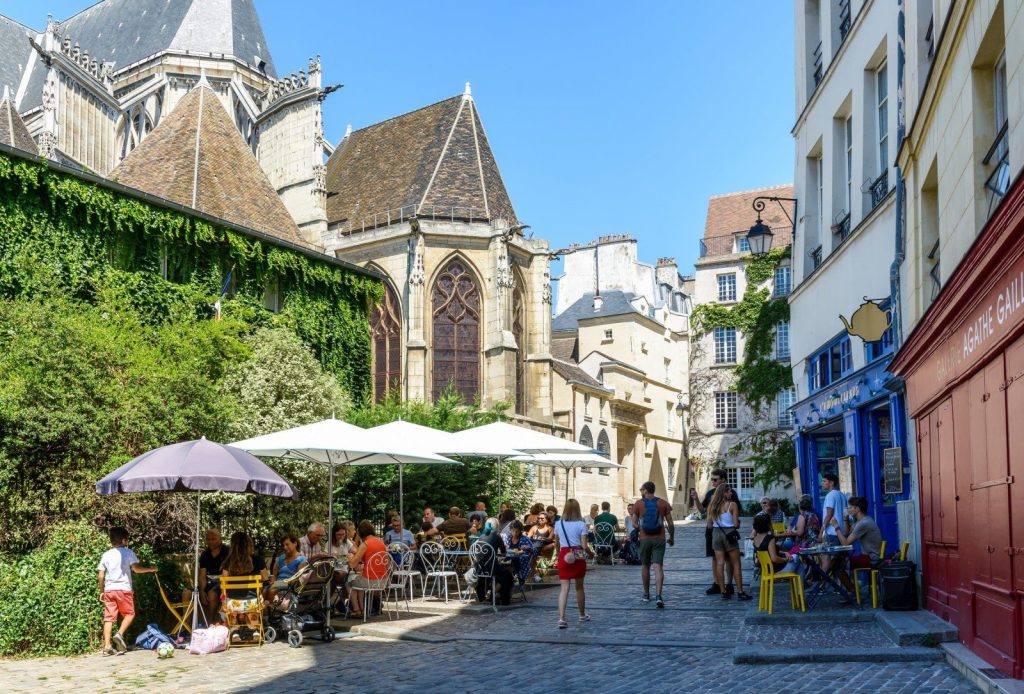
Coming down from Montmartre and heading east takes you into Le Marais, the neighbourhood where Paris's medieval street pattern survived Haussmann's 19th-century redevelopment, preserving a dense network of narrow lanes and courtyard mansions that feels nothing like the grand boulevards.
Place des Vosges, completed in 1612, is the oldest planned square in Paris and one of the most beautiful public spaces in Europe, with identical red brick and stone arcaded townhouses surrounding a formal garden. Victor Hugo lived at number 6 from 1832 to 1848 and it is now a free museum.
The Centre Pompidou on the western edge turned its structure inside out, with escalators, plumbing, and air conditioning colour-coded and displayed on the exterior.
The collection inside is Europe's largest museum of modern art: Kandinsky, Matisse, Duchamp, and Warhol.
The rooftop gives some of the finest free views in Paris for visitors with a museum ticket.
Le Marais also has the finest independent boutiques in the city, some excellent gallery spaces, and L'As du Fallafel on the Rue des Rosiers, which makes the best falafel in Europe and has a queue outside most of the day to prove it.
The Champs-Élysées and Versailles
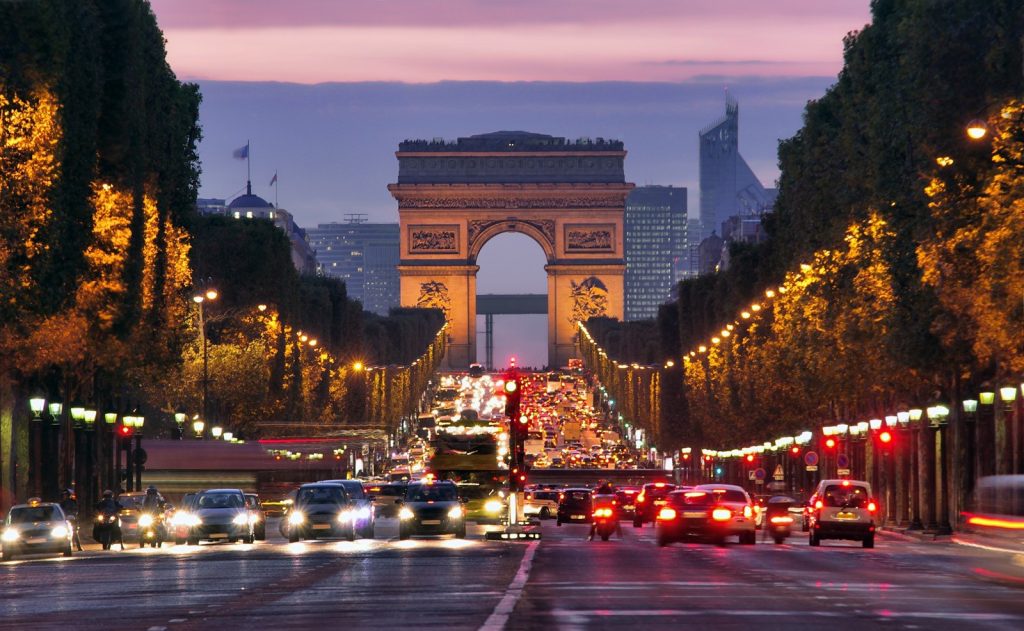
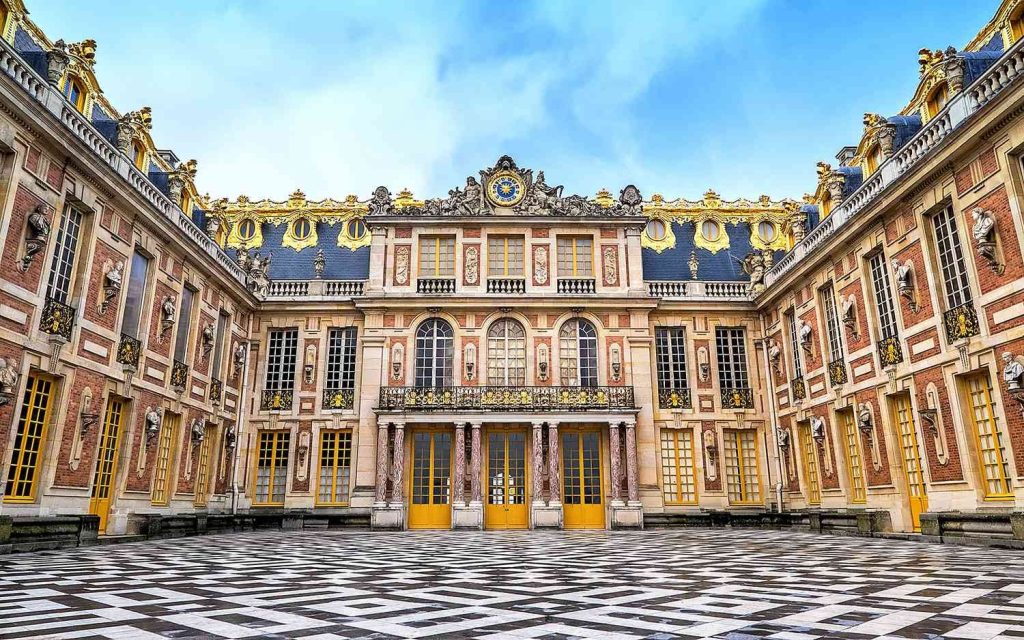
Two of Paris's most famous destinations are best understood in context.
The Champs-Élysées is most impressive as a spectacle rather than a shopping destination. It is a 1.9 km promenade from the Place de la Concorde to the Arc de Triomphe, lined with chestnut trees and the occasional genuine café hidden between the luxury brands.
The Arc itself, commissioned by Napoleon in 1806 and completed in 1836, has a rooftop terrace at 50 metres with the finest view of the star-shaped intersection where 12 avenues converge. It is free on the first Sunday of every month from November to March, which is 284 steps otherwise.
Versailles is worth the 35-minute RER C journey from central Paris, particularly for visitors who want to understand what absolute power looks like when it has an unlimited budget and no planning committee.
The Hall of Mirrors (73 metres long, 357 mirrors facing 17 arched windows) is the most celebrated room in France. Go on a weekday, arrive early, and book in advance. It is extremely popular, and the crowds reward planning.


Popular Things to Do in Paris and Ticket Options
- Disneyland Paris at Marne-la-Vallée, 35 minutes from central Paris by RER A, is the most visited theme park in Europe and covers two parks: Disneyland Park with Sleeping Beauty Castle, Space Mountain, Pirates of the Caribbean, and Phantom Manor, and Walt Disney Studios Park with Avengers Campus, Tower of Terror, and Crush's Coaster. Single-day tickets cover one park, while multi-day tickets cover both and are the better format for families who want to explore everything properly.
- Aquarium de Paris is one of the finest aquariums in France, built underground into the Trocadéro hillside directly across the river from the Eiffel Tower, with 43 shark species and tropical marine life in genuinely immersive surroundings.
- Go City Paris Explorer Pass lets you choose from Paris's top attractions with a 30-day window. The selection covers the Louvre, Musée d'Orsay, Versailles, Moulin Rouge, Big Bus, and more. For visitors covering three or more paid attractions, the pass consistently saves compared to individual purchases.
- Big Bus Hop on Hop off Pass Paris runs open-top double-decker routes covering the main landmarks with live and recorded commentary. It is the most practical orientation tool for first-time visitors who want to understand the city's geography before committing to individual sights on foot.
- Puy du Fou is the most remarkable theme park in Europe and possibly the world, approximately 350 km southwest of Paris (about 2 hours by TGV from Montparnasse). It has no mechanical rides. Instead, it stages theatrical shows covering Roman gladiators, Viking invasions, medieval falconry, and the French Revolution in outdoor venues of extraordinary scale, with casts of hundreds, live animals, pyrotechnics, and water effects that make conventional theme parks feel quite ordinary by comparison. A dedicated overnight trip from Paris is required, and multi-day tickets are the recommended format for experiencing the full programme across multiple evenings and days.
- The Generali Balloon Flight Over Paris is the world's largest captive passenger balloon, rising to 150 metres above the André Citroën Park in the 15th arrondissement for panoramic views of the city and the Eiffel Tower. The 20-minute tethered flight is accessible to all ages and runs subject to wind conditions.
- The Seine River Dinner Cruise is the most atmospheric way to spend an evening in Paris. You get to enjoy a multi-course French dinner served on the Seine as the illuminated Eiffel Tower, Notre Dame, the Louvre, and the Pont Alexandre III pass alongside.
- Bateaux Parisiens Seine River Gourmet Dinner Cruise is the premium format of the same experience, with a gourmet French menu, live music, and the most elegant presentation of the river journey available.
- Seine River Sightseeing Cruise by Bateaux Mouches is the classic 1-hour daytime commentary cruise from the Pont de l'Alma, the most established river cruise operator in Paris, and the best introduction to the city from the water.
- Seine River Cruise by Vedettes de Paris - Musical Aperitif pairs the evening river cruise with drinks and live music on board, giving you a lighter evening format before dinner elsewhere.
- Paris Museum Pass + Seine River Sightseeing Cruise by Bateaux Parisiens combines unlimited entry to over 50 Paris museums and monuments (including the Louvre, Orsay, Versailles, Sainte-Chapelle, and the Centre Pompidou) across 2, 4, or 6 consecutive days with a Seine sightseeing cruise. For visitors covering multiple institutions across several days, the Museum Pass saves significant money and, crucially, allows entry without queuing at the ticket desk.
- The Batobus Paris Ticket covers the hop-on hop-off river bus with eight stops along the Seine. It is a practical and scenic way to move between the main attractions using the river rather than the metro.
- The Moulin Rouge Cabaret Show with Drop-off Service and Dinner is the complete Moulin Rouge experience. Enjoy the full dinner and show package at the world's most famous cabaret, with private drop-off from your hotel. The show has been running since 1889 and shows no signs of losing its edge.
- The Musée d'Orsay Dedicated Entrance gives priority access to the world's greatest Impressionist collection in the converted Gare d'Orsay railway station, bypassing the standard queue to reach Monet, Van Gogh, Renoir, Degas, and Cézanne directly. It is one of the most visited museums in Paris, so a dedicated entrance is worth booking for any weekend or peak season visit.
- The Rodin Museum in the 18th-century Hôtel Biron is where Auguste Rodin rented studios, and the greatest works of his career, including The Thinker and The Kiss, are displayed in the rooms and gardens where he made them. The sculpture garden alone justifies the visit.
- The Marmottan Monet Museum in the 16th arrondissement holds the largest collection of Monet's work in the world, including the original Impression, Sunrise, which gave Impressionism its name. It is less visited than the Orsay and significantly more intimate.
- The Paris Picasso Museum in the Marais holds the most comprehensive collection of Picasso's work in the world, donated by his heirs to the French state, covering every period of his career in a beautiful 17th-century mansion.
- Fondation Louis Vuitton in the Bois de Boulogne is Frank Gehry's billowing glass structure housing one of the finest contemporary art collections in Europe, with premium access giving priority entry and a guided experience of the building and its rotating exhibitions.
- Bourse de Commerce Pinault Collection is a contemporary art museum opened in 2021 inside the 18th-century Paris commodity exchange, renovated by Tadao Ando. The Pinault collection rivals any contemporary museum in Europe.
- The Jacquemart-André Museum is a 19th-century private mansion on Boulevard Haussmann preserved exactly as its owners left it, with a remarkable collection of Italian Renaissance, Dutch Golden Age, and French 18th-century art displayed in the most elegant domestic setting in Paris.
- Quai Branly Museum - Jacques Chirac on the bank of the Seine opposite the Eiffel Tower holds one of the world's finest collections of indigenous art and culture from Africa, Asia, Oceania, and the Americas, in a building designed by Jean Nouvel.
- The Les Invalides Museum covers French military history from the Middle Ages to the 20th century in the golden-domed complex built by Louis XIV, housing Napoleon's tomb in a red porphyry sarcophagus in the central crypt.
- Panthéon in the Latin Quarter is the neoclassical mausoleum where France buries its greatest citizens: Voltaire, Rousseau, Victor Hugo, Marie Curie, and Émile Zola are all here. The Foucault Pendulum, demonstrating the Earth's rotation, hangs from the central dome.
- Conciergerie on the Île de la Cité is the medieval royal palace that became the most feared prison of the French Revolution, where Marie Antoinette was held before her execution. The Gothic halls and the preserved cell are among the most atmospheric historical spaces in Paris.
- Parc Astérix is a French alternative to Disneyland Paris, about 35 km north of central Paris and entirely built around the Asterix and Obelix comic universe. The rollercoasters, Gallic village, and Roman-themed areas make it a strong choice for families looking for something distinctly French.
- The Crazy Horse Paris Show is the most artistically distinctive of Paris's cabarets, a choreographed nude performance art show at the Crazy Horse venue near the Champ de Mars, known for its extraordinary lighting design and the precision of its productions since 1951.
- Paradis Latin Cabaret Night Show is the oldest and most architecturally beautiful of the Paris cabarets, built by Gustave Eiffel in 1889 in the Latin Quarter, with a show combining French song, comedy, acrobatics, and spectacle in an intimate theatre.
- Mont Saint Michel Tour from Paris covers the extraordinary tidal island abbey on the Normandy coast, approximately 4 hours by coach from Paris, where the medieval monastery and its surrounding village rise from the sea on a rocky outcrop with tides that once cut it off completely from the mainland.
- Thoiry ZooSafari is a combined zoo and drive-through safari park about 50 km west of Paris in the grounds of the 16th-century Château de Thoiry, with lions, tigers, rhinos, and giraffes in open enclosures visible from vehicles. It is a strong, full-day family trip from the city.
- Château de Vincennes is a royal medieval fortress on the eastern edge of Paris, the largest surviving medieval fortified castle in France, with a 52-metre keep (the tallest in Europe), a Gothic chapel, and the dungeon where Fouquet, Diderot, and the Marquis de Sade were all imprisoned at various points.


Food in Paris
Paris has more Michelin-starred restaurants than any other city in the world, but the food that defines daily life here is considerably more accessible and considerably more important.
The boulangerie is the foundation. Over 1,200 in Paris, and the morning croissant is not a tourist performance; it is how the city actually eats. The pain au chocolat, the Paris-Brest (choux pastry with praline cream), and the tarte tatin are the other pastry-counter essentials.
Bistro culture is the social dining mode with a handwritten daily menu, the plat du jour, and house wine by the carafe. The best bistros are in the 11th arrondissement, Oberkampf, the Batignolles, and Montmartre's backstreets, not on the tourist boulevards.
Café de Flore and Les Deux Magots in Saint-Germain are where Hemingway, Sartre, and Beauvoir used to sit. Pierre Hermé and Ladurée represent the two poles of Parisian macaron culture. The covered passages (Galerie Vivienne, Passage des Panoramas) off the grands boulevards have some of the most interesting specialist food shops in the city, and are free to walk through.
When Should You Visit Paris?
- Spring (April to June) is the most celebrated season with cherry blossoms in late March and April, chestnut trees on the Champs-Élysées coming into leaf, and terraces reopening after winter. Temperatures range from 10 to 22°C.
- Summer (July to August) is peak season with the warmest temperatures (24 to 30°C) and the highest visitor numbers. August sees many Parisians leave the city. The atmosphere changes, but the major attractions remain fully operational.
- Autumn (September to November) is the local favourite with golden light on the Seine, temperatures around 12 to 20°C, and the cultural season at full strength. Fashion Week in September brings extra energy.
- Winter (December to February) has the finest Christmas atmosphere in Europe. You’ll see lights on the Champs-Élysées, Christmas markets, ice rinks in front of the Hôtel de Ville, and shorter queues at every museum. New Year's Eve on the Champs-Élysées is free, public, and genuinely spectacular.
Practical Tips Before You Go
- Book the Louvre, Eiffel Tower, and Notre Dame well in advance. The Louvre sells out its timed entry slots weeks ahead of time during peak season. The Eiffel Tower summit and evening slots go even faster.
- Metro tickets: The Navigo Easy card (reloadable for individual t+ tickets) or a Navigo weekly/monthly pass is the correct approach. Apple Pay/Google Pay linked to a Navigo account works at the gates. Standard physical credit cards do not tap at Metro turnstiles.
- The Eiffel Tower sparkling show runs for five minutes at the top of every hour from dusk to 1 am. Time for a riverside picnic around it.
- The Champs-Élysées is not where Parisians eat. Head to the 11th arrondissement, Le Marais, Saint-Germain, or Montmartre's backstreets for the actual restaurant life of the city.
- The Metro stops at 1:15 am on weekdays and 2:15 am on Friday and Saturday nights. The Noctilien overnight bus network covers the gap until service resumes.
- Carry some cash. Markets, bouquinistes, and smaller neighbourhood shops often prefer it. EUR 50 to 100 in small bills covers most situations.
Paris earns its reputation and then surpasses it. It has the greatest art collection in the world, the finest river promenade in Europe, a food culture that shaped how the entire world thinks about eating, and a quality of light that makes even unremarkable streets look as though someone carefully painted them. Every day you give it rewards, you give it more than the last, and you will leave feeling you have not given it enough.
Don’t wait up! Head to Thrillark now to book your Louvre tickets, Seine river cruises, Disneyland Paris, Moulin Rouge, the Paris balloon flight, and everything else this extraordinary city has waiting for you.
Frequently Asked Questions About Paris
Do you need a visa to visit Paris?
EU and Schengen citizens need no pre-travel requirements. Citizens of the US, UK, Canada, Australia, and most Western countries can visit without a visa for up to 90 days in any 180-day Schengen period. Indian nationals require a Schengen visa from the French Embassy. The EU's ETIAS pre-travel authorization is being progressively rolled out for visa-exempt non-EU nationals; check travel.ec.europa.eu before booking.
What is the best way to get from CDG Airport to central Paris?
The RER B train reaches Gare du Nord in about 25 minutes and Châtelet-Les Halles in about 35 minutes, running every 10 to 15 minutes. It is the fastest and most cost-effective option by a significant margin. Taxis and Uber operate from the airport, but take 45 to 90 minutes depending on traffic.
What is the Paris Museum Pass, and is it worth it?
The Paris Museum Pass gives unlimited entry to over 50 museums and monuments, including the Louvre, Musée d'Orsay, Versailles, Sainte-Chapelle, and the Centre Pompidou for 2, 4, or 6 consecutive days, with no queuing at ticket desks at participating venues. For visitors covering three or more institutions, it consistently saves money and time. The COMBO ticket through Thrillark adds a Seine sightseeing cruise for additional value.
What is Puy du Fou, and how do you get there from Paris?
Puy du Fou is a historical theme park in the Vendée, about 2 hours from Paris by TGV from Montparnasse to La Roche-sur-Yon. It has no mechanical rides. Instead, it stages extraordinary theatrical shows covering Roman gladiators, Viking invasions, medieval falconry, and the French Revolution in outdoor venues with casts of hundreds, live animals, and pyrotechnics. Widely considered the finest theme park experience in Europe. A dedicated overnight trip is required; multi-day tickets are the recommended format.
Which Seine river cruise should you choose?
The Bateaux Mouches sightseeing cruise is the classic 1-hour daytime option with audio commentary. The Seine River Dinner Cruise and the Bateaux Parisiens Gourmet Dinner Cruise are the evening options with French dinner on board. The Vedettes de Paris Musical Aperitif is a lighter evening format with drinks and live music. The Batobus is a practical hop-on hop-off service for using the river as transport between attractions.
What is the Generali Balloon Flight Over Paris?
The world's largest captive passenger balloon, tethered in the André Citroën Park in the 15th arrondissement, rises to 150 metres for panoramic views over Paris and the Eiffel Tower. The tethered flight lasts about 20 minutes, is accessible to all ages, and operates subject to wind conditions. Evening departure slots before sunset are the most popular and sell out fastest.
What is the best time to visit Paris?
Spring (April to June) and autumn (September to November) offer the best balance of weather, manageable crowds, and full cultural life. April and May are particularly good for the blossoms and the first terraces. September and October bring golden light and the return of the restaurant and theatre season. December is worth a winter visit, specifically for the Christmas atmosphere, which is the finest in Europe.
Browse by themes
Other Things to Do in Paris