Hong Kong does not compromise. It is one of the most densely populated places on Earth and one of the most vertical cities ever built, with a skyline so dramatic that most cities look modest by comparison.
It is a financial powerhouse and a street food paradise. This is a neon-lit harbour city where typhoon warnings come every summer, and nobody stops working. It has world-class restaurants within walking distance of street stalls where a bowl of wonton noodles costs almost nothing. And the combination of British colonial legacy, Cantonese culture, international finance, and 7.4 million people living on 1,114 square kilometres of mountainous coastline has produced a city that is like nothing else in Asia, or anywhere else.
Hong Kong is a Special Administrative Region of China, returned from British rule in 1997 under the “one country, two systems” framework that preserved its common law legal system and economic freedoms. The city occupies Hong Kong Island, the Kowloon Peninsula, the New Territories, and 263 outlying islands, connected by one of the most efficient public transit systems in the world.
Give it three days at minimum. Four is better. The city rewards the visitor who gets past the harbour view and into the wet markets, the temple districts, and the outlying islands that most people never quite reach.
Hong Kong City Essentials
Entry Requirements for Hong Kong
Visitors from most countries, including the US, UK, EU nations, Canada, Australia, and many others, can enter Hong Kong without a visa for periods ranging from 14 to 180 days, depending on nationality. The majority of Western passport holders receive 90 days on arrival.
Indian nationals can enter without a visa for up to 14 days but must complete an online Pre-arrival Registration (PAR) before departure. Always verify your specific requirements at immd.gov.hk before booking flights, as conditions continue to evolve following the changes to Hong Kong’s political status.
Note that Hong Kong maintains a separate immigration system from mainland China. A Hong Kong visit does not include entry to China. A separate Chinese visa is required if you plan to cross the border into Shenzhen or beyond.
Getting There and Getting Around
By air: Hong Kong International Airport (HKG) on Lantau Island is one of the finest airports in Asia and handles direct flights from virtually every major global hub. The Airport Express is the fastest connection into the city, with the trains departing every 10 minutes and reaching Hong Kong Station in Central in 24 minutes. Buy a ticket at the airport or use an Octopus card. The train also stops at Tsing Yi (12 minutes) and Kowloon (20 minutes). Taxis and hotel buses are available at the ground transportation level. The taxi journey to Central takes about 45 minutes, depending on traffic.
Getting around the city:
The Octopus card is the foundation of Hong Kong transport. It is a rechargeable smart card accepted on every MTR train, bus, tram, Star Ferry, and most green minibuses in the city. Buy one at any MTR station on arrival, load it with HKD, and tap on and off every vehicle. It also works at 7-Eleven, McDonald’s, and many other retailers. Having one removes almost every friction point from getting around the city.
- MTR (Mass Transit Railway): Hong Kong’s metro is one of the cleanest, most punctual, and most comfortable urban rail networks in the world. Ten lines cover Hong Kong Island, Kowloon, and the New Territories, and connect to the Airport Express and cross-boundary rail to Shenzhen. The Octopus card is the standard fare payment. Single-journey tickets are also available at station machines.
- Trams: The iconic green double-decker trams that run along the northern coast of Hong Kong Island between Kennedy Town in the west and Shau Kei Wan in the east have been operating since 1904 and are one of the most characterful and cheapest ways to see the city at street level. One flat fare covers any distance. Just pay on exit with Octopus or exact cash.
- Star Ferry: The green-and-white Star Ferries crossing Victoria Harbour between Central/Wan Chai and Tsim Sha Tsui have been running since 1888 and are the most beautiful 8-minute commute in the world. The crossing is particularly atmospheric at night when the harbor lights show play across the water. Services run every 6 to 12 minutes from approximately 6:30 am to 11:30 pm. Adult fares range from HK$4.00 to HK$6.50, depending on the deck and day.
- Bus: An extensive network of double-decker buses covers all parts of Hong Kong not served by the MTR, including routes to the New Territories and outlying areas. The upper deck of a Hong Kong bus on the right routes gives spectacular views.
- Minibus: Green-topped public light buses (minibuses) cover shorter-distance neighbourhood routes. They are faster than buses but slightly more complex to use without Cantonese.
- Taxi: Hong Kong taxis are metered, plentiful, and colour-coded by district. The red taxis are for urban areas, green for the New Territories, and blue for Lantau Island. The red taxis accept Octopus payment. Uber also operates.
Victoria Peak
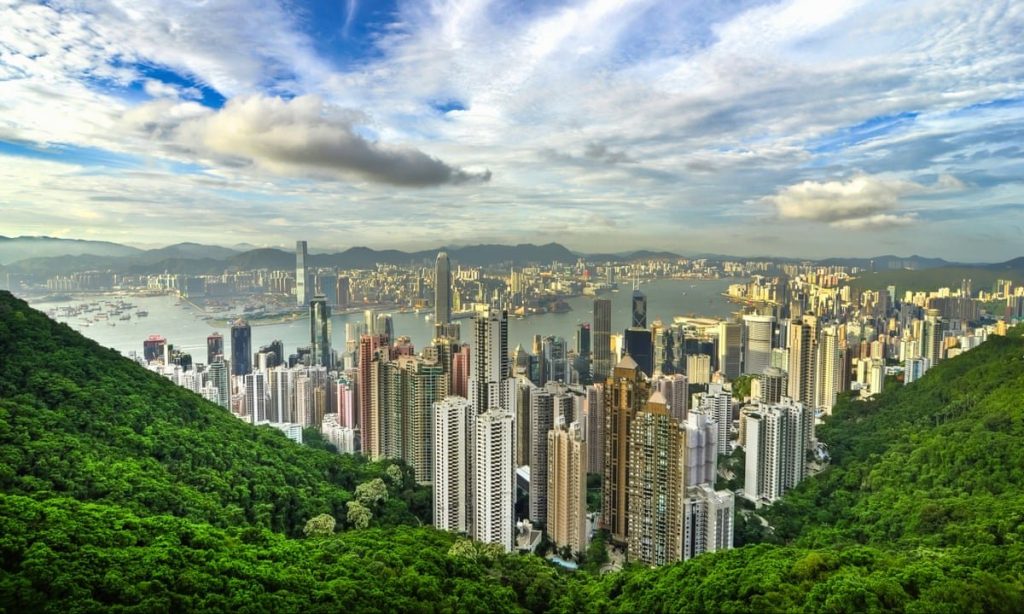
The first thing almost everyone does in Hong Kong is go up to Victoria Peak, and it is the correct instinct. The view from the summit at 552 metres over the Hong Kong skyline, Victoria Harbour, Kowloon, and the surrounding hills is one of the most dramatic urban panoramas on Earth and one that genuinely earns the effort to reach it.
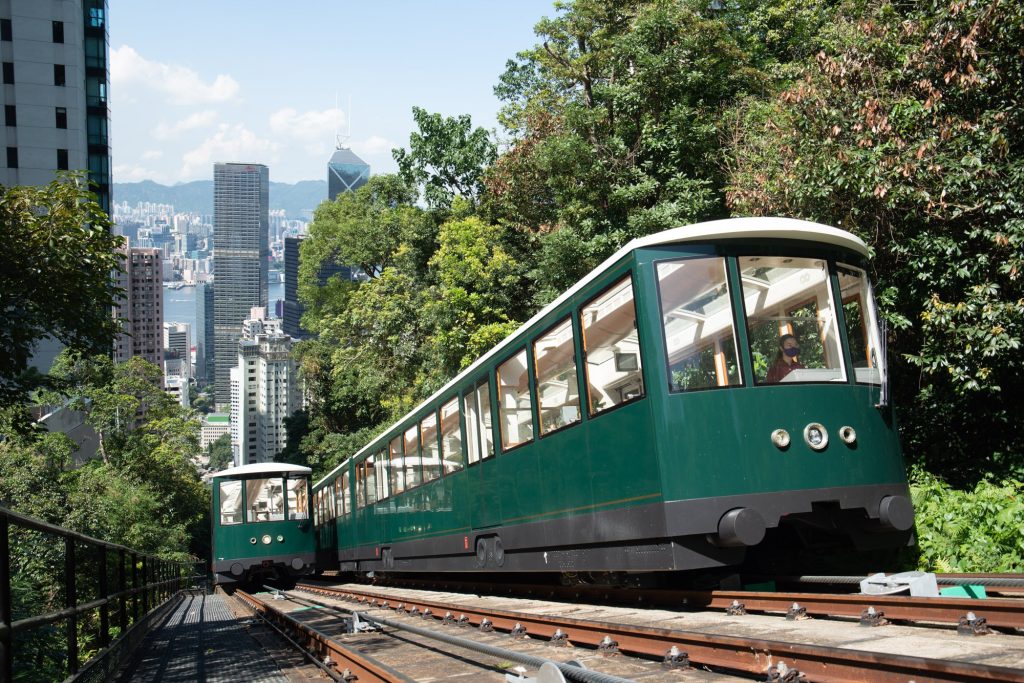
The Peak Tram is both the transport and the experience. It is a funicular railway that has been climbing the 396-metre vertical rise from Central to the Peak since 1888, the oldest funicular in Asia. The gradient at certain points reaches 27 degrees, which produces an optical illusion as the buildings alongside appear to lean dramatically away from vertical. The journey takes about 8 minutes. The tram departs from the Lower Terminus on Garden Road and operates from 7 am to midnight daily, every 10 to 15 minutes.
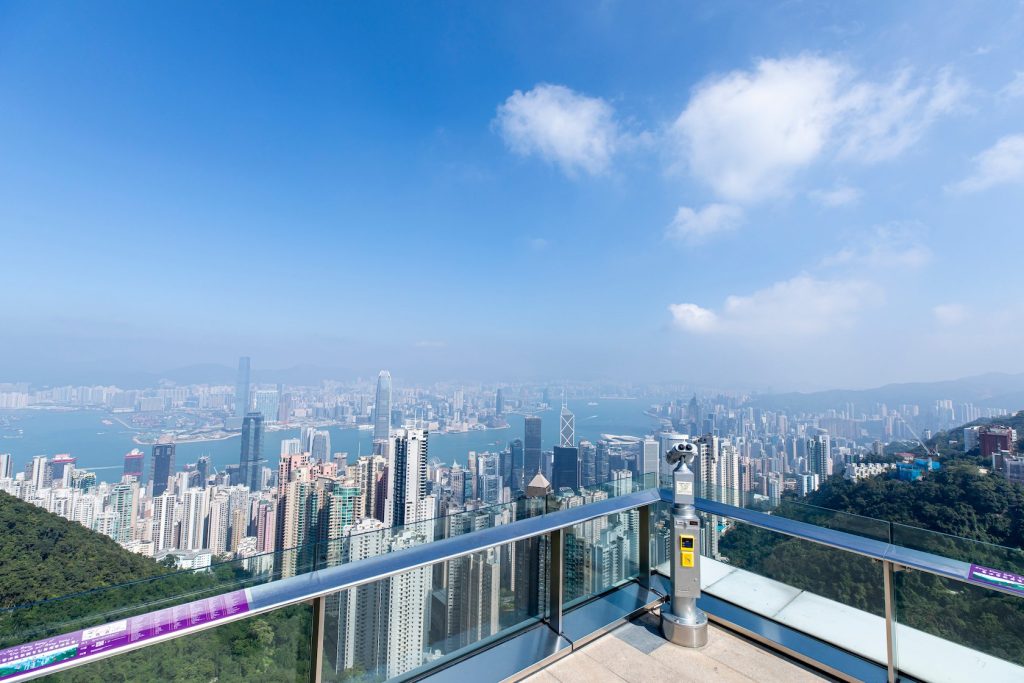
Sky Terrace 428 at The Peak Tower is the outdoor observation deck at 428 metres above sea level, with 360-degree views over the harbour and the surrounding landscape. The name refers to the 428-metre elevation. On clear days, the visibility extends far beyond the city to the outlying islands and into the Pearl River Delta. The early morning visit, before cloud or haze builds over the water, gives the clearest views, while evening visits give the most spectacular city-lights panorama.
The Peak is busiest on weekends and public holidays, when queues for the tram from the lower station can exceed an hour. Arriving before 9 am or after 7 pm significantly reduces wait times.

Victoria Harbour and the Waterfront
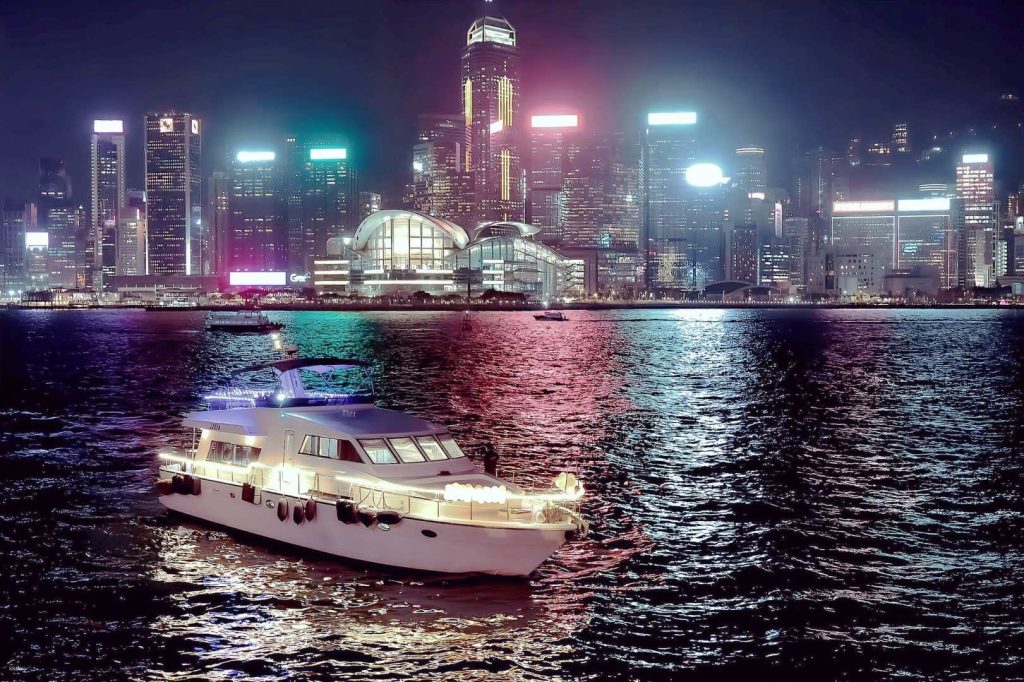
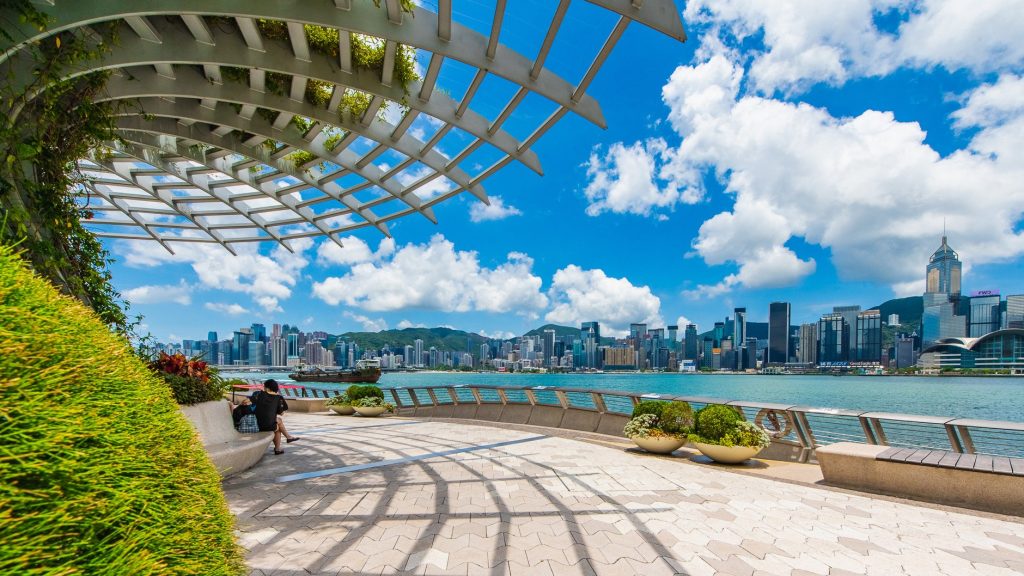
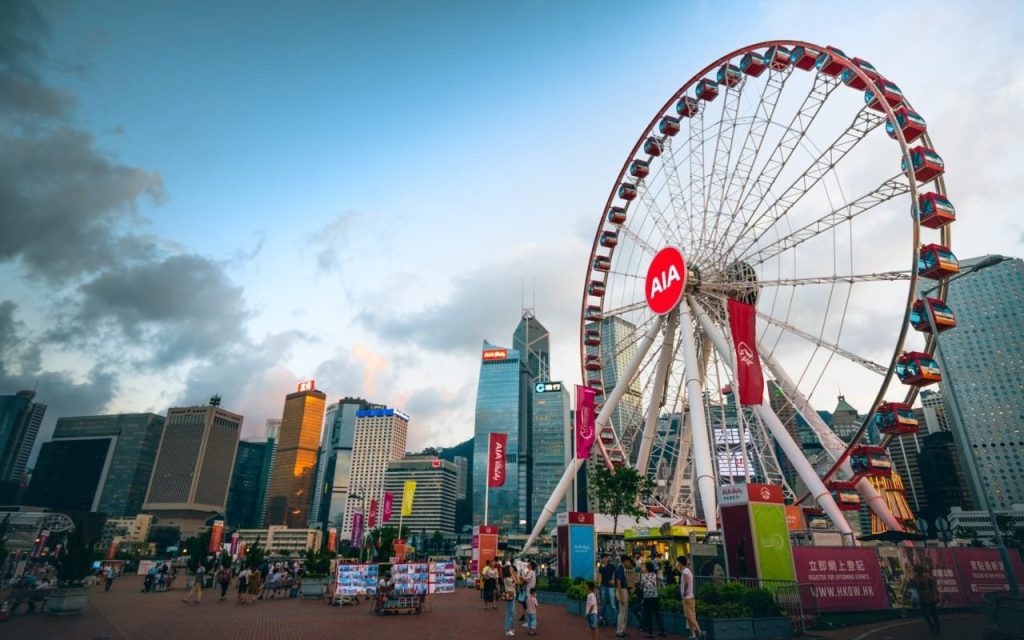
From the heights of the Peak, the eye is drawn inevitably to Victoria Harbour below, one of the finest natural harbours in the world and the geographic feature that gave Hong Kong its identity as a trading city. Coming down from the Peak and spending time at water level on both sides is essential to understanding what makes this city tick.
The Tsim Sha Tsui (TST) Promenade on the Kowloon side of the harbour gives the most celebrated view of the Hong Kong Island skyline with the wall of towers rising from the waterfront, the Peak behind them, and the constant movement of vessels across the harbour in front. The promenade runs from the Star Ferry Pier west to the Cultural Centre and east toward Hung Hom, and is lined with the Avenue of Stars (Hong Kong’s film industry tribute).
The best time to be here is at 8 pm, when the Symphony of Lights laser and light show plays across the buildings of Hong Kong Island from the rooftops.
The Hong Kong Observation Wheel at the Central Harbourfront on Hong Kong Island, directly beside the Star Ferry Pier, is a 60-metre Ferris wheel with climate-controlled gondolas giving views directly over the harbour, the Kowloon skyline, and the water traffic below. A single rotation takes approximately 15 to 20 minutes. It is modest by comparison to the Peak views, but positioned directly on the waterfront at the most central point of the city.
The Star Ferry crossing itself, with adult fares of HK$4.00 to HK$6.50 depending on deck and day (updated in 2023), remains one of the best-value transport experiences in the world:. You get to experience a genuine commuter ferry that also happens to be one of the most beautiful harbour crossings on Earth.

Hong Kong Island Neighbourhoods
Walking off the Star Ferry into Central and exploring eastward reveals the layers of Hong Kong Island in a way that no amount of viewing from above quite prepares you for.
Central is the financial heart of the city. You get to see glass towers housing global banks and law firms above street-level luxury retail, with the famous Midlevels Escalator (the world’s longest outdoor covered escalator system, running 800 metres from Central to Conduit Road at Mid-Levels) cutting through the neighbourhood’s steep hillsides from 10 am to midnight daily. The escalator passes through the SOHO restaurant and bar district, which has the most concentrated independent dining in the city, and the narrow streets of the Sheung Wan antique district just to the west.
Wan Chai, east of Central, retains something of the character that gave it its reputation. It is a working-class harbour district of wet markets, tram routes, old Cantonese restaurants, and the kind of street life that makes Hong Kong feel like more than a financial district with a harbour view. The Hong Kong Convention and Exhibition Centre, designed like a bird in flight over the waterfront at Wan Chai, is also where the 1997 handover ceremony took place.
Causeway Bay, further east, is where local Hong Kongers shop, eat, and spend their evenings. Explore the Times Square mall complex, the narrow lanes of Jardine’s Crescent market, and the typhoon shelter where floating restaurants and pleasure boats bob in one of the most unexpected restaurant settings in the city.
Stanley on the southern coast of Hong Kong Island, is a half-hour bus ride from Central and feels like a completely different city. This is a colonial-era waterfront village with a street market, seafood restaurants facing the bay, and the most pleasant waterfront promenade on the island. The route there on the double-decker 6 or 260 bus over the mountain gives some of the most dramatic road views in Hong Kong.
Kowloon
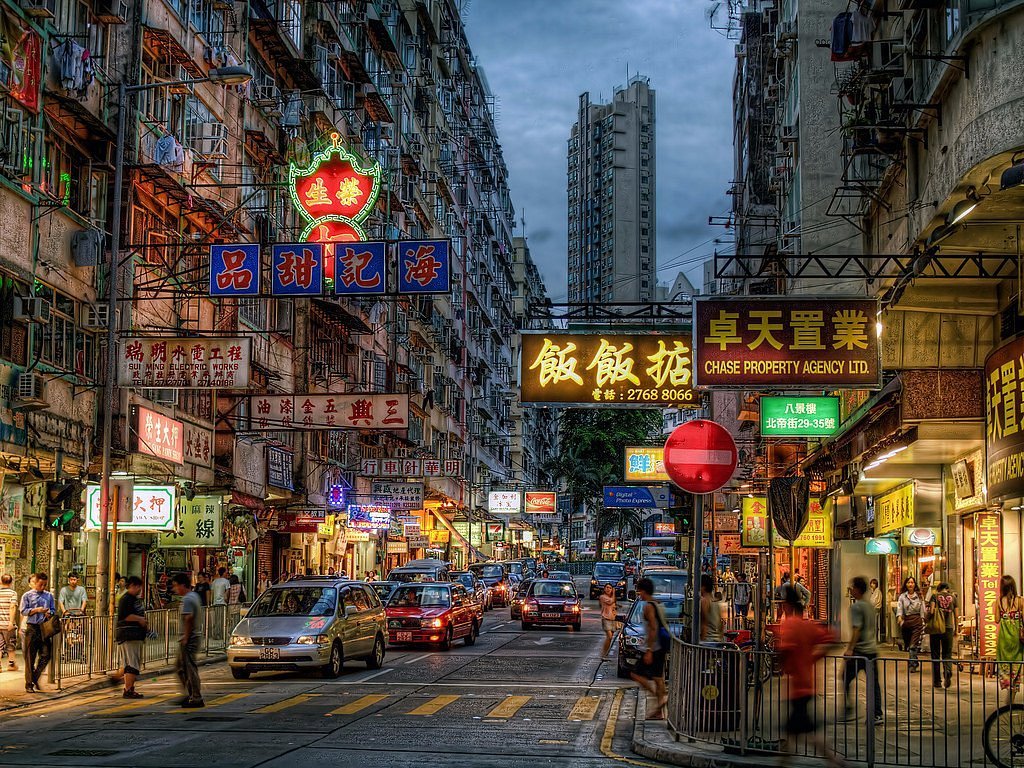
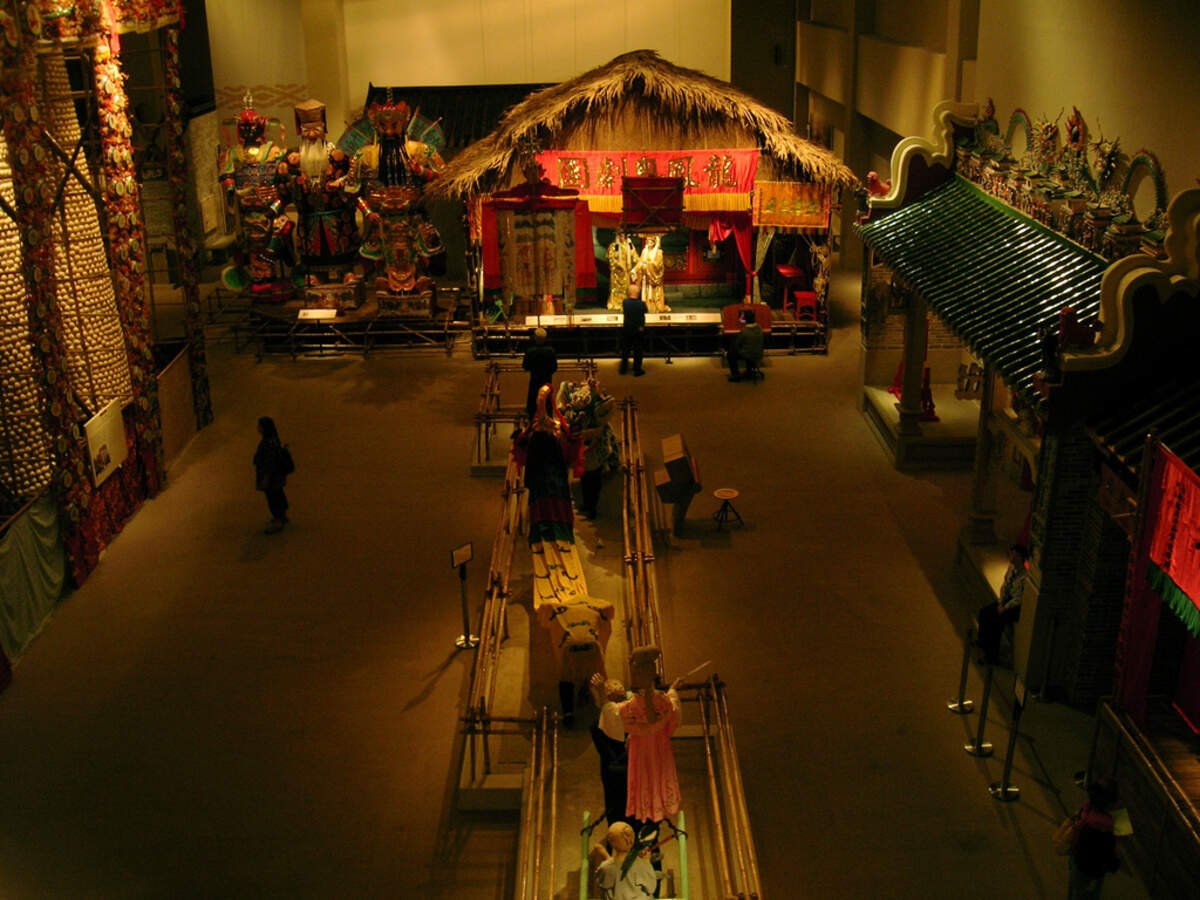
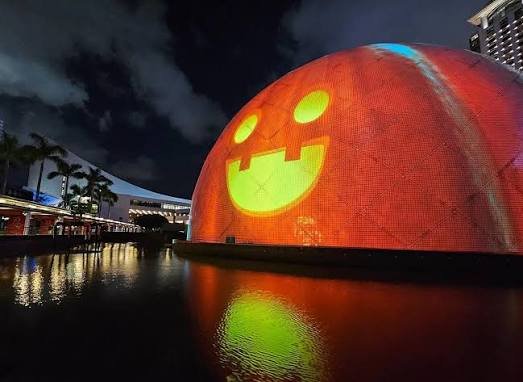
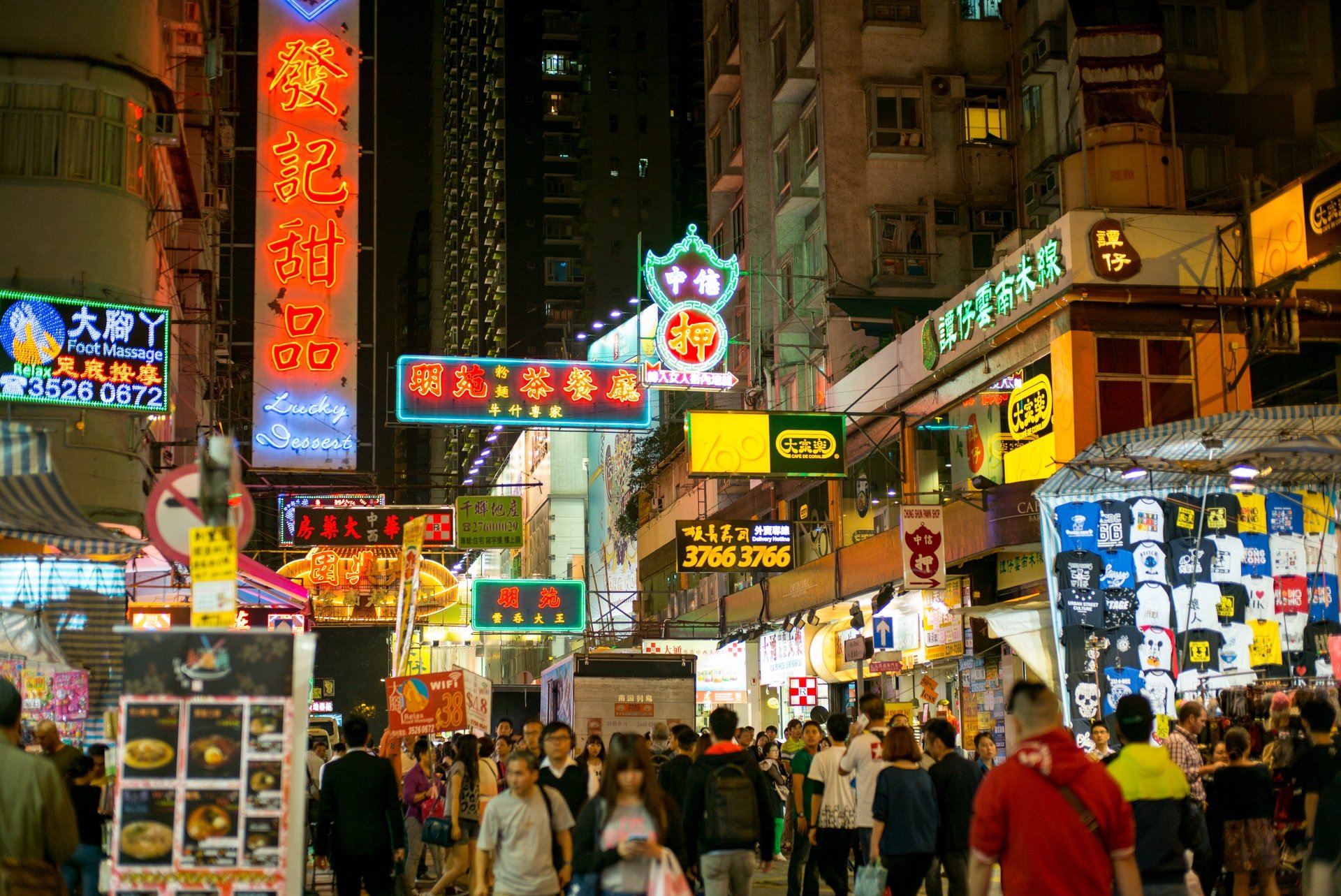
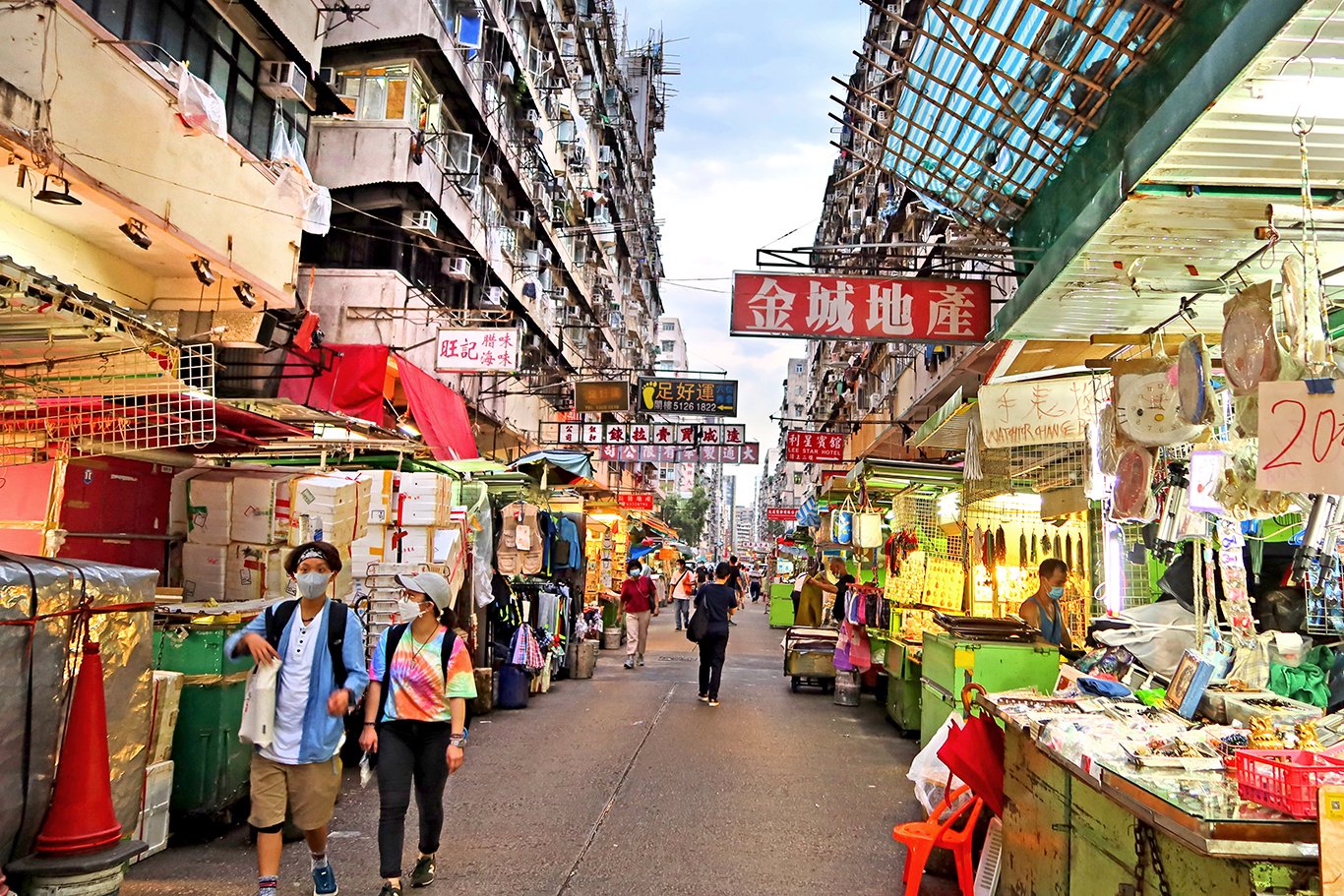
Crossing the harbour by Star Ferry into Tsim Sha Tsui deposits you in Kowloon, which is louder, denser, more commercial, and in many ways more viscerally Hong Kong than the island side.
Tsim Sha Tsui is where the majority of mid-range and budget accommodation is concentrated, alongside the city's museum district, the Harbour City mega-mall, and the jade and electronics markets that have been selling everything imaginable since the colonial era.
The Hong Kong Museum of History in TST gives the most comprehensive account of the city's development from prehistoric times to the handover. The Hong Kong Space Museum, with its distinctive white dome, is next to the Cultural Centre on the promenade.
Mong Kok to the north of TST is the densest neighbourhood in one of the world's densest cities, and the street market culture here is extraordinary. Make sure to explore the Fa Yuen Street (Sneaker Street), Tung Choi Street (Ladies' Market), the Goldfish Market, and the Flower Market on Prince Edward Road West, which are all within a few blocks of each other and together give the most market-dense afternoon available anywhere in the city.
Sham Shui Po, further north, is where the electronics bazaars, fabric wholesalers, and the Golden Computer Arcade (for second-hand electronics and gaming hardware) give Kowloon its most local, least tourist-oriented character. It is excellent for the Apliu Street flea market and the concentrated neon of the shop frontages.
Outlying Islands
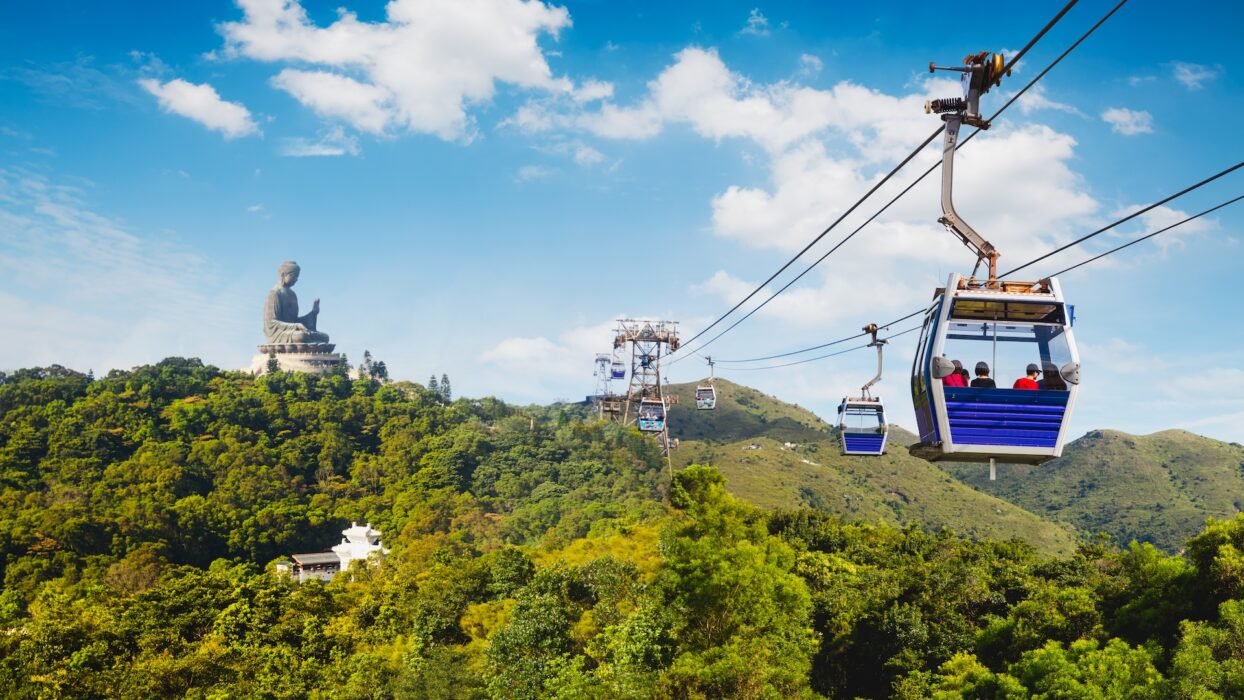
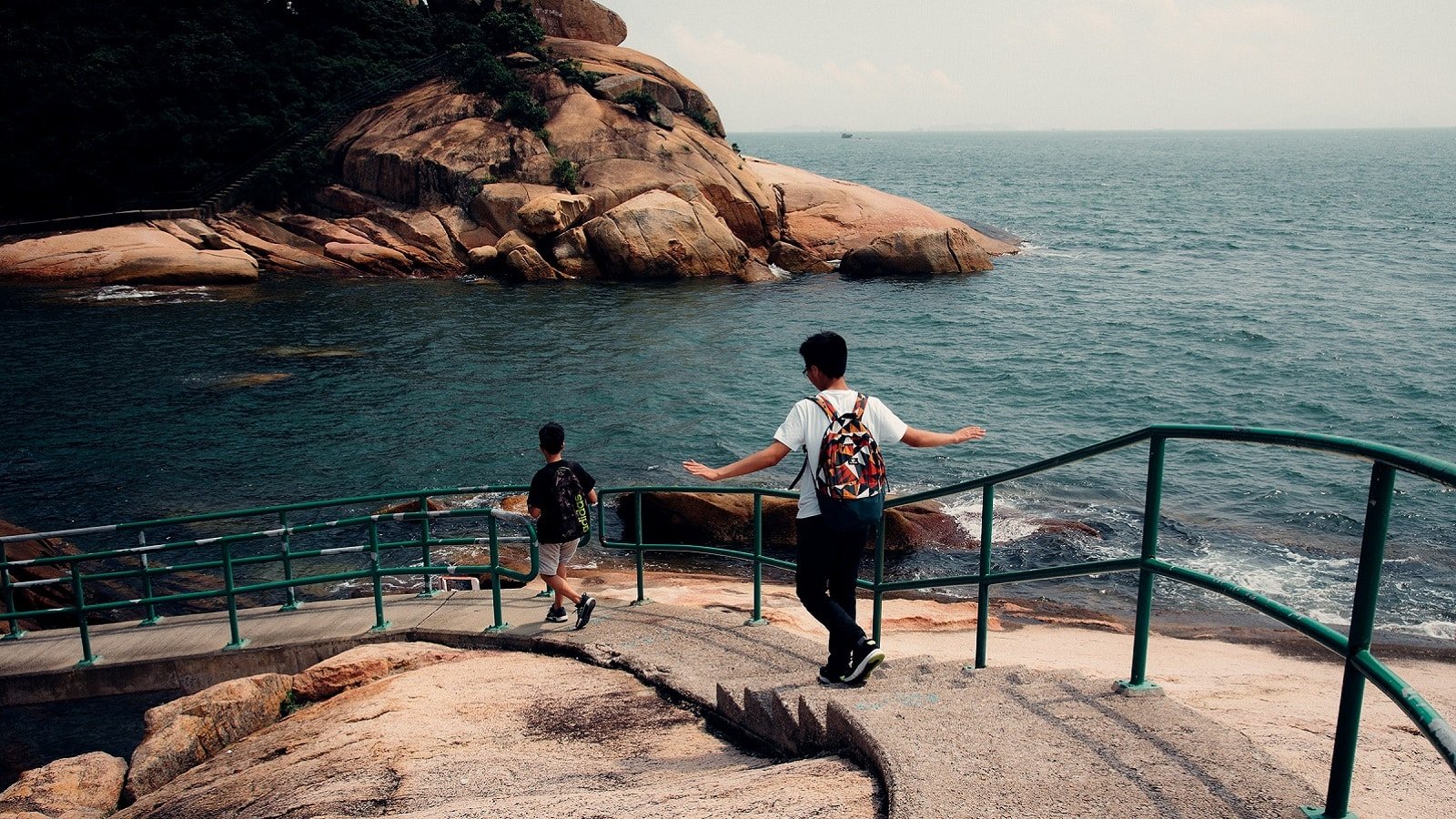
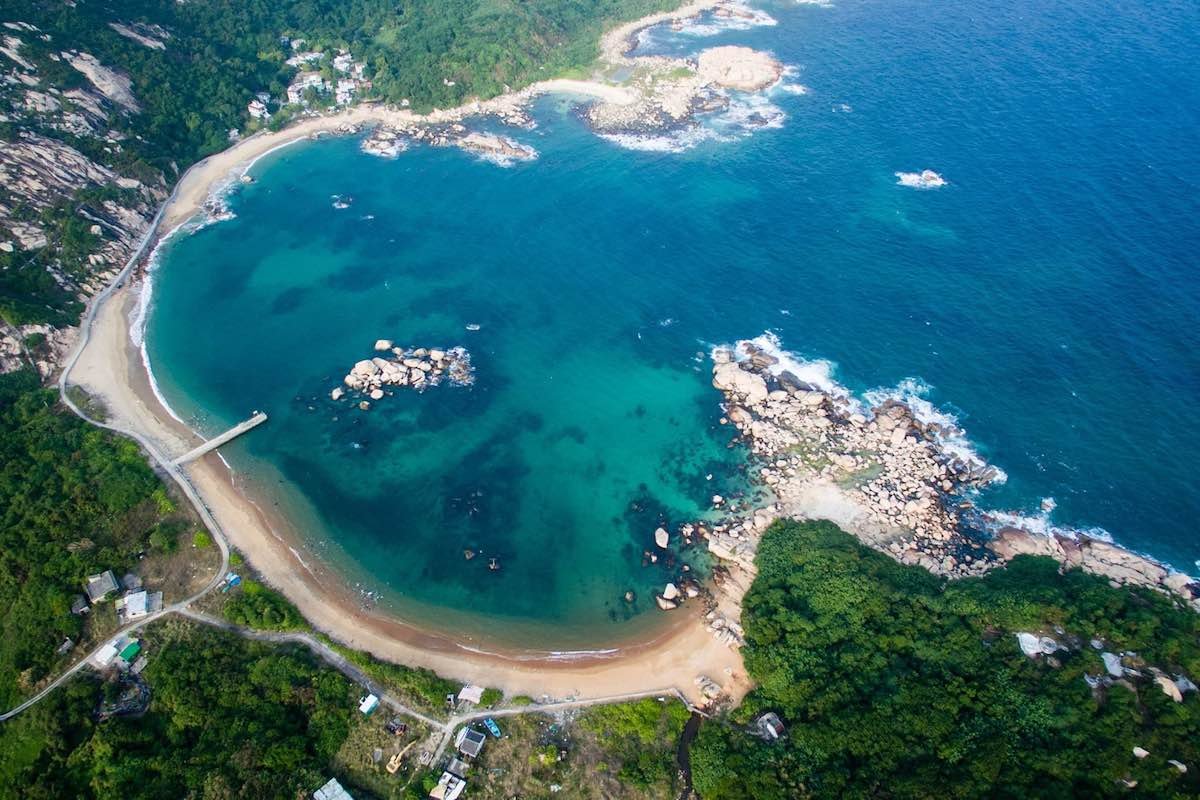
One of Hong Kong's great underused assets for visitors is the ferry network connecting the city to its 263 outlying islands, many of which have no cars and a character completely removed from the urban intensity of the main city.
Lantau Island is the largest, covering an area larger than Hong Kong Island, and is home to the Ngong Ping 360 Cable Car and the Tian Tan Buddha. The cable car departs from Tung Chung (accessible by MTR from Hong Kong Station) and covers 5.7 km in 25 minutes over Lantau's mountainous terrain and the North Lantau Country Park, arriving at Ngong Ping village at 500 metres elevation.
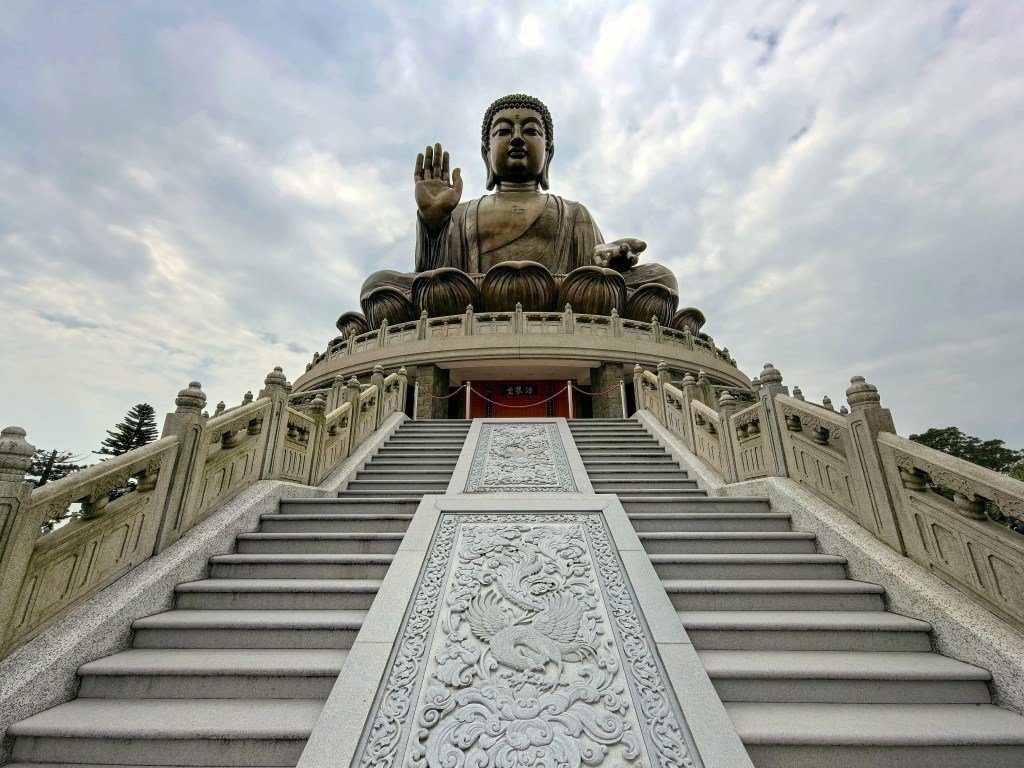
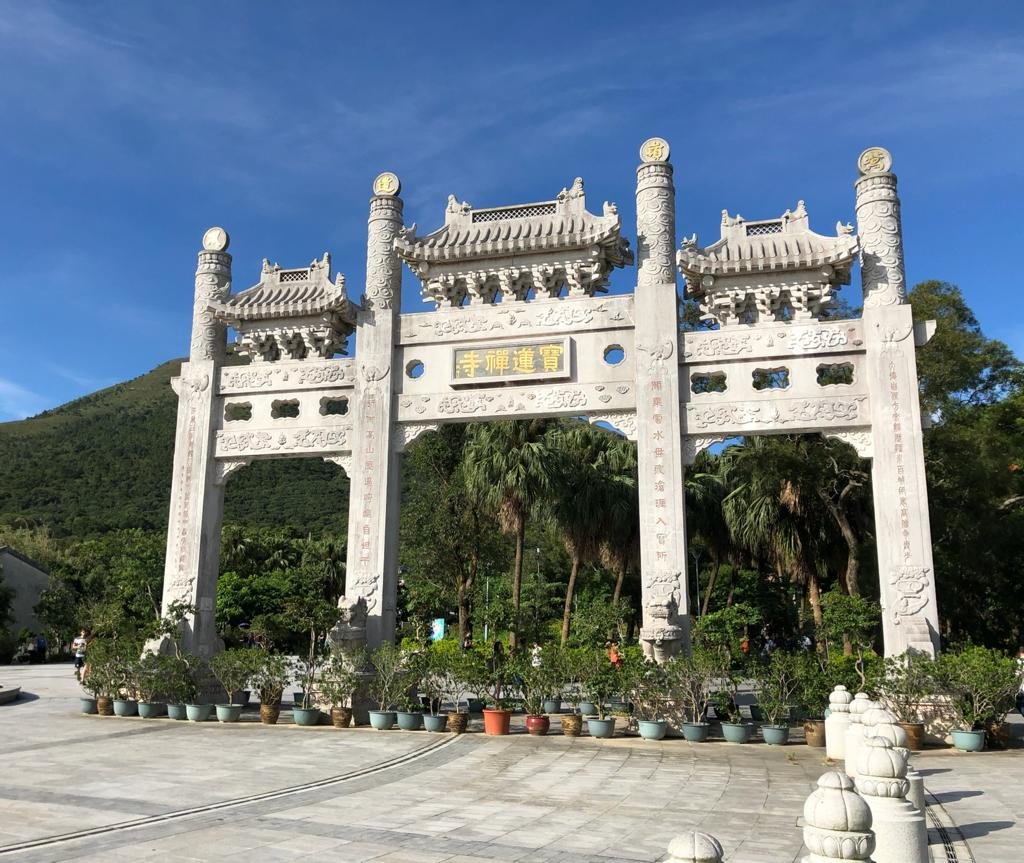
The Tian Tan Buddha (Big Buddha) statue at the summit is the world's tallest seated outdoor bronze Buddha at 34 metres, approached by a staircase of 268 steps, with views across the surrounding mountains and coastline that are extraordinary on clear days. The Po Lin Monastery at the base of the Buddha is an active Buddhist temple offering vegetarian meals to visitors. A full day is recommended for the Lantau experience.
Cheung Chau is a dumbbell-shaped island 10 km from Central, accessible by ferry in about 30 minutes, with no private cars on the entire island. The fishing village atmosphere, the seafood restaurants along the waterfront, the narrow lanes, and the Pak Tai Temple are the main draws. The Cheung Chau Bun Festival (held in May) is one of the most distinctive traditional festivals in Hong Kong.
Lamma Island has two villages connected by a 3 km walking path and is the most pleasant afternoon escape from the city, with seafood restaurants in Sok Kwu Wan, the family beach at Hung Shing Ye, and a pace of life that feels genuinely removed from the mainland.

Macau: A Day Trip Worth Taking
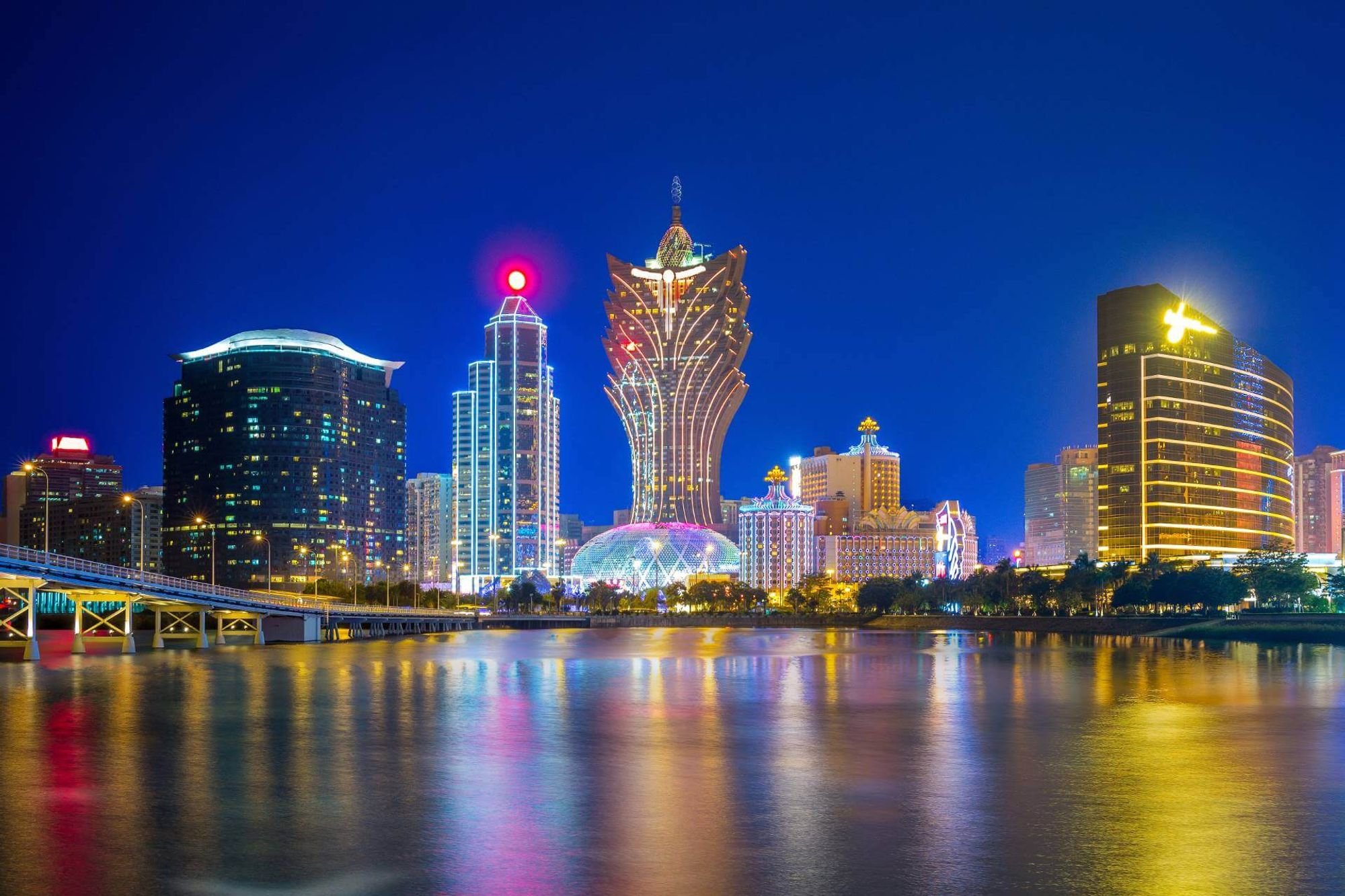
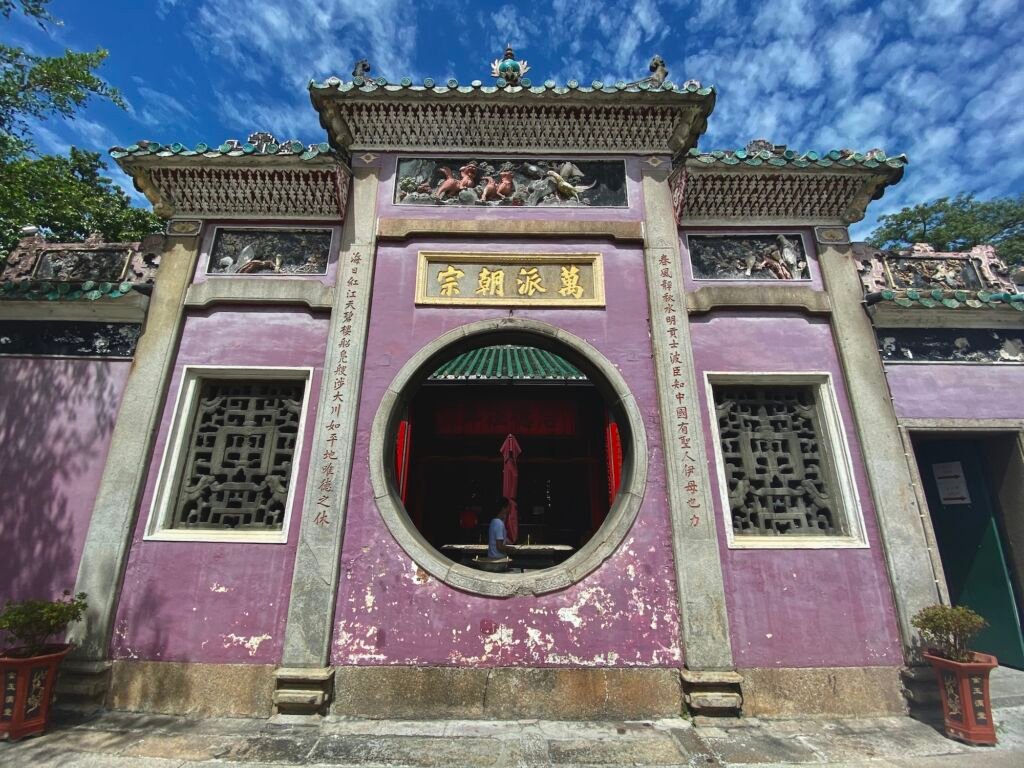
If the cable car to the Big Buddha represents one kind of adventure from Hong Kong, Macau represents another. The former Portuguese territory, now another Special Administrative Region of China, sits 64 km west of Hong Kong across the Pearl River Delta and is accessible by high-speed ferry in about an hour.
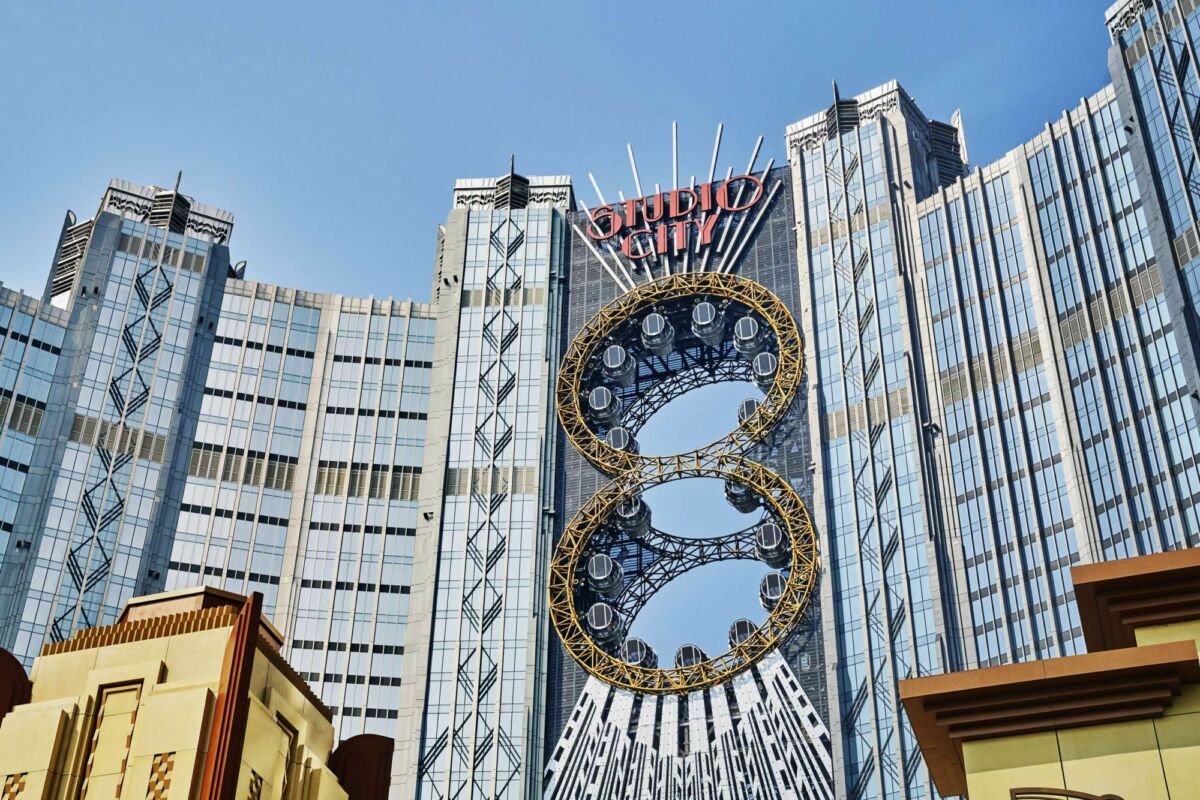
Macau is the gambling capital of the world by revenue, significantly outpacing Las Vegas, and the Cotai Strip's casino resorts are one of the defining experiences of the territory. The most visually spectacular of the Cotai properties is Studio City Macau, a Hollywood-themed integrated resort anchored by the Golden Reel, the world's first figure-eight-shaped Ferris wheel, rising 130 metres above the Cotai Strip and visible from across the area. Gondola cabins travel the full figure-eight circuit, giving views over the Strip, the surrounding reclaimed land, and the skyline of the broader Pearl River Delta. The Studio City complex also houses a Warner Bros. fun zone, a Batman Dark Flight 4D experience, an aquarium, a water park, and a full casino.
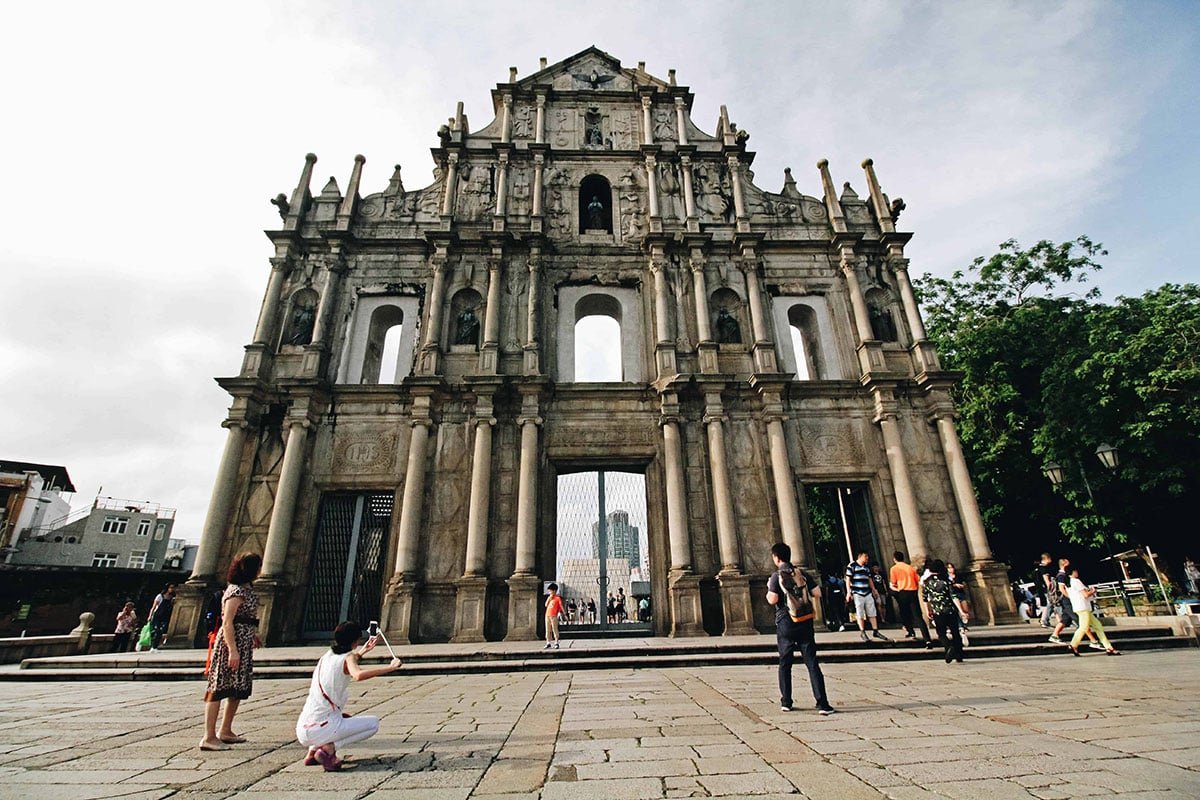
But the Historic Centre of Macau (UNESCO World Heritage Site) is the other Macau: Portuguese colonial architecture, baroque churches, and a fusion culture visible in the food (Portuguese egg tarts, African chicken, bacalhau) and the language. The Ruins of St. Paul's on the northern hillside is the most photographed sight in Macau: the baroque stone facade of a 17th-century cathedral, all that remains after a fire in 1835.
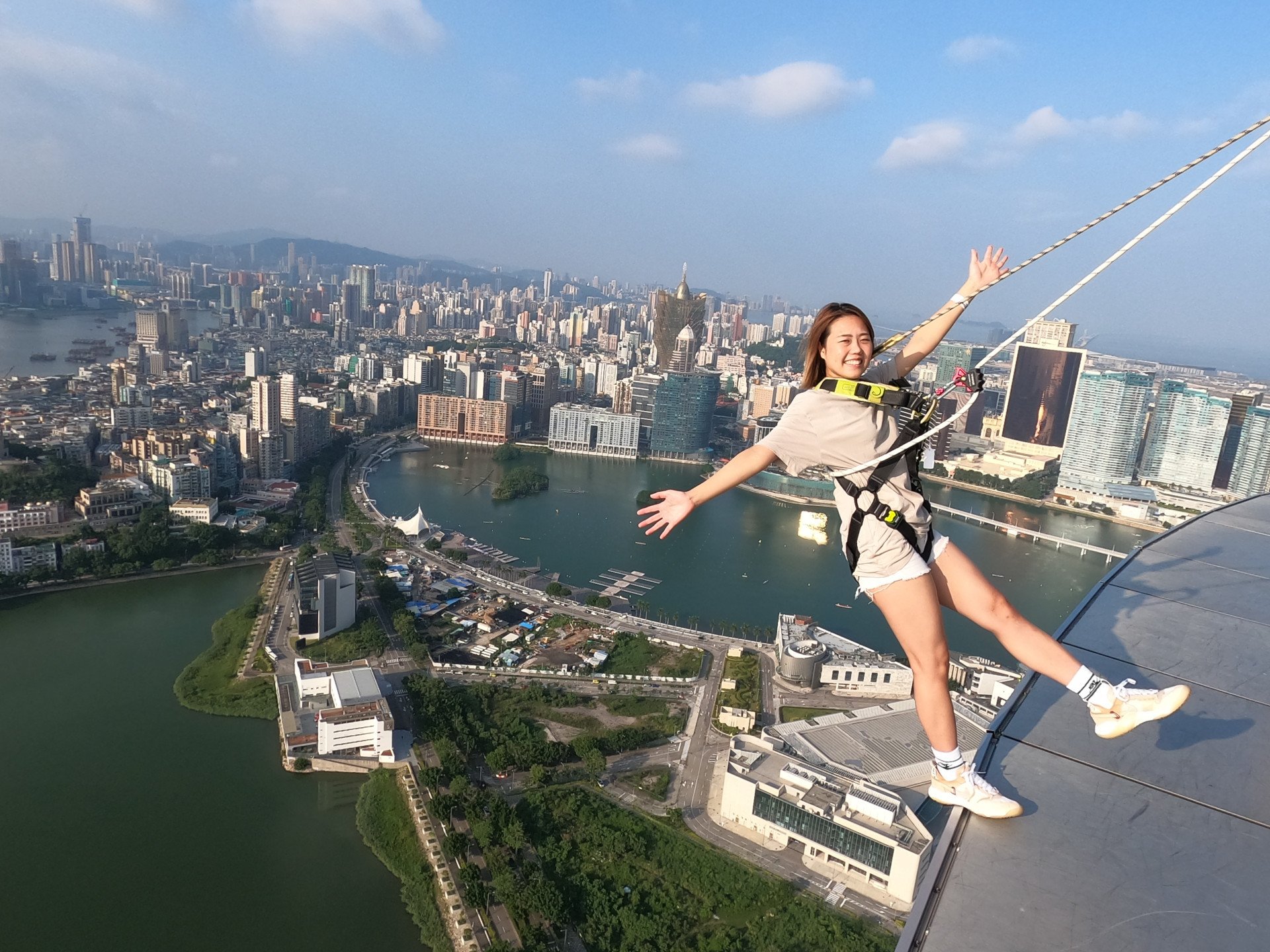
Skypark Macau by AJ Hackett on the Macau Tower is the signature thrill experience. It is a bungee jump or walk around the outer ledge of the tower at 233 metres, the highest commercial bungee jump in the world. The Macau Tower also has an observation deck and revolving restaurant accessible without the bungee experience.
The combination of the Macau day trip with the Skypark experience is one of the most memorable adventure activities available from Hong Kong.


Popular Things to Do in Hong Kong and Ticket Options
- Hong Kong Peak Tram and Sky Terrace 428 Tickets combine the iconic funicular railway from Central (Asia's oldest funicular, operating since 1888) with access to the 428-metre Sky Terrace observation deck at The Peak Tower. The combined ticket available through Thrillark gives better value than purchasing at the turnstile and is particularly recommended for evening visits when the city is fully lit.
- LEGOLAND Discovery Center Hong Kong in Elements Mall in Tsim Sha Tsui is the only LEGOLAND Discovery Center in Asia outside of Japan, making it a genuinely distinctive family attraction in the city. The centre covers MINILAND Hong Kong, a detailed LEGO recreation of the city's most iconic landmarks including the Peak, Victoria Harbour, and the Tsim Sha Tsui skyline, alongside a 4D cinema, a LEGO factory tour, two LEGO-themed rides, and extensive building zones where younger visitors can construct and race their own creations. The experience is designed specifically for families with children aged 3 to 10, with adult-only entry not permitted. All adult visitors must be accompanied by a child. It is a well-positioned rainy-day or all-weather option in one of Kowloon's most central malls.
- Hong Kong Disneyland Park Tickets give access to the Disney theme park on Lantau Island, covering seven themed lands: World of Frozen (the newest addition opened in 2023), Tomorrowland, Fantasyland, Adventureland, Toy Story Land, Marvel Studios area, and the original Main Street USA. Hong Kong Disneyland is the most compact of the Disney parks globally and well-suited to a single full-day visit. The park is directly accessible by MTR from Central.
- Ocean Park Hong Kong Ticket gives full-day access to the homegrown Hong Kong theme park that predates Disneyland here by decades. It is a marine and wildlife park built across two plateaus connected by a cable car, with giant pandas, jellyfish exhibits, roller coasters including the Hair Raiser and the Arctic Blast, an Aqua City waterfront zone, and the dramatic cliff-face installations on the Ocean Park mountainside that give views over the South China Sea. It is one of the most interesting theme parks in Asia for the combination of wildlife, rides, and coastal landscape.
- Madame Tussauds Hong Kong in The Peak Tower at the top of the Peak Tram journey houses wax figures across entertainment, music, sport, history, and Hong Kong cultural icons in interactive themed zones. It is conveniently combined with the Peak Tram and Sky Terrace 428 visit in a single Peak trip.
- Hong Kong Observation Wheel Tickets give access to the 60-metre Ferris wheel at the Central Harbourfront, with climate-controlled gondolas and direct harbour views over Kowloon and Victoria Harbour. A pleasant 15 to 20-minute rotation in one of the most scenic harbourfront positions in the city.
- Big Bus Hong Kong Open-Top Night Tour is an evening open-top double-decker bus tour covering the main Hong Kong Island and Kowloon landmarks after dark, consisting of the Tsim Sha Tsui promenade, the Symphony of Lights view, Central, Wan Chai, and the illuminated Peak. It is one of the best ways to understand the geography of Hong Kong while experiencing the city at its most atmospheric hour.
- Go City Hong Kong Explorer Pass lets you choose from a selection of Hong Kong's top attractions and experiences in a single booking, with a 30-day window to use all selected experiences. The pass covers options including Ocean Park, Madame Tussauds, the Observation Wheel, the Big Bus Night Tour, the Peak Tram, the Ngong Ping Cable Car, and more. For visitors planning to cover three or more paid attractions, the pass consistently saves compared to individual ticket purchases.
- The Ngong Ping 360 Cable Car Ticket covers the 5.7 km gondola journey from Tung Chung at sea level to Ngong Ping village at 500 metres on Lantau Island, with the Tian Tan Buddha and Po Lin Monastery accessible at the top. The standard and crystal cabin (glass-floor) options are both available. The crystal cabin looks straight down at the mountain terrain and North Lantau Country Park below. A full day on Lantau, combining the cable car, the Buddha, the monastery, and the Lantau Trail walking section, is the recommended approach.
- Skypark Macau by AJ Hackett is the highest commercial bungy jump in the world at 233 metres from the Macau Tower, available as a solo or tandem jump or a tower walk along the outer ledge at the same height. The experience includes equipment fitting, a safety briefing, and a souvenir package. It is accessible by ferry from Hong Kong's Macau Ferry Terminal (journey approximately 55 to 65 minutes each way).
- Noah's Ark Hong Kong on Ma Wan Island, accessible by bus from Tsing Yi MTR station, is a family cultural park built around a full-size replica of Noah's Ark on the waterfront. The Ark itself can be explored across multiple decks with exhibits covering natural history and biodiversity, while the outdoor Garden of Creation has life-size animal sculptures and walking paths with views across to the Tsing Ma Bridge. It is a quieter, more educational alternative to the big theme parks, well suited to a half-day with younger children.


Food in Hong Kong
Hong Kong is one of the great food cities of the world, and the range runs from street stalls that have been serving the same dish for fifty years to restaurants holding more Michelin stars per capita than almost anywhere else on Earth.
Dim sum is the non-negotiable first meal. The Cantonese tradition of dim sum (yum cha) involves ordering bamboo steamer baskets of dumplings, steamed buns, rice noodle rolls, and pastries over pots of Chinese tea, traditionally for breakfast or lunch. The old-school trolley-service establishments (where elderly women push carts of freshly made dishes between the tables) are increasingly rare but still found in places like Maxim's Palace City Hall and Lin Heung Tea House in Sheung Wan.
Wonton noodles at a street-level noodle shop are among the most satisfying things you can eat in Hong Kong. You get to enjoy shrimp or pork wontons in a clear shrimp-roe-tinged broth with thin egg noodles, served in a bowl that arrives in under two minutes and costs almost nothing. The Mak's Noodle branch in Wellington Street Central has been serving the definitive version since 1968.
Char siu (barbecued pork) and siu yuk (roast pork belly with crackling skin) hanging in the windows of Cantonese roast meat shops are another defining visual of Hong Kong and equally define its food. The dish consists of rice with roast meats, dark sweet sauce, and broth is the lunch that feeds more of the city on any given weekday than anything else.
Egg waffles (gai daan zai) are Hong Kong's most distinctive street snack. It is a waffle cooked in a grid of small, round cells, producing a crispy exterior and an eggy, almost custardy interior. They are available from street stalls throughout the city and best eaten immediately.
Milk tea is the Hong Kong version of the British influence expressed through Cantonese taste. It is an extremely strong black tea blended with evaporated milk (not fresh milk), served hot or cold. It is at a level of tea flavour that properly made Hong Kong milk tea achieves, making ordinary tea taste like water. The Lan Fong Yuen on Gage Street in Central is credited with inventing the "silk stocking" method of straining the tea through a cloth filter to produce the characteristic texture.
The Lan Kwai Fong area in Central and SOHO on the Midlevels Escalator strip have the most international restaurants and bars. Wan Chai has the most Cantonese neighbourhood restaurant culture.
Tsim Sha Tsui East has an excellent concentration of Korean, Japanese, and Southeast Asian options alongside Cantonese. For serious Hong Kong fine dining, the list of Michelin-starred restaurants is long. Lung King Heen in the Four Seasons was the world's first Chinese restaurant to receive three Michelin stars.
Best Time to Visit Hong Kong
Getting the timing right matters in Hong Kong, where the seasons produce genuinely different experiences.
Autumn (October to December) is the best time to visit. The temperatures drop to a comfortable 18 to 25°C, humidity falls to its annual low, skies are clear, and the city is at its most energetic as the summer heat dissipates. October is arguably the single best month that is warm enough for outdoor activities, cool enough for all-day walking, and the harbour visibility is at its annual best.
Spring (March to May) is pleasant but increasingly hazy, with temperatures from 18 to 28°C and occasional rain. The humidity begins building in April. Cherry blossoms appear in the New Territories parks in February and March.
Summer (June to September) is hot (30 to 35°C), extremely humid, and typhoon season. Hong Kong manages typhoons by number (Signal 1 to Signal 10), and a Typhoon Signal 8 or above means all businesses, transport, and public spaces close until the signal is lowered. Typhoons are unpredictable, so book a refundable accommodation and flexible flights if visiting in this window.
Winter (January to February) is the coolest season (12 to 18°C), occasionally cold enough for a jacket, and has the clearest air of the year. The Chinese New Year celebrations (usually late January to mid-February) are the most spectacular public event in Hong Kong's calendar, with lion dances, the Harbour Fireworks, and the Flower Market on the streets of Mong Kok.
Practical Tips Before You Go
- Get an Octopus card at the Airport Express arrival hall or any MTR station on arrival. Load it with at least HK$200 for the first day. It covers every form of public transport and many retail transactions.
- The Airport Express is the correct airport choice. The 24-minute journey to Central costs HK$100 one way. In-town check-in is available for select airlines at Hong Kong Station (Kowloon Station check-in remains suspended).
- Tipping: The 10% service charge added to restaurant bills is standard and covers the tip. Do not feel obligated to add more unless the service was exceptional.
- Stay in Kowloon for better value. Accommodation on the Kowloon side (TST, Jordan, Mong Kok) is significantly cheaper than the equivalent Hong Kong Island standard, and the MTR and Star Ferry make the island completely accessible.
- The Star Ferry is worth taking multiple times. At HK$4.00 to HK$6.50 per crossing it is still one of the world's great travel experiences and gives a different angle on the harbour at every hour of the day.
- Book Disneyland and Ocean Park tickets in advance through Thrillark, particularly for weekends and school holidays when park capacity fills, and queues are significantly longer.
- Book the Ngong Ping cable car for a weekday morning. Weekends and public holidays bring significant queues at Tung Chung station.
- Walking in Hong Kong is more complex than it looks. The steep topography of Hong Kong Island means walking distances between places that look close on a map can involve significant elevation change. Lifts (elevators), escalators, and the Midlevels Escalator are the legitimate tools for navigating the hillside.
- Do not drink tap water without checking your hotel's advice. Water quality is generally good, but the old building plumbing in some areas can affect it. Bottled water is cheap and widely available.
Hong Kong is one of those cities that gives you the feeling, repeatedly, that you have turned a corner and found something that could not exist anywhere else. The tram rattling through Causeway Bay at midnight, the Star Ferry cutting across the harbour at dawn, the Big Buddha appearing above the Lantau clouds, and the dim sum arriving at 7 am in bamboo steamers at a restaurant that has been doing this for sixty years. It is a city of genuinely extraordinary density of experience, and every day you give it rewards, you get more than the last.
Head to Thrillark to book your Peak Tram tickets, Ngong Ping cable car, Disneyland and Ocean Park passes, the Big Bus night tour, and the Skypark Macau bungy experience, and give one of the world's great harbour cities the visit it deserves.
Frequently Asked Questions About Hong Kong
Do you need a visa to visit Hong Kong?
Visitors from most Western countries, including the US, UK, EU nations, Canada, and Australia, can enter Hong Kong without a visa for stays of 30 to 180 days, depending on nationality; most Western passport holders receive 90 days on arrival. Indian nationals can enter visa-free for up to 14 days but must complete an online Pre-arrival Registration (PAR) before departure. Check the current requirements at immd.gov.hk before booking. Note that Hong Kong's visa and immigration system is separate from mainland China; visiting Hong Kong does not give you entry to China.
What is the Octopus card, and do you need one?
The Octopus card is Hong Kong's reloadable smart transit card, accepted on every MTR train, tram, Star Ferry, bus, and most minibuses in the city, as well as at convenience stores, fast food restaurants, and many shops. It is the single most useful thing you can acquire on arrival, available at any MTR station. The card eliminates the need to carry exact change for transit and speeds up every journey. Load it with at least HK$200 on arrival and top up at any MTR station or convenience store.
What is the best way to get from Hong Kong Airport to the city?
The Airport Express is by far the fastest and most comfortable option: 24 minutes to Hong Kong Station in Central, with in-town check-in available for select airlines (including Cathay Pacific and HK Express) at Hong Kong Station. Taxis to Central or TST take 45 to 60 minutes and cost significantly more. The Airport Express accepts Octopus cards; single-journey tickets are also available at the station.
What is the Ngong Ping 360 Cable Car, and is it worth taking?
The Ngong Ping 360 is a 5.7 km gondola cable car from Tung Chung (accessible by MTR) to Ngong Ping village on Lantau Island at 500 metres, taking 25 minutes over mountainous terrain and North Lantau Country Park. At the top, the Tian Tan Buddha (the world's tallest seated outdoor bronze Buddha at 34 metres) and Po Lin Monastery are the main attractions. The crystal cabin option has a glass floor looking straight down at the landscape below. Allow a full day for the Lantau experience, including the cable car, the Buddha, the monastery, and the surrounding trails.
What is the Skypark Macau bungy, and how do you get to Macau?
Skypark Macau by AJ Hackett is a bungy jump from 233 metres on the Macau Tower, the highest commercial bungy in the world. Ferries from the Macau Ferry Terminal in Sheung Wan on Hong Kong Island reach Macau in approximately 55 to 65 minutes; the journey is also available from the Airport ferry terminal at Tung Chung. The Macau Tower observation deck and revolving restaurant are accessible without the bungy experience for visitors who want the views without the jump.
What should you eat in Hong Kong?
The non-negotiables are dim sum (bamboo steamer baskets of dumplings and rice dishes over Chinese tea, best at a traditional trolley-service restaurant), wonton noodles (shrimp wontons in clear broth with thin egg noodles at any street-level noodle shop), char siu (barbecued pork from a Cantonese roast meat shop over rice), egg waffles from a street stall, and Hong Kong milk tea strained through a cloth filter at a traditional cha chaan teng (Hong Kong-style café).
What is the Symphony of Lights, and when does it happen?
The Symphony of Lights is a coordinated light and laser show performed across the buildings of Hong Kong Island's waterfront every evening at 8 pm, best viewed from the Tsim Sha Tsui promenade on the Kowloon side of the harbour. The show uses coloured lights, searchlights, and lasers on the facades of over 40 buildings and runs for approximately 10 minutes (8:00 pm to 8:10 pm nightly). It is free to watch from the promenade and is the most spectacular and most accessible free evening experience in Hong Kong.
Browse by themes