
Melbourne 3-Day Itinerary: A Practical Guide to Your First Visit
Melbourne rewards a slower pace than most first-time visitors expect. The city itself is best explored on foot, one laneway leading into the next, and its most famous day trip sits far enough outside the city that it needs a day of its own. This itinerary splits the visit into a CBD walking day, a museums and gallery day, and a full day trip to Phillip Island for the penguins, in that order, so you're never doubling back across the city or racing a sunset you didn't plan for.
- Laneways, museums, and a Phillip Island day trip
- City days walkable, with free trams
- Finish with the Penguin Parade at dusk
The plan at a glance
- Explore Melbourne's laneways and skyline. The city's famous street art lanes, Federation Square, and sunset from the Melbourne Skydeck.
- Explore Museums and galleries. A relaxed indoor day built around Melbourne Museum, SEA LIFE Aquarium, and NGV International.
- Visit Phillip Island. A full day trip south to see koalas, a heritage farm, and the famous penguins coming ashore at dusk.
New to Melbourne? Start with the city guide
This page is the day-by-day plan. If you're still deciding what Melbourne is actually like, which attractions are worth your time and what else the city has beyond these three days, our full Melbourne city guide covers everything from the CBD laneways to the day trips further out. It's the better place to start if your dates aren't locked in yet.
Read our complete Melbourne city guide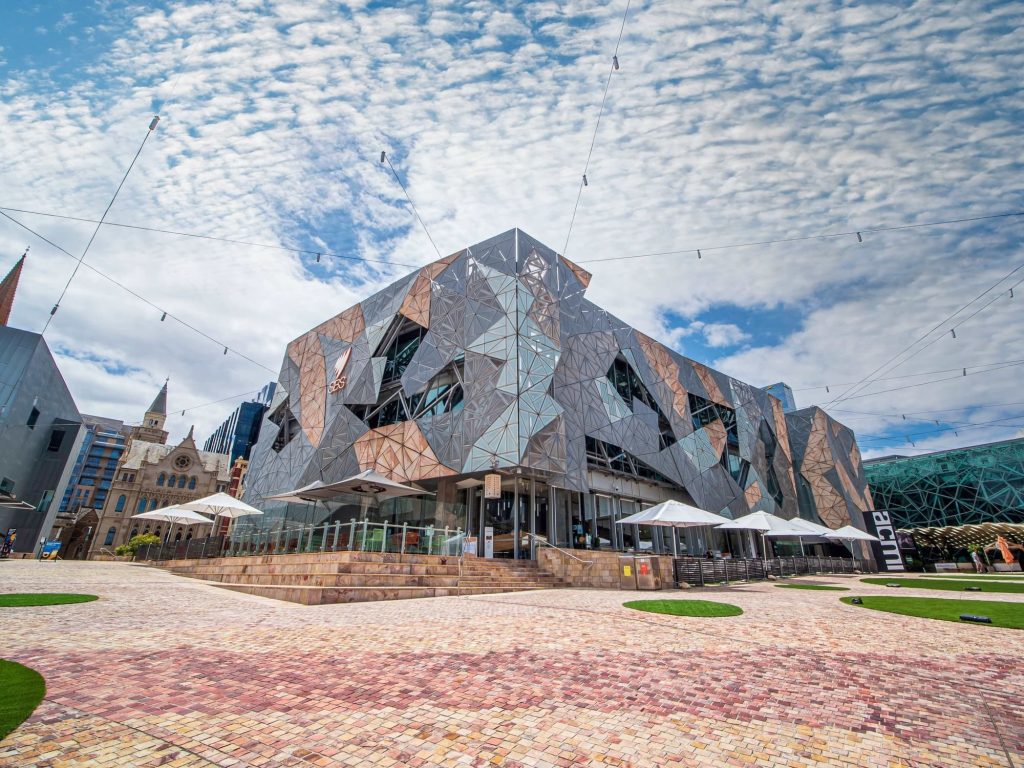
The laneways and street art
Melbourne's laneways are where the city's actual character lives, tucked behind the main streets in a maze most visitors need a guide, or at least a decent map, to properly appreciate.
- Hosier Lane is the best-known stretch of street art, with work that changes constantly, so no two visits look quite the same.
- Centre Place and Degraves Street are where the café culture concentrates, both worth a coffee stop rather than a walk-through.
- A guided city discovery tour is a good option if you'd rather have the history and the hidden spots pointed out than hunt for them yourself.
Go early on a weekday if you want the laneways at their quietest. Weekend mornings bring out a lot of foot traffic, especially around Degraves Street.

Federation Square and Flinders Street Station
This is the civic heart of the city, and the easiest orientation point for everything else nearby.
- Flinders Street Station's clocks are the classic Melbourne meeting point, and the building itself is worth a proper look rather than a walk-past.
- Federation Square hosts markets, exhibitions, and events depending on the day, so it's worth checking what's on before you arrive.
- The Yarra River runs right alongside, and the promenade makes for an easy lunch stop with a view.
If you want to add a museum to today rather than saving it for Day 2, the Melbourne Immigration Museum sits a short walk from here, inside the old Customs House.
Melbourne Skydeck at sunset
Melbourne's tallest observation deck sits on the 88th floor, reached by one of the fastest lifts in the Southern Hemisphere.
- On a clear evening, the view stretches out to Port Phillip Bay and the Dandenong Ranges. This is a genuinely different way to understand how the city sits on the map.
- The Edge is the deck's signature add-on, a glass-floored platform that slides out from the building. It is not for anyone who'd rather keep both feet on something solid.
- Arriving before sunset gets you the daylight skyline first, then the city lighting up beneath you as the evening sets in.
Combine this ticket with an aquarium or museum visit elsewhere in the trip. Thrillark bundles Skydeck with several other Melbourne attractions, and it's worth checking before buying it as a standalone.

Melbourne Museum
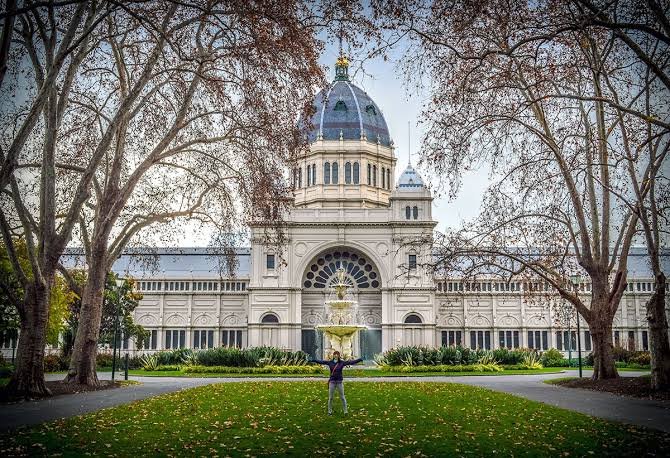
It is one of the largest museums in the Southern Hemisphere, covering everything from Victorian natural history to Aboriginal culture and a genuine taxidermied racehorse that's something of a local legend.
- The Forest Gallery, a living indoor ecosystem built into the museum itself, is worth slowing down for rather than walking straight through.
- The Bunjilaka Aboriginal Cultural Centre gives real depth to the museum's coverage of First Nations history, and it's one of the better cultural exhibits in the city.
- It sits right beside the Royal Exhibition Building and the Carlton Gardens, worth a short walk afterwards if the weather's decent.
Grab lunch somewhere around Carlton Gardens before heading to SEA LIFE next. The walk between the two takes you past some of the city's better café strips, so there's no need to eat on the run.


SEA LIFE Melbourne Aquarium
Set on the Yarra River in the CBD, this aquarium covers everything from Antarctic penguins to a shark tunnel you walk directly beneath.
- Feeding sessions for the penguins, sharks, and rays run through the day. It is worth timing your visit around rather than hoping to catch one by chance.
- General admission includes a digital photo pass, so there's no need to bring your own camera gear through the darker exhibits.
- Being fully indoor makes this the natural fallback if Melbourne's weather, famously changeable, turns partway through the day.
Check the daily feeding schedule at the entrance and plan your route through the exhibits around it, rather than working through in order and missing the timed sessions.


NGV International
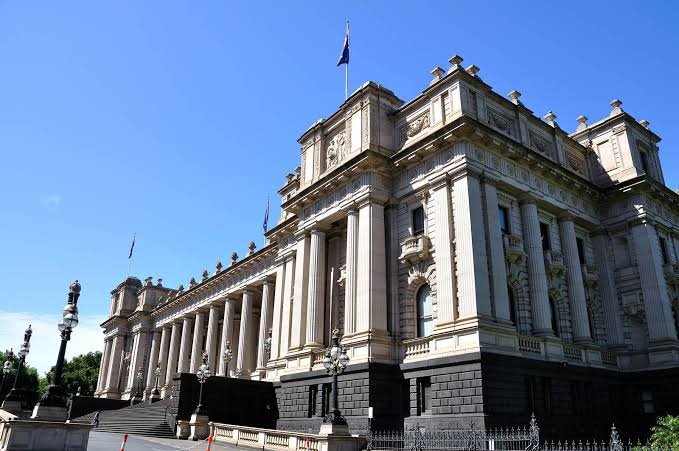
This is Australia's oldest and most visited public art gallery, which is a short walk across Princes Bridge from Federation Square and Flinders Street, on St Kilda Road, and one of the few major Melbourne attractions with free general admission.
- The building itself is worth seeing regardless of what's on, with its famous stained-glass ceiling in the Great Hall a genuine architectural moment.
- The permanent collection spans European masters through to contemporary and Australian Indigenous art, easily enough to fill an afternoon on its own.
- Ticketed touring exhibitions run alongside the free galleries, so check what's currently showing if there's something specific you want to catch.
Look up at the stained-glass ceiling in the Great Hall rather than just walking beneath it. It's easy to miss if you're focused on the artwork on the walls.
Evening in the CBD or Southbank
Wind the day down with dinner somewhere along the Southbank promenade or back in the CBD, depending on how the day's shaped up.
- Southbank has a long stretch of riverside restaurants within easy walking distance of NGV International.
- Families travelling with younger kids might prefer to swap the evening for an hour at LEGOLAND Discovery Centre at Chadstone instead, which pairs naturally with SEA LIFE earlier in the day.
If LEGOLAND is on your list, treat it purely as a Day 2 add-on rather than pairing it with Kryal Castle. The two sit on opposite sides of Melbourne, more than 100 kilometres apart, and Thrillark's combo ticket is meant for use across separate visits, not a single day trip.

Getting there
Phillip Island sits about 140 kilometres south-east of Melbourne, reached by car via the Monash Freeway and South Gippsland Highway, or by a full-day guided tour that handles the driving for you.
- In light traffic, the drive takes around 90 minutes each way, but budget closer to two to two and a half hours if you're travelling during peak periods or on a weekend, when the road out of Melbourne gets genuinely busy.
- A guided day tour is the easier option if you'd rather not drive, generally departing Melbourne late morning and returning well after dark, often not until 9 or 10 pm, once the penguins have finished for the night.
- This is a genuine full-day commitment. Don't plan anything else for Day 3, since you won't be back in the city until quite late in the evening.
If you're self-driving, the return trip is the part that catches people out, roughly 140 kilometres of two-lane regional road, at night, after a long day. A guided tour removes this entirely, which is worth the trade-off for a lot of travellers.
Churchill Island
A small island connected to Phillip Island by a footbridge and home to a working heritage farm dating back to 1872.
- The homestead and gardens give a genuine sense of 19th-century farming life in Victoria, with sheep shearing and farm animal demonstrations running on select days.
- It's a slower, quieter stop than the rest of the day, and is worth treating as a gentle start rather than rushing through.
Check ahead for the day's demonstration schedule if farm animal encounters are the reason you're visiting. Not every session runs every day.

Koala Conservation Reserve
A short drive from Churchill Island, this reserve puts you at eye level with wild koalas via a series of treetop boardwalks through their natural bushland habitat.
- The elevated boardwalks mean you're often looking at koalas from just a few metres away, genuinely closer than most zoo enclosures allow.
- Wallabies and a wide range of native birds are common sights along the ground-level trails as well.
- Koalas are most active, and easiest to spot properly awake, in the cooler parts of the day rather than in the middle of a warm afternoon.
Bring binoculars if you have them. Koalas spend most of the day asleep high in the canopy, and a closer look makes a real difference to what you actually see.

Penguin Parade at dusk
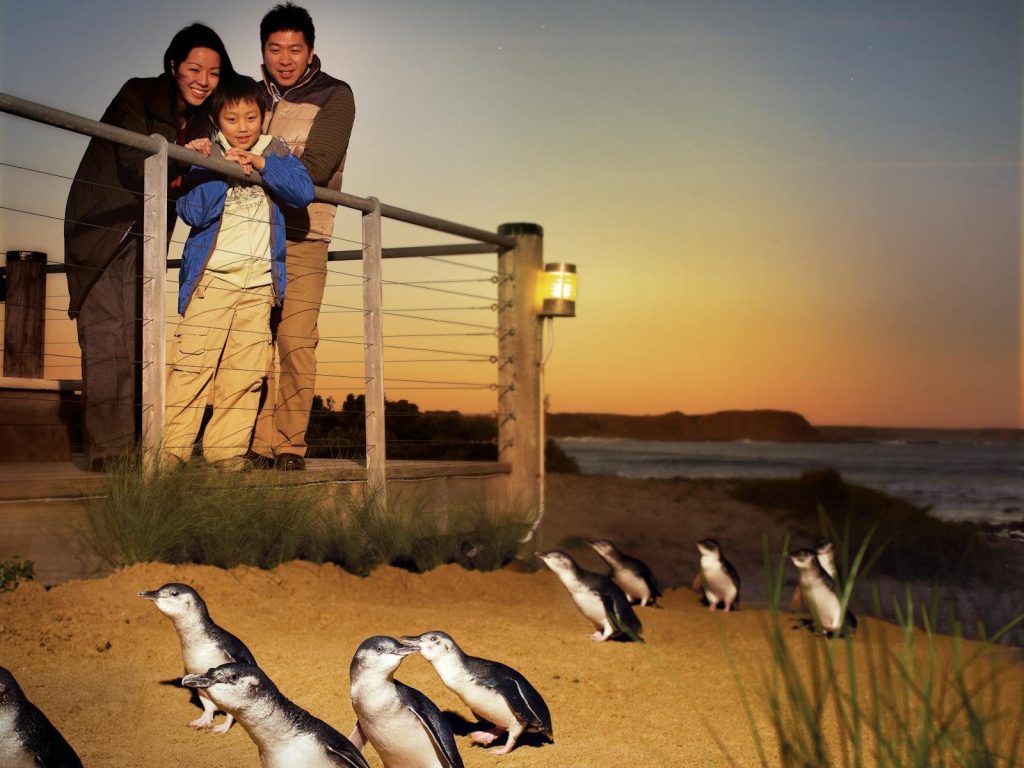
This is the reason most people make this trip in the first place. Each evening, as the sun goes down, hundreds of little penguins, the smallest penguin species in the world, come ashore at Summerland Beach and waddle up to their burrows.
- The exact viewing time shifts with sunset, running earlier in winter and later in summer, so check the day's scheduled time rather than assuming a fixed hour.
- Photography is not permitted during the parade itself. This rule is strictly enforced since flash and camera light genuinely disturb the penguins' eyes, so treat this as an experience to watch rather than document.
- Bring warm layers regardless of the season. The beach is exposed, and evenings here are considerably colder than Melbourne's CBD.
Book your Penguin Parade entry ahead rather than planning to buy on arrival. Viewing areas have capacity limits, and the general viewing platform sells out on weekends and through the warmer months.
Swap any day for one of these
The structure above, CBD laneways, museums and galleries, Phillip Island, suits most first-time visitors, but individual pieces are easy to swap.
Melbourne Museum + Immigration Museum
Melbourne Museum + Immigration Museum, both on Day 1 instead of Day 2, for travellers who'd rather front-load the culture and keep Day 2 lighter.
Scienceworks Museum
Scienceworks Museum in place of NGV International on Day 2, for families with younger kids who'd get more out of hands-on science exhibits than a fine art gallery.
Book Now →Grampians National Park Day Tour
Grampians National Park Day Tour in place of Phillip Island on Day 3, for a different full-day trip west of the city instead of south, built around dramatic sandstone ranges and waterfalls rather than wildlife.
Book Now →Kryal Castle
Kryal Castle is its own separate day trip toward Ballarat for families who'd rather spend a day at a medieval-themed attraction park than in the CBD. Keep this as a standalone day rather than pairing it with LEGOLAND, since the two sit on opposite sides of Melbourne and combining them into one day means several hours of highway driving.
Moonlit Sanctuary
Moonlit Sanctuary, a smaller wildlife park closer to the city, is an alternative to the full Phillip Island day if you'd rather see native Australian animals without the two-hour drive each way.
Book Now →Getting Around
Melbourne's CBD is genuinely walkable, and the city's free tram zone covers most of Day 1 and Day 2 without needing to pay for a single fare.
| Route | Without a car | By car |
|---|---|---|
| Melbourne Airport to the CBD | SkyBus direct to Southern Cross Station, 20 to 30 minutes off-peak, 35 to 50 minutes or more in weekday peak traffic | 25 to 35 minutes off-peak, longer in peak traffic |
| Within the CBD (Day 1 and Day 2) | Free City Circle Tram or walking, 5 to 15 minutes between stops | Not worth driving |
| CBD to Southbank / St Kilda Road | Tram, or a 15- to 20-minute walk | 5 to 10 minutes |
| Melbourne CBD to Phillip Island | Guided day tour, returning around 9 to 10 pm | 90 minutes in light traffic, 2 to 2.5 hours on weekends or in peak periods |
The Best Time to Visit Melbourne
Melbourne’s weather is changeable in every season, so the month you pick matters less for the two city days than it does for Phillip Island. Sunset decides when the Penguin Parade starts, which means the time of year sets how late Day 3 runs and how cold the beach gets while you wait.
March to May
Mild, often the most comfortable stretch of the year, with the autumn colour in the CBD's parks and gardens an added bonus. Good conditions for the laneway walking day and for Phillip Island.
June to August
Melbourne's winter, cool and often grey, with shorter days meaning the Penguin Parade starts noticeably earlier in the evening. A good season for the museum-heavy Day 2, less ideal for a full day outdoors on Phillip Island unless you're prepared for the cold.
September to November
Spring is generally mild with occasional bursts of Melbourne's famously unpredictable weather. A safe bet across all three days of this itinerary.
December to February
Summer, warm, and the longest days of the year, meaning the Penguin Parade runs quite late into the evening. This is also peak tourist season, so book Phillip Island tours and Skydeck sunset slots further ahead.
Melbourne's weather can shift within a single afternoon regardless of season. Layers are worth packing on any of these three days, not just the cooler months.
Where to Stay
The CBD is the natural base for this itinerary, keeping Day 1 and Day 2 entirely within walking distance and putting you close to wherever your Phillip Island transport departs from.
Melbourne CBD
Melbourne CBD is closest to the laneways, Federation Square and the free tram loop, with easy access to Southern Cross Station for the SkyBus and most Phillip Island tour departure points.
Southbank
Southbank, across the river from the CBD, is walkable to Flinders Street Station and NGV International, and slightly quieter than staying right in the city centre.
Docklands
Docklands, a short tram ride from the CBD, is worth considering if you'd rather stay closer to the water and don't mind a short commute back into the city grid.
Melbourne 3-Day Itinerary FAQs
Is 3 days enough to see Melbourne?
Yes, for the core experiences. Three days comfortably covers the CBD laneways, a museums and galleries day, and a full day trip to Phillip Island, which is what most first-time visitors are after. It won't stretch to the Great Ocean Road or the Yarra Valley as well, so those are better suited to a longer trip.
Is Phillip Island worth a full day?
Yes, and trying to shorten it isn't a good trade. With meaningful travel time built into the round trip, often three hours or more once traffic is accounted for, a genuine full day is what it takes to properly see Churchill Island, the Koala Conservation Reserve, and the Penguin Parade without rushing any of them.
What time does the Penguin Parade start?
It's timed to sunset, so it shifts through the year, starting as early as 5 pm in winter and running past 8:30 pm in summer. Check the specific date's scheduled time when you book rather than assuming a fixed hour.
Can I do Phillip Island without a car?
Yes. A guided day tour from Melbourne handles the driving both ways and is the easier option for most visitors, particularly for the return trip after dark once the Penguin Parade finishes, often not landing you back in Melbourne until 9 or 10 pm. Self-driving is possible but adds a genuinely long drive home late at night, along a stretch of regional road that's best avoided when tired.
Is Melbourne walkable, or do I need to rely on transport every day?
Day 1 and Day 2 are almost entirely walkable, helped by the free City Circle Tram loop that covers the CBD without needing a transit card. Day 3 relies on either a car or a booked tour, since Phillip Island sits well outside the city.
Can I combine LEGOLAND Discovery Centre with Kryal Castle in one day?
Not comfortably. LEGOLAND sits at Chadstone, on Melbourne's east side, while Kryal Castle is near Ballarat, more than 100 kilometres to the west. Despite being sold as a combo ticket, the two are best treated as separate outings on different days rather than a single day trip, since visiting both would mean several hours of highway driving.
What's the best combination for families with young kids?
Swap NGV International on Day 2 for the Scienceworks Museum, which leans more hands-on and science-based, and consider adding LEGOLAND Discovery Centre in place of the evening in Southbank. The Koala Conservation Reserve on Day 3 is a genuine highlight for kids, since the boardwalks put them at eye level with the koalas.
What is the best month to visit Melbourne?
March to May and September to November are the strongest windows, balancing comfortable weather with reasonable crowds. December to February brings the longest days, useful for a later Penguin Parade, but also the busiest tourist season, so book ahead further if travelling then.
Ready to book your three days?
Compare live prices on every attraction in this itinerary, with instant confirmation on your booking.