Most people call it Saigon. The official name is Ho Chi Minh City, formally adopted by the National Assembly on July 2, 1976, following reunification, and both names coexist in daily use in a way that says everything about this city: a place that holds multiple histories at once and does not feel the need to resolve them.
French colonial boulevards. Communist government buildings. Buddhist pagodas beside luxury boutiques. War museums beside rooftop cocktail bars. A river that once carried cargo ships and now carries dinner cruises. Saigon is all of this simultaneously, and it runs at a pace and with an energy that is entirely its own.
Vietnam’s largest city and its economic engine, HCMC, has a population of over 9 million people and a motorbike fleet that seems to include most of them.
The food is bolder and sweeter than in Hanoi. The pace is faster. The nights go later. The Cu Chi Tunnels, the Mekong Delta, and some of the most significant sites of the Vietnam War are all within a day trip’s reach. Give it three days minimum, five if you can manage it.
Ho Chi Minh City Essentials
Entry Requirements for Ho Chi Minh City
Most visitors need a visa. The most convenient option for most nationalities is the Vietnam e-Visa: single or multiple entry, valid for up to 90 days, applied for online at the official portal (evisa.xuatnhapcanh.gov.vn) before arrival, with three business-day processing.
Citizens of a growing number of countries qualify for visa exemption for stays ranging from 15 to 45 days.
Indian nationals require an e-Visa. Always verify your specific requirements at the official Vietnam immigration portal (immigration.gov.vn) before booking flights, as the exemption list is regularly updated.
Where Can You Stay in Saigon?
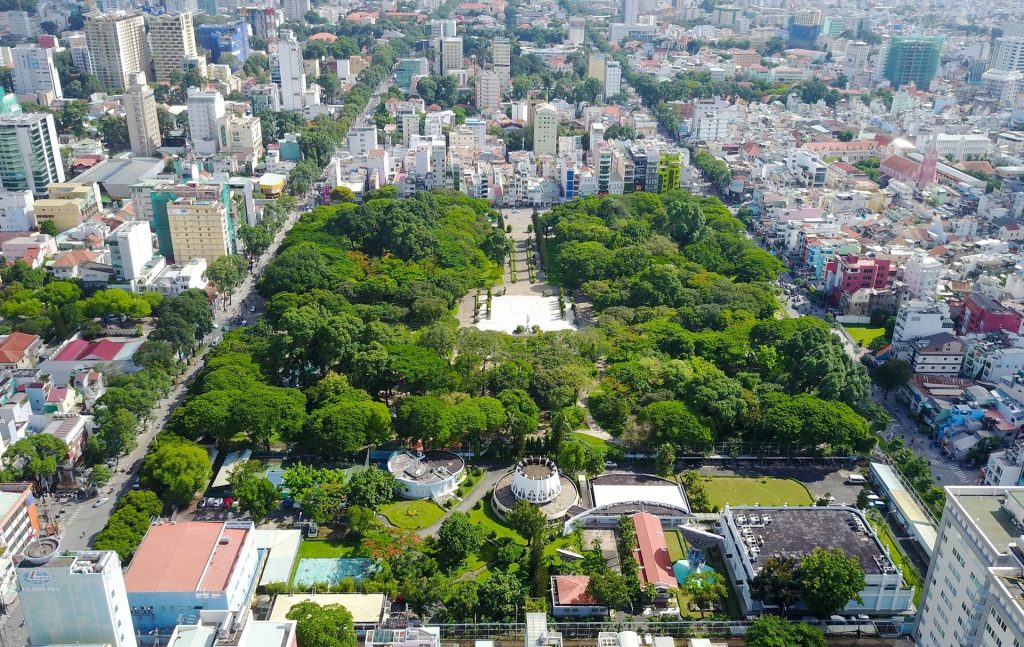
District 1 is where most visitors base themselves, and with good reason. It puts the War Remnants Museum, Reunification Palace, Ben Thanh Market, Notre Dame Cathedral, and the majority of hotels within a walkable radius.
The Park Hyatt Saigon on Lam Son Square is the flagship luxury option, while Hotel Majestic Saigon on Dong Khoi, operating since 1925, delivers river views and colonial character that newer hotels cannot replicate.
Bui Vien Street in the southern end of District 1 is the budget hub, with guesthouses and hostels around one of the noisiest, most social streets in Vietnam. It provides good value but is not recommended for light sleepers.
District 3 has a growing boutique hotel scene with a more residential feel and is still within easy Grab reach of the main sights.
Getting There and Getting Around
Tan Son Nhat Airport is 7 km from the center, with journeys into District 1 taking 20 to 40 minutes depending on traffic. Book a Grab car from inside the arrivals hall before exiting.
Getting around the city:
- Grab: This is the safest and most transparent option. Take GrabCar for comfort and GrabBike for speed. Make sure to download the app before landing.
- Metered taxis: These are reliable metered taxi companies. Before you take the ride, always confirm the meter.
- Metro Line 1: Opened December 2024, it connects Ben Thanh Market to Suoi Tien in the northeast across 19.7 km and 14 stations. It is clean, cheap, and air-conditioned.
- Walking: It is practical throughout District 1, which can be covered on foot in under 30 minutes end-to-end.
Traffic is dense and motorbike-dominated at almost all hours. Rush hour (7 to 9 am and 5 to 7 pm) can turn a 10-minute journey into 40. Use Grab wherever possible.
The Colonial Heart of the City
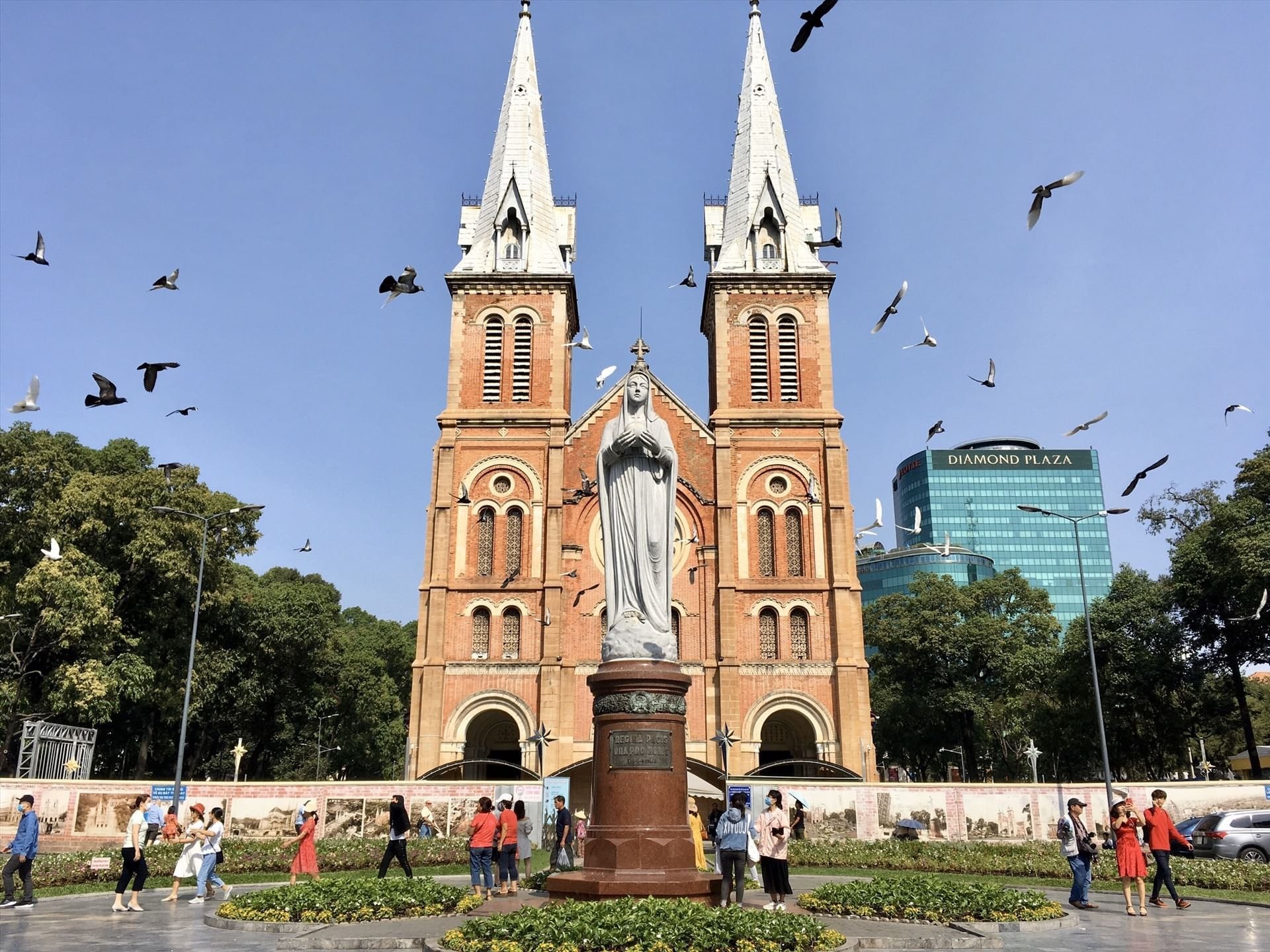
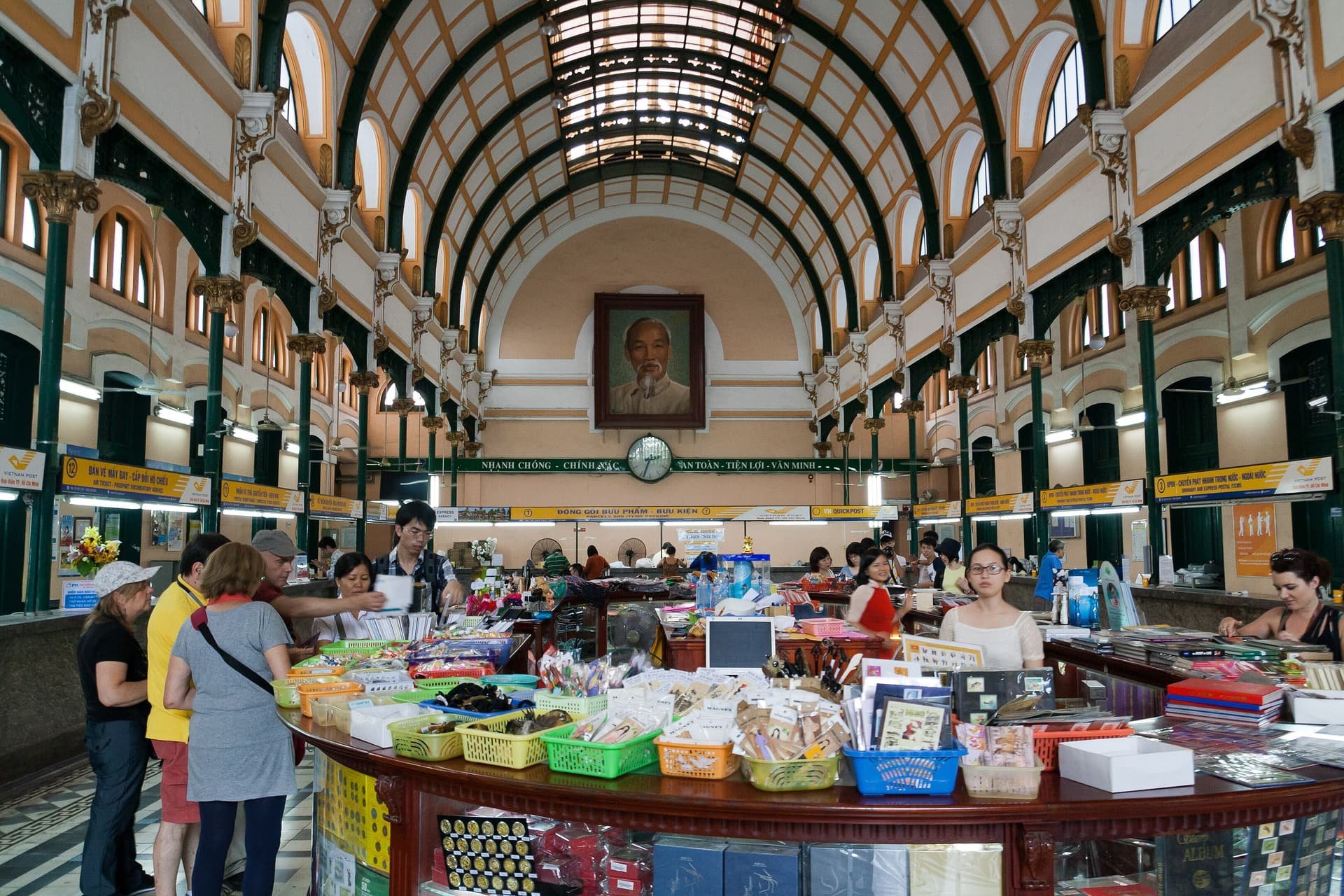
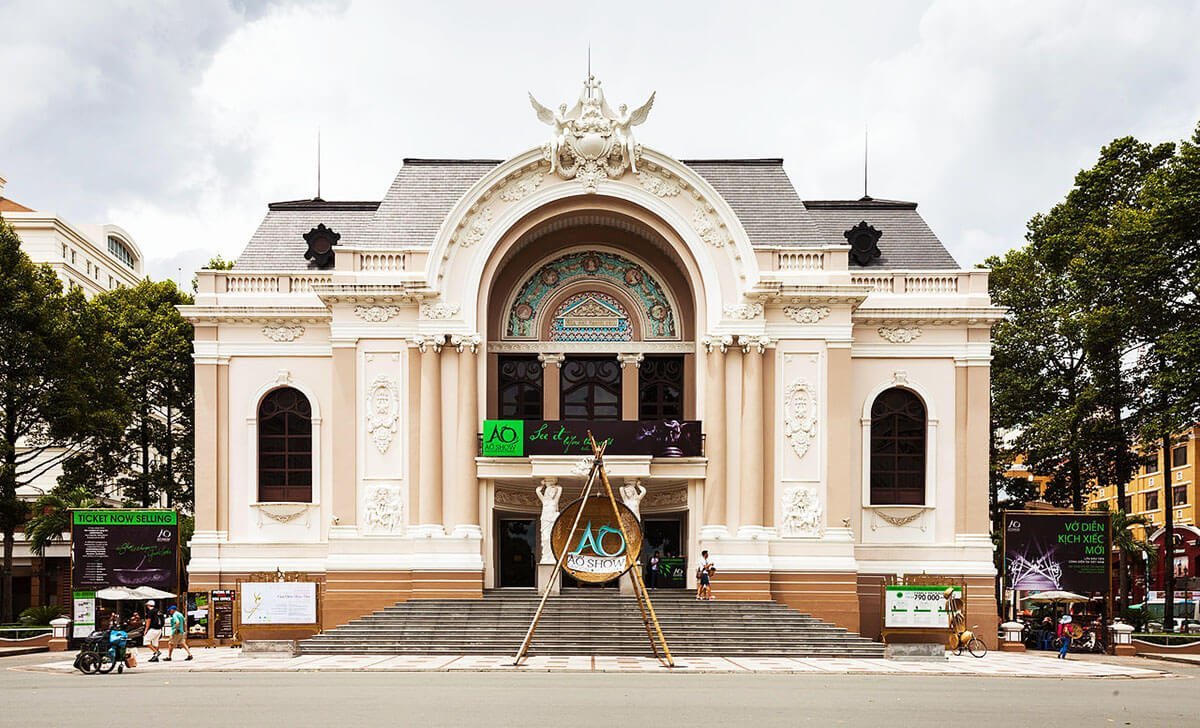
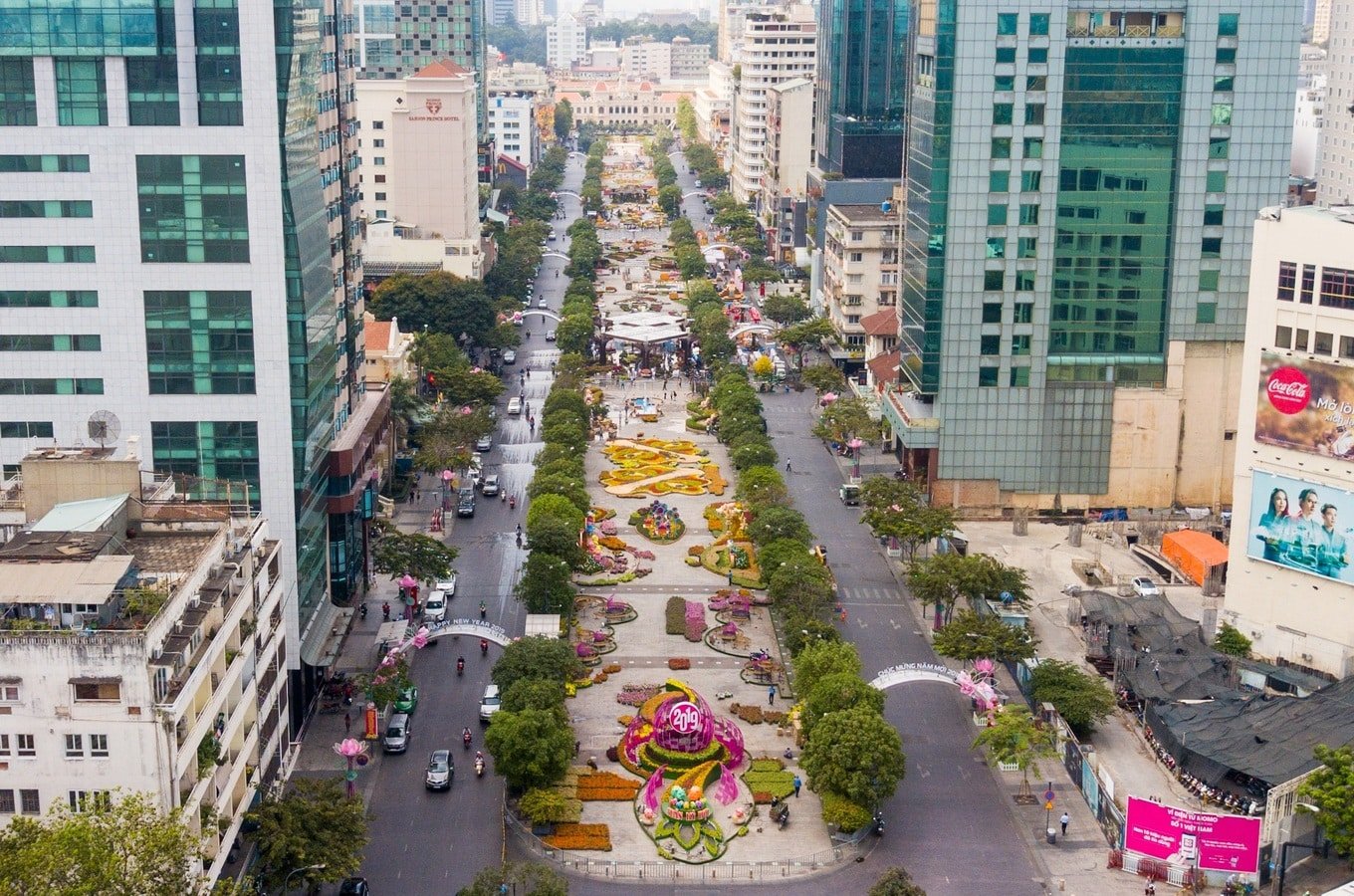
The French left behind some of the most striking architecture in Southeast Asia, concentrated in District 1 and best explored on foot in the early morning. Let’s take a look at some of those:
- Notre Dame Cathedral Basilica of Saigon on Paris Square is the most photographed building in the city with a red-brick neo-Romanesque cathedral completed in 1880 with twin bell towers rising 58 metres above the square. The cathedral has been undergoing significant restoration in recent years, so check the current access before visiting.
- The Central Post Office directly beside the cathedral was completed in 1891, designed by Alfred Foulhoux (a common misattribution to Gustave Eiffel has long circulated, but the building was Foulhoux's work). The iron-arched interior with its vintage maps and colonial details is one of the most beautiful interior spaces in the city and remains a working post office.
- The Saigon Opera House on Dong Khoi Street is a yellow neo-baroque building that opened on January 1, 1900, and hosts performances ranging from traditional Vietnamese theatre to contemporary music.
- Nguyen Hue Walking Street runs from the river waterfront to the People's Committee Building (whose illuminated facade makes for one of the city's best evening photographs), with cafes, street performers, and a musical fountain display after dark.
The War Remnants Museum
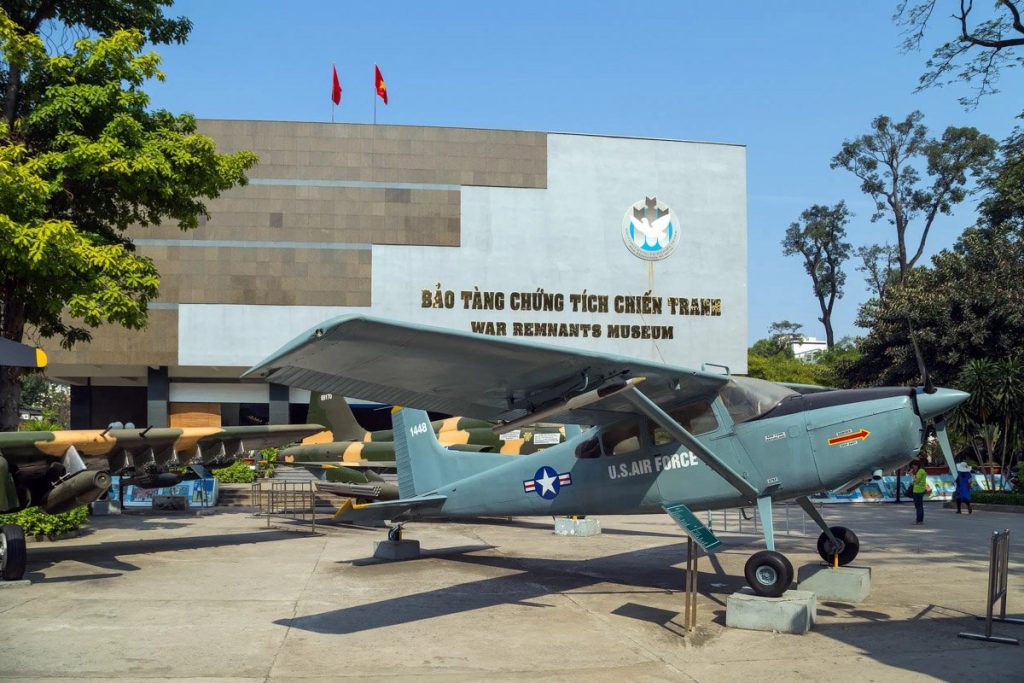
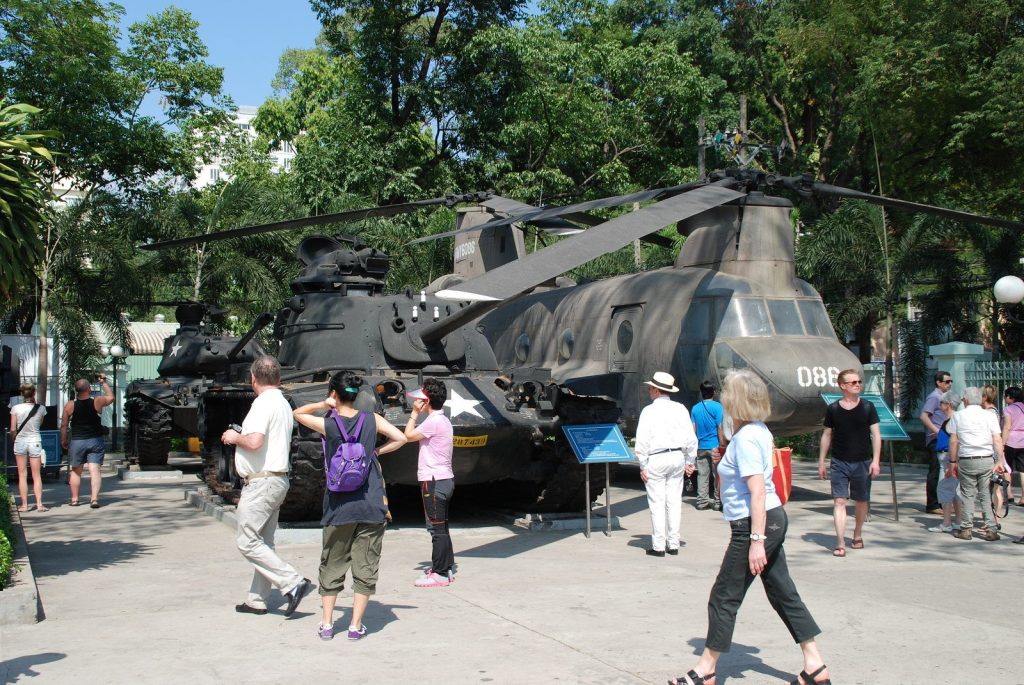
The War Remnants Museum on Vo Van Tan Street is the most visited and most emotionally affecting museum in Vietnam.
It documents the American-Vietnam War from the Vietnamese perspective, with sections covering Agent Orange, the prison system, international media coverage, and a courtyard of captured American military hardware.
The museum is not neutral and does not pretend to be. Approaching it with that awareness makes the experience more honest and more valuable. The photographs throughout are some of the most powerful war documentation in existence.
Try to give the place at least one and a half to two hours.
Reunification Palace
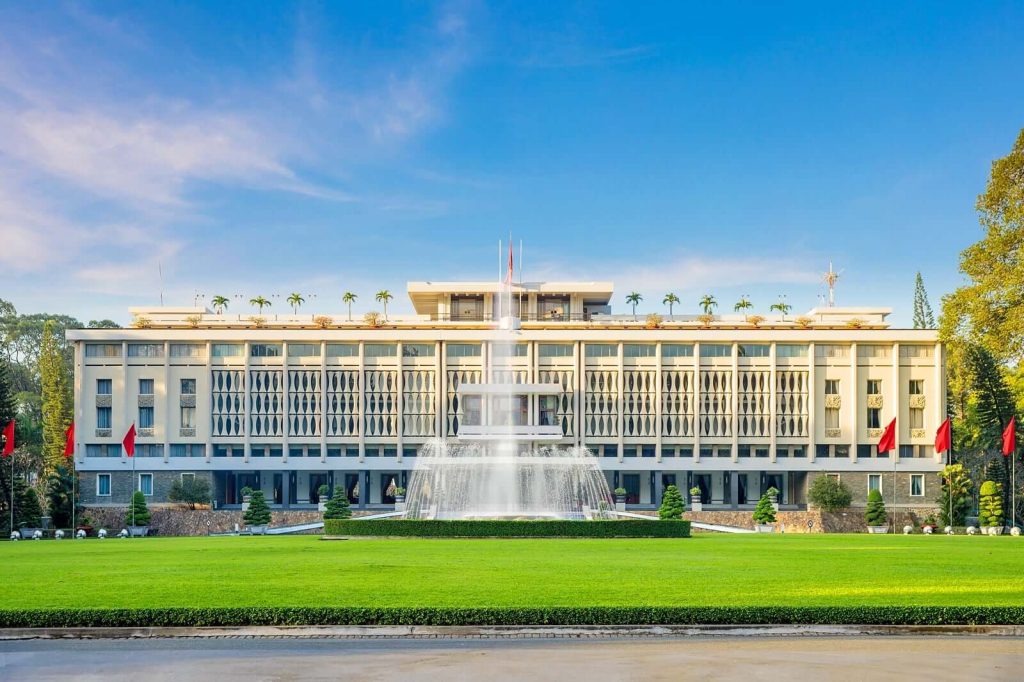
The Reunification Palace on Nam Ky Khoi Nghia Street is where the Vietnam War officially ended on April 30, 1975, when North Vietnamese tanks crashed through the gates.
Preserved largely as it appeared on that day, the building's government offices, reception rooms, and underground communications bunkers are all accessible.
The underground level, with its vintage war room maps and telecommunications equipment, is the most striking part. The building itself, designed by Ngo Viet Thu in the 1960s Vietnamese modernist style, is also architecturally beautiful.
Pagodas and Spiritual Life
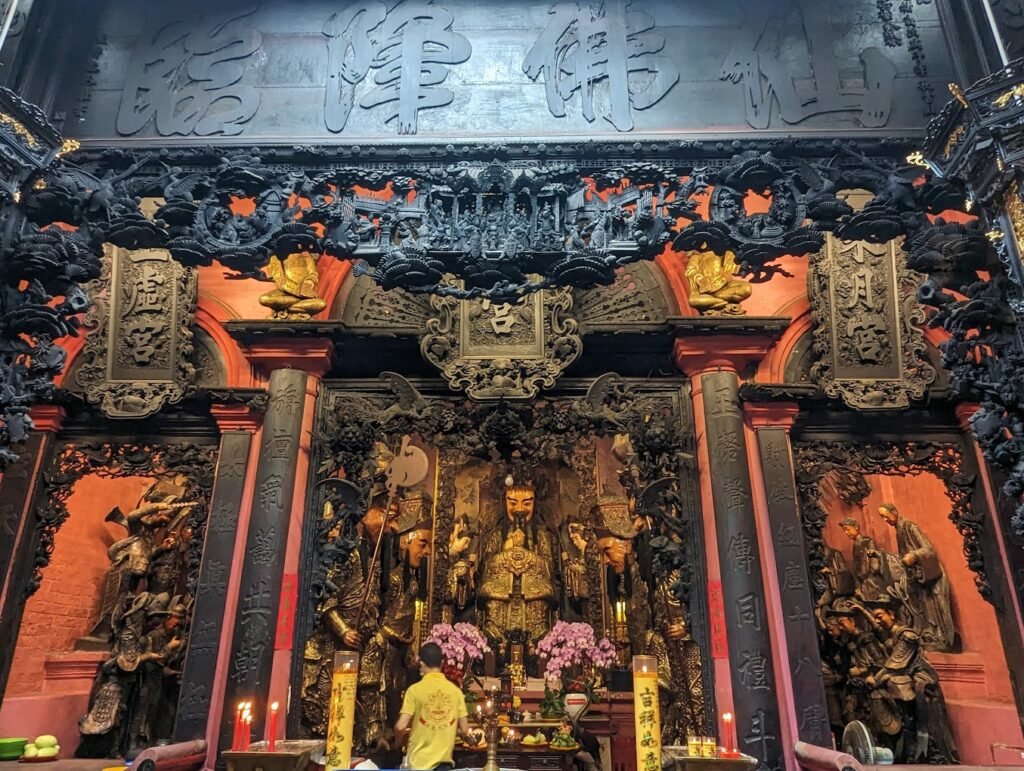
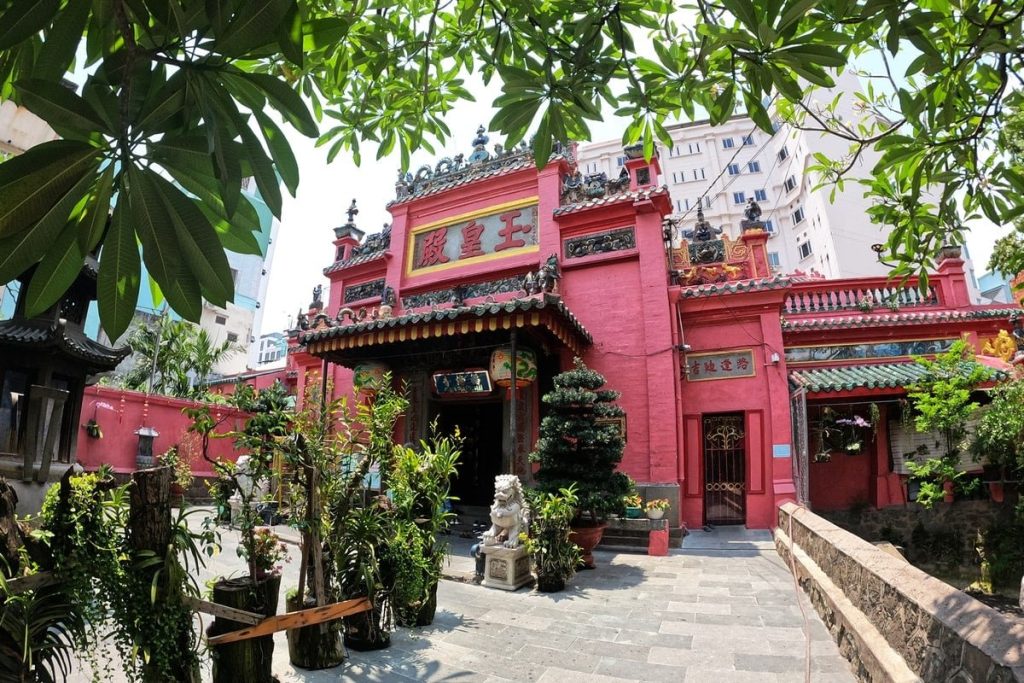
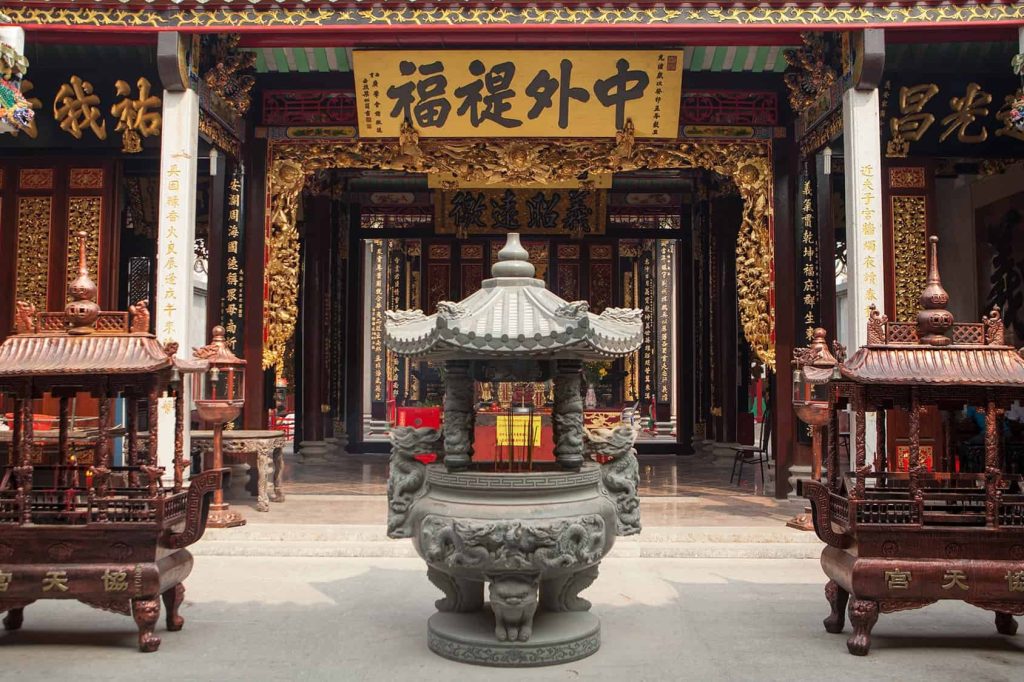
Beneath the surface of HCMC's commercial energy, the city has a deep and active spiritual life, visible in the temple smoke that drifts across busy intersections and the early morning worshippers who arrive before the tourist crowds.
The Jade Emperor Pagoda on Dien Bien Phu Street in District 3 is the most beautiful temple in HCMC. It is a compact Taoist pagoda built in 1909 with elaborate carved wooden panels, incense smoke filling every room, and a vivid collection of deities, including the Jade Emperor himself, presiding from the main hall.
The chamber behind the main altar, housing female figures representing the Ten Regions of Hell, is worth the extra five minutes to find. Try to arrive before 9 am for the most atmospheric visit, when the light is low, and the incense coils hanging from the ceiling create a genuinely otherworldly haze.
Just a few kilometers away in Cholon, Thien Hau Pagoda on Nguyen Trai Street is a Cantonese temple built in the early 19th century, dedicated to the Goddess of the Sea and constructed by the Cantonese immigrant community that helped shape this part of the city. Enormous coiled incense spirals hang from the ceiling, gilded altars line the walls, and the carved ceramic roof decorations tell stories from Chinese mythology that reward a slow, upward look. It is one of the finest examples of southern Chinese temple architecture in Vietnam and the natural starting point for a morning in Cholon.
Cholon: The Chinese Quarter
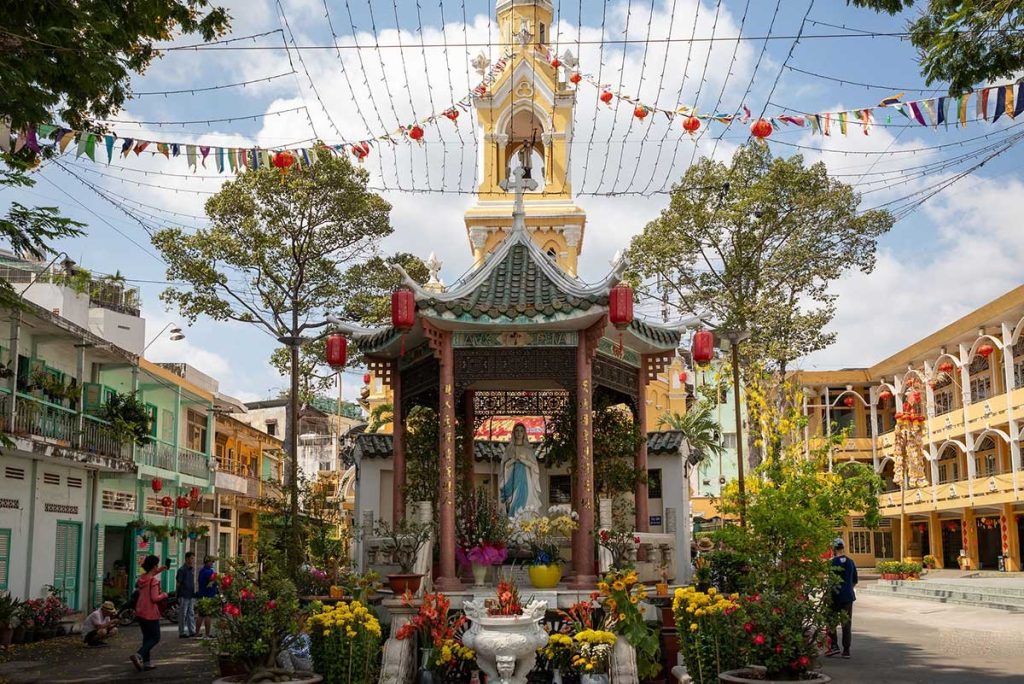
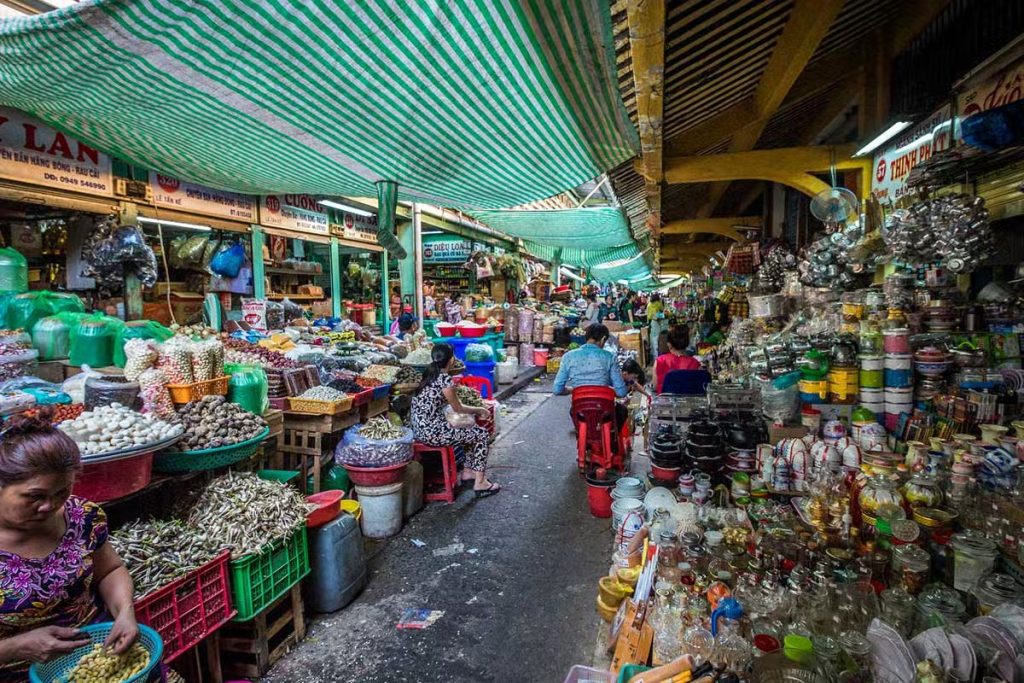
From Thien Hau Pagoda, the rest of Cholon opens up around you and rewards anyone willing to spend a few hours getting deliberately lost in it.
Cholon occupies Districts 5 and 6 and is one of the most culturally distinct and genuinely undervisited parts of HCMC.
Settled by Cantonese, Teochew, Fujian, and Hakka Chinese immigrants from the 18th century onward, it retains a Sino-Vietnamese character visible in the temple facades, the clan houses, the street-level commerce, and the food that has been cooked the same way for generations.
Binh Tay Market, a vast Chinese-style wholesale market built in 1928, is the commercial heart of the neighborhood, with a sprawling, chaotic, beautiful building selling dried goods, spices, textiles, and everything else, largely to locals rather than tourists. The alleys radiating out from the market are where the best exploring happens, with herb sellers, incense shops, and temple courtyards appearing without warning.
The Chinese-Vietnamese breakfast food in Cholon is among the best in the city, and the kopitiams and noodle shops around Binh Tay serve dishes with a depth of flavour that comes from decades of practice and a community that takes its food extremely seriously.
Budget a morning here and treat the lack of a fixed plan as a feature rather than a problem.
The Skyline: Landmark 81 and Bitexco
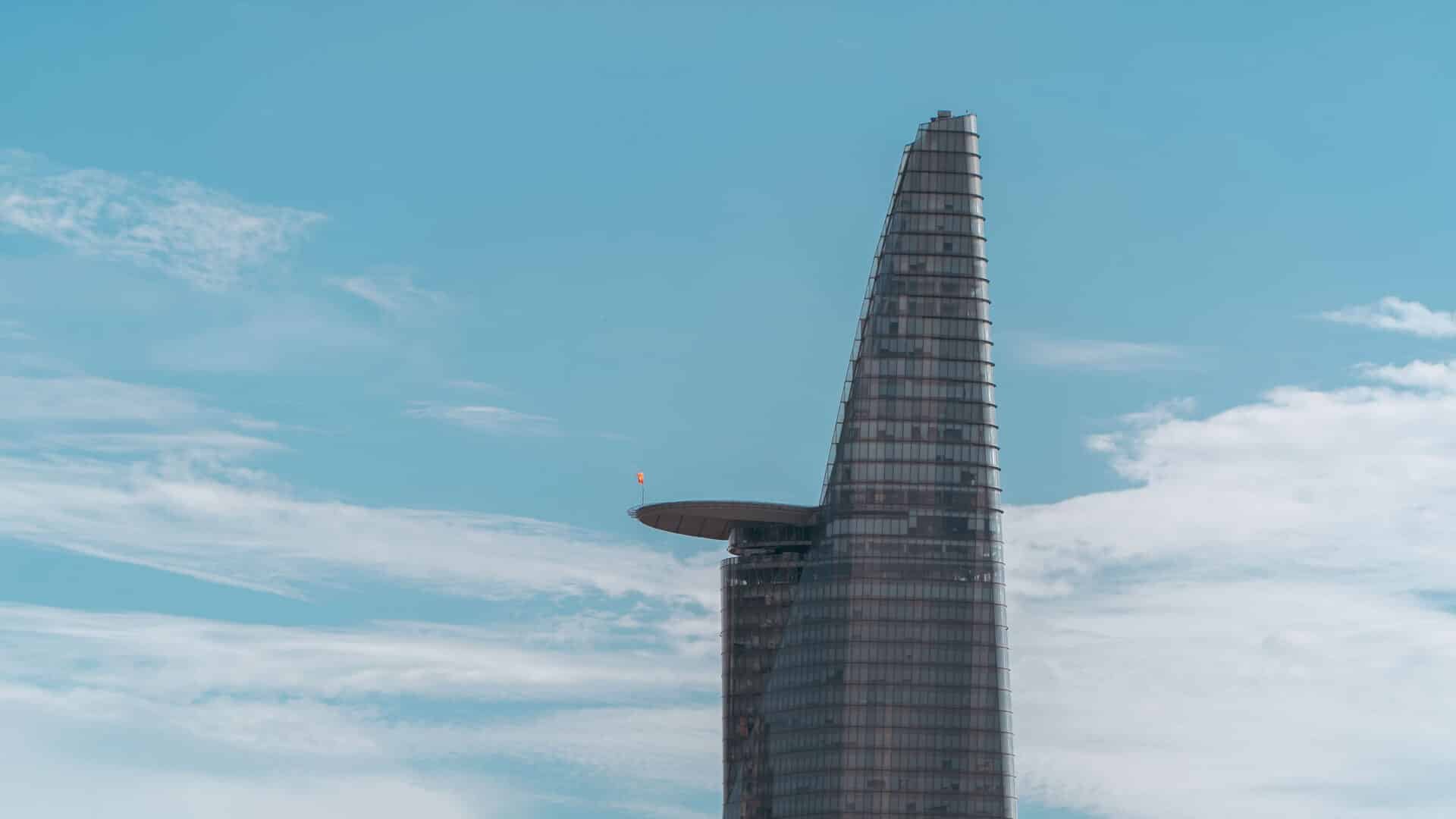
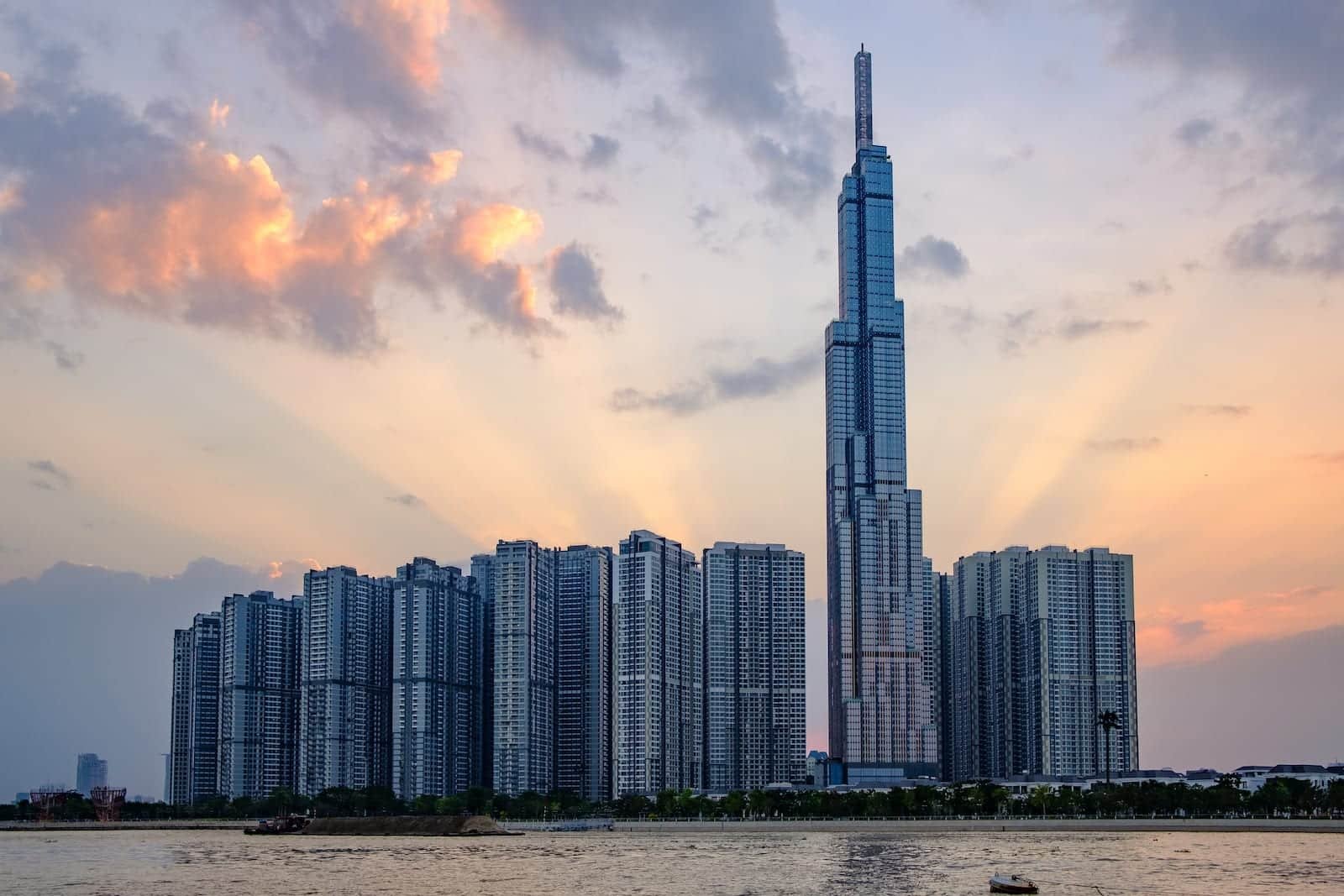
HCMC's skyline has been building for two decades, and the results are dramatic, but two towers have become the definitive vantage points for seeing the city from above.
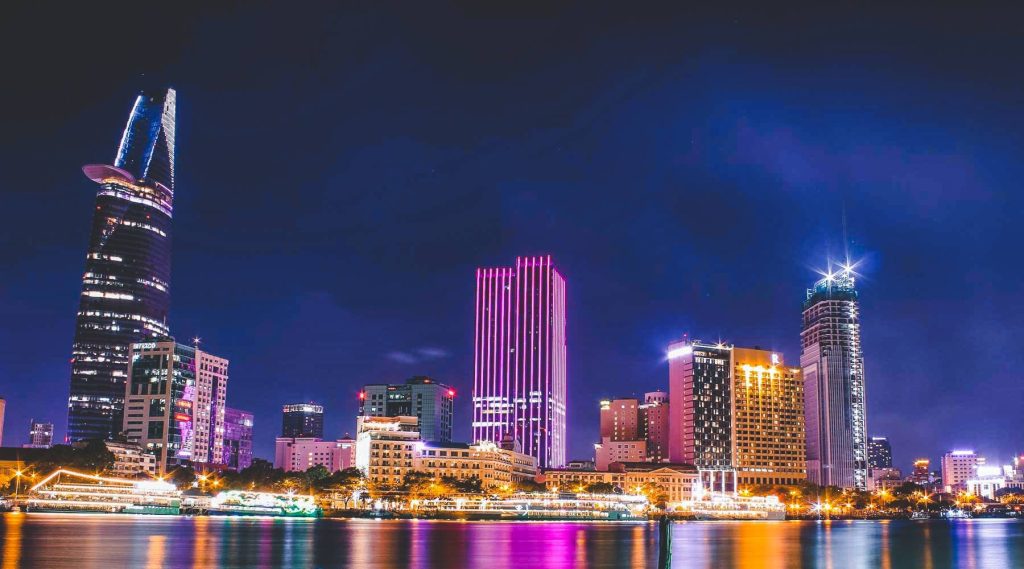
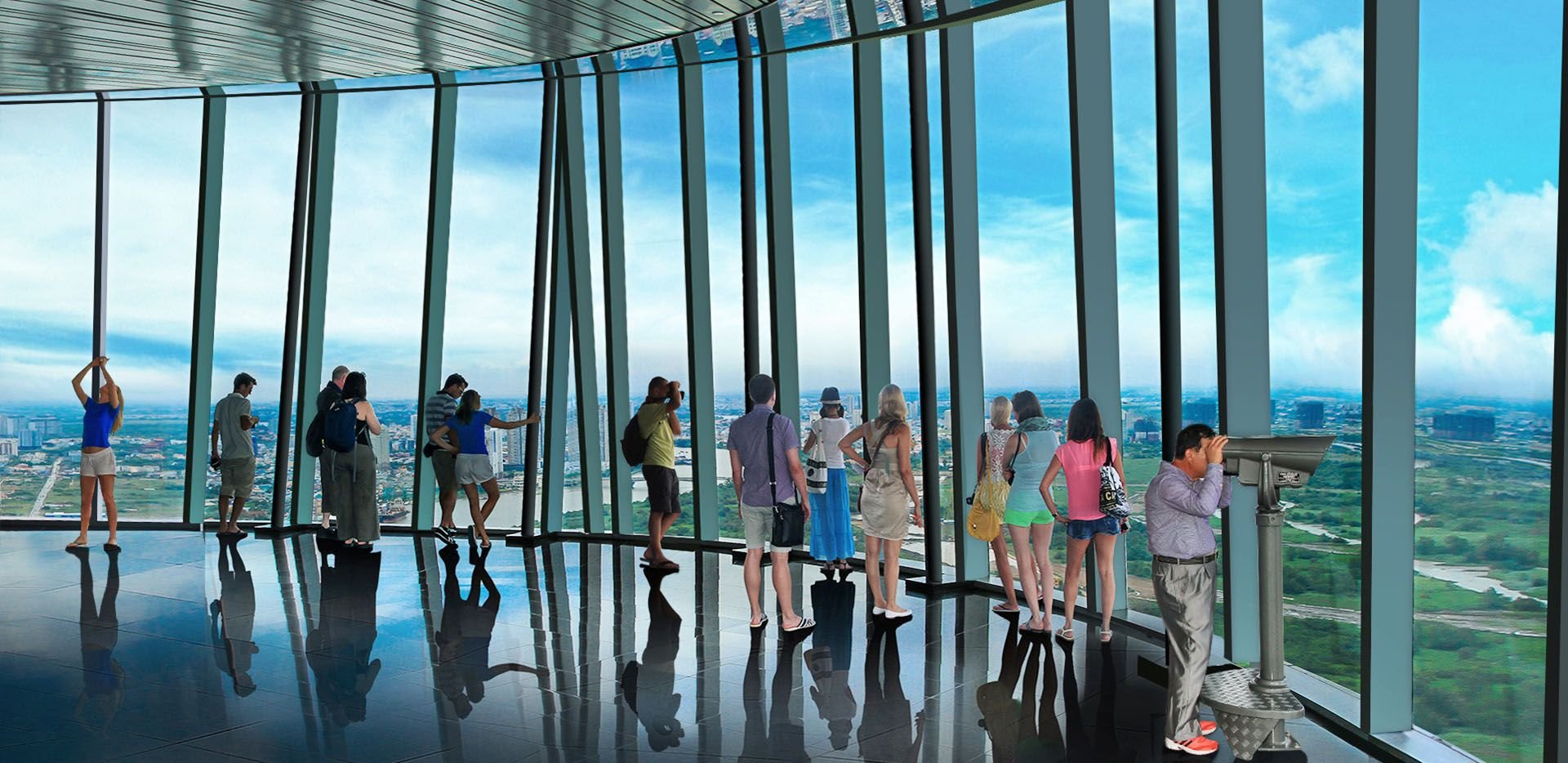
Landmark 81 in Binh Thanh District is the tallest building in Vietnam at 461 metres, and the Saigon Skyview observation deck on floors 79 to 81 delivers 360-degree views across the entire metropolitan area, including the river bending south, the districts spreading outward in every direction, and on clear evenings, the full sweep of a city of nine million people illuminated below.
The night view is the one you should aim for. So book a sunset slot and stay until full dark, when the city transforms completely.
For visitors who want panoramic views without a Grab ride to Binh Thanh, Bitexco Financial Tower in District 1 is the original HCMC observation deck. It is a 68-storey tower with its distinctive helipad jutting from the 52nd floor and the Saigon Skydeck on the 49th floor, giving strong river and downtown views in a location that is walkable from most District 1 hotels.
It covers less of the city than Landmark 81 but makes up for it in convenience, and the building itself, shaped like an unfurling lotus, is one of the most architecturally striking in the skyline.
The Cu Chi Tunnels
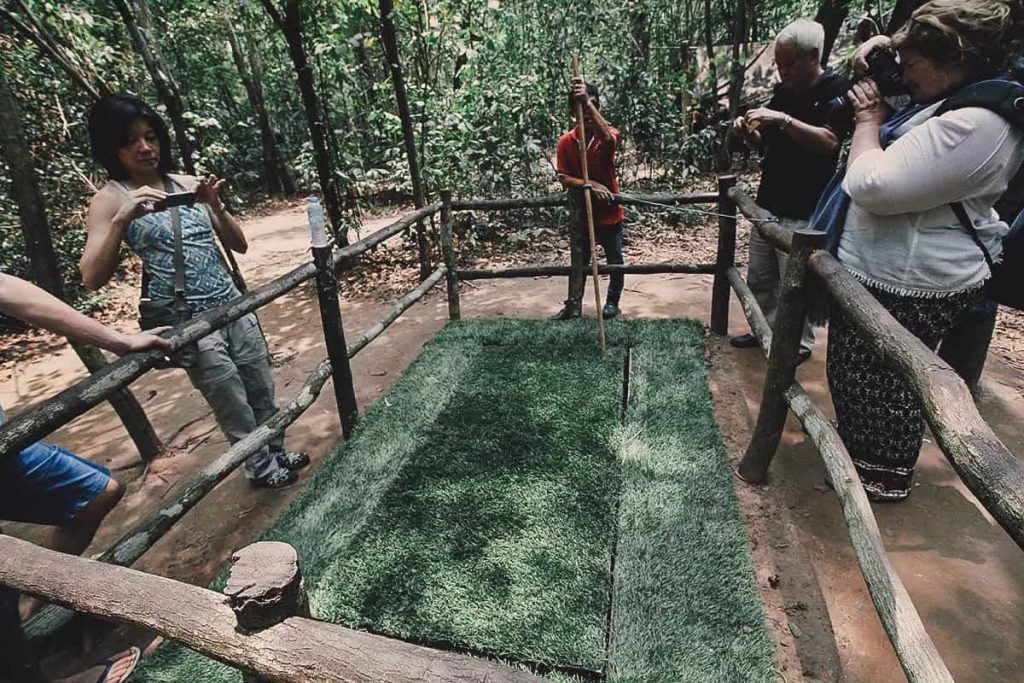
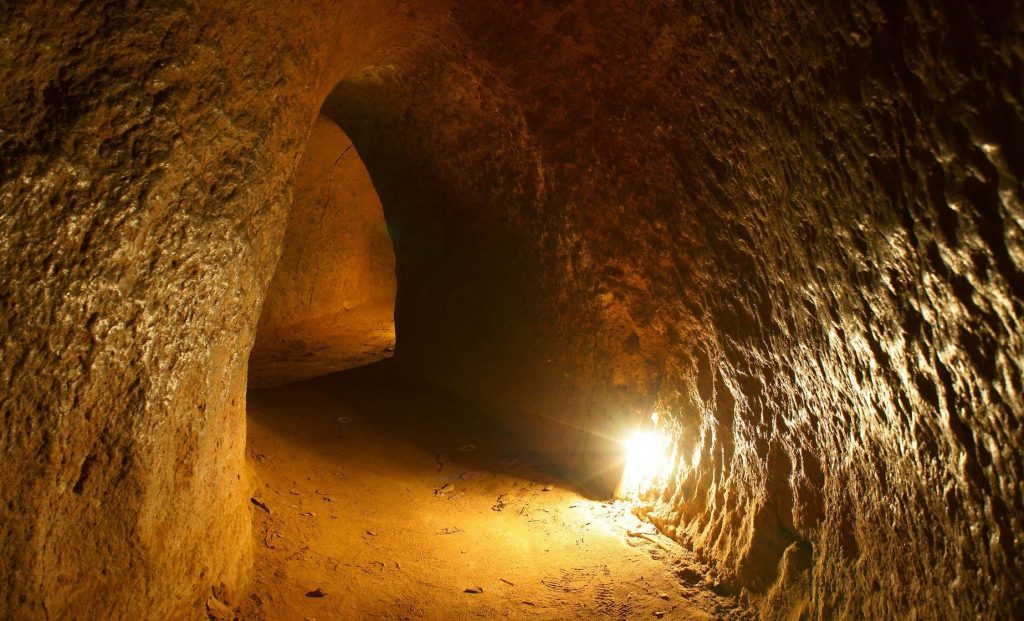
The Cu Chi Tunnels are the single most historically significant day trip from HCMC.
Located about 70 km northwest of the city, the 250-kilometre network of underground passages, chambers, kitchens, hospitals, and living quarters was used by the Viet Cong during the war to resist one of the most intensive military campaigns in history.
Up to 16,000 people lived underground at various points, emerging at night to maintain the tunnels and conduct operations. American soldiers could not locate the concealed entrances, some of which passed directly beneath US military bases.
Visitors can crawl through specially widened sections, explore underground living areas, and see the traps.
You can also choose between the Ben Dinh site (closer, more compact, more visitor-oriented) or Ben Duoc (further, more extensive, quieter, with more original fabric). Either justifies the journey.


The Mekong Delta
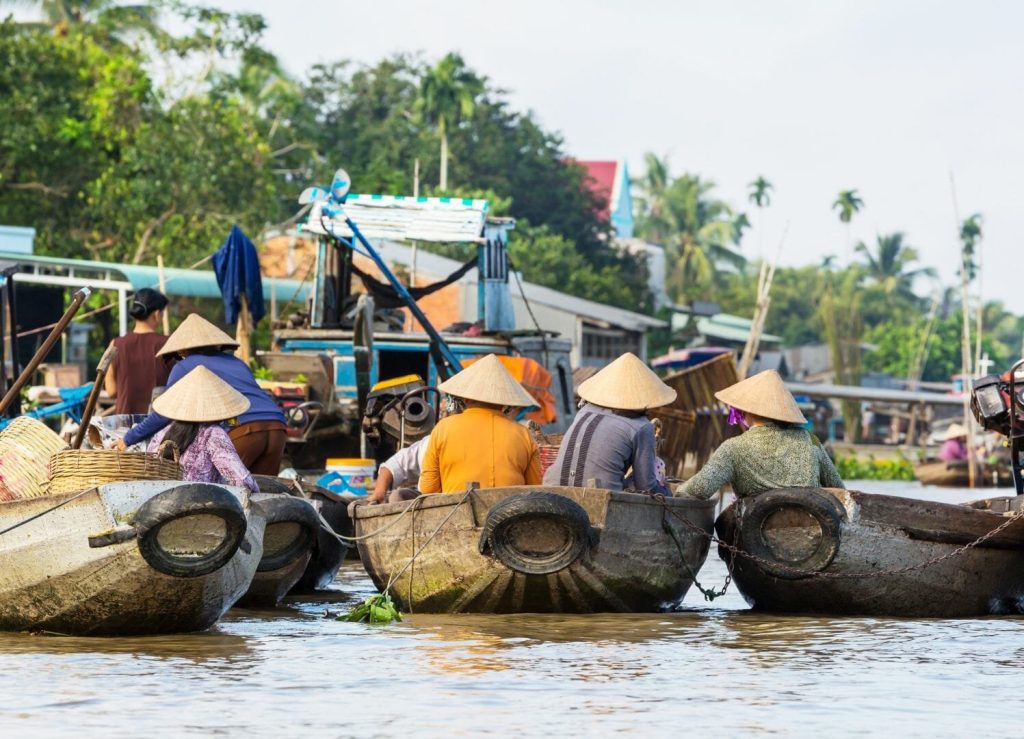
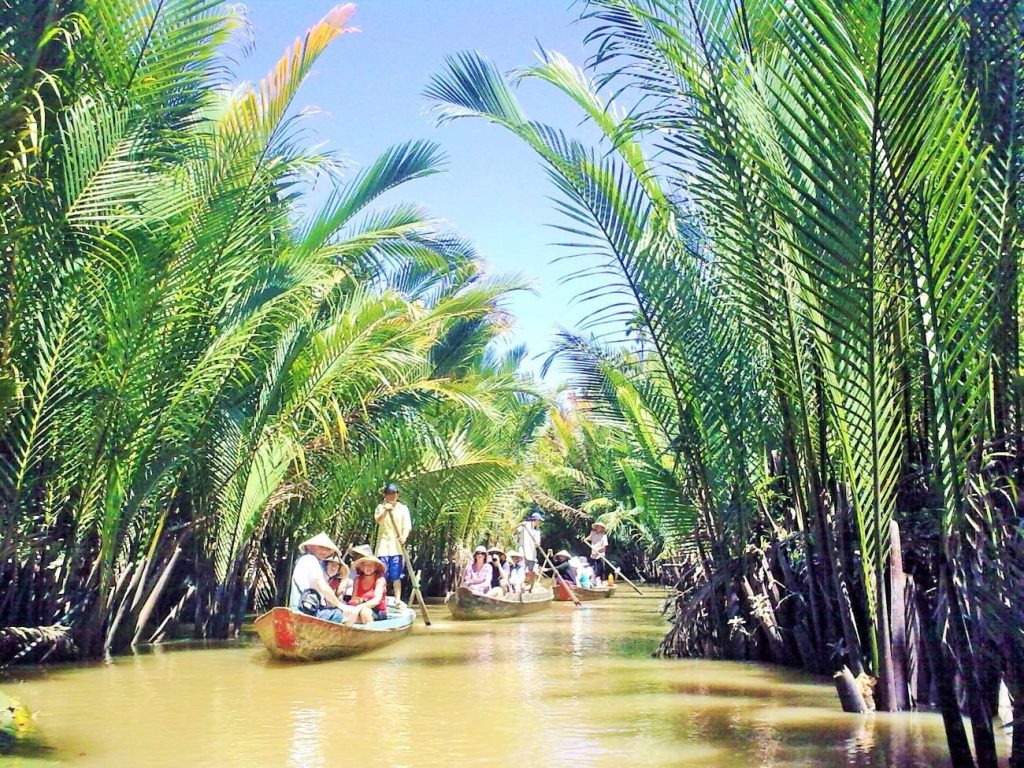
The Mekong Delta begins southwest of HCMC and covers 40,000 square kilometres of waterways, islands, and floodplain farmland, home to over 17 million people.
Day tours focus on the areas around My Tho, Ben Tre, and Can Tho, covering floating markets, sampan rides through narrow canals, fruit orchards, and riverside lunch.
The Cai Rang floating market near Can Tho is the largest and most spectacular, busiest in the early morning. Tours departing by 6 am catch the best activity. An overnight stay in Can Tho can give you a significantly richer experience than a day trip allows.

Popular Things to Do in Ho Chi Minh City
- The Ho Chi Minh Half-Day City Tour is the most efficient introduction to District 1, covering Reunification Palace, the War Remnants Museum, Notre Dame Cathedral, the Central Post Office, Ben Thanh Market, and Nguyen Hue Walking Street in a single guided morning or afternoon. A local English-speaking guide provides historical context that turns a sightseeing loop into a genuinely educational experience of the city's layered past.
- Saigon Cultural Evening Tour with Water Puppet Show and Dinner River Cruise is the best way to experience HCMC after dark in a single evening. The tour opens with a guided walk through the illuminated colonial district, moves into a traditional water puppet performance, and closes with a dinner cruise along the Saigon River with live music and the city skyline reflected on the water beside you.
- Saigon Princess Dining Cruise takes the river dinner experience further with a dedicated luxury format. You get a multi-course Vietnamese dinner, live traditional music performances, and uninterrupted views of the illuminated HCMC waterfront from the water. It is best booked for a later evening departure when the city is fully lit.
- Landmark 81 Saigon Skyview on floors 79 to 81 of Vietnam's tallest building gives 360-degree views across the entire metropolitan area, the Saigon River, and the full spread of the city at night. The on-site VR zone adds an interactive layer to the visit beyond the standard observation deck experience.
- Bitexco Financial Tower Saigon Skydeck on the 49th floor is the most centrally located sky-high viewpoint in HCMC, walkable from most District 1 hotels, with direct views over the river bend and the downtown core. The building's distinctive lotus-shaped helipad makes it one of the most architecturally recognisable towers in the skyline from the outside.
- Suoi Tien Theme Park in District 9 is a large Vietnamese cultural theme park drawing on Buddhist mythology, historical scenes, and local folklore across an extensive site. With Metro Line 1 now connecting Ben Thanh directly to Suoi Tien station, it is one of the easiest major attractions in the city to reach without a car.
- Mekong Delta Discovery Expedition takes a small group deep into the river delta southwest of HCMC, with multiple island stops, floating market visits, local cottage industry workshops, and a riverside Vietnamese lunch that covers the full range of what the delta offers.
- The Mui Ne Guided Beach Experience heads 200 km northeast via the Phan Thiet Expressway (about 2.5 to 3 hours by private car) to one of southern Vietnam's most distinctive coastal landscapes: the White Sand Dunes, Red Sand Dunes, the Fairy Stream, and the long fishing bay with an overnight stay, letting you see the dunes at both sunset and dawn.


Food: The Main Event
Southern Vietnamese food is sweeter, bolder, and more herb-forward than northern cooking. These are the dishes you need to eat in HCMC.
Banh Mi here is a genuine work of art. It is a crispy baguette stuffed with pâté, cold cuts, pickled vegetables, cucumber, coriander, and chilli sauce. Huynh Hoa on Le Thi Rieng Street makes arguably the most celebrated version.
Com Tam (Broken Rice) is the HCMC breakfast staple, which is fractured rice grains with grilled pork ribs, a fried egg, and pickled vegetables. They are available at street-corner restaurants from early morning and are deeply satisfying.
Banh Xeo (Sizzling Cake) is a large, crispy turmeric crepe filled with pork, shrimp, and bean sprouts, eaten by wrapping pieces in lettuce and herbs and dipping in nuoc cham.
Pho in HCMC is sweeter and more garnished than the northern version. They contain more herbs, bean sprouts, fresh chilli, hoisin sauce, and lime. It’s different, but equally excellent.
Bun Bo Hue is a spicy lemongrass-scented beef broth with thick noodles and pork knuckle that HCMC does particularly well.
If you’re looking for evening street food, the Ben Thanh Night Market outside Ben Thanh's southern entrance is the most convenient, while Vinh Khanh Street in District 4 is the best destination for fresh shellfish from late afternoon onward.
When Should You Visit Ho Chi Minh City?
HCMC has two seasons: a dry season and a wet season, both warm.
Dry season (December to April) is the most popular window, with temperatures around 25 to 35°C, low humidity, and minimal rain. January and February are the most comfortable among them.
The Tet holiday (Vietnamese Lunar New Year, usually January or February) closes much of the city for several days. This is a fascinating time to witness but a challenging time to rely on restaurants and services.
Wet season (May to November) brings daily afternoon downpours of one to two hours before clearing. Mornings are generally dry during this time. The prices drop, tourist numbers fall, and the city turns an extraordinary shade of green.
October and November can bring heavier flooding. So plan your trip accordingly.
Practical Tips Before You Go
- Get your e-Visa before arrival at evisa.xuatnhapcanh.gov.vn. It may take three business days to process, so do not leave it for later.
- Download Grab before landing. It covers airport pickup from the official zone in arrivals.
- Confirm the taxi meter is running before the car moves. Use Vinasun or Mai Linh only.
- Cross the road slowly and steadily, letting motorbikes flow around you. Do not stop suddenly or run.
- Cash is widely used at street stalls, markets, and smaller restaurants. Withdraw VND on arrival.
- Book Cu Chi and Mekong tours in advance during peak season (December to February). Popular small-group tours like these sell out days ahead.
- Tet holiday: Book accommodation months ahead during this period. Many businesses close for three to seven days.
Ho Chi Minh City does not stand still long enough to be easily described. It is the Cu Chi Tunnels and the rooftop cocktail. The banh mi from a street cart and the white tablecloth dinner. The postcard-like colonial streetscape and the neon-lit alleyway. The war history and the extraordinary energy of a country that processed that history and kept going.
Come with curiosity, come with appetite, and come with enough time to let it get under your skin.
Head to Thrillark to book your HCMC tours, river cruises, city experiences, and day trips, and give Vietnam's greatest city the time it deserves.
Frequently Asked Questions About Ho Chi Minh City
What is the difference between Ho Chi Minh City and Saigon?
Saigon was the city's name before reunification. The National Assembly officially adopted the name Ho Chi Minh City on July 2, 1976, though the new name came into informal use immediately after the fall of Saigon on April 30, 1975. Both names coexist in daily use. Government offices and formal documents use Ho Chi Minh City, while casual conversation, most restaurants, and many businesses still say Saigon. The name technically refers to District 1 specifically and carries particular affection among older residents and returnees.
Are the Cu Chi Tunnels worth visiting from HCMC?
The Cu Chi Tunnels are one of the most historically significant and genuinely extraordinary sites in Vietnam. The 250-kilometre underground network used by the Viet Cong during the American-Vietnam War is incomprehensible in scale until you are standing above it, trying to find the concealed entrances. Visitors can crawl through specially widened sections, see the trap mechanisms, and explore recreated underground living areas. The Ben Duoc site is more extensive and quieter than the tourist-oriented Ben Dinh site. Both justify the day trip.
What is the Mekong Delta, and how do you visit it from HCMC?
The Mekong Delta is a vast river system covering 40,000 square kilometres southwest of HCMC, known as the "Rice Bowl" of Vietnam. Day tours cover floating markets, sampan boat rides through narrow canals, local workshops, fruit orchards, and riverside lunch. The Cai Rang floating market near Can Tho is the largest and most spectacular, being busiest before 8 am. Tours departing at 6 am or earlier get the best of the market activity. An overnight stay in Can Tho gives a significantly more immersive experience.
What should you eat in Ho Chi Minh City?
The non-negotiables are banh mi (baguette sandwich, best at Huynh Hoa on Le Thi Rieng Street), com tam (broken rice with grilled pork, a city institution from early morning), banh xeo (crispy turmeric crepe wrapped in lettuce with dipping sauce), and pho bo in the sweeter, more garnished southern style. The Ben Thanh Night Market is the most convenient street food cluster for visitors in District 1. Vinh Khanh Street in District 4 is the best destination for fresh shellfish from late afternoon onward.
How do you get around Ho Chi Minh City?
Grab is the safest and most practical option, with GrabCar and GrabBike both available through the same app. Metered taxis from Vinasun and Mai Linh are reliable, but you should always confirm the meter is running before moving. Metro Line 1 (opened December 2024) connects Ben Thanh Market to Suoi Tien in the northeast and is clean, affordable, and air-conditioned. Walking covers the main sights of District 1 comfortably.
What is the best time to visit Ho Chi Minh City?
The dry season from December to April is the most popular, with temperatures around 25 to 35°C and minimal rain. January and February are the most comfortable months. The wet season from May to November brings daily afternoon showers of one to two hours, lower prices, fewer tourists, and a greener city. The Tet holiday in January or February brings a unique atmosphere but closes many businesses; plan around it if possible.
Is HCMC safe for tourists?
Ho Chi Minh City is generally safe, with the main risk being opportunistic bag snatching from motorbikes, particularly around Ben Thanh Market and Bui Vien Street. Keep bags away from the road, avoid using your phone while walking on busy streets, and use Grab rather than accepting unlicensed rides. Comprehensive travel insurance covering medical care is always recommended for travel to Vietnam.
Browse by themes
Top Things to Do in Vietnam