Some cities make an impression. Hoi An makes a spell. You arrive expecting a well-preserved old town and leave having spent three days cycling through rice paddies, eating white rose dumplings at a plastic table, watching silk lanterns turn the river gold at dusk, and booking a tailor-made dress for pickup the following morning.
It is one of those places where the itinerary dissolves within about forty-five minutes, and you find yourself simply following whatever looks interesting down whichever street smells best.
Hoi An is a UNESCO World Heritage Site on the central coast of Vietnam, 30 km south of Da Nang. From the 15th to the 19th century, it was one of the most important trading ports in Southeast Asia, where Chinese, Japanese, Dutch, and Portuguese merchants all settled and built the layered architectural world that still exists largely intact today.
The Ancient Town is not a reconstruction or a theme park version of history. It is the actual thing, lived in and worn in and magnificent. Give it three days, or give it more if you can.
Hoi An City Essentials
Entry Requirements for Hoi An
Most visitors need a visa to enter Vietnam. The most convenient option for most nationalities is the Vietnam e-Visa. You get a single or multiple entry, valid for up to 90 days, applied for online at the official portal (evisa.xuatnhapcanh.gov.vn) before arrival with three business days processing.
Citizens of a growing number of countries qualify for visa exemption for stays of up to 45 days (updated in August 2023 from the previous 15-day limit). Make sure to check the current list at the official Vietnam immigration portal (immigration.gov.vn) before travelling, as the exemption list is regularly updated. Indian nationals require a Vietnam e-Visa.
Where Can You Stay in Hoi?
Hoi An is small enough that almost anywhere in or near the Ancient Town works as a base, but the neighbourhood you choose sets the tone of the trip.
- The Ancient Town itself is the most atmospheric option. Staying inside the heritage zone means stepping out of your door directly into the lantern-lit streets, waking up to the sound of the Thu Bon River, and reaching every sight on foot. Heritage boutique hotels in restored merchant houses are the most characterful option. The spaces are small, the character is high, and the trade-off is a complete lack of a pool. The Nam Hai, outside the town, is the resort option if a beachside luxury experience is the priority. A hotel shuttle connects it to the Ancient Town.
- Cam Nam Island, the small island connected to the Ancient Town by a footbridge, is a calmer, more local alternative with fewer tourists, lower accommodation prices, and a short cycle to everything in the heritage zone.
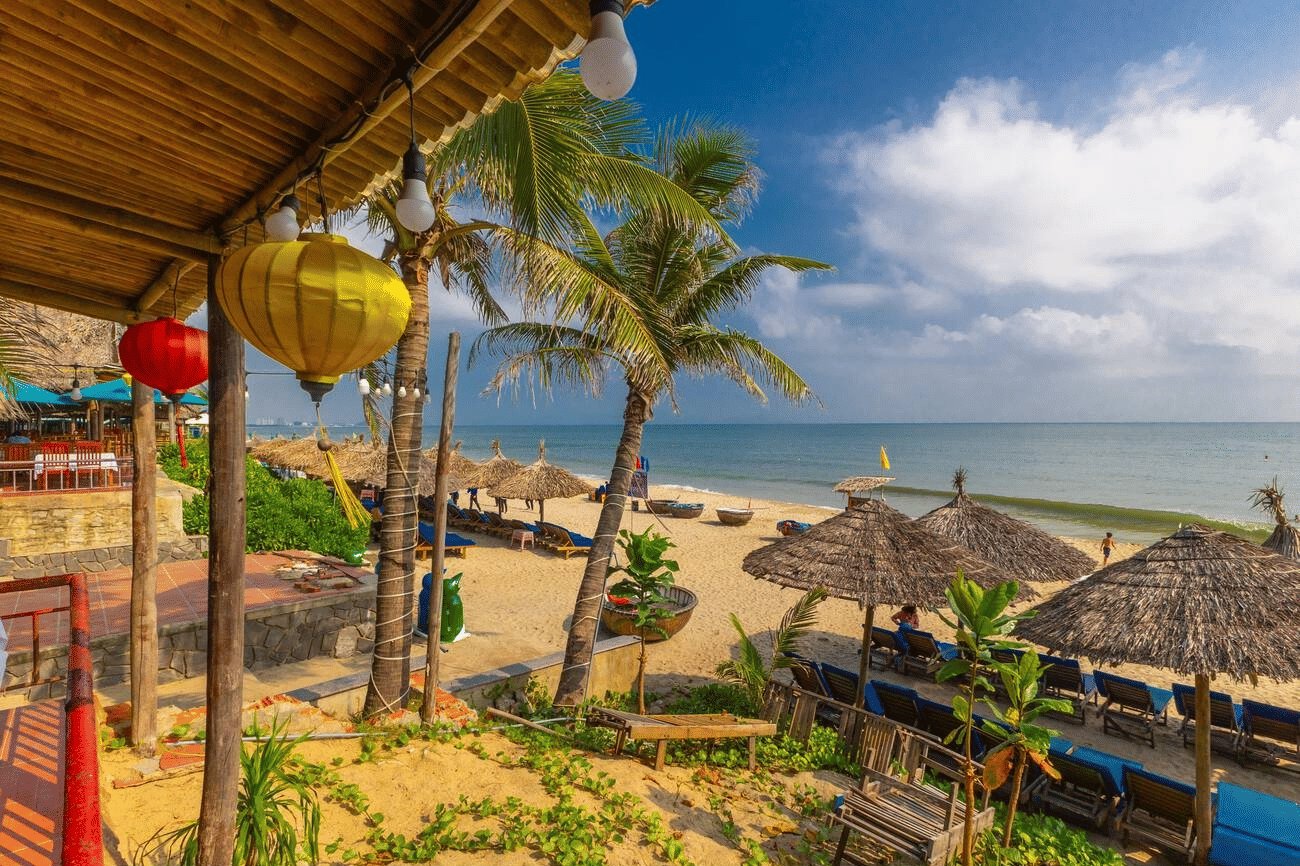
- An Bang Beach, about 4 km from the Ancient Town, suits visitors whose trip is built around beach time, with the heritage town as a supplement. The beach village atmosphere is relaxed, and the accommodation is more resort-style.
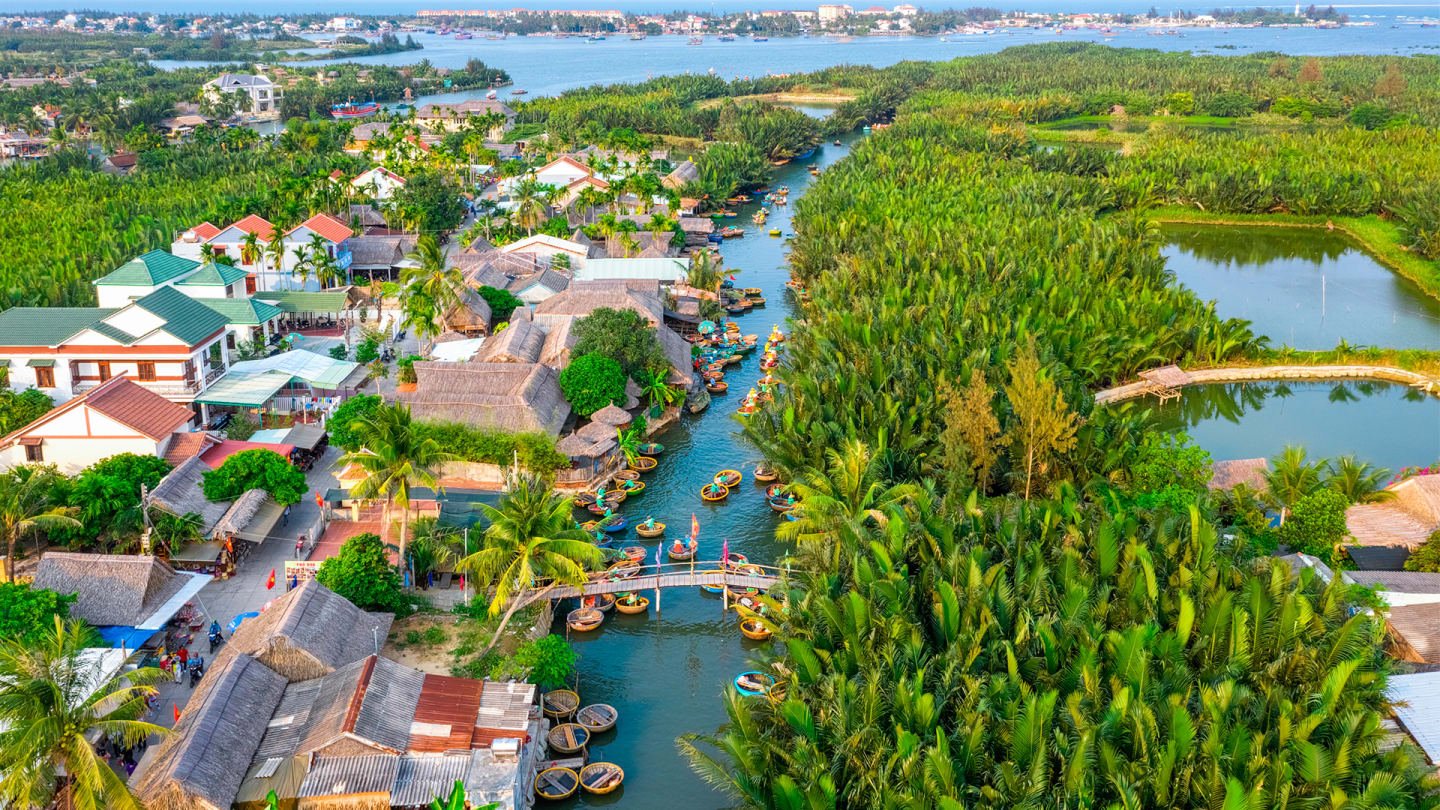
- Cam Thanh, the water coconut village south of the Ancient Town, has homestay and eco-lodge accommodation for visitors who want a genuinely rural experience of the landscape around Hoi An.
Getting There and Getting Around
From Da Nang: Da Nang International Airport (DAD) is about 30 km north of Hoi An, approximately 45 to 50 minutes by taxi or Grab, depending on traffic. Book a Grab from the app on arrival for transparent pricing. Hoi An is also accessible by bus, shuttle van, and private transfer from Da Nang city, Hue (about 3.5 hours), and Nha Trang (about 5 to 6 hours).
Getting around Hoi An:
- Walking: The Ancient Town is compact and designed to be walked. Most of the heritage buildings, temples, assembly halls, and the riverside promenade are within a 20-minute walk of each other.
- Bicycle: This is the most enjoyable way to get around Hoi An and the surrounding countryside. Bicycles are available for rent from most guesthouses and shops throughout the Ancient Town for a very small daily fee. The flat terrain makes cycling effortless even in the heat, and the rice paddy roads around Tra Que vegetable village and Cam Thanh are best explored by bike.
- Grab: It is available in Hoi An for GrabCar and GrabBike, and is useful for reaching An Bang Beach, Marble Mountains from Da Nang, and My Son Sanctuary.
- Electric vehicle taxis: These small electric carts operate within the Ancient Town pedestrian zone and are available for hire for those who prefer not to walk. Make sure to negotiate the fare before setting off.
- Motorbikes: They are rentable in the town but not permitted in the Ancient Town pedestrian core during restricted hours. They are also good for longer trips into the countryside or to the beach.
The Ancient Town
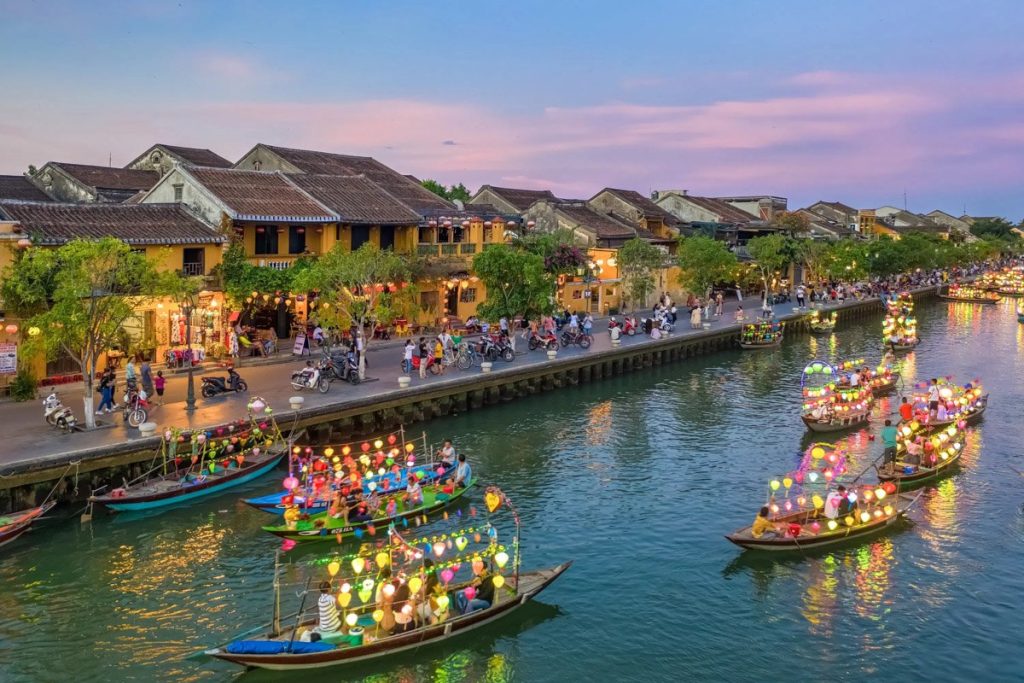
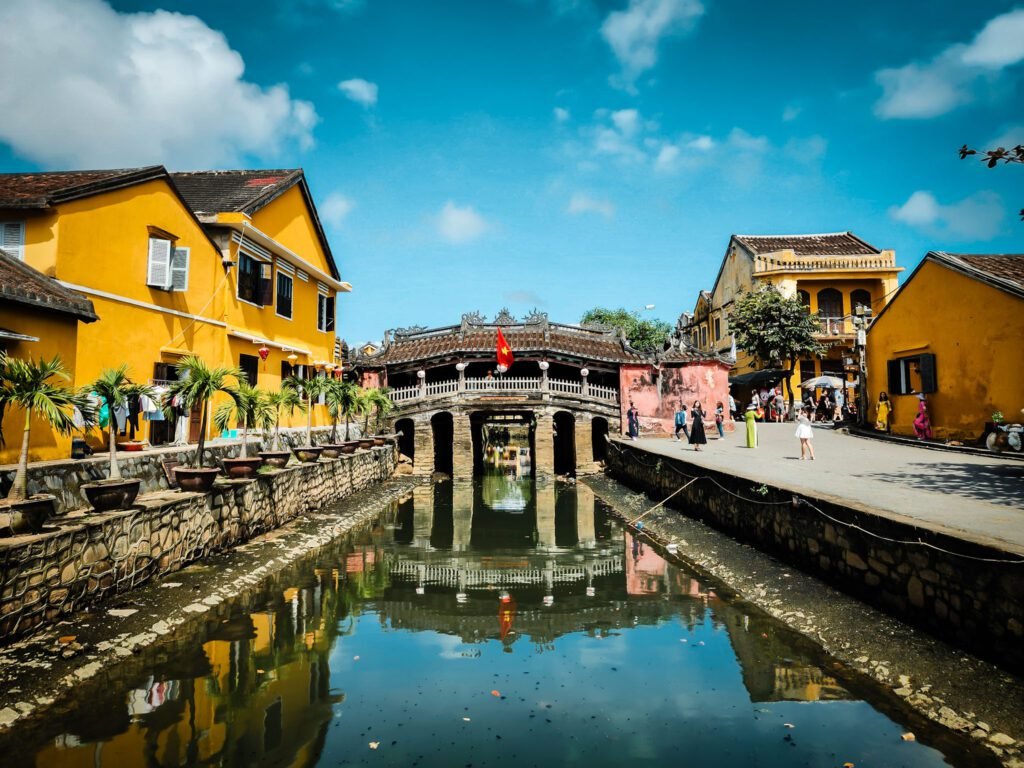
The Ancient Town of Hoi An is the reason most visitors come and the thing that keeps them longer than planned. It is a remarkably intact 16th to 19th-century merchant port, with over 1,000 heritage buildings preserved across a compact area that can be walked in an hour but deserves considerably more time than that.
Entry to the most significant heritage buildings requires a ticket, which covers five attractions from a list of options, including assembly halls, houses, museums, and the Japanese Covered Bridge. The ticket system is managed by the Hoi An Centre for Cultural Heritage Management, and tickets are sold at booths throughout the town.
Note that the pagodas and temples within the Ancient Town are free to enter independently.
The Japanese Covered Bridge (Lai Vien Kieu) is the most iconic structure in Hoi An. It's a small, roofed bridge built by the Japanese merchant community in the early 17th century, decorated with carved wooden dogs and monkeys at each end (representing the years of the dog and monkey under which construction began and ended) and housing a small shrine in its centre. The bridge underwent major restoration from late 2022 and officially reopened to the public in August 2024.
The Assembly Halls are the most substantial heritage buildings in the Ancient Town and the most rewarding to spend time in. The Phuc Kien Assembly Hall (Fujian Assembly Hall), built by Fujian Chinese merchants in 1697, is the grandest, with a series of courtyards with elaborately painted halls dedicated to the Goddess of the Sea, with vibrant red and gold decoration, incense spirals, and model boats that were sent out to guide endangered sailors safely home.
The Cantonese Assembly Hall and the Chaozhou (Teochew) Assembly Hall are equally detailed and worth visiting as part of a circuit of the town's Chinese heritage.
Tan Ky Merchant House on Nguyen Thai Hoc Street is one of the best preserved private merchant houses in the Ancient Town, a 200-year-old family home that blends Japanese, Chinese, and Vietnamese architectural elements in a single building. Three generations of the same family have lived here, and guided tours run throughout the day.
The roof construction, the carved beams, and the ancient flood watermarks on the walls showing the historic high-water levels of the Thu Bon River are all worth examining closely.
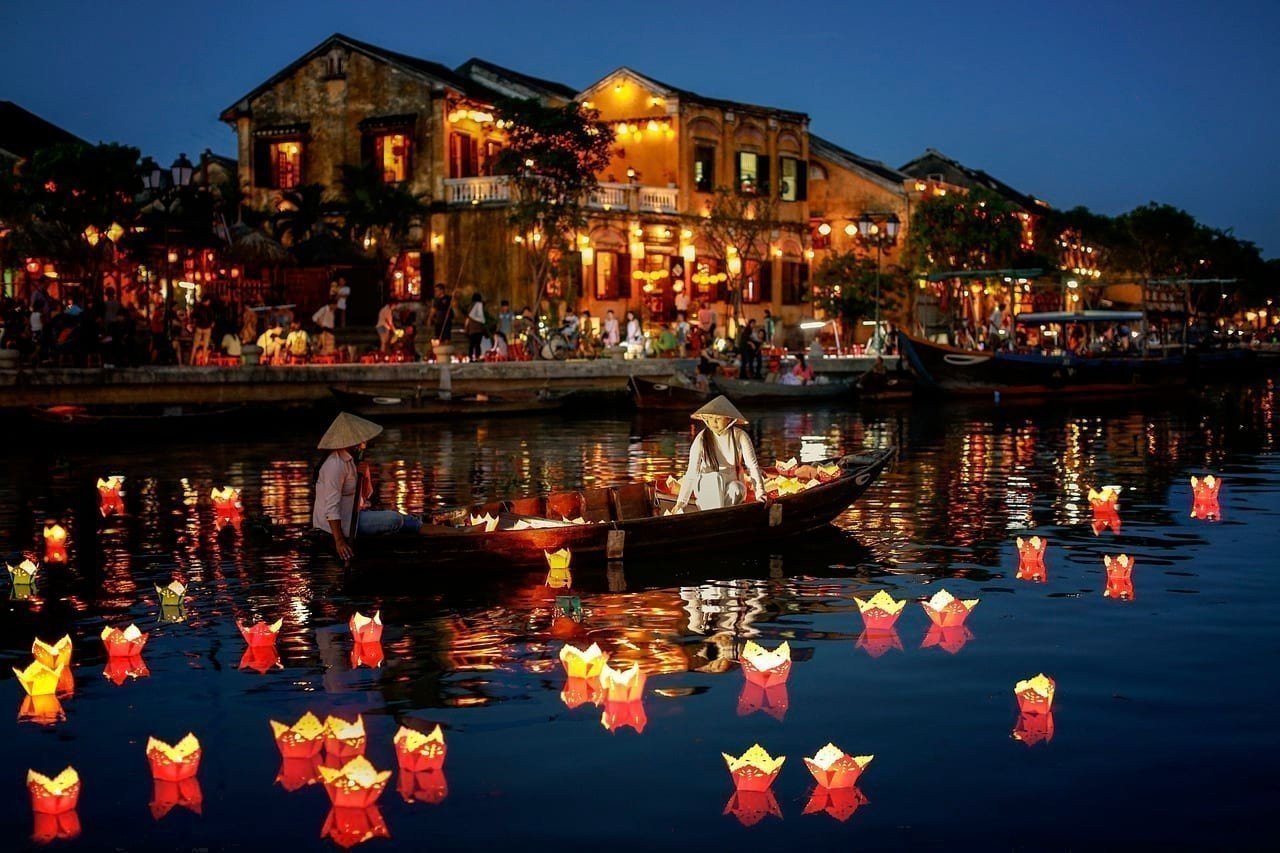
The Thu Bon River runs along the southern edge of the Ancient Town and is most beautiful in the evening, when the lanterns come on, and the reflection doubles everything.
Walking the riverside path from the Japanese Bridge east to Cam Nam Bridge at dusk is one of the best things to do in Hoi An, free of charge, and better on a weeknight when the crowds thin slightly.
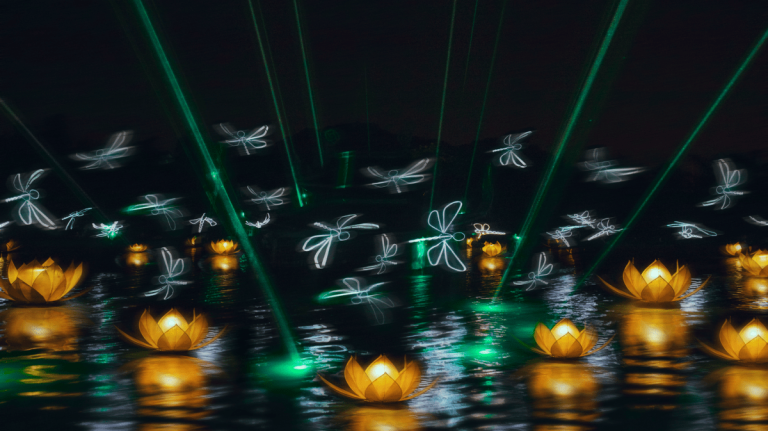
Hoi An Memories Show
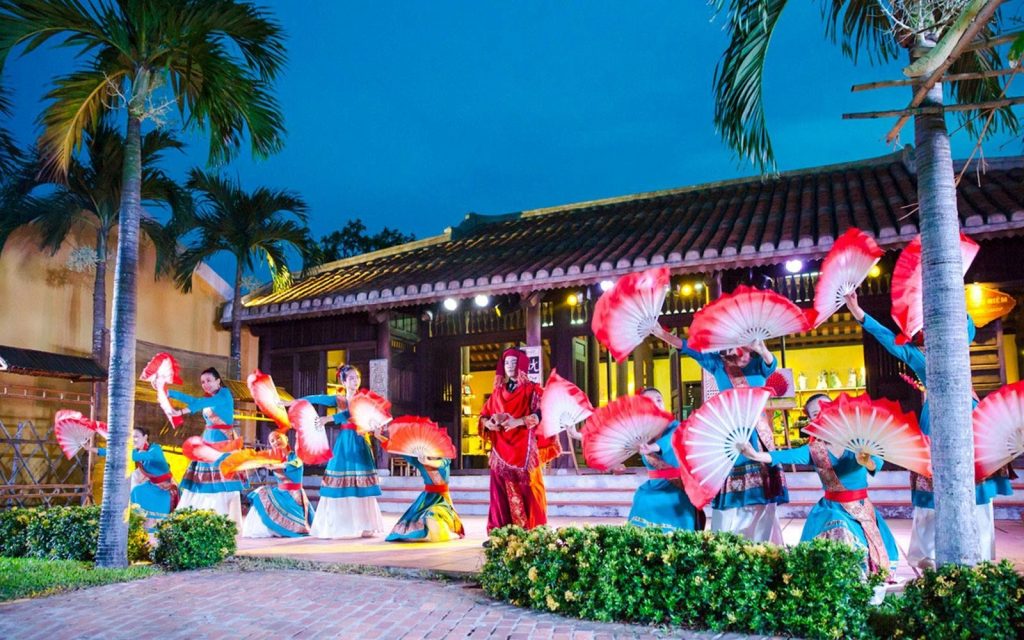
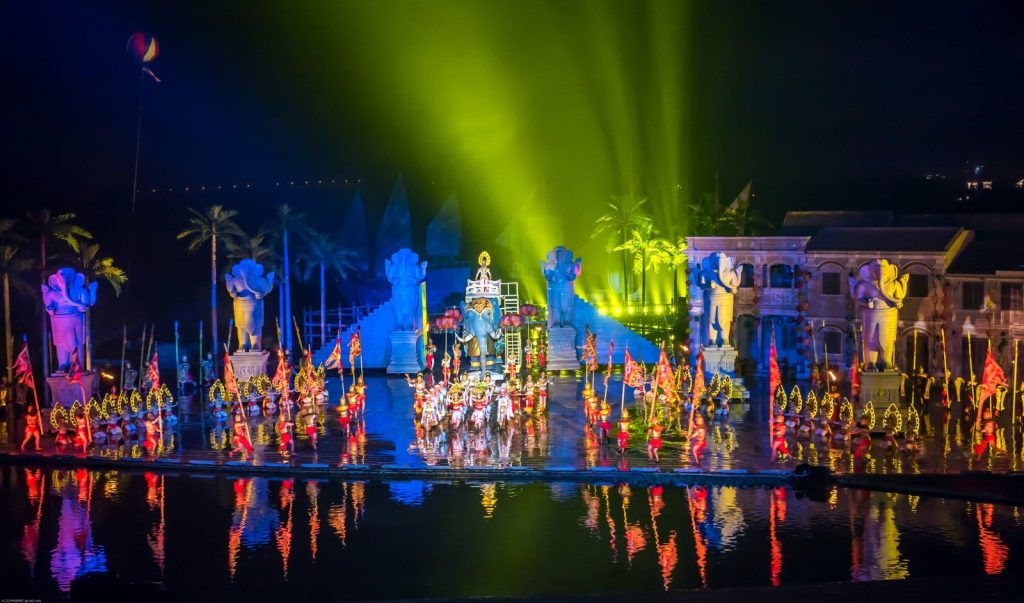
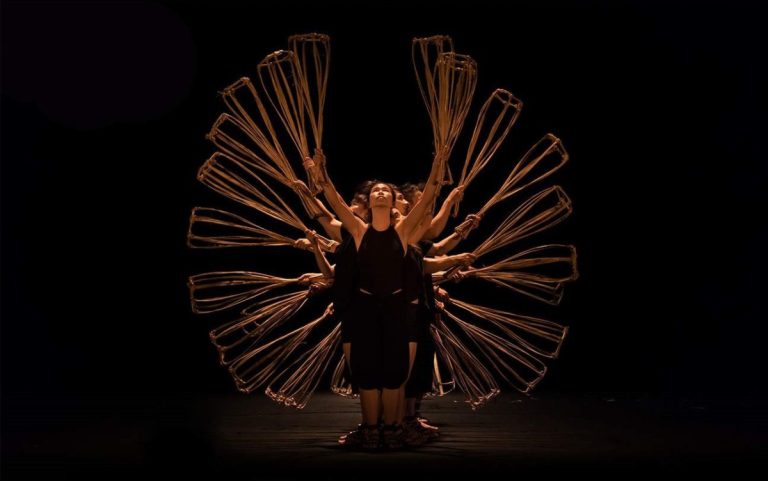
Hoi An Memories is the largest outdoor performing arts show in Vietnam. It's a 60-minute open-air theatrical production staged at the Hoi An Impression Theme Park on the Thu Bon River, about 1.5 km from the Ancient Town. The show takes place on an island stage with the Thu Bon as the backdrop, featuring over 500 performers drawn from the Hoi An and Quang Nam community alongside professional choreographers and musicians.
The production tells the history of Hoi An as a 16th-century trading port through five acts covering the arrival of Chinese, Japanese, Portuguese, Dutch, and Vietnamese traders, the town's cultural synthesis, and its spiritual life.
The scale is genuinely extraordinary, with massive set pieces, traditional costumes, live music combining Vietnamese and East Asian instruments, fire elements, water effects, and the river itself as part of the staging create a visual spectacle unlike any indoor performance.
Performances run six nights a week, every day except Tuesday. So don’t forget to check the current schedules before booking, as show dates can vary by season. Booking in advance is strongly recommended as the show has become one of the most popular experiences in central Vietnam and sells out on performance nights during peak season. The venue is accessible by taxi, Grab, or bicycle from the Ancient Town.

Beyond the Ancient Town
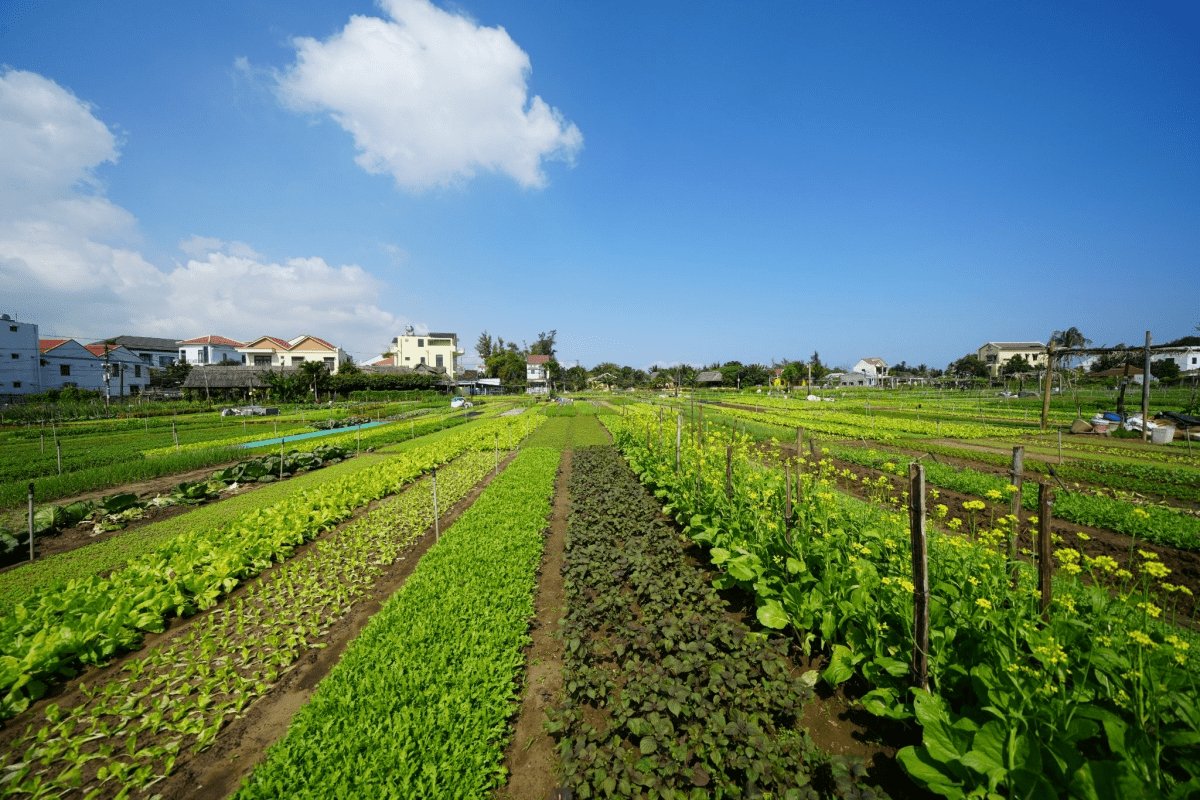

- Tra Que Vegetable Village is about 3 km north of the Ancient Town, a working organic farm community supplying much of the fresh produce used in Hoi An's restaurants. The standard visit involves a guided walk through the vegetable gardens, an introduction to traditional farming techniques using seaweed from the Thu Bon as fertilizer, and a cooking demonstration of Hoi An dishes using the freshly grown produce. It is accessible by bicycle in about 20 minutes from the town centre.
- An Bang Beach is 4 km east of the Ancient Town and one of the best beaches in central Vietnam. It is a long, relatively uncrowded stretch of sand with a growing strip of beach bar and seafood restaurant infrastructure that balances accessibility with an atmosphere that has not yet been over-developed. The sunset here, viewed from a beach bar chair with a cold drink, is one of the most reliably enjoyable experiences the Hoi An area offers. Cua Dai Beach, slightly closer to town, was significantly affected by coastal erosion in recent years and is less recommended than An Bang.
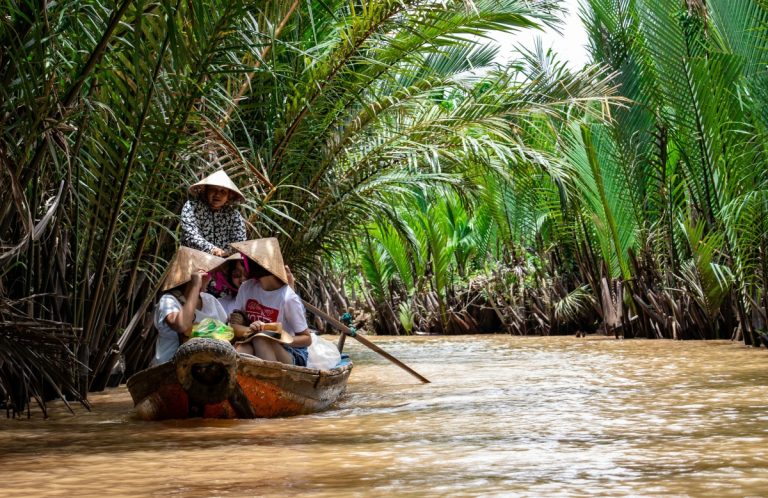
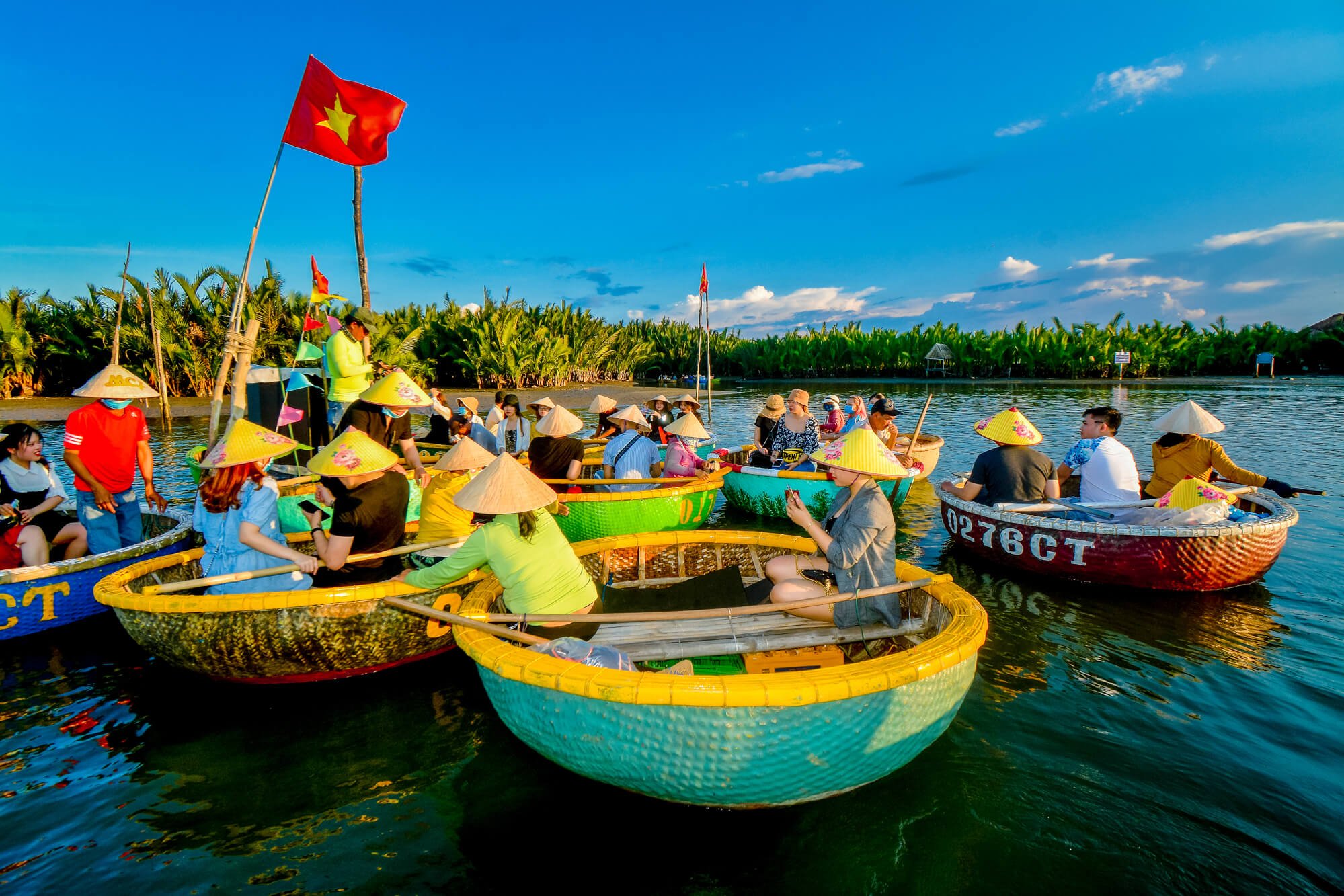
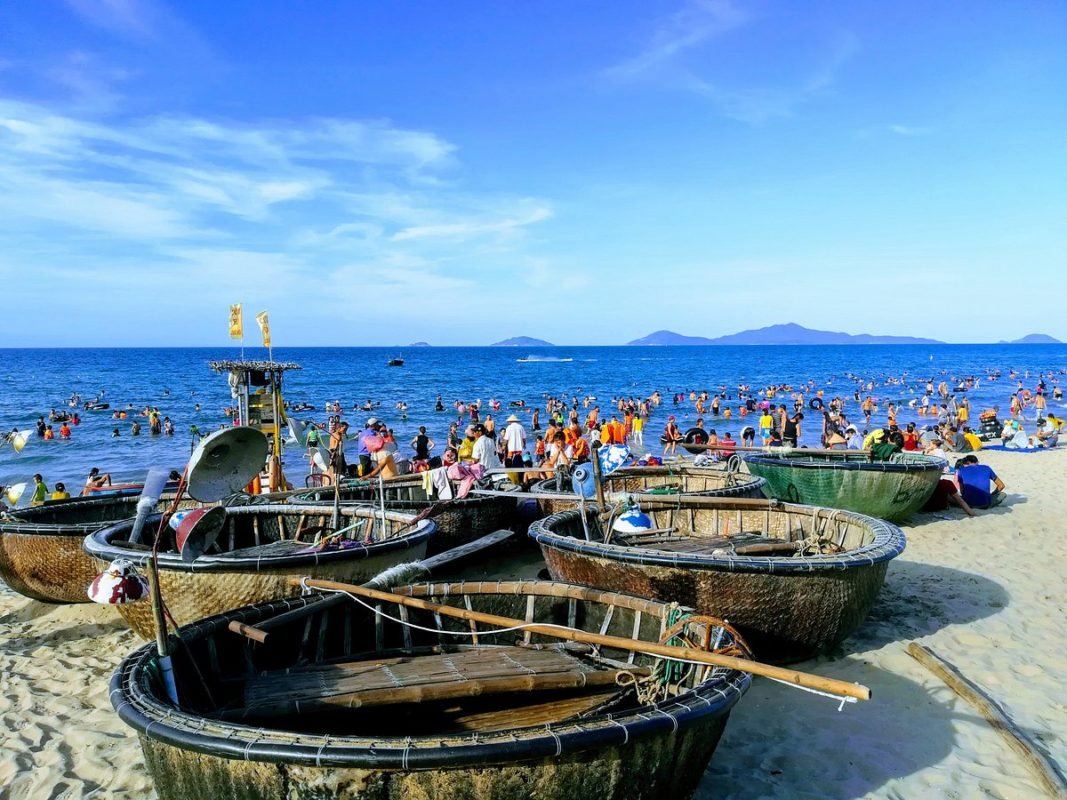
- Cam Thanh Water Coconut Forest (Bay Mau) is a wetland area of water coconut palms 5 km south of the Ancient Town, best explored by a round bamboo basket boat (thung chai) through the narrow waterways. The local boatmen who navigate these basket boats with extraordinary skill are one of the most distinctive sights of the Hoi An area. Tours typically last about an hour and can be combined with fishing activities or a visit to the floating restaurant in the middle of the forest.
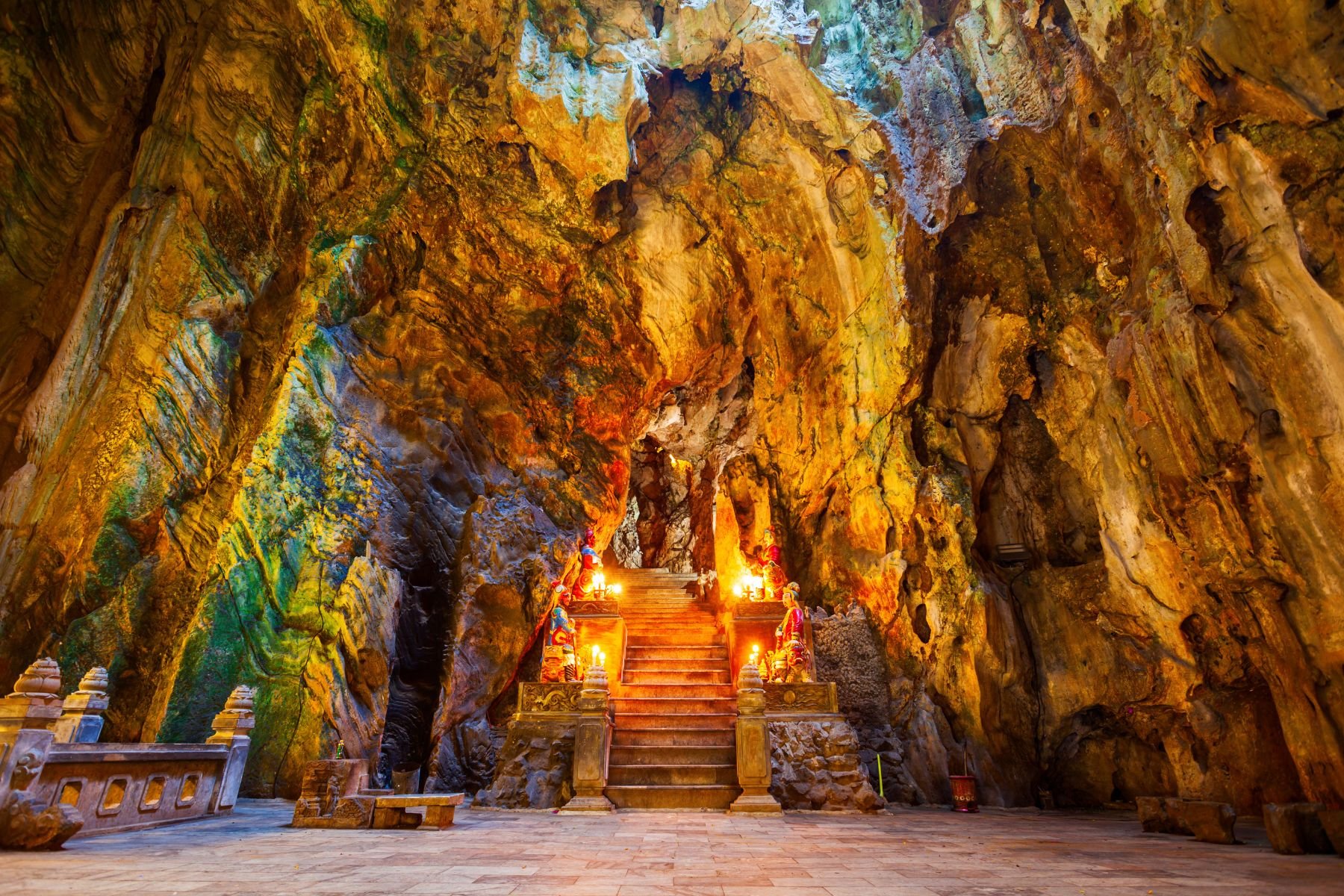
- The Marble Mountains (Ngu Hanh Son) are five limestone peaks 19 km north of Hoi An on the outskirts of Da Nang, each named after one of the five elements. The most-visited, Thuy Son (Water Mountain), has cave temples, Buddhist shrines, and a viewpoint accessible by lift or stairs. The area is also the centre of marble carving in Vietnam, with workshops visible along the road leading to the mountains. A Grab from Hoi An takes about 30 minutes.
My Son Sanctuary
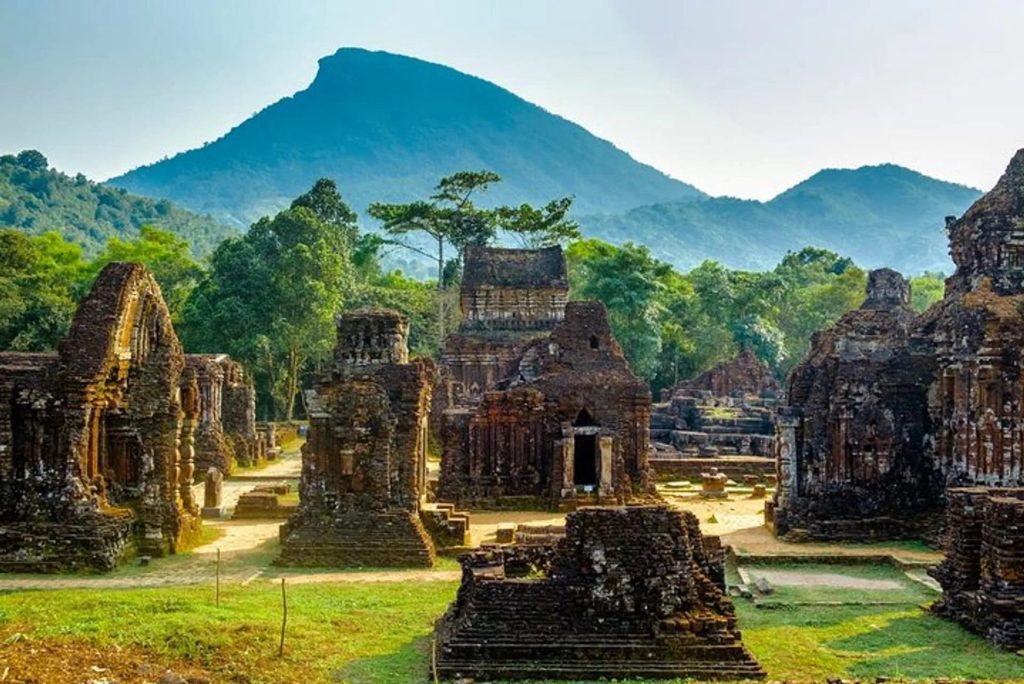
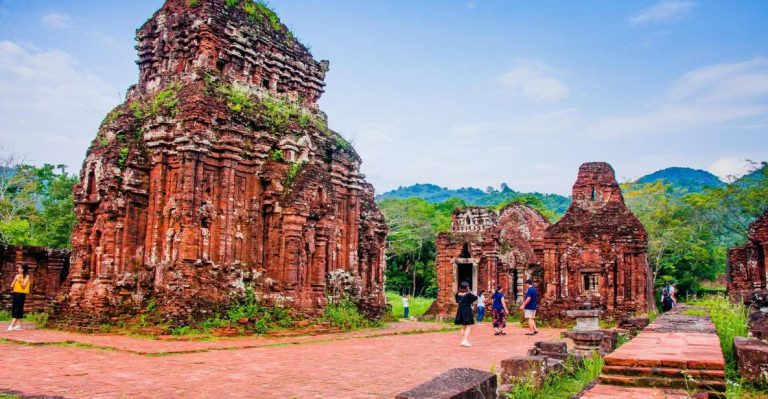
My Son is the single most historically significant day trip from Hoi An. This is a UNESCO World Cultural Heritage Site 40 km southwest of the town, set in a valley of jungle-covered hills.
The sanctuary is a complex of Hindu temples and towers built by the Champa Kingdom, a Hindu civilisation that dominated central Vietnam from the 4th to 15th centuries, and the surviving structures date from the 7th to 13th centuries.
My Son was heavily bombed during the Vietnam War, and many structures were damaged or destroyed. What remains are fragments and ruins rather than complete temples, but the atmosphere of the valley, the carved reliefs still visible on the surviving masonry, and the extraordinary fact of a thousand-year-old Hindu complex in the Vietnamese jungle make this one of the most distinctive heritage sites in Southeast Asia.
Guided tours depart from Hoi An in the early morning, arriving before the heat builds and before the day-tripper coaches from Da Nang. Going with a guide who can explain the Cham civilisation's history significantly deepens the experience. Give it a full morning.
Tailor-Made Clothing in Hoi An
Hoi An is one of the most celebrated custom tailoring destinations in the world, and having something made here is an experience that many visitors count among their best travel memories. Over 400 tailor shops operate in and around the Ancient Town, with turnaround times as fast as 24 hours and the ability to copy a photograph or produce an original design from scratch.
The most common items are suits, shirts, dresses, and ao dai (the traditional Vietnamese dress). The range in quality is significant. A well-established shop with good reviews will produce work that rivals expensive tailors in major cities. A rushed job at a rock-bottom price will look like one.
Research shops in advance, read recent reviews (particularly regarding whether the finished product matched what was agreed), and build enough time into your Hoi An stay for at least one fitting before collection.
Yaly Couture and A Dong Silk are two of the most consistently recommended shops with decades of experience between them.
Food in Hoi An
Hoi An has its own distinct culinary tradition that is neither Northern nor Southern Vietnamese cooking, and the dishes here are truly local in the most literal sense. Some can barely be found outside the town itself.
- Cao Lau is the signature dish of Hoi An. It’s a thick, chewy noodle made with water specifically from the Ba Le Well in the Ancient Town, topped with char siu pork, crunchy rice crackers, bean sprouts, and fresh herbs. The noodle texture is unlike any other Vietnamese noodle because of the specific water and ash used in preparation, and the dish genuinely cannot be replicated elsewhere with quite the same result.
- White Rose Dumplings (Banh Bao Vac) are translucent, flower-shaped shrimp dumplings made exclusively by one family in Hoi An, who supply every restaurant in town. They look delicate and taste extraordinary, eaten with crispy fried shallots and a dipping sauce that is as important as the dumpling itself.
- Banh Mi Phuong on Phan Chau Trinh Street has been called by Anthony Bourdain the best banh mi in the world. The queue outside the shop most mornings suggests this assessment has not gone uncontested. The version here is a fully loaded baguette with multiple fillings and fresh herbs pressed in with a force that requires two hands to contain. It costs almost nothing.
- Com Ga Hoi An (Hoi An Chicken Rice) is the local version of a dish found throughout Vietnam. This is a dish with poached chicken over yellow turmeric-tinted rice, accompanied by a clear broth and fresh herbs. The Hoi An version uses local ingredients and a local preparation method that produces a chicken rice of notable subtlety compared to the bolder versions in the south.
- Banh Xeo (Sizzling Cake) and Hoanh Thanh (Wontons) round out the essential Hoi An dishes. The wontons here are fried and served with sweet and sour dipping sauce, different from the boiled version common elsewhere, and genuinely excellent at the small stalls around the Ancient Town.
- The Hoi An Market (Cho Hoi An) on the riverfront is the best place to eat inexpensively and well in the town. It is an indoor market with a large food section on the upper level where local women cook fresh Hoi An dishes at stalls where the menu and prices are written on the wall, and the atmosphere is entirely local.
When Should You Visit Hoi An?
Hoi An's weather is the most important planning consideration and one that surprises many visitors who expect tropical Vietnam to be reliable year-round.
February to August is the best window, while March to May is peak dry season with the most consistently pleasant conditions: warm, sunny, and with enough breeze from the coast to keep the heat manageable. June, July, and August are hotter and more humid but still workable, with beach weather at An Bang excellent and the Ancient Town at its most colourful in the evening heat.
September and October bring increasingly unpredictable weather as the rainy season approaches. The town has flooded periodically during heavy rains, particularly in October and November when the Central Vietnamese monsoon is most intense.
November to January is the rainy and occasionally cold season. Hoi An can flood from October to December, with the Thu Bon occasionally rising enough to submerge the ground floors of riverside buildings in the Ancient Town. The town has experienced multiple significant floods in recent years. That said, some visitors love the rainy season in Hoi An for its atmosphere, lower prices, and quieter streets. Just arrive informed and flexible.
The full moon lantern festival takes place on the 14th of every lunar month, when electric lights in the Ancient Town are switched off, and the streets are lit entirely by paper lanterns. It is the most magical evening Hoi An offers and is worth timing a visit around if possible.
Practical Tips Before You Go
- Get your Vietnam e-Visa before arrival at evisa.xuatnhapcanh.gov.vn. It takes approx. three business days to process, so do not leave it until the week before departure.
- Rent a bicycle on your first morning. It is the best way to get around the town and the countryside, costs almost nothing, and makes the whole experience more enjoyable.
- Book tailoring early. If having clothes made is on your list, visit the tailor on your first or second day to allow time for fittings and adjustments before you leave.
- Book the Hoi An Memories Show in advance, particularly during peak season (February to August). The show runs six nights a week except Tuesday and sells out on performance nights during busy periods.
- The full moon lantern festival falls on the 14th of each lunar month. Check the calendar before booking to see if your stay overlaps.
- Carry cash. Most street food, market stalls, and smaller restaurants are cash-only. ATMs are available throughout the Ancient Town.
- Motorbikes are restricted in the Ancient Town pedestrian zone at certain hours. Walking and cycling are the correct approaches within the heritage core.
- Sunscreen is non-negotiable for cycling and beach days. UV levels in central Vietnam are extreme. Try to reapply every two hours.
Hoi An is one of those places that does not need selling. It sells itself the moment the lanterns come on over the Thu Bon at dusk, and you realise you have spent the entire day doing exactly what you wanted without a plan.
The food is extraordinary, the old town is genuinely beautiful, the tailors are remarkable, the beaches are lovely, and the Memories Show at night is the kind of spectacle that stays with you.
Head to Thrillark to book your Hoi An experiences and give Vietnam's most magical town the time it deserves.
Frequently Asked Questions About Hoi An
Do you need a ticket to enter the Hoi An Ancient Town?
Entry to the Ancient Town streets and the riverside is free. However, visiting the ticketed heritage buildings requires an Ancient Town ticket, which covers five attractions of your choice from a broader list that includes ancient merchant houses, assembly halls, museums, and specific pagodas such as Quan Cong Temple. The ticket is sold at booths throughout the town and checked at each attraction entrance.
What is the Hoi An Memories Show, and is it worth attending?
Hoi An Memories is the largest outdoor performing arts show in Vietnam, staged on a river island with the Thu Bon as its backdrop, featuring over 500 performers and telling the story of Hoi An's 16th-century trading port history across five acts. The production uses live music, traditional costumes, fire effects, water features, and the full scale of the outdoor environment to create something significantly more impressive than most indoor cultural shows. It runs six nights a week (every day except Tuesday) and sells out during peak season; book through Thrillark in advance to guarantee your tickets.
What are the must-eat dishes in Hoi An?
The non-negotiables are Cao Lau (thick pork noodles made with water from the Ancient Town's Ba Le Well), White Rose Dumplings (translucent shrimp dumplings made exclusively by one family who supply the entire town), Banh Mi Phuong on Phan Chau Trinh Street (widely regarded as among the best banh mi in Vietnam), and Com Ga (Hoi An chicken rice). The upper floor of the Hoi An Market on the riverfront is the best place to eat all of these at local prices in an entirely non-touristy atmosphere.
What is the best time to visit Hoi An?
March to May is the best window: warm, sunny, pleasantly breezy, and with consistent conditions for both the Ancient Town and An Bang Beach. February and June to August are also good. October and November bring the Central Vietnamese monsoon, with the risk of significant flooding in the Ancient Town during heavy rain periods; visitors during this time should arrive informed and with flexible accommodation plans. The full moon lantern festival on the 14th of each lunar month is the single most atmospheric evening Hoi An offers and is worth timing a visit around.
How do you get to Hoi An from Da Nang Airport?
Da Nang International Airport is about 30 km north of Hoi An, approximately 45 to 50 minutes by taxi or Grab. Book a Grab from the official app before exiting the arrivals hall for the most transparent pricing. Official metered taxis from Da Nang are also available. Private transfers can be pre-booked through most Hoi An hotels and guesthouses. The journey by road is straightforward via the coastal route and does not require a connecting bus or train.
Is Hoi An good for tailor-made clothing?
Hoi An is one of the best places in the world for custom tailoring, with over 400 shops in and around the Ancient Town producing suits, shirts, dresses, and traditional Vietnamese ao dai with turnaround times as fast as 24 hours. The range in quality is significant; established shops with strong recent reviews produce work that rivals expensive tailors globally, while rock-bottom prices tend to produce results to match. Visit the tailor on your first or second day in town to allow sufficient time for fittings and adjustments before collection.
What is My Son Sanctuary, and how do you get there from Hoi An?
My Son Sanctuary is a UNESCO World Cultural Heritage Site 40 km southwest of Hoi An: a complex of Hindu temples and towers built by the Champa Kingdom between the 7th and 13th centuries, set in a jungle valley and partially damaged during the Vietnam War. It is the most historically significant day trip from Hoi An and is best visited in the early morning with a guide who can explain the Cham civilisation's history. Guided tours depart from Hoi An by minibus or car; the journey takes about an hour.
Browse by themes
Top Things to Do in Vietnam